13th November 2023 – Learning about folksinger Esther Smith and her daughter May Bradley from Karen (Session 8)

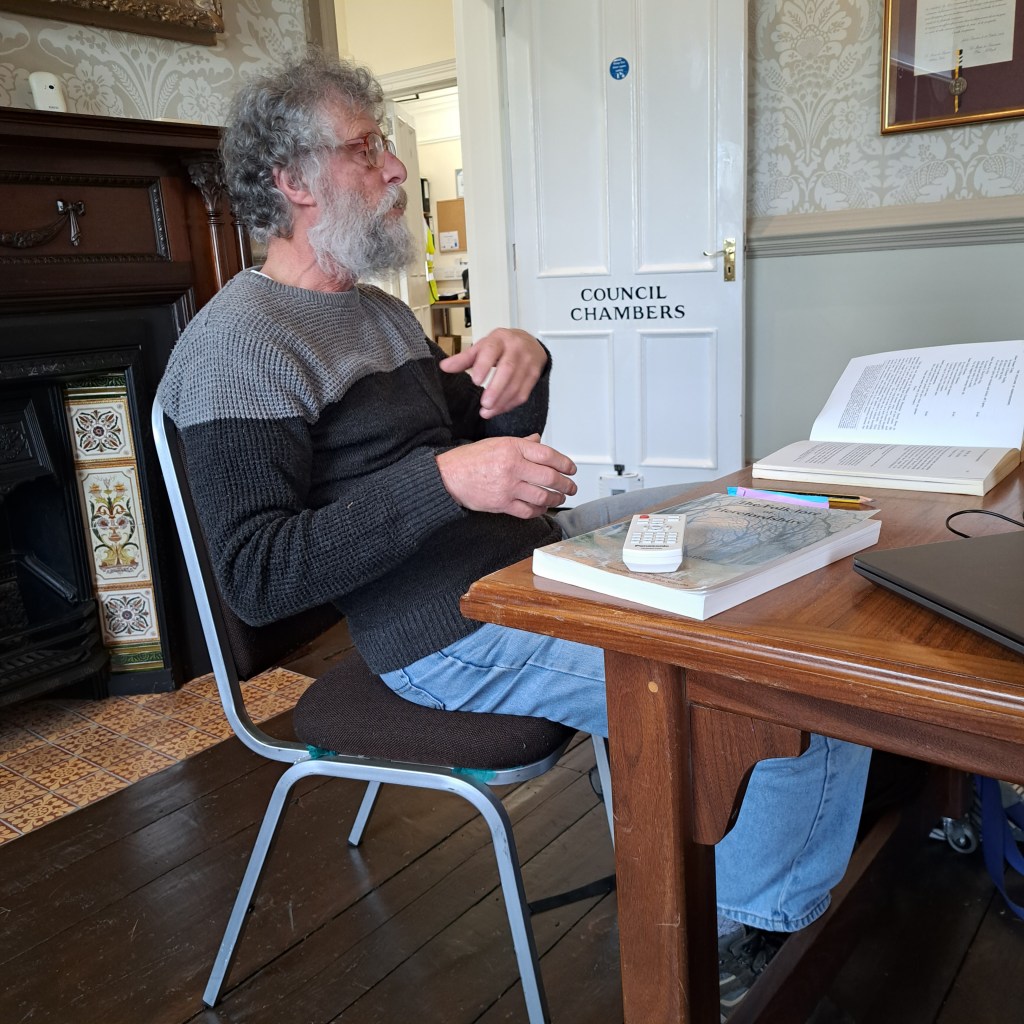
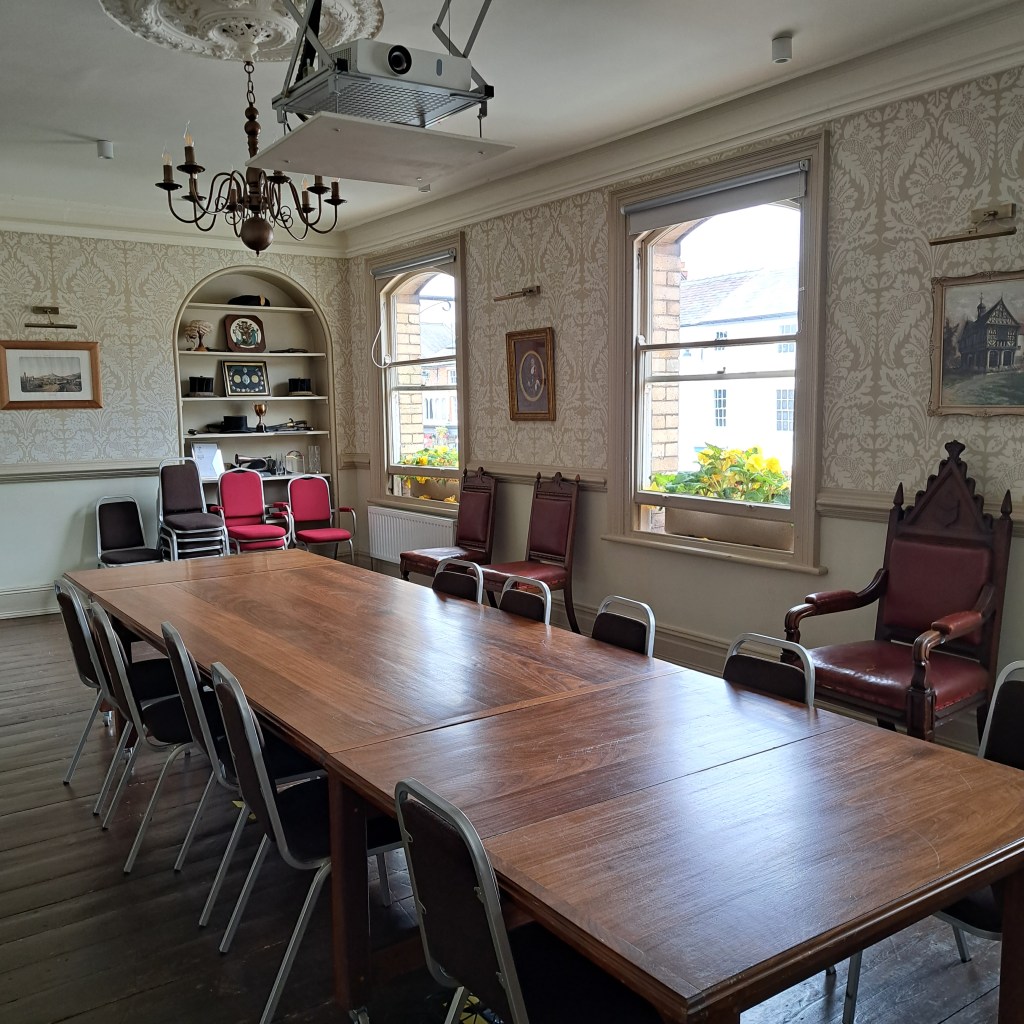
Eleven stitchers came along today to join me in The Council Chamber at Leominster Information Centre. Ann had completed this gorgeous design for the Autumn Page of The Stitched Atlas, we were curious how she had achieved the raised effect (done with a little padding).

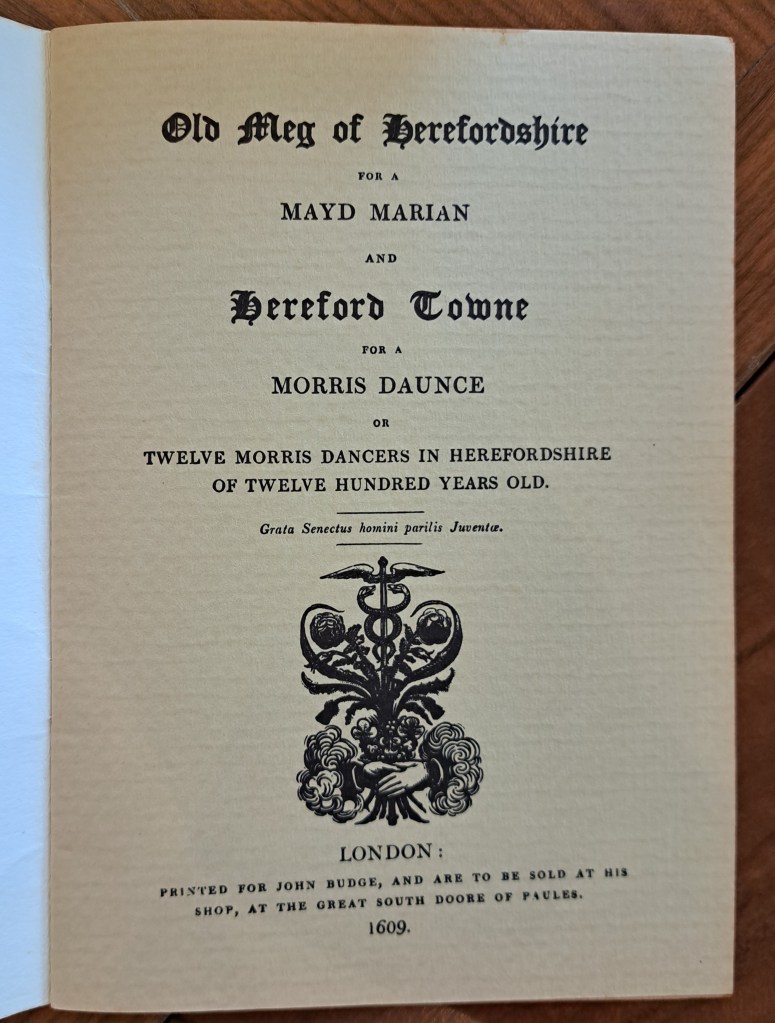
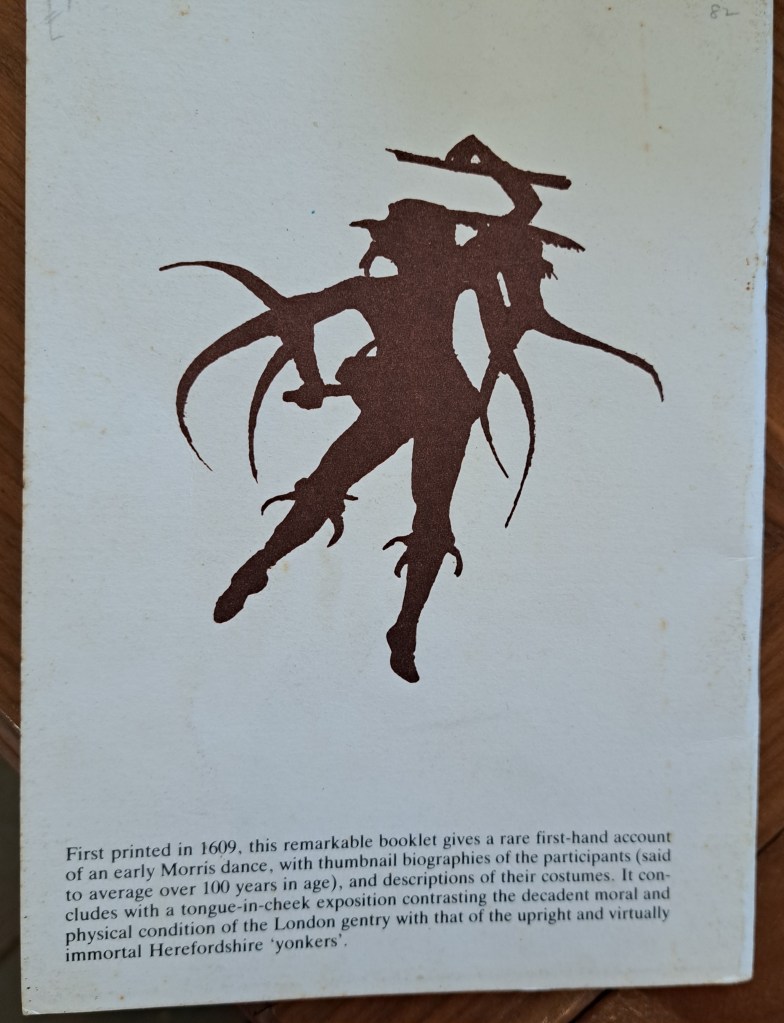
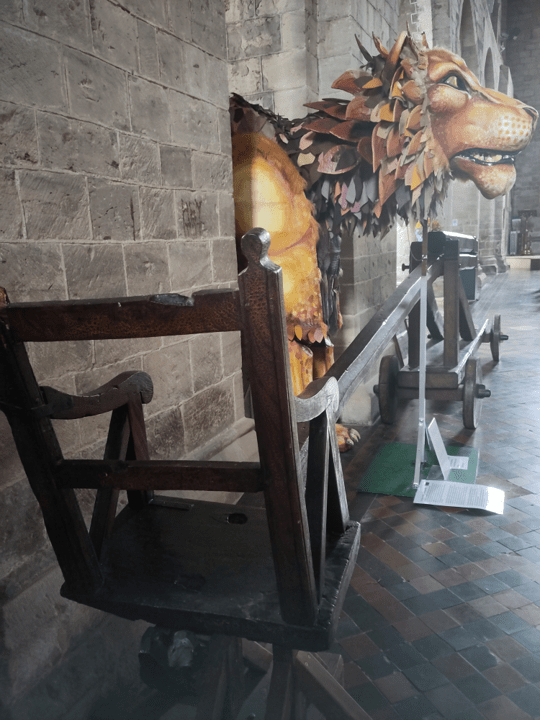
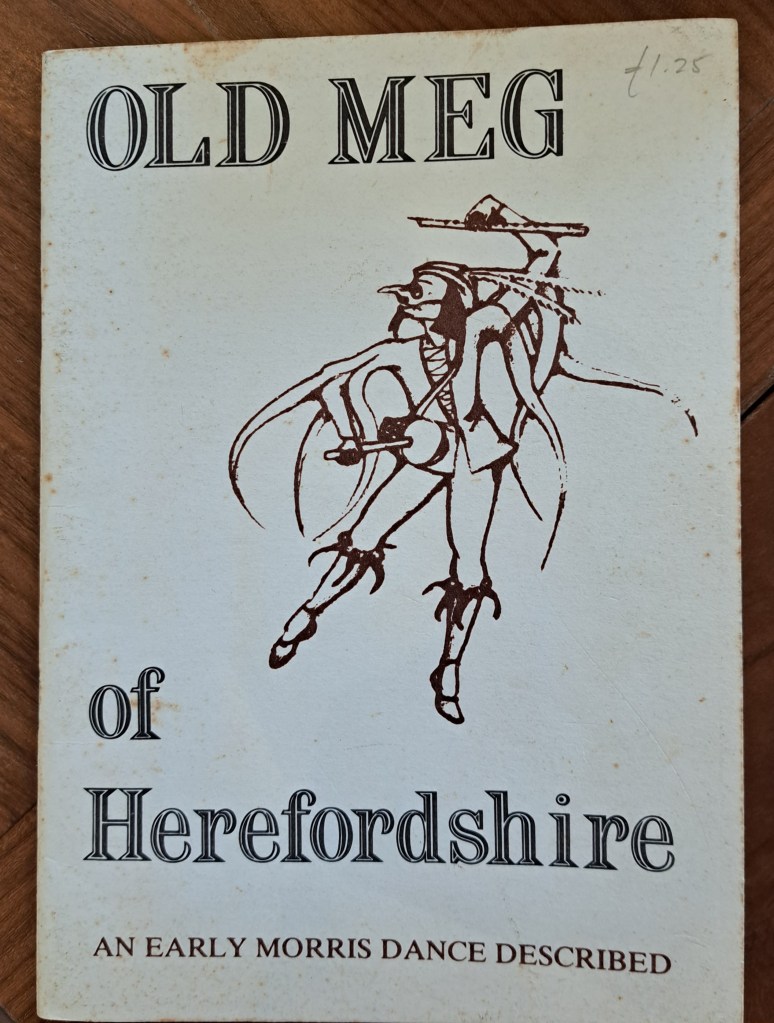
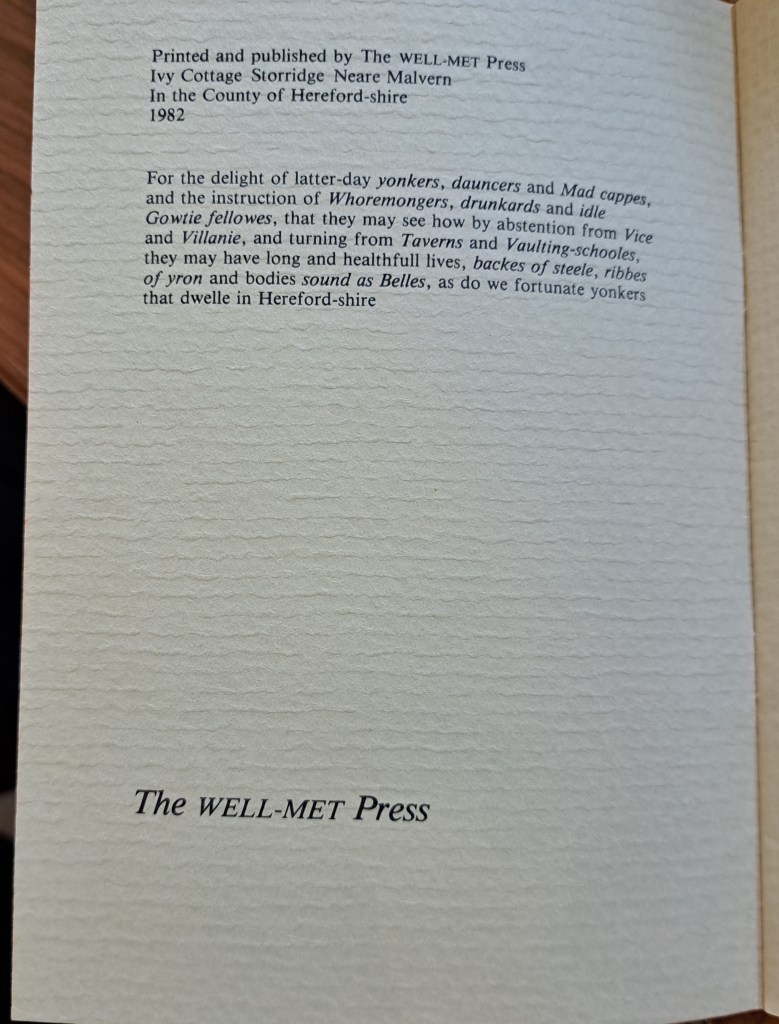
Ann is pursuing the story of Constance Pauncefoot of Much Cowarne. She also brought along a reprint of the book Old Meg of Herefordshire to show us (The Well-Met Press, 1982) The front cover drawing inspired Mary.
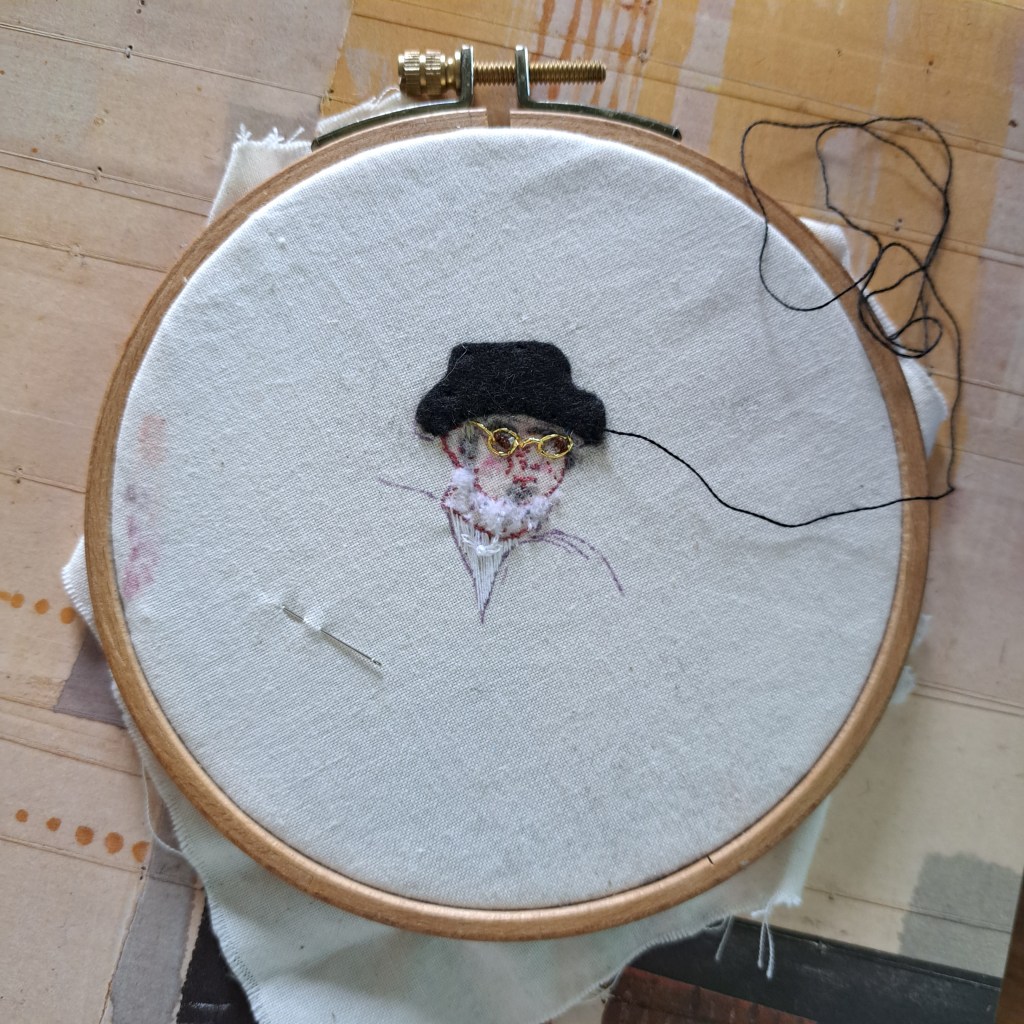
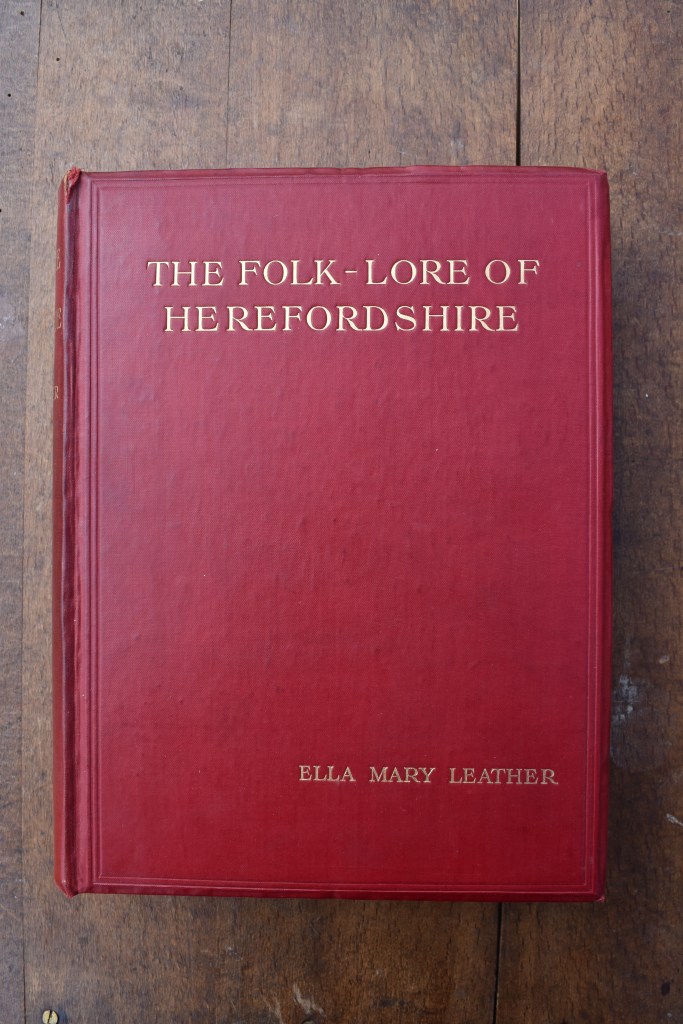
Meg is continuing with her stitching of the singers photographed in Ella Mary Leather’s Folk-lore of Herefordshire. Ella took up photography and had developed photos from plate glass negatives in a cupboard under the stairs in her house. It is likely she took these photos of the singers.

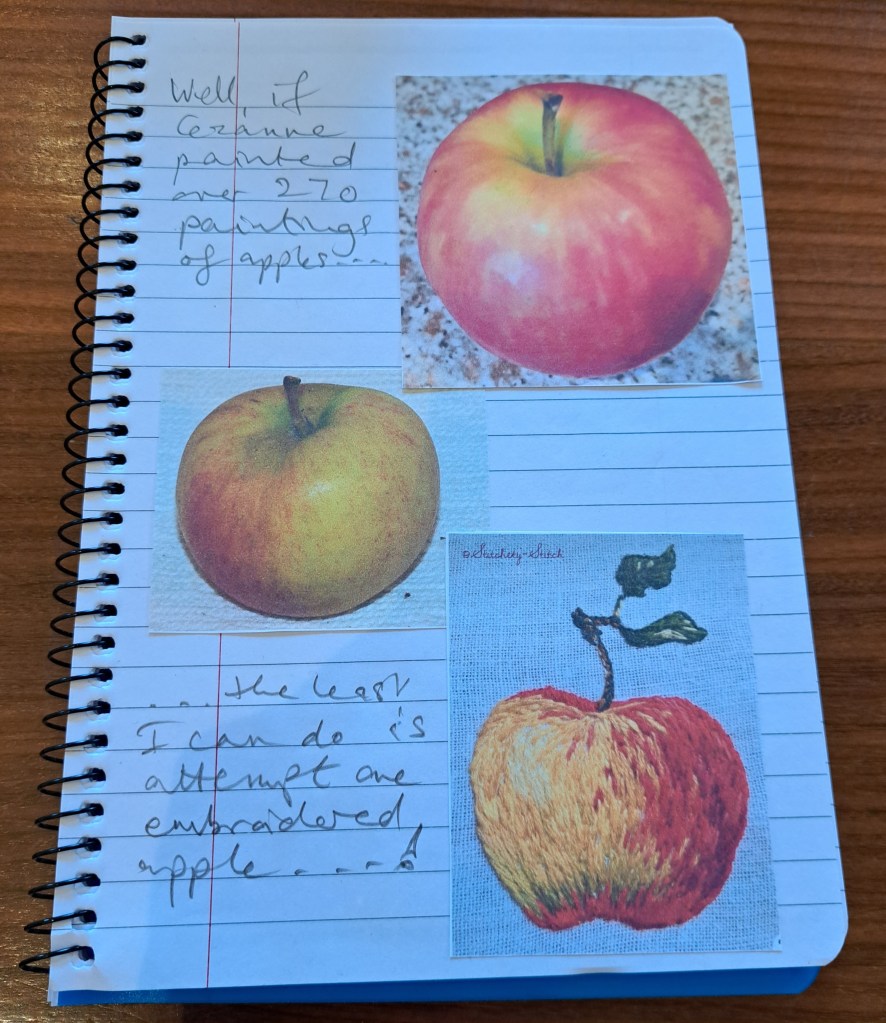
Chris described looking into orchards and their history. She is using a notebook to document her research. She was stitching an apple in the meeting.
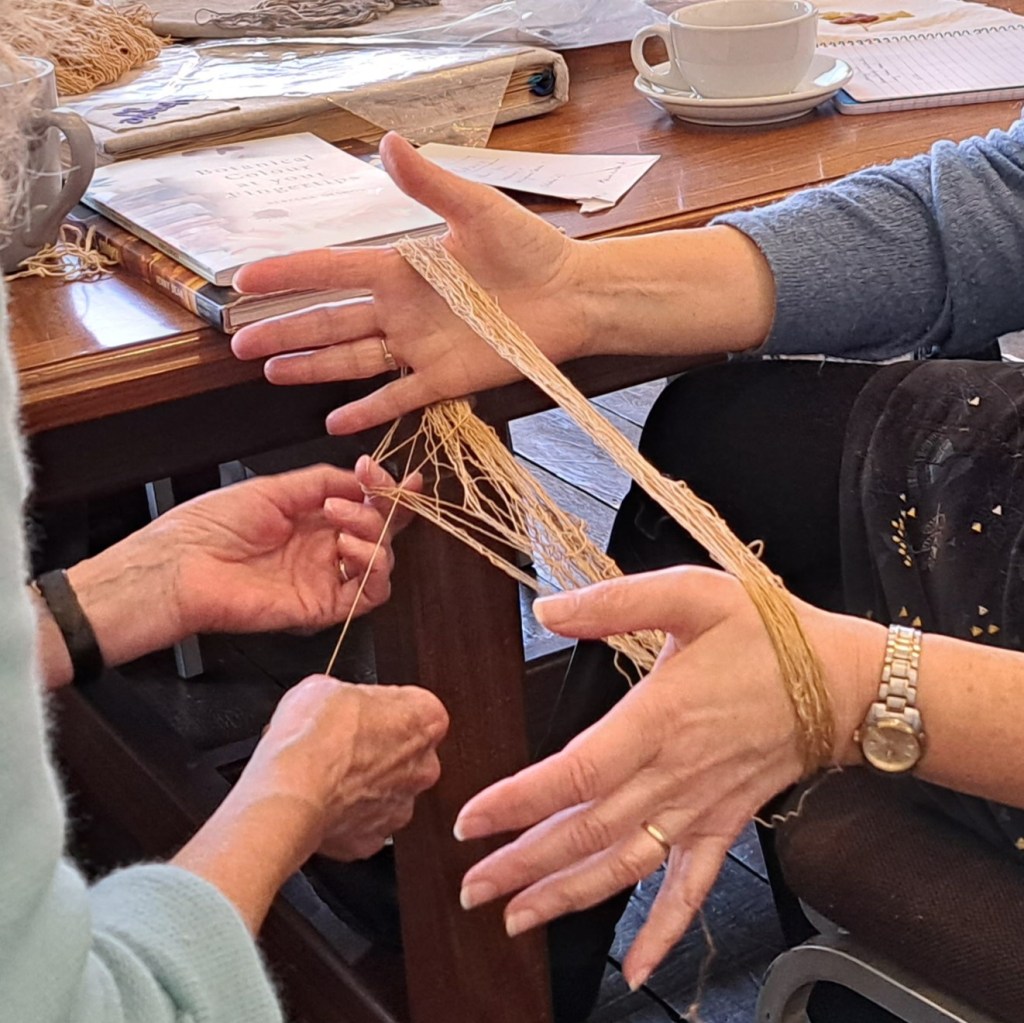
Helen showed us results of her natural dye experiments with blackberries and nettles sourced from her investigation place of Bacho Hill. Ann helped her to wind some of the dyed yarn, it reminded me of the Cats Cradle game.
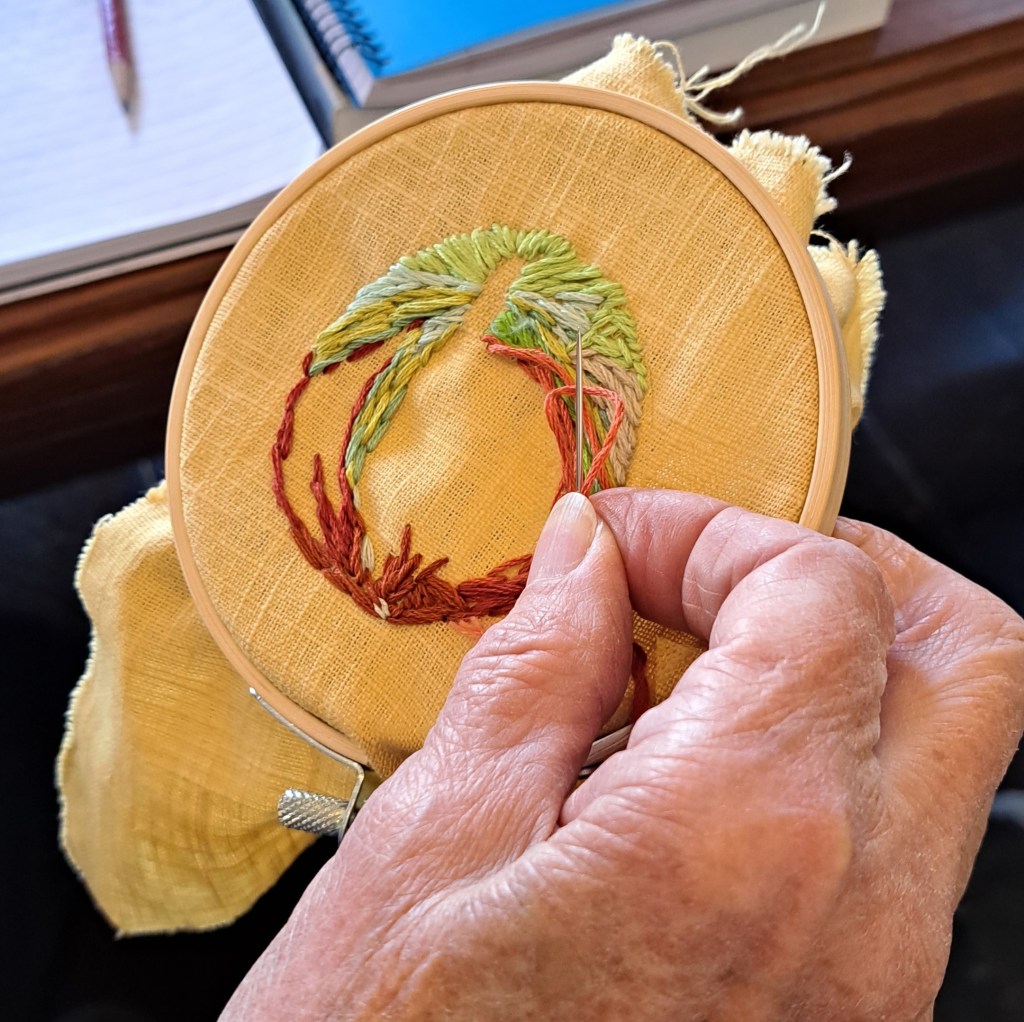
Maggie C laughingly said she hasn’t lifted a needle this week but has been back to the confluence of The Lugg and The Kenwater, important to the origin story of Leominster that she is investigating. She picked some oak leaves which she plans to press and incorporate. She is a poet; words are her craft and she says she has been thinking about how stories change and legends move. She has some written words in progress.

Mary is investigating the history of Morris Dancers and their music and how these relate to her chosen place of Hereford.

Caroline T is working on a Fly Agaric mushroom embroidery for the Autumn page.

Francesca has been walking in Dorstone in her research into Arthur’s Stone.

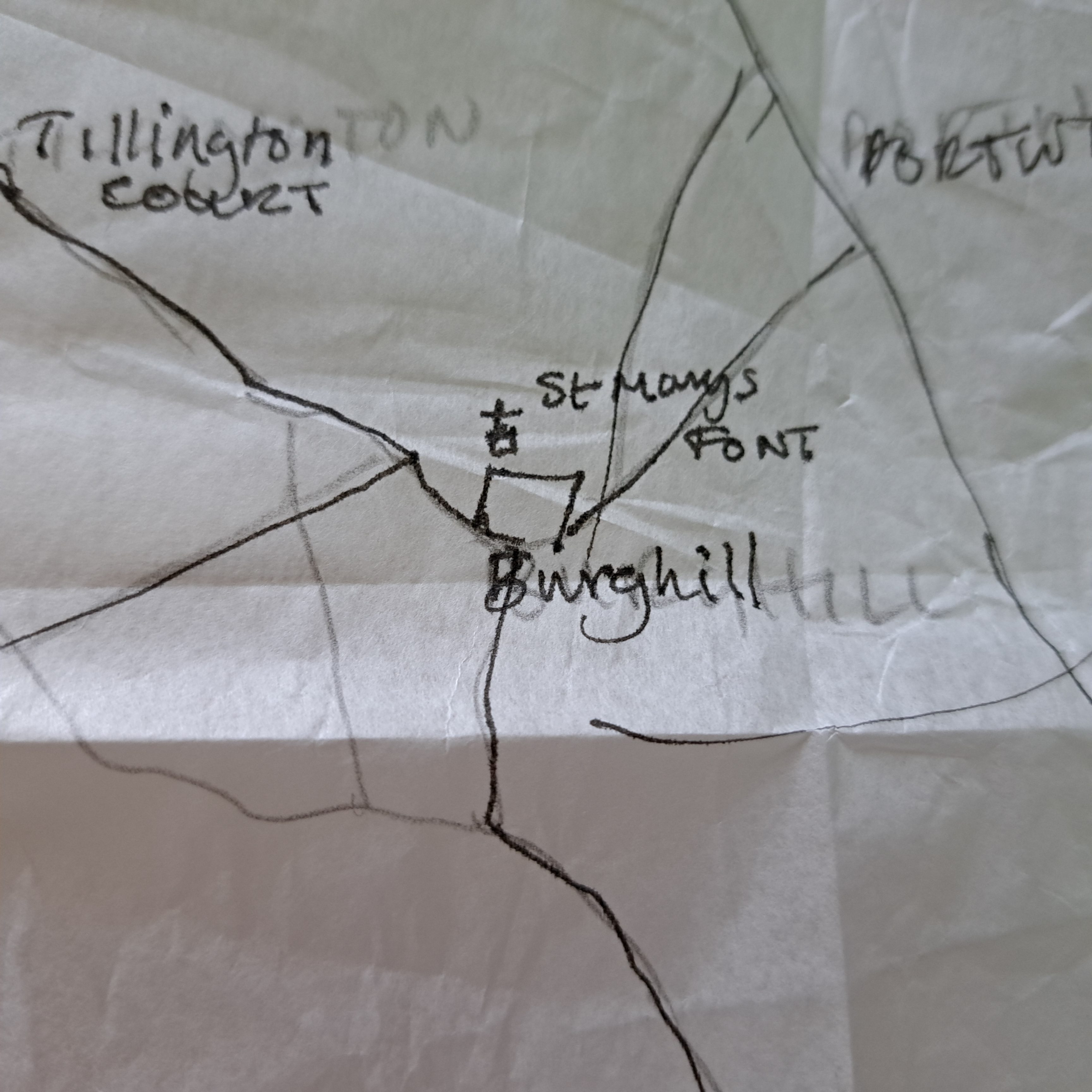
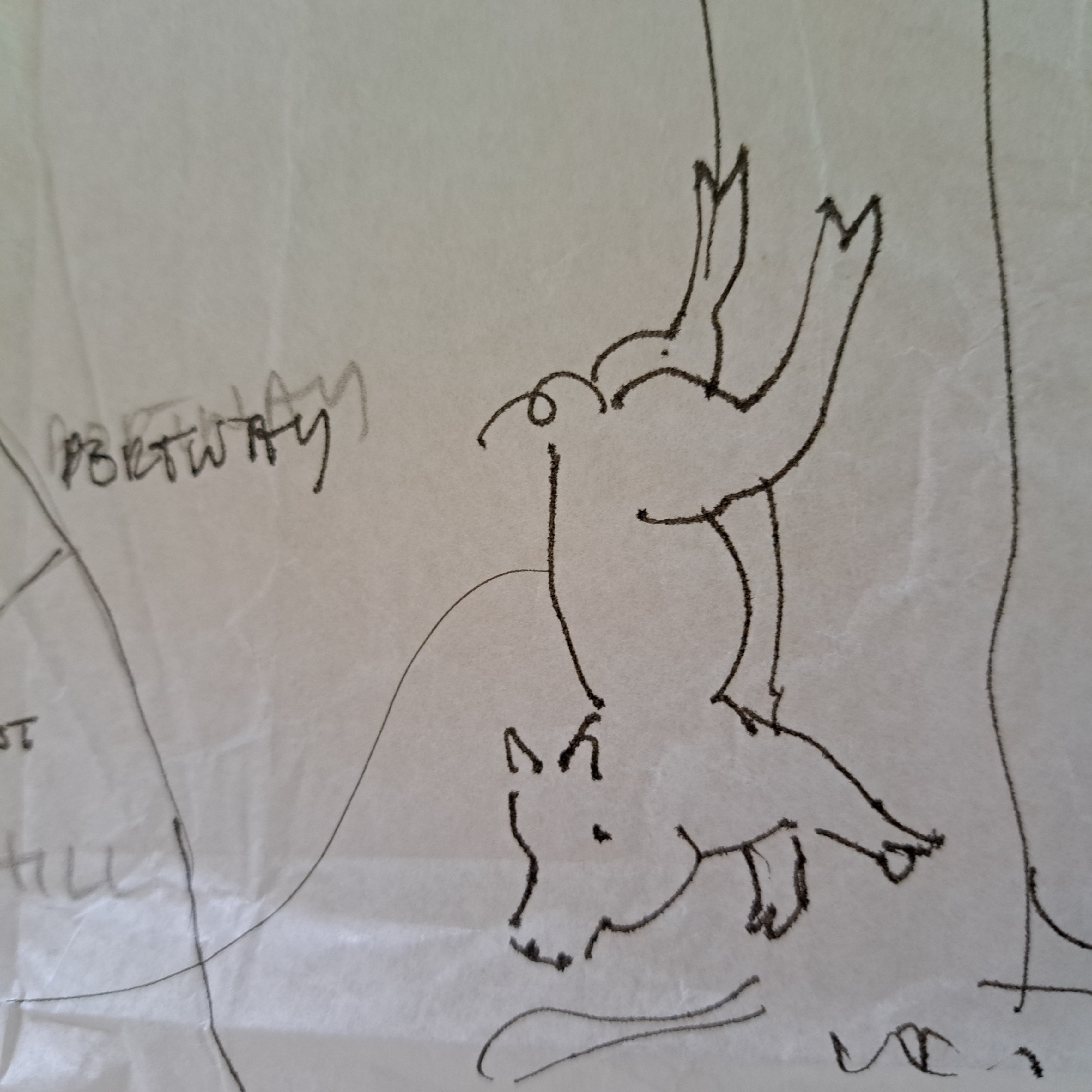
Liz says she is also not a stitcher but is interested in the story of the pig seen going up a hill backwards from a coach travelling between Burghill and Hereford.

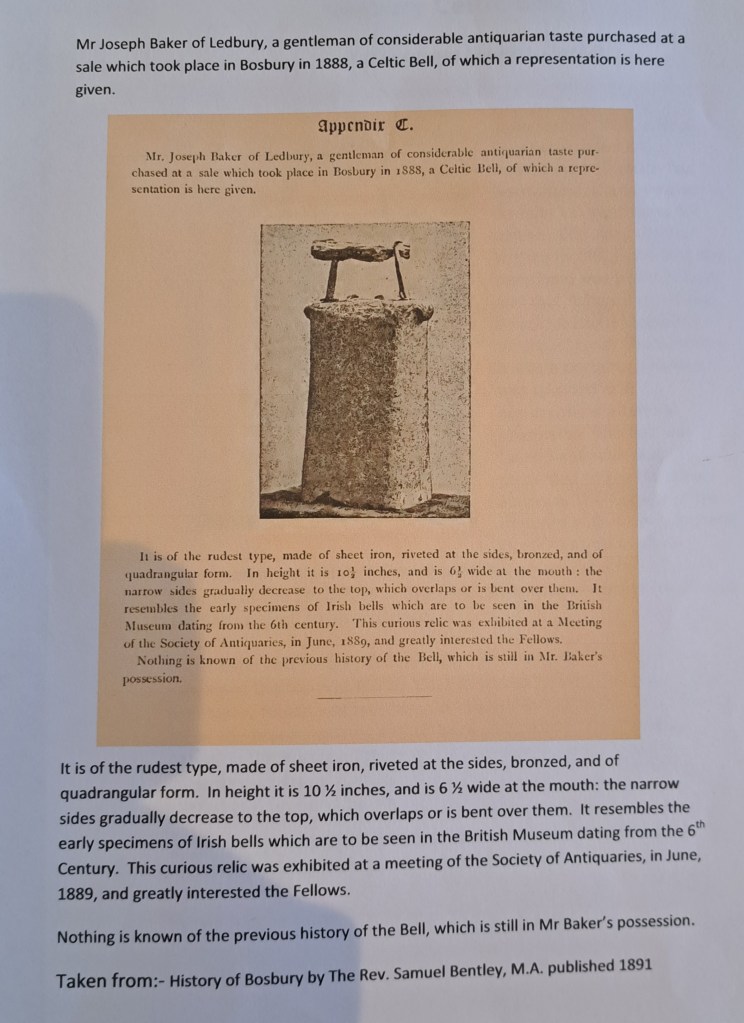
Annie is investigating Leominster’s Alm’s Houses. Chris had brought along some information about the Bosbury Bell for Annie. Annie had also mentioned the Bell jingle rhymes in Ella’s book as something we might consider using in the atlas. I like this idea of them chiming through the atlas, or adding another rhythm to it as the pages are turned. A similar bell to the Bosbury Bell is The Marden Bell which is in Hereford Museum and links to the legend of The Mermaid of Marden.
Karen has been back to Kings Pyon and is inspired by the architecture of a gatehouse there, a Jubilee tree, and the story of the devil. She is also very interested in the story of the singer Esther Smith and has found recordings of her daughter May Bradley. Today Karen told us a lot about the history of these singers that she has discovered and played a recording of May singing. Hearing the singing in the room for the first time, for me brought with it a new and different feeling for the folk material; a little eerie but in a moving way.
6th November 2023- A focus on stitching (Session 7)

Eight folk plus myself were able to attend the seventh group meeting. Here are some images of people’s work taken during the morning’s discussion of ongoing investigations into place, whilst stitching together.

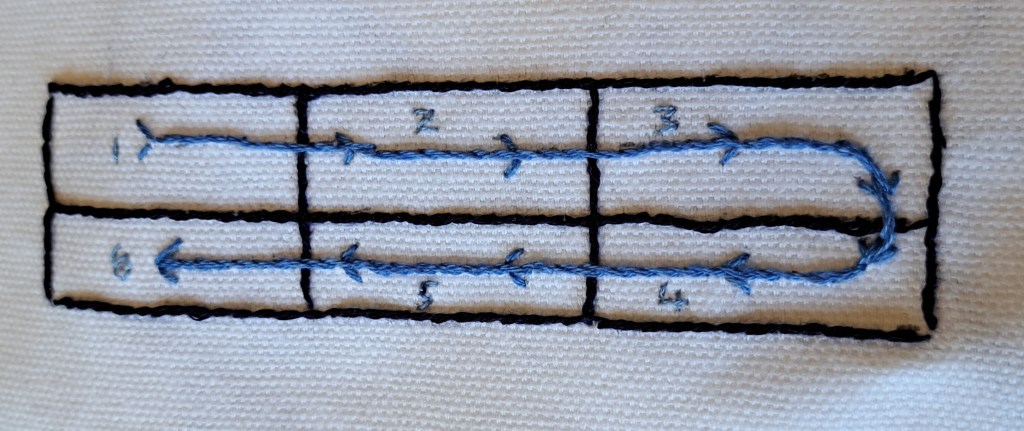
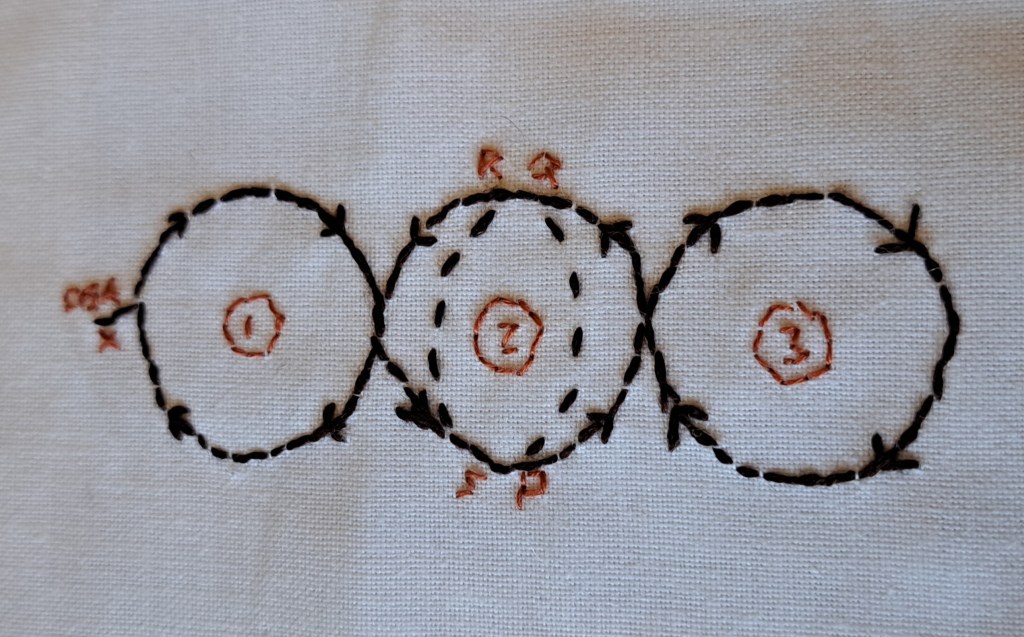
Annie’s embroidery of the dancing diagram for ‘Three Jolly Black Sheepskins‘, which is a game as well as a dance, Leather reports that when danced in an Alehouse, whoever made a mistake had to buy the drinks!
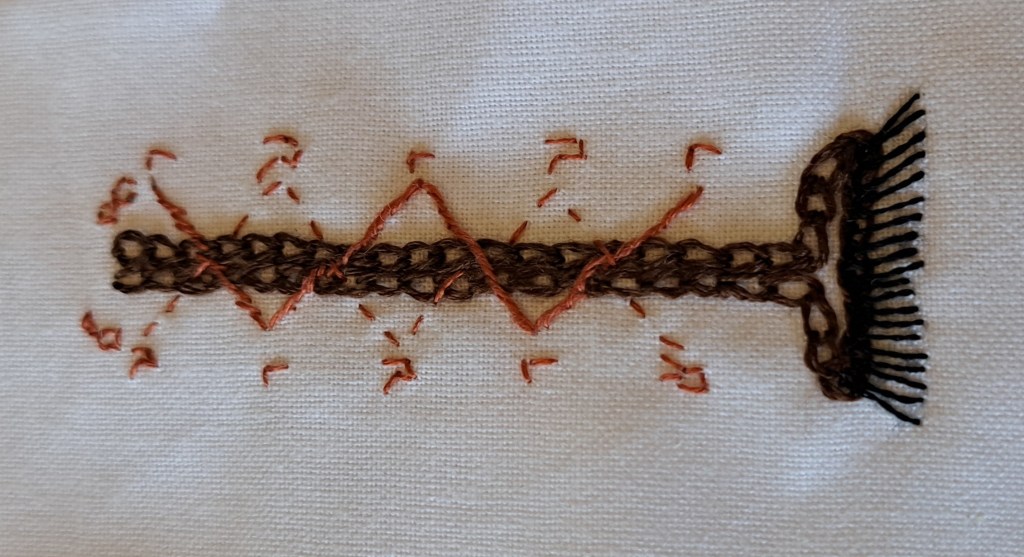
Annie’s embroidery of the diagram for ‘Dancing the Broom Stick’
Annie’s embroidery of the diagram for ‘Hop-scotch’, this is the “Hops-bed” drawn on the road or pavement.
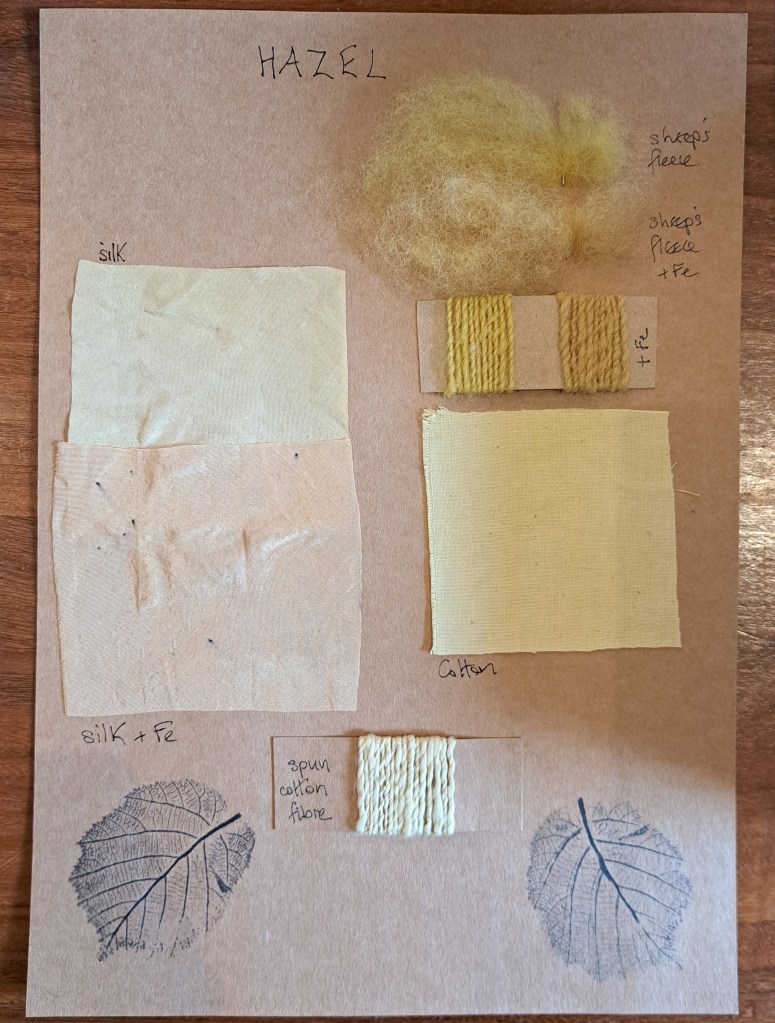
Hazel leaves and natural dye experiments
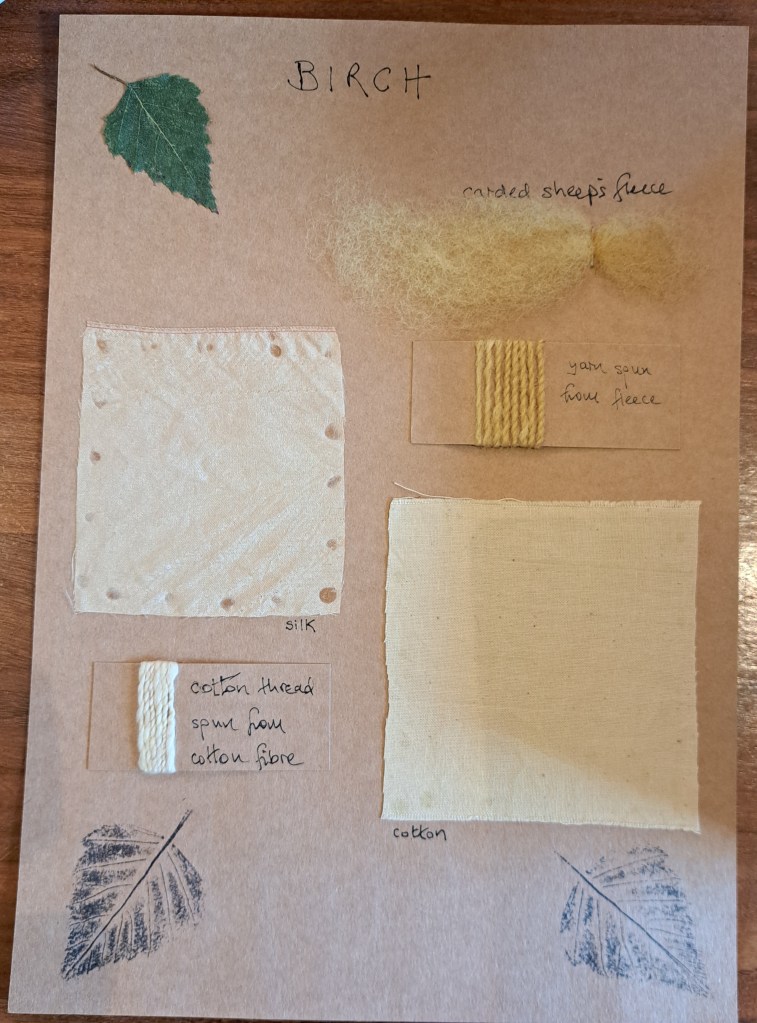
Birch leaves and natural dye experiments
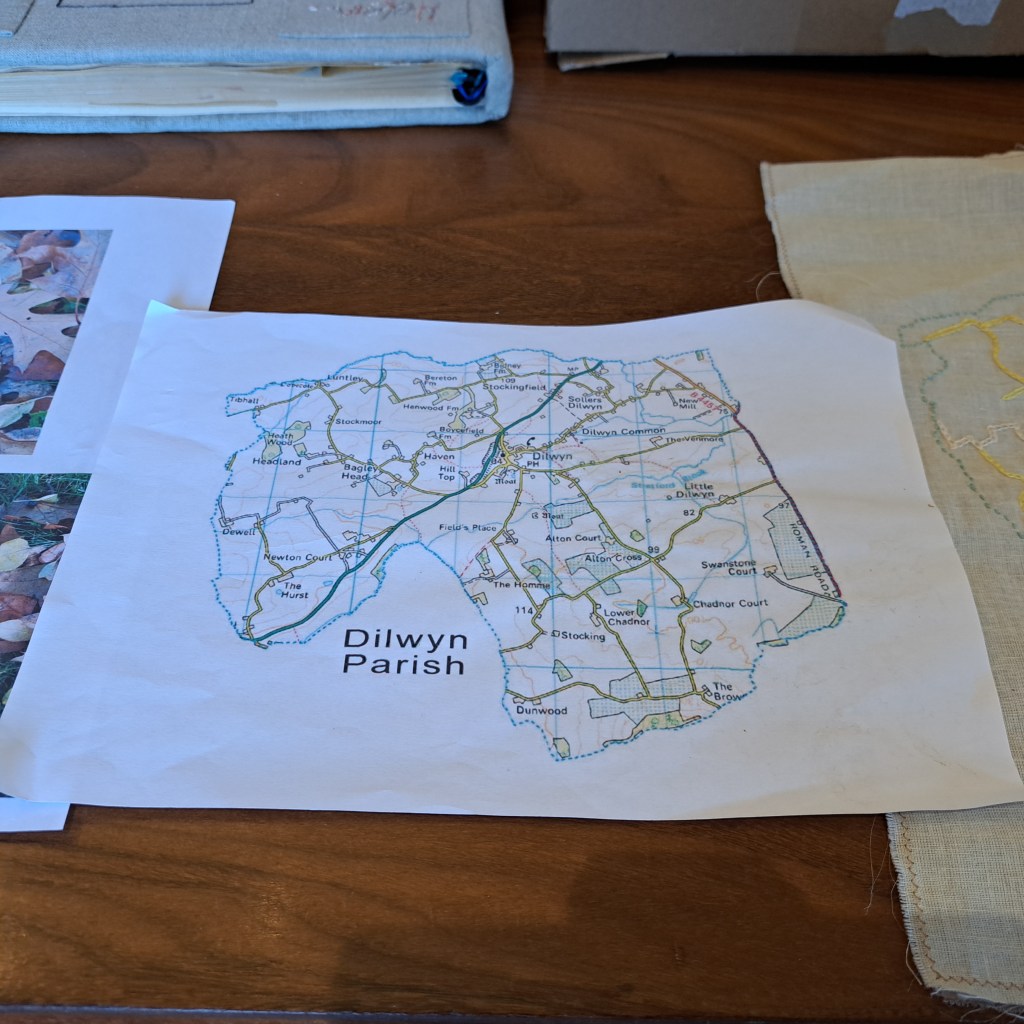
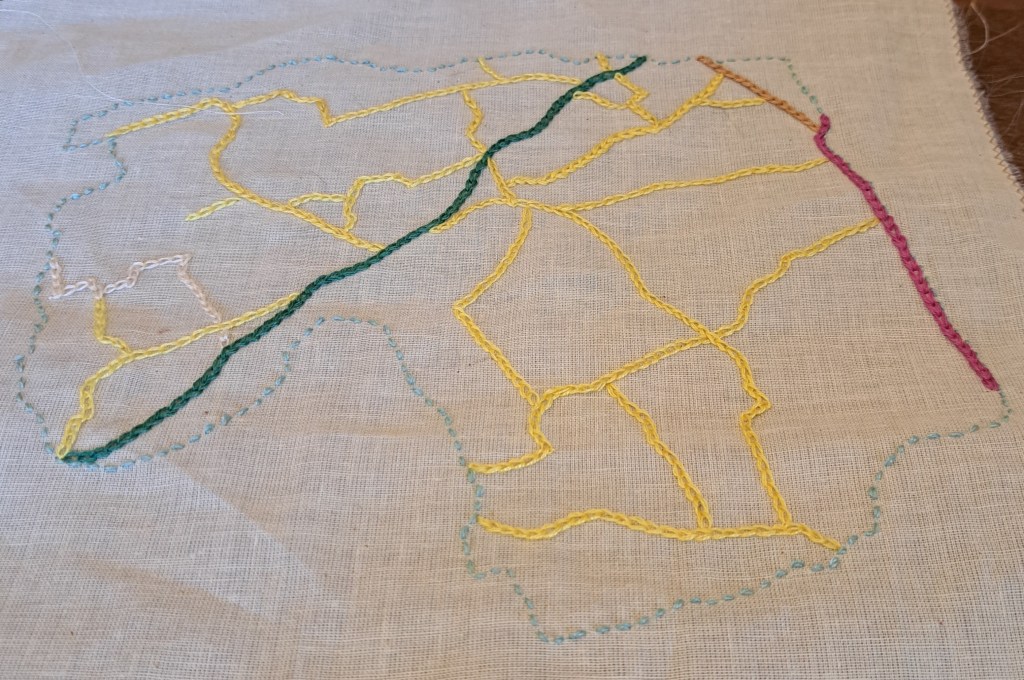
Maggie P developing her map of Dilwyn
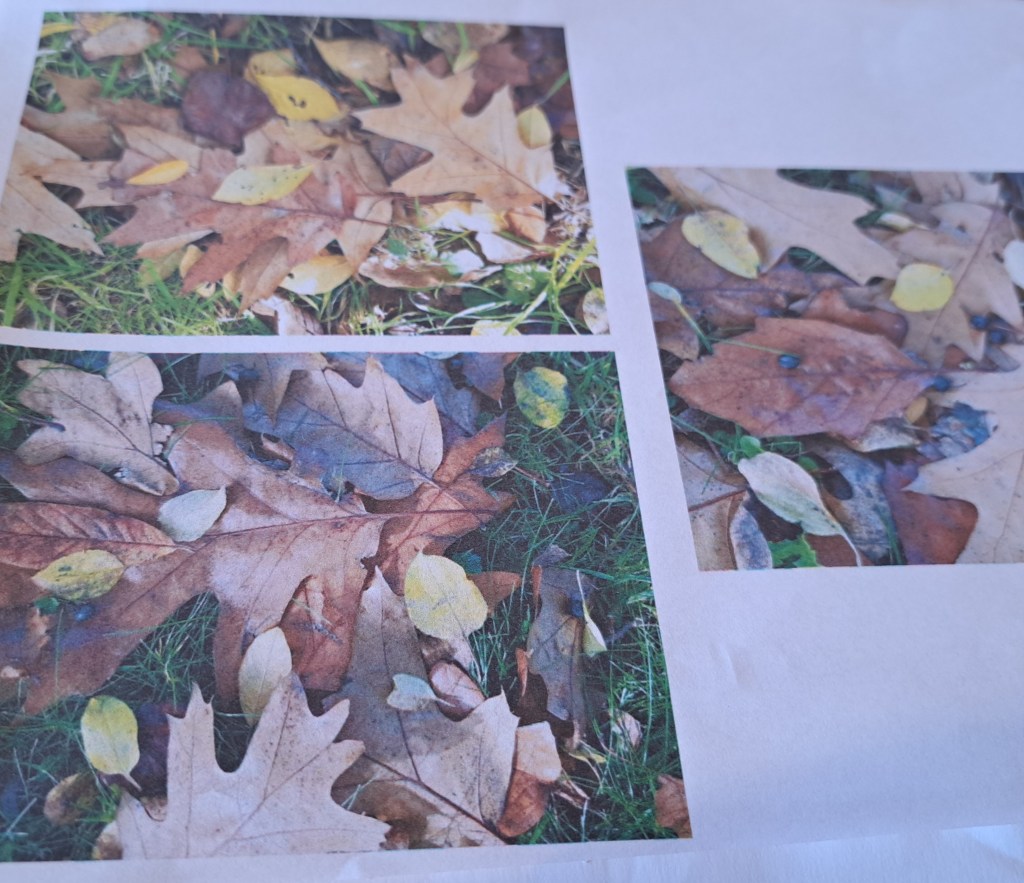
Inspiration for the Autumn page of the Atlas
Plans for the Autumn page of the Atlas
Meg’s work on the singers pictured in Ella Mary Leather’s Folk-lore of Herefordshire
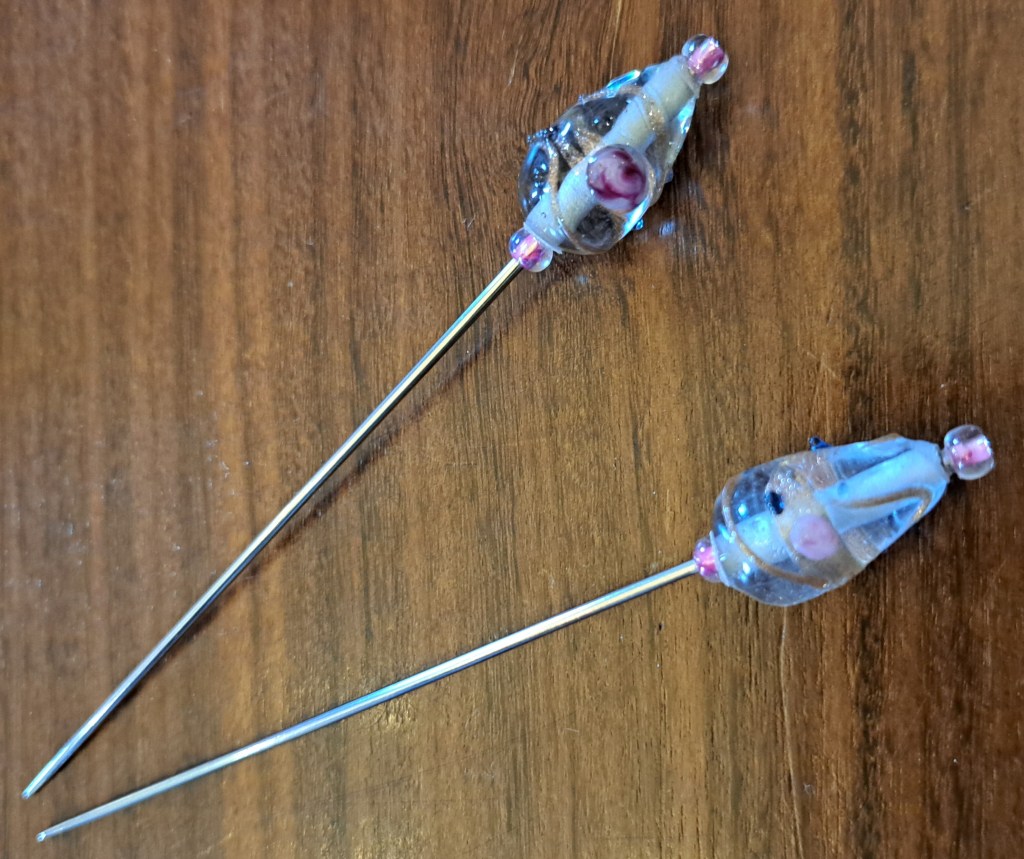
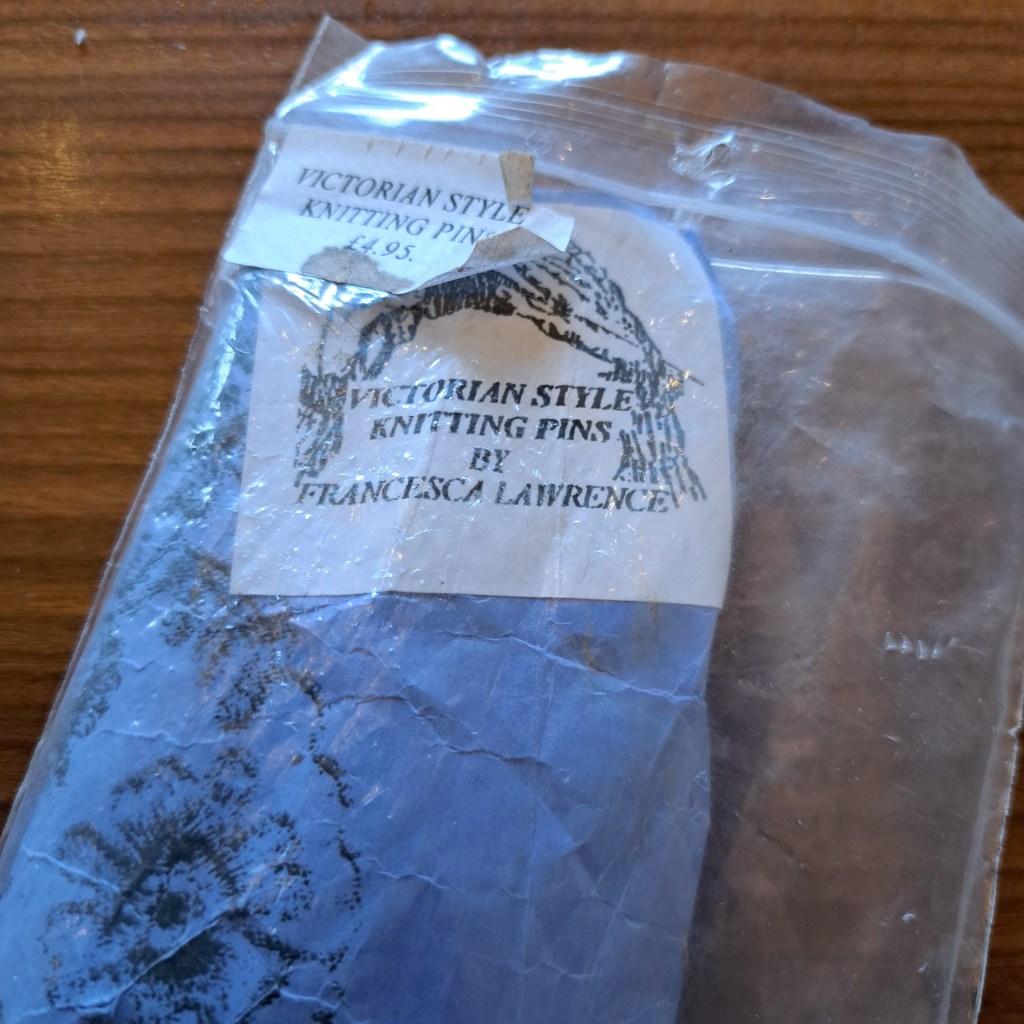
The Victorian style knitting pins Meg used to knit a Weobley carol- singer’s shawl. She sang “The Man that Lives”

23rd October 2023 – A special guest Terry from Leominster Morris to tell us about the Brimfield Dance seen at Orleton by Ella Mary Leather ( Session 6)

Annie and Karen invited Terry to come along to our meeting to tell us about
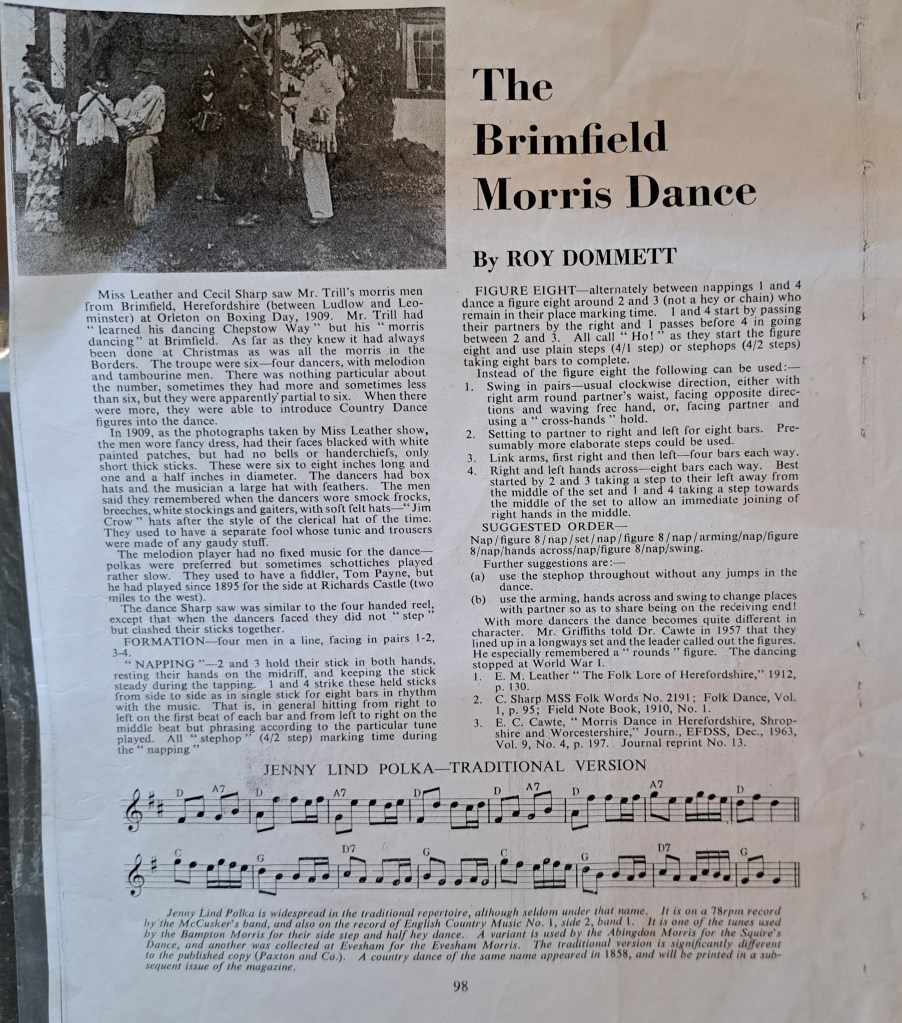
the Brimfield Morris dancers seen at Orleton on Boxing Day in 1909 , which Ella Mary Leather brought Cecil Sharp along to see. The next day John Locke, a Gipsy fiddler played local tunes for Cecil Sharp.

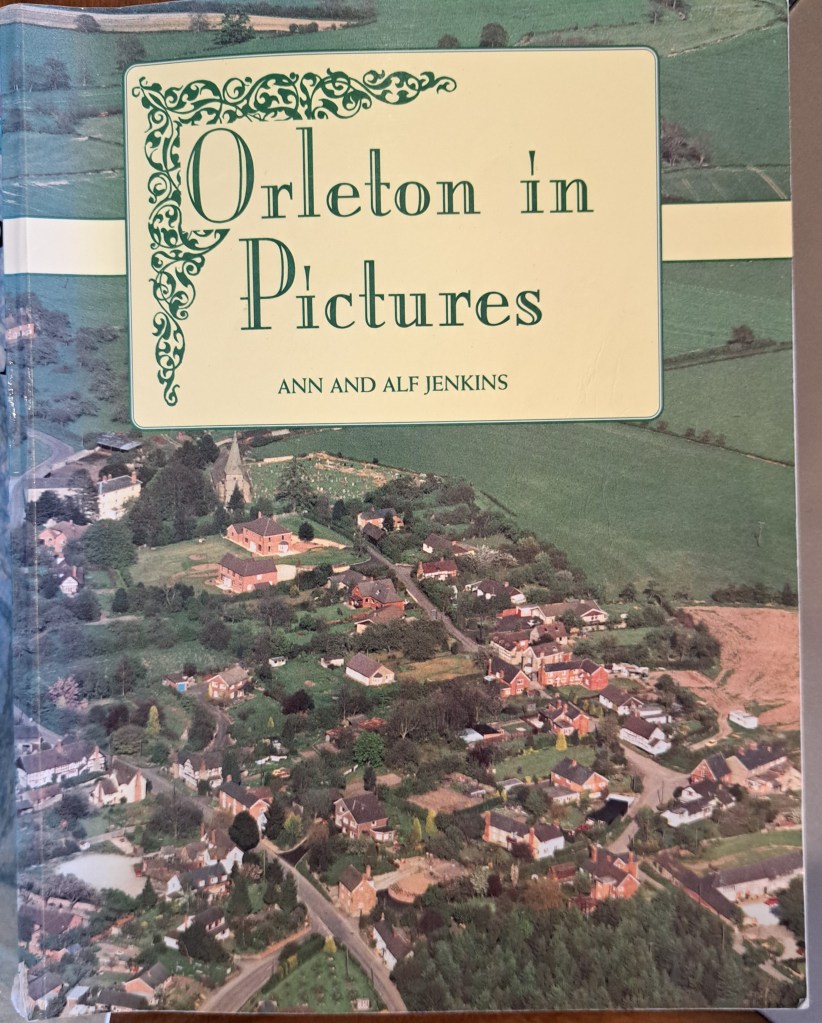
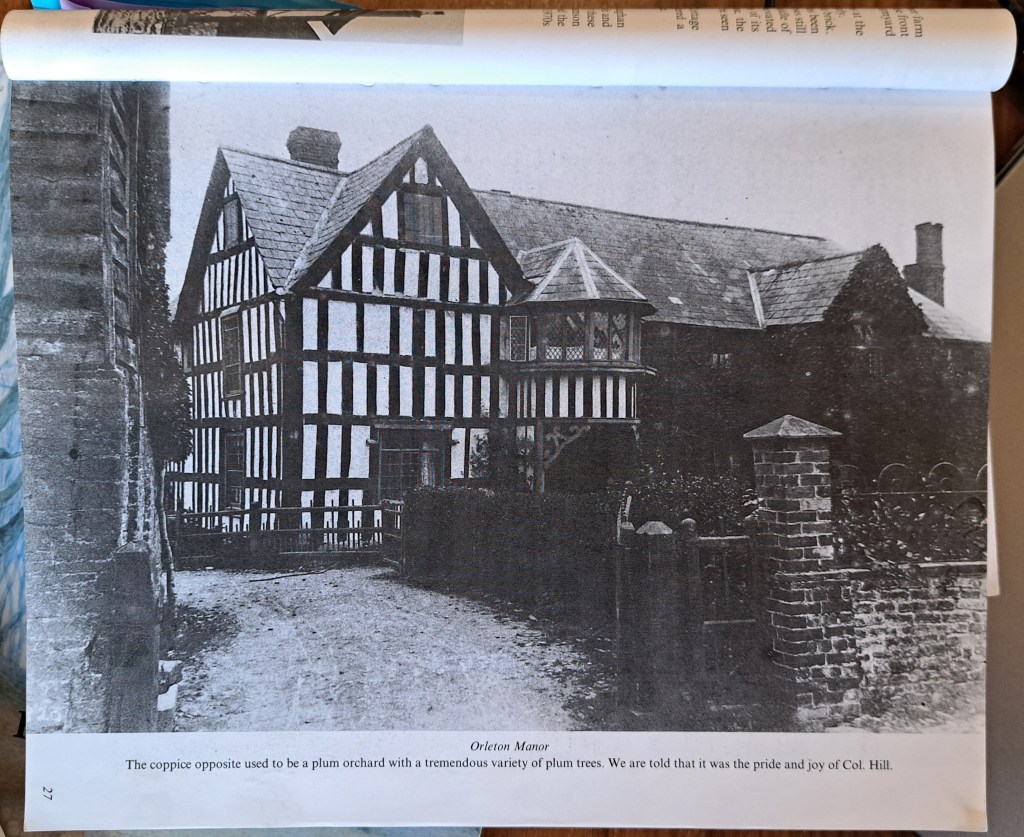
From the photos of the original event and the book Orleton in Pictures
to assist, Terry went to Orleton to try and establish the place the dance was
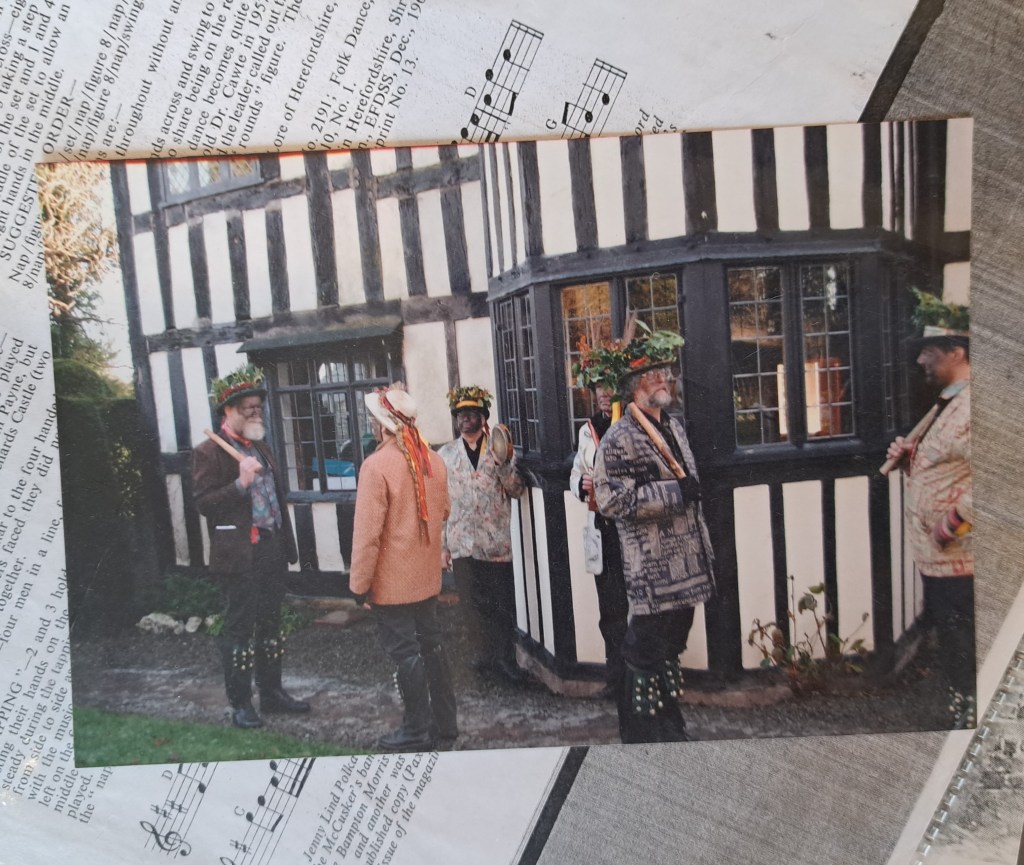
performed. He said that Leominster Morris still perform the Brimfield Stick
dance.

Terry described a detailed history of Morris dancing beginning with the
first record of something called the Morris, written about from 1440 in
accounts such as court records and parish records. If Morris men had danced on the Sabbath they were taken to court. Some say the term ‘Morris’ comes from Moorish dancers. In Puritan times (around 1664-65) people turned away from Morris dancing. It was resurrected when King Charles II came to the throne and a later Victorian revival.

Terry described different styles of dance such as Cotswold dancing, Clog Morris from the North-West, Northumberland processional dancing, sword dancing including long sword and rapper swords, and maypole dancing. He talked about mixed sides, Cecil Sharp tidying up the tunes and seen by some as taking dancing away from its root and losing its emotion.

Finally, Terry delighted us with a demonstration of a broom stick dance and Maggie P accompanied him by playing a tin whistle.

We went onto discuss places we are investigating, places now added to the previous list are Dilwyn, Eaton Bishop, and Bodenham.

Additional topics of discussion were Godwin tiles, Hester Clark of Leominster, Blackwork embroidery and repeated motifs, making a film, and where to purchase fabric. Maggie C also said that she planned to write some poems sparked off by the work people are doing, for example she is writing a piece inspired by Helen’s two ‘apotropaic marks’ pages for the atlas, where she created a second design from the material removed from the first design.

16th October 2023 – A discussion of each person’s chosen place (Session 5)

Nine people attended the meeting today. We discussed each person’s chosen place of research inspired by the folklore, folksongs or dance recorded there and their inroads so far.

The places discussed today were Withington, Leominster, Bacho Hill (outside Madley), River Wye, Pokehouse Wood, Brinsop, and Kings Pyon.

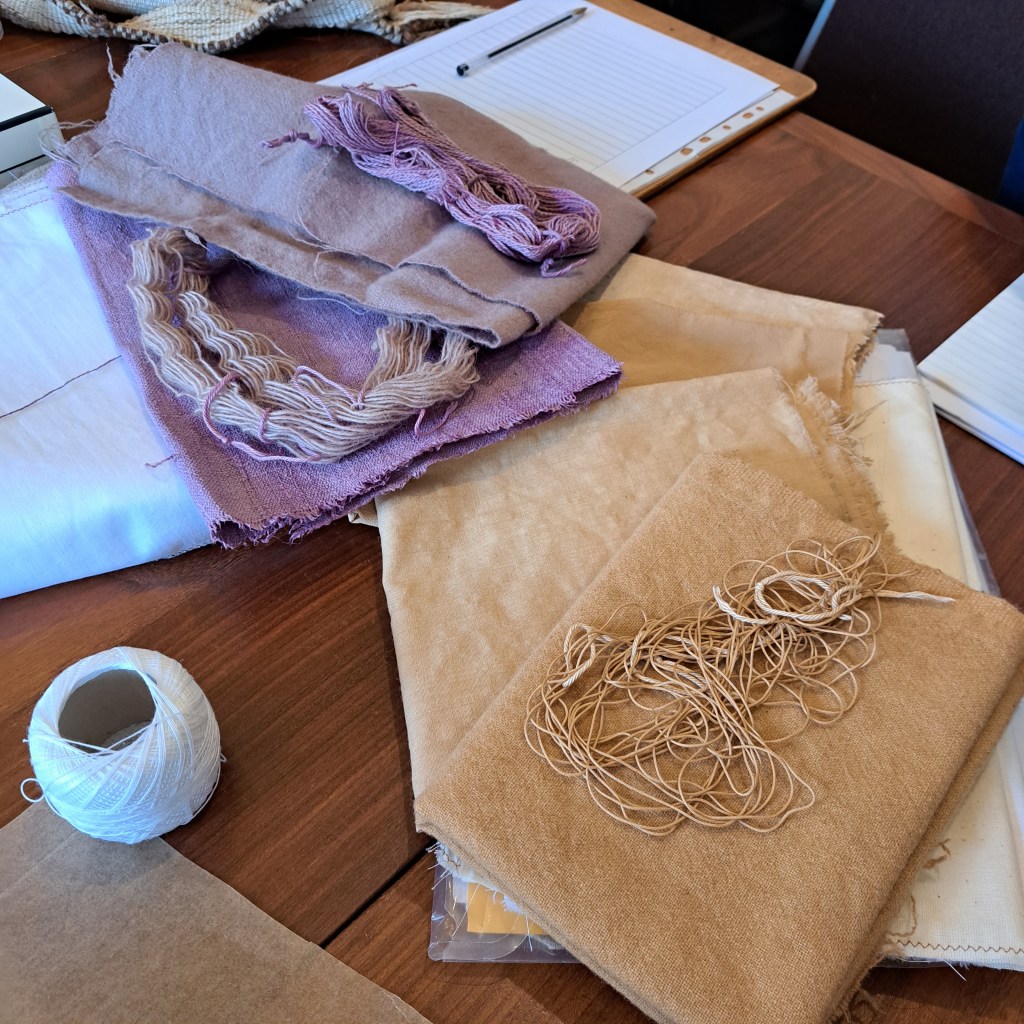
Helen’s fabric and threads dyed with natural dye after a soya milk mordant

Helen had picked hawthorn berries and blackberries at Madley Wood, which she used to dye french linen, wool, silk and cotton. She said that alum can be used as a mordant but also told us about the possibilities of using soya milk as a mordant and recommended a book by Rebecca Desnos. The group were interested to learn more about this process so we provisionally booked a date for a practical natural dyeing session in November.

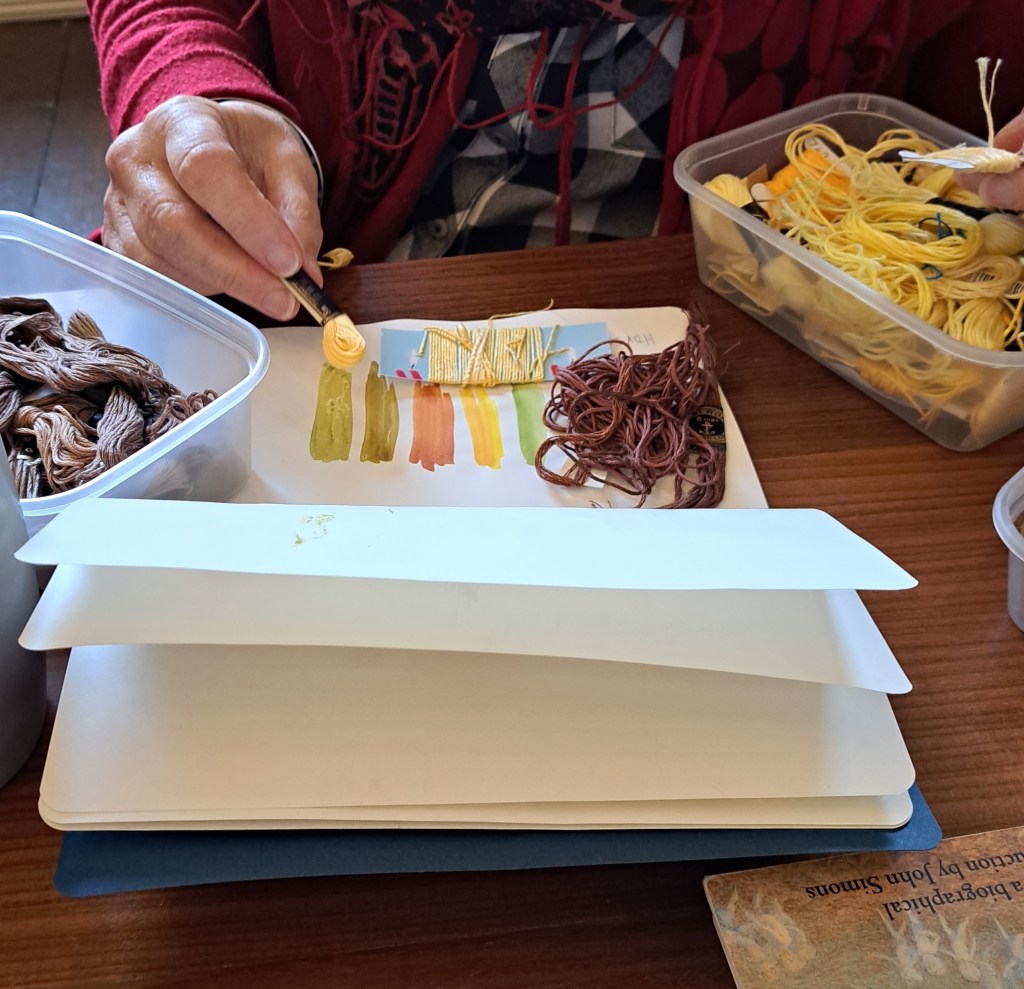
Liz colour matching threads to colours recorded in her sketchbook

We also discussed possible topics or themes for the meetings ahead and suggestions were the seasons, autumn, apples, trees, dances, bells, and fairies.

The group started to share practical tips for ways to work, as there was not a requirement to have any stitching skills to join the project. I invited people to respond to walking in or moving through their chosen place through stitch as mark making, so no need to produce a recognisable image as such.

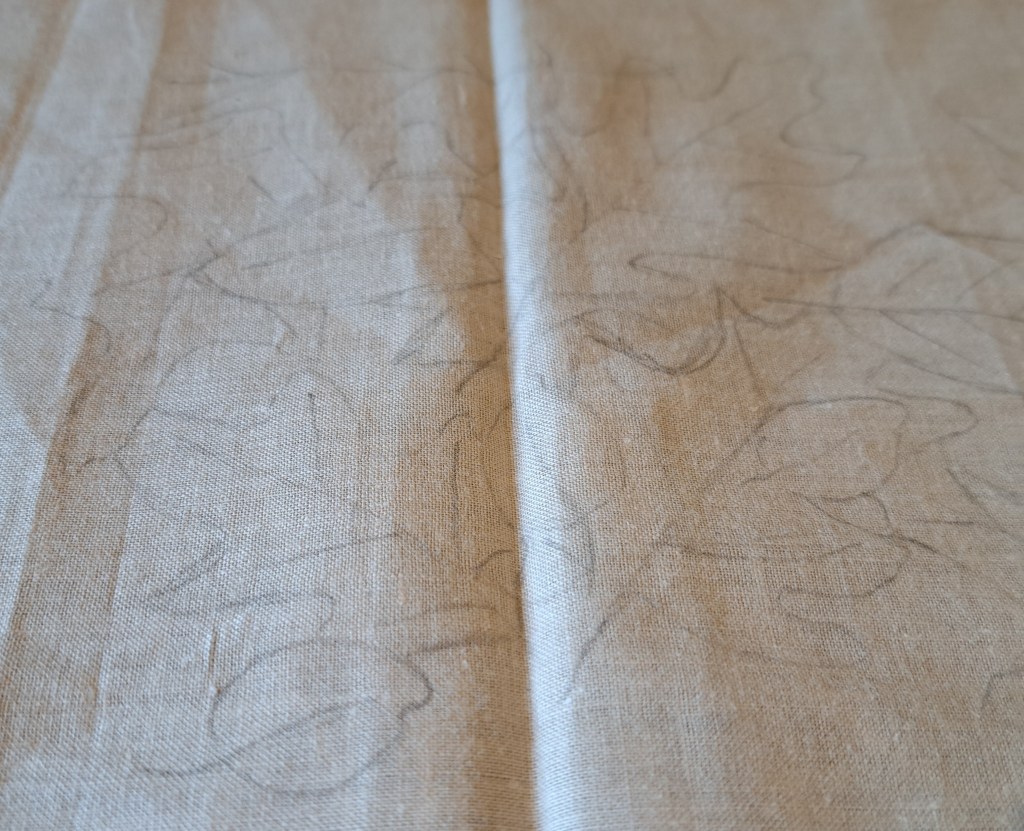
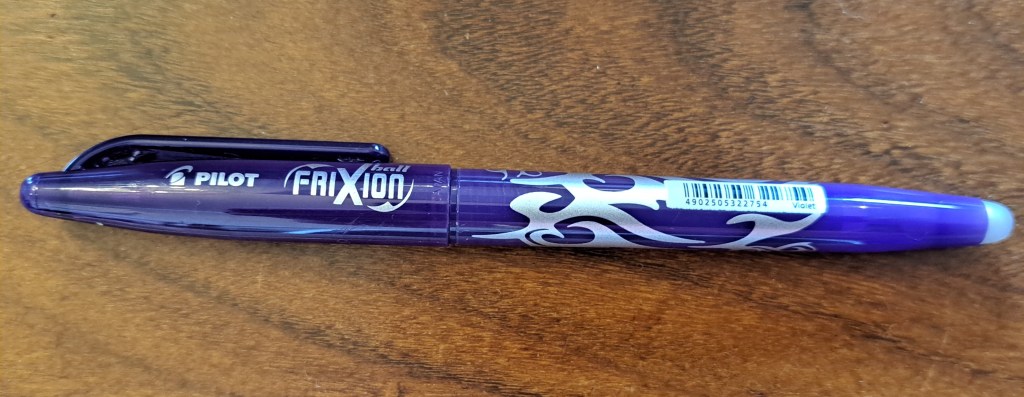
Meg recommended Frixion pens for drawing designs straight onto fabric pre stitching

Other recommendations from the group were a Ken Loach film ‘The Old Oak’ ( a compassionate refugee drama) , a podcast about the folksong Dives and Lazarus, and The Artemis Fowl Series of books (fantasy genre) by Eoin Colfer.

9th October 2023- Stories of fairies, Puck, Willo-the-wisp, ghosts, and a goblin funeral (Session 4)

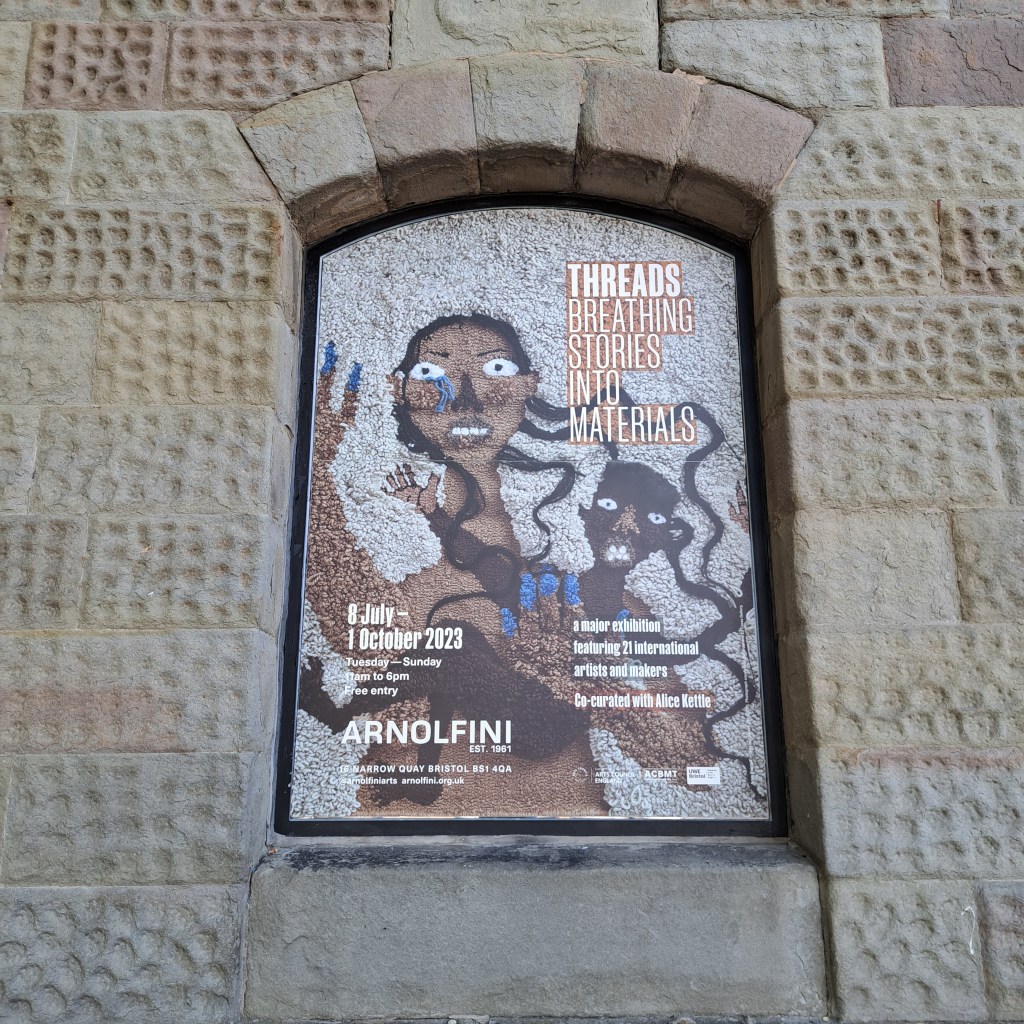
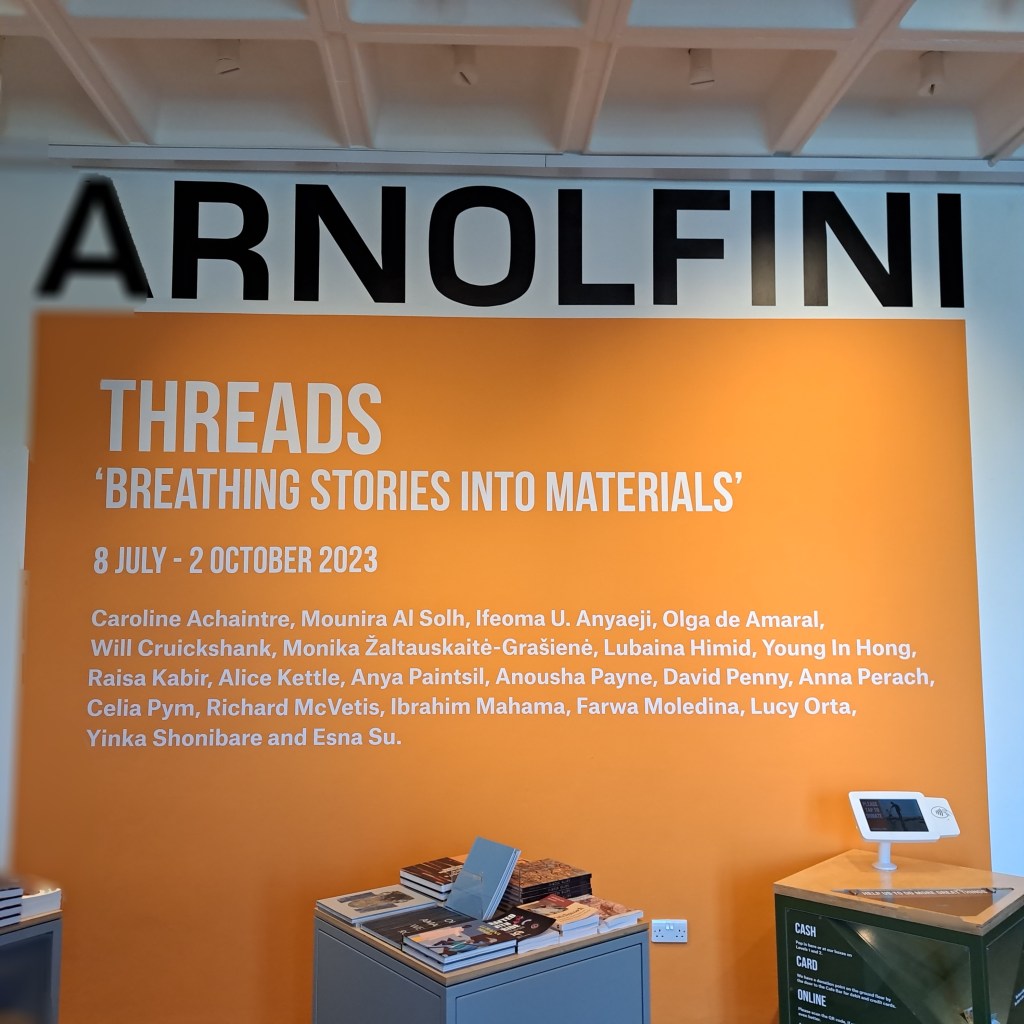
A lot of people couldn’t make the session this week so we were a smaller group of seven. I kicked off with showing lots of images from the current Arnolfini exhibition in Bristol: Threads: Breathing Stories into Materials curated by Professor Alice Kettle who is also a contemporary textile/fibre artist.

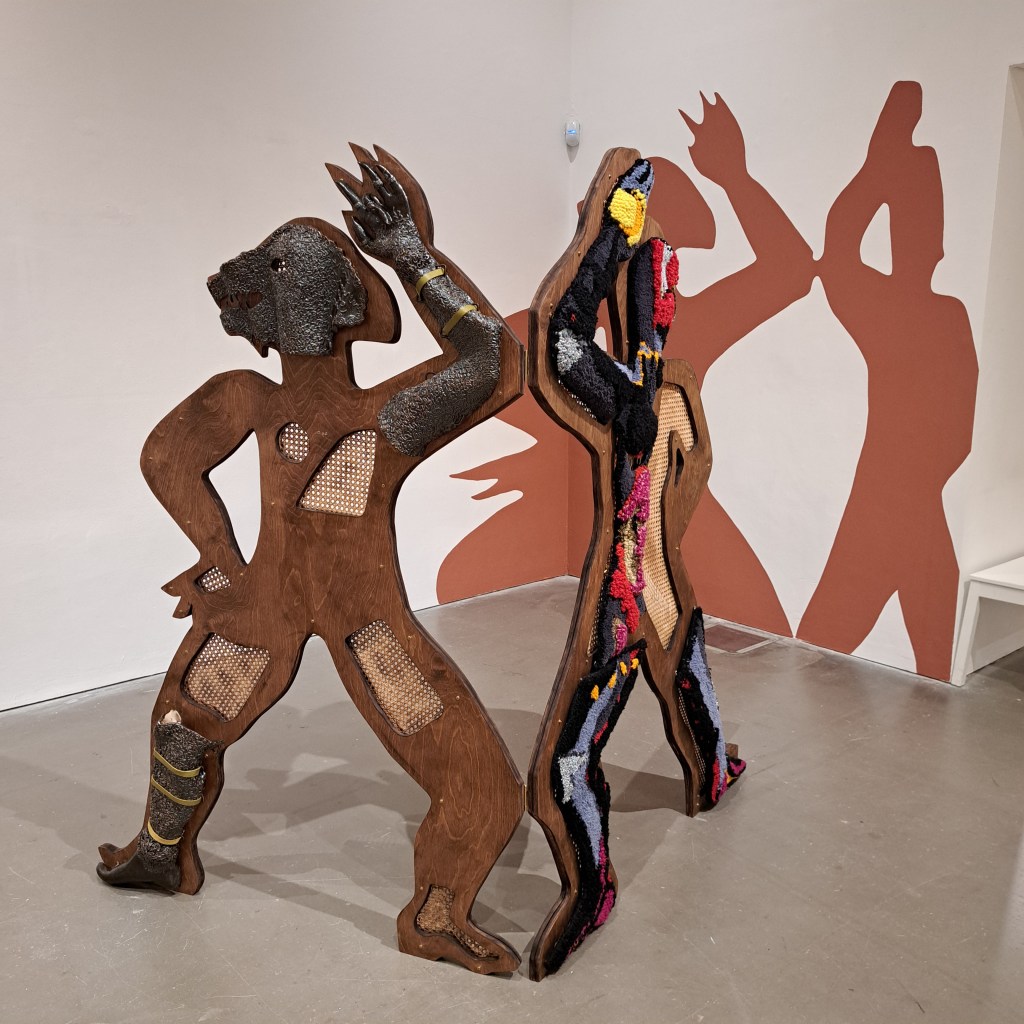
Anna Pearch and Anousha Payne: As She Laughs, 2021

Pearch and Payne’s work As She laughs, 2021 collaboratively combines their ceramic and textile practices, and draws together their shared interest in folklore and myth. It ‘plac(es) women at the centre of the action to create new myths‘ .

(Exhibition notes)

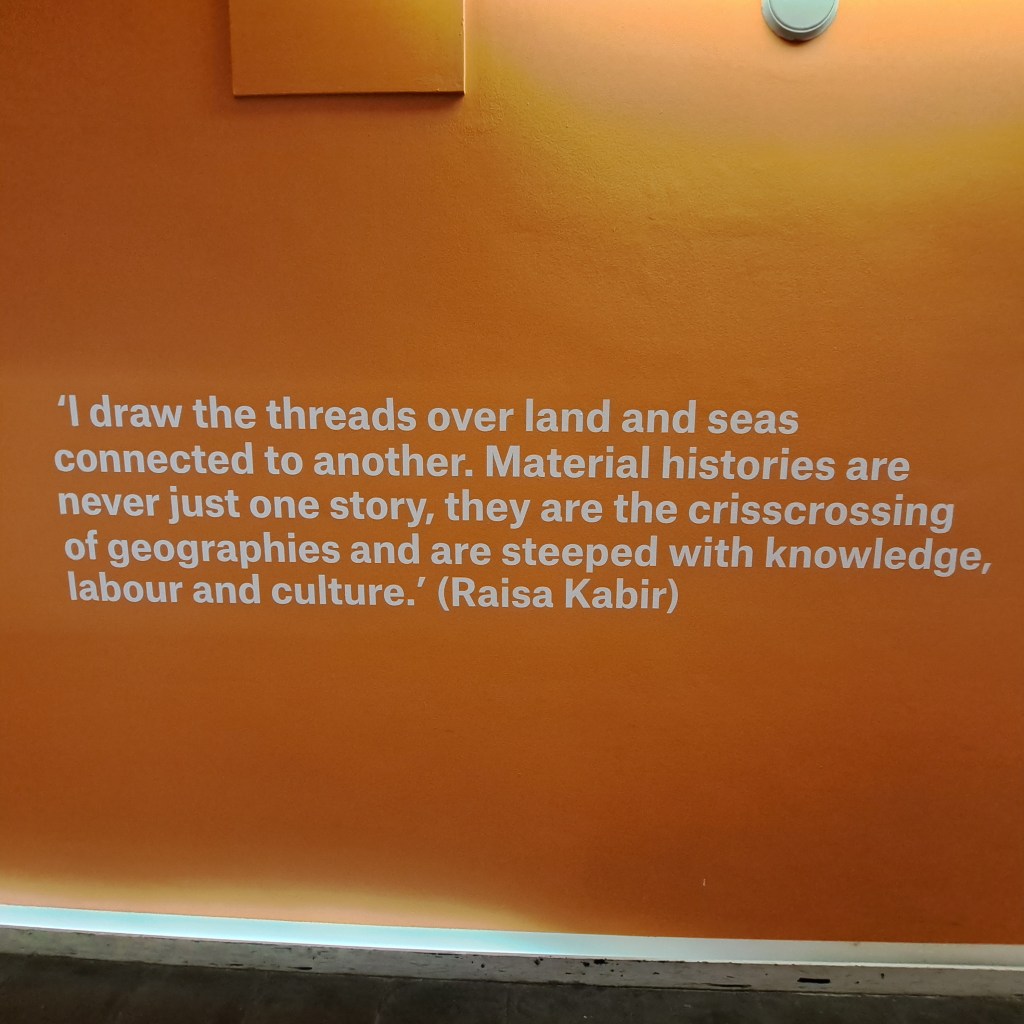
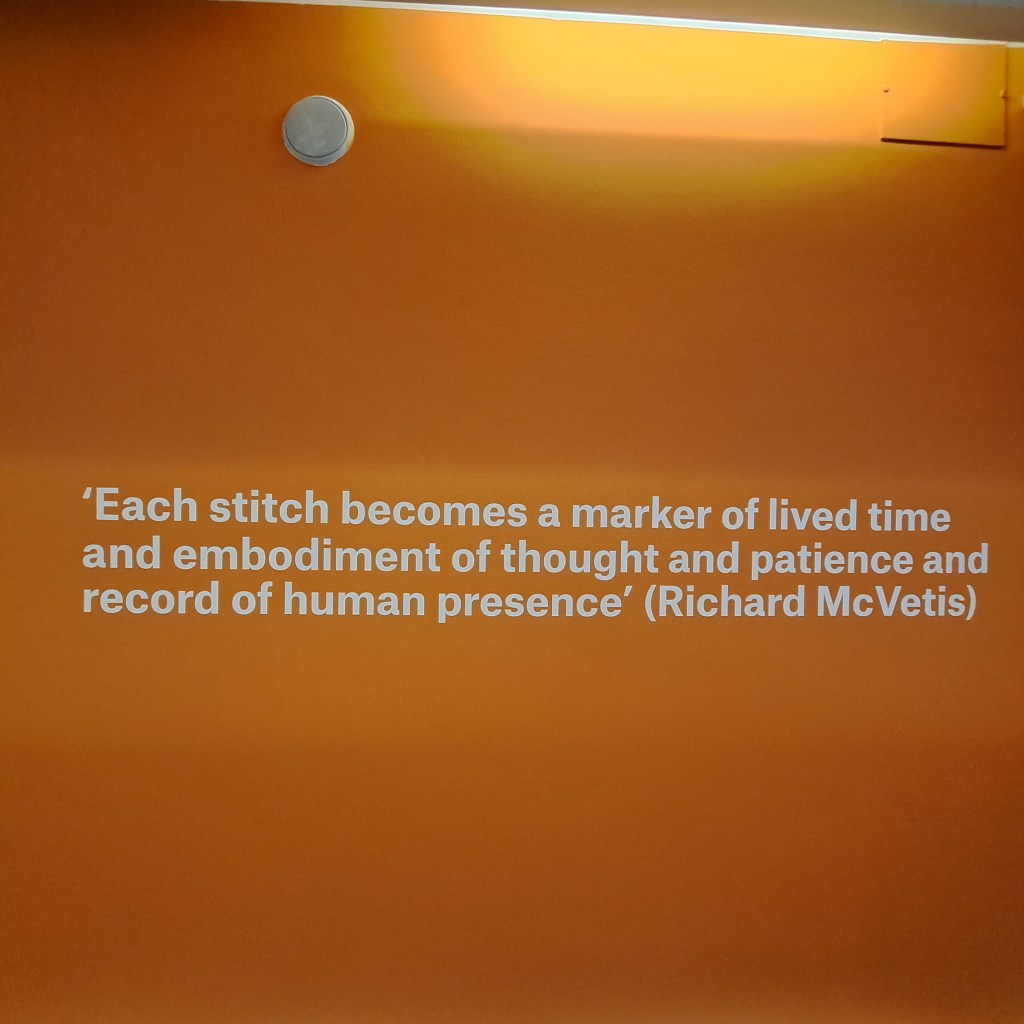
There were some fabulous thought provoking quotes from the artists on the exhibition walls.

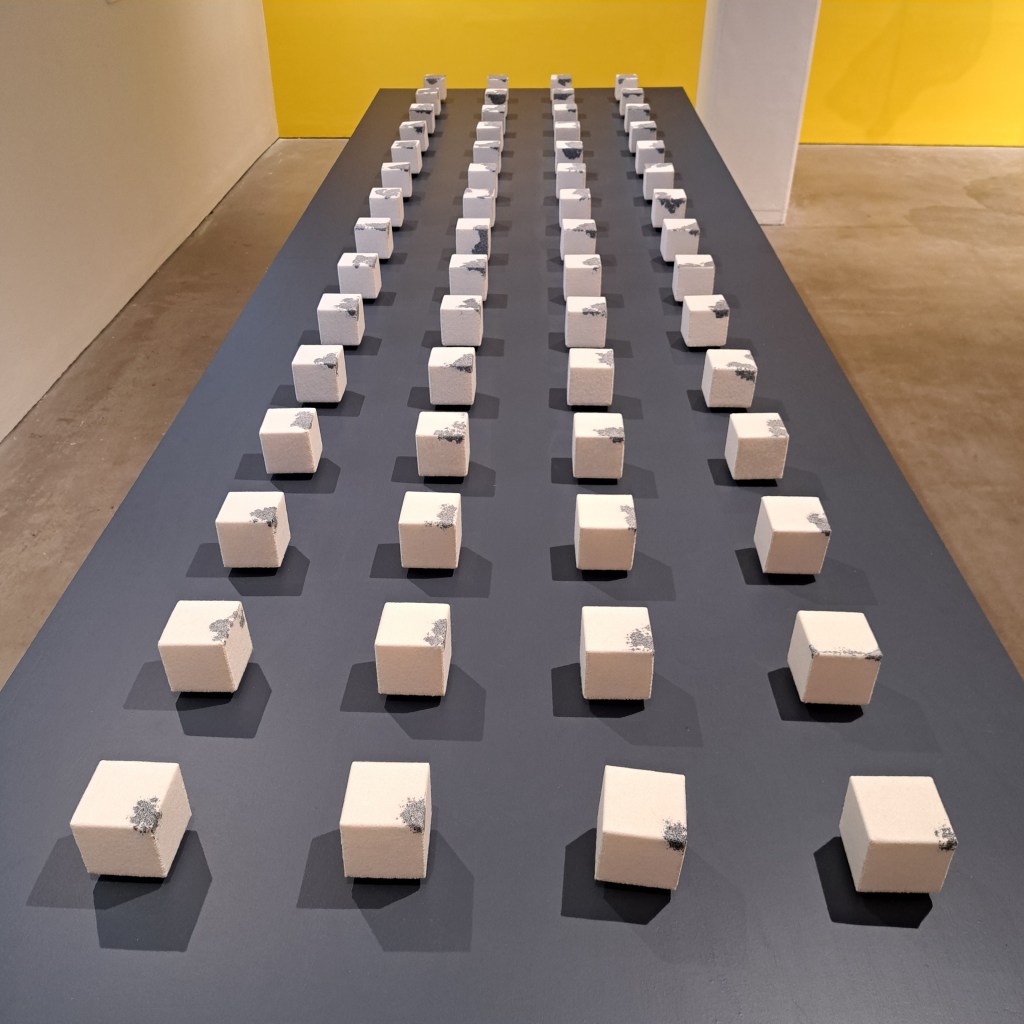
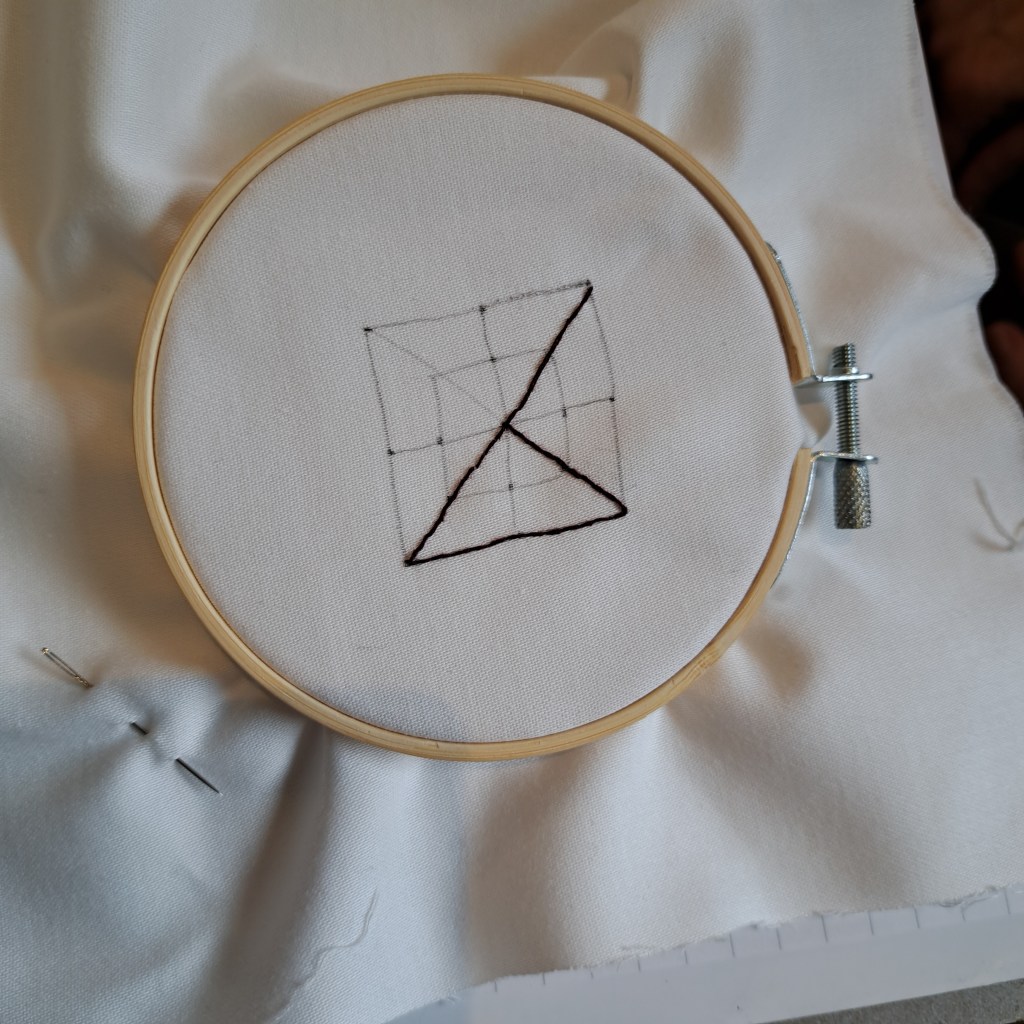
Richard McVetis: Variations on a Stitched Cube, 2017
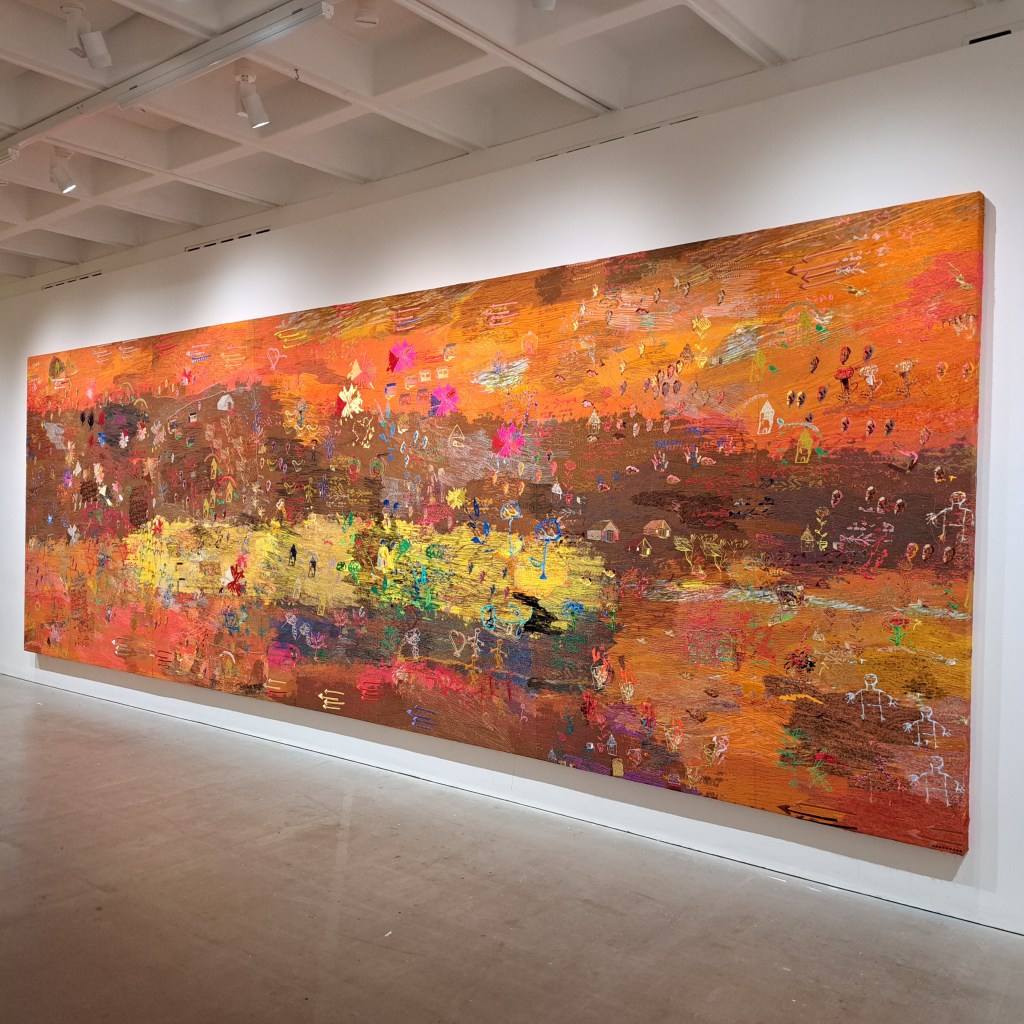
Alice Kettle: Ground, 2018. Stitch and life jacket material on printed canvas
Detail from Ground, Alice Kettle, 2018
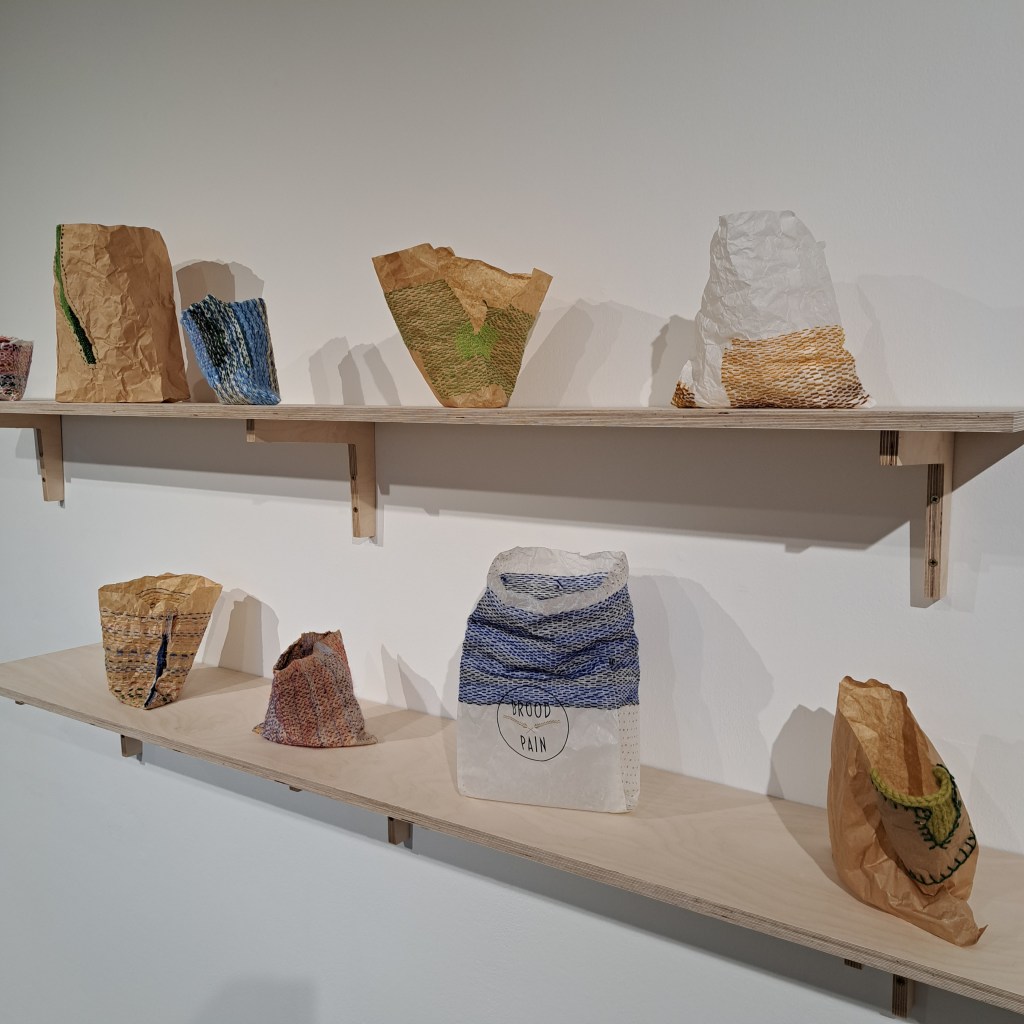
Celia Pym: Selection of Mended Paper Bags

Back in the session, I went over the material covered last week namely apotropaic marks and poisonous plants so that those that had missed that information were up to date. The group got stuck into stitching their protective marks. We had discussed that these could make up a page in the atlas or be scattered throughout it, or both

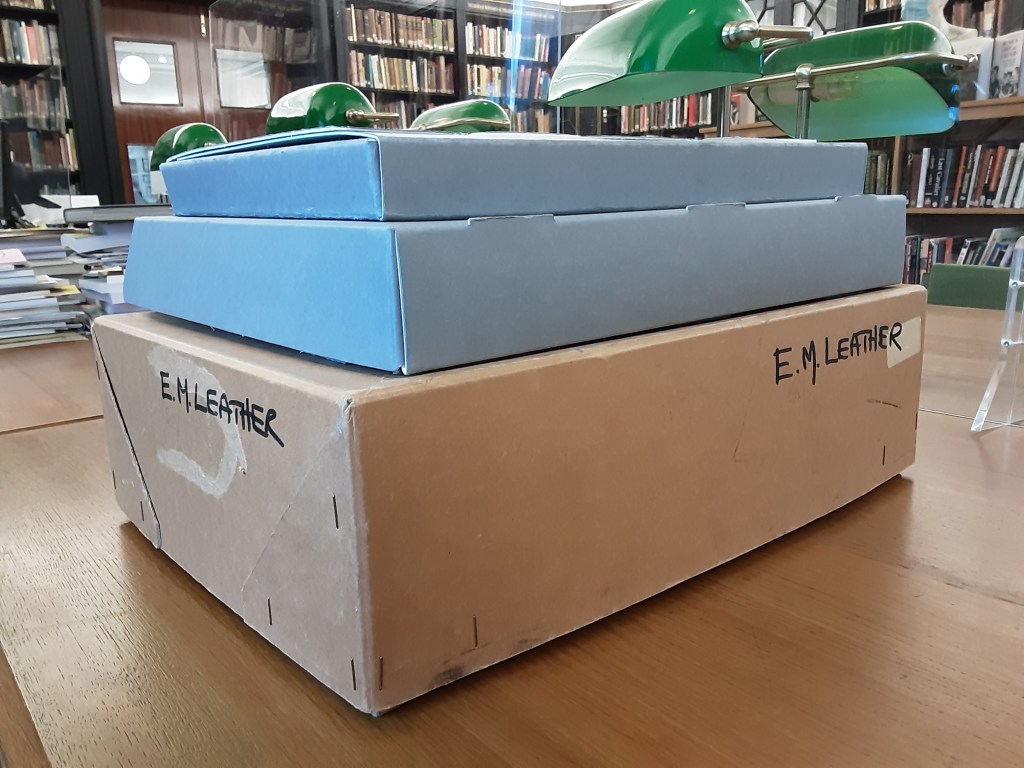
The group had also previously decided the size of the pages for the final atlas and had plumped for making it the exact same size as Ella Mary Leather’s Notebook in the Vaughan William Memorial Library Archive. This idea has a lovely resonance through history! If our Atlas becomes too thick, we decided we could also break it into volumes.

We had also had various discussions through the weeks about seam allowance on the pages and I had given everyone a page template to work to. I had cut out pages from Valencia linen, as used in my previous project ‘The Lugg Embroideries’, and this is a delight to stitch on. I also prepared some pages from material given to me by Textile Artist Helen Vine, which I had dyed with a walnut dye she had also provided. I explained that participants were free to use their own preferred materials for pages. I want participants to feel they have as much creative license as possible, so the only limitations are page size and seam allowances!  

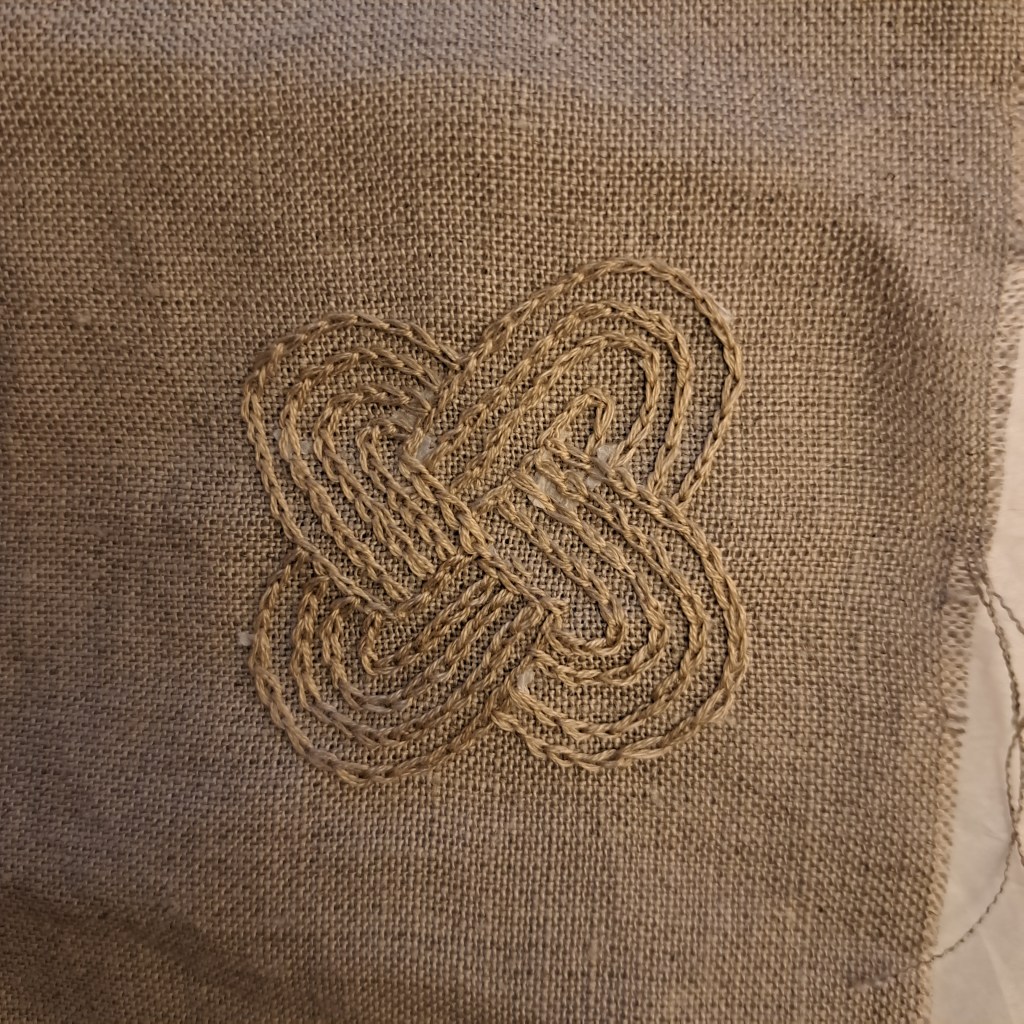
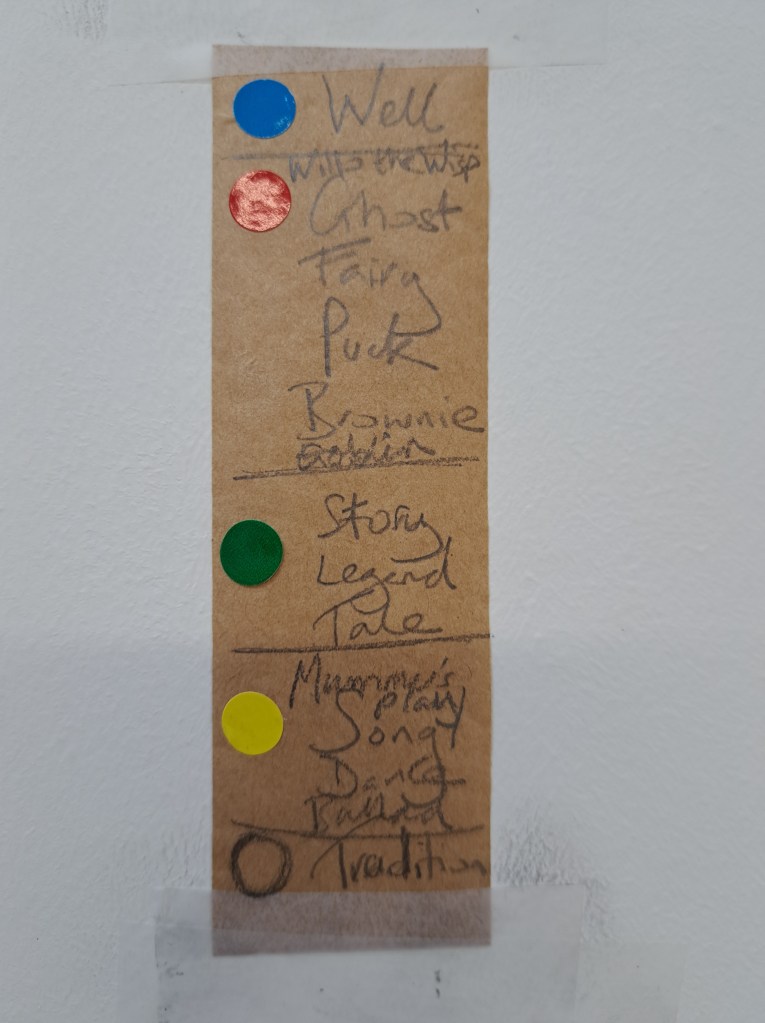
The group stitched whilst I shared information about the 34 places linked to stories of fairies, Puck, Willo-the-Wisp, ghosts and goblins in Herefordshire as gleaned from Folklore of Herefordshire (Leather, 1912). Below are some of the finished apotropaeic marks; we must be well protected from evil in the Council Chamber today!

Meg taught us about using Fray Stop, explaining her particular technique for edging her intricate embroidered figures before they will be stitched onto her Atlas page. I am very grateful to her for sharing her knowledge. Additionally we learnt that ‘Frixion pens ‘ are great for drawing a design straight onto fabric, which can then be made to disappear with heat if it is not already covered up by stitching. Meg cautioned us to practice first!

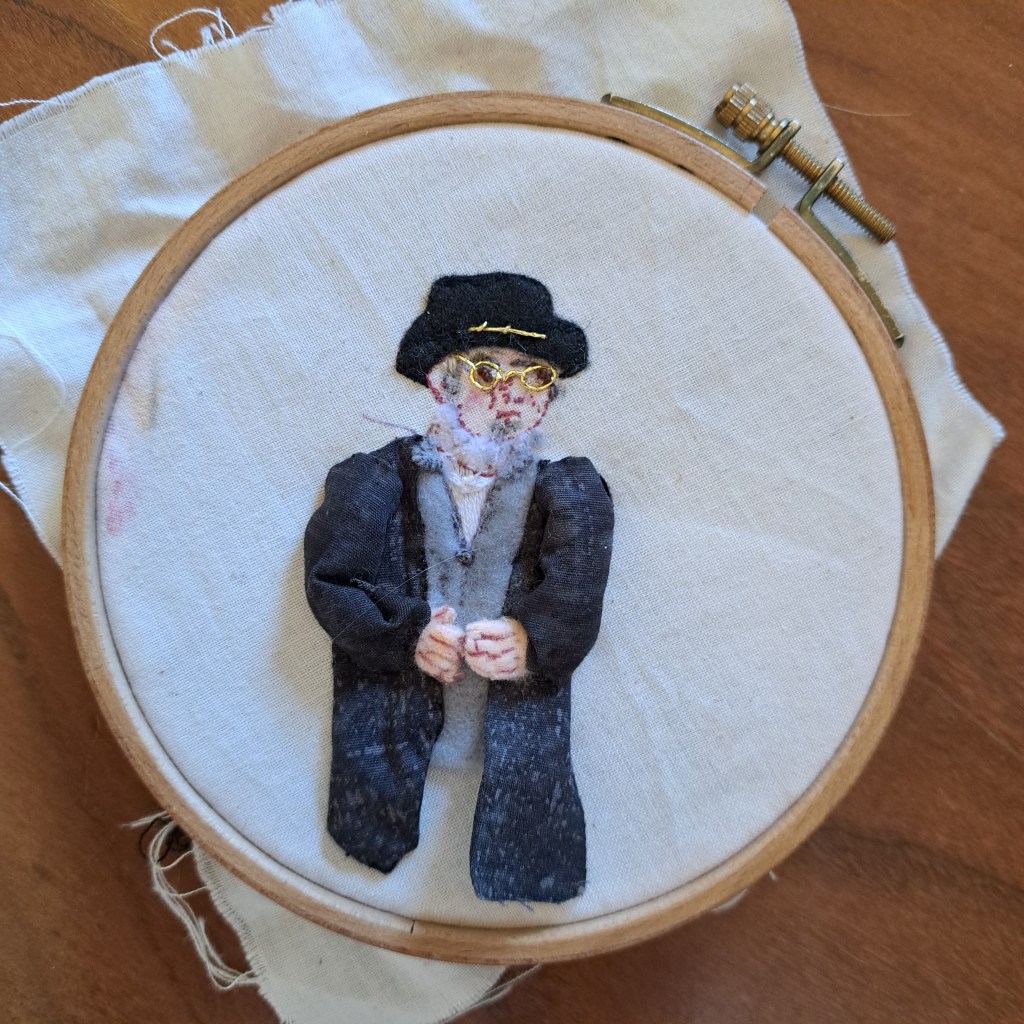
I was surprised to see the embroideries taking sculptural form away from the fabric base. Below is Meg’s work in progress, the figure of William Colcombe who assisted Ella Mary Leather in Weobley with songs and stories.

Meg’s work in progress

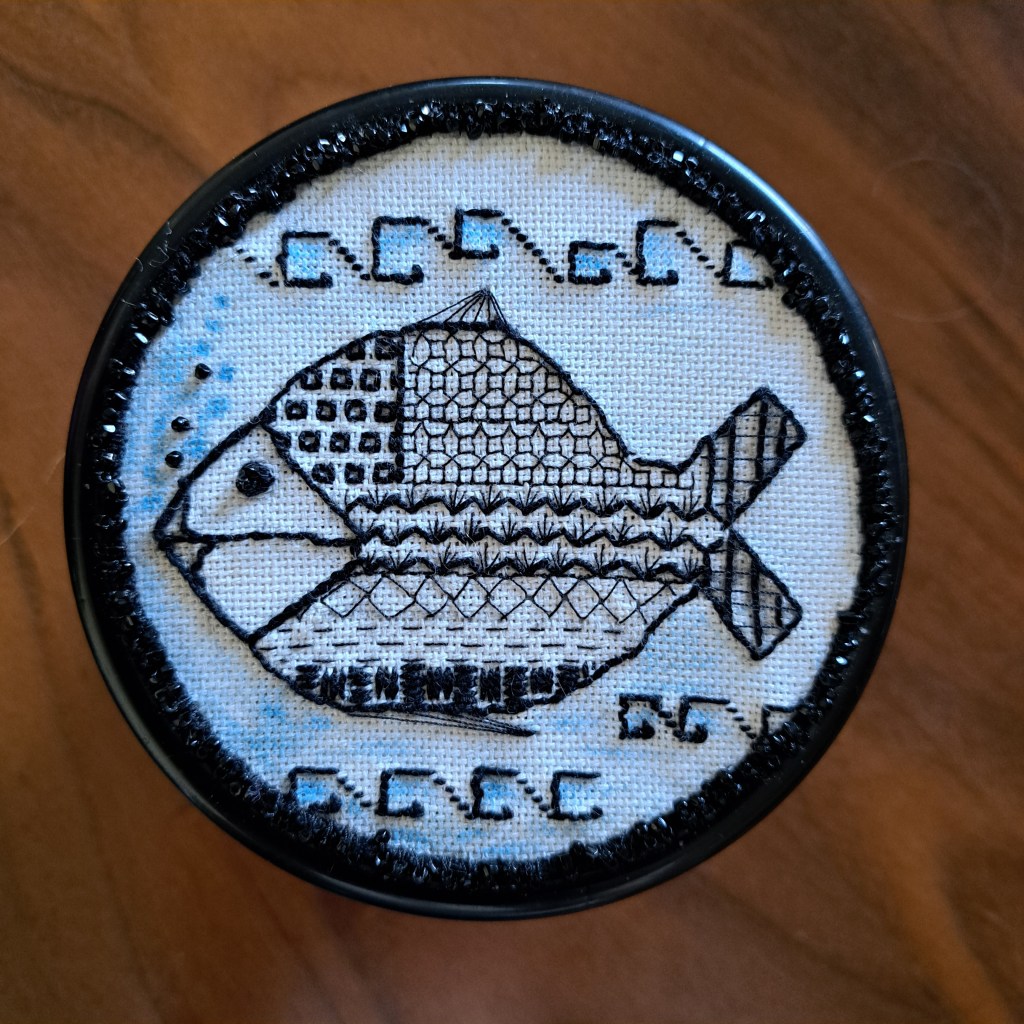
We also discussed blackwork and Meg happened to have this example in her work bag! Another group member is considering using blackwork stitching in their response to place.

Meg’s blackwork example

2nd October 2023 – Stories of devils & demons, apotropaic marks and poisonous plants (Session 3)

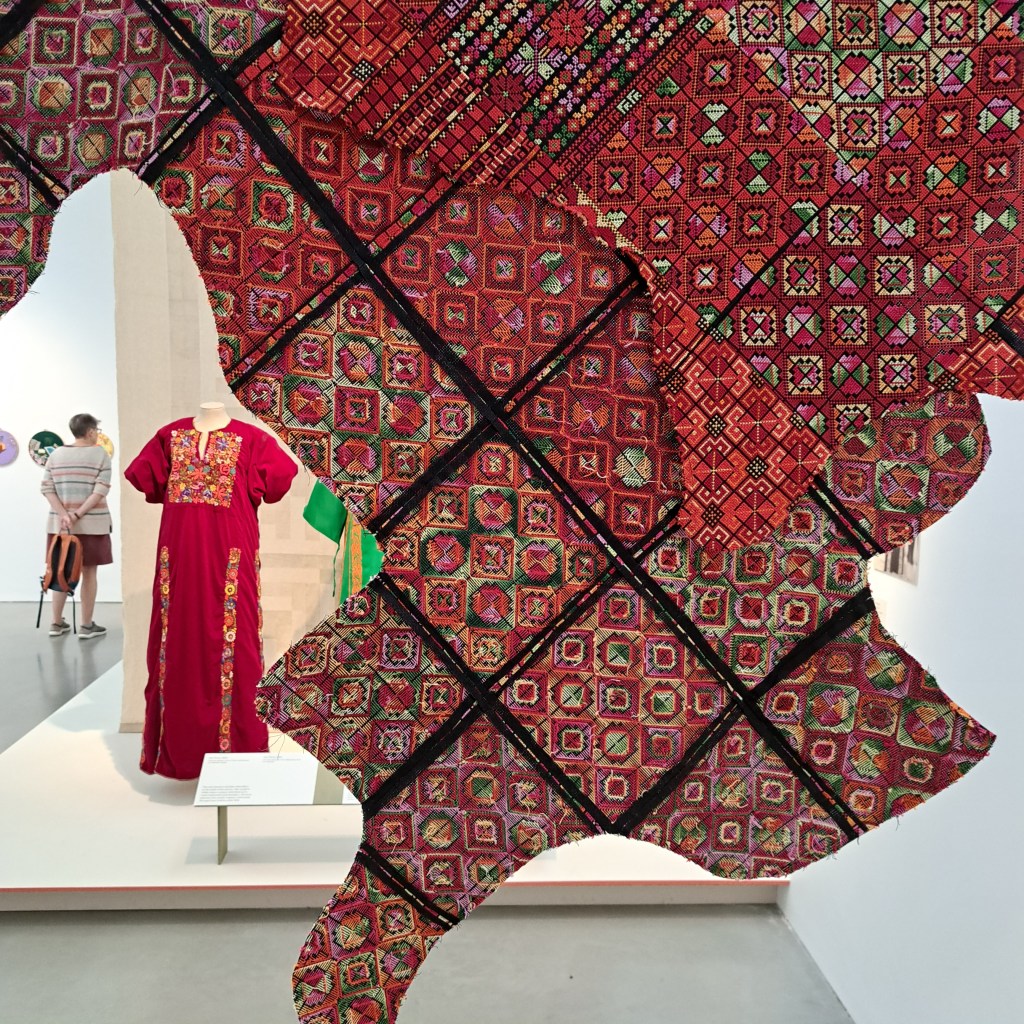
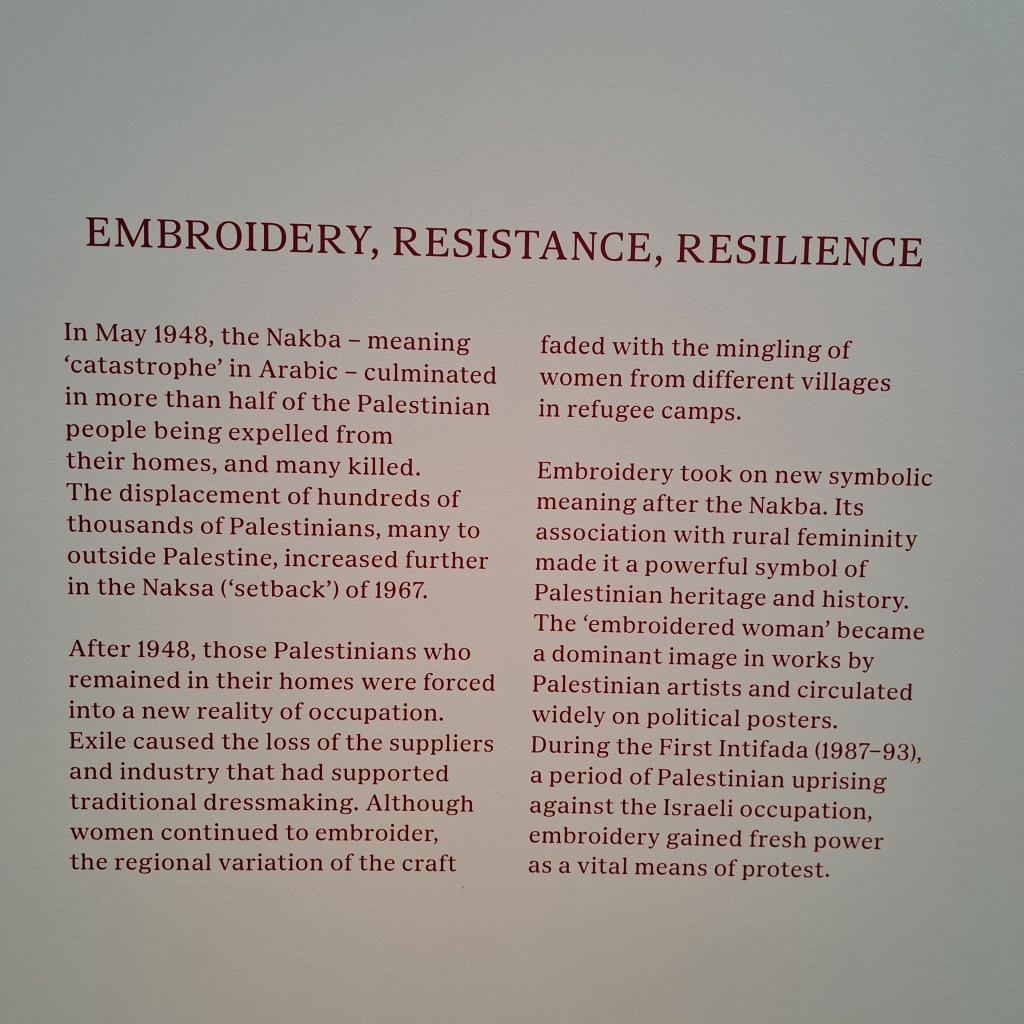
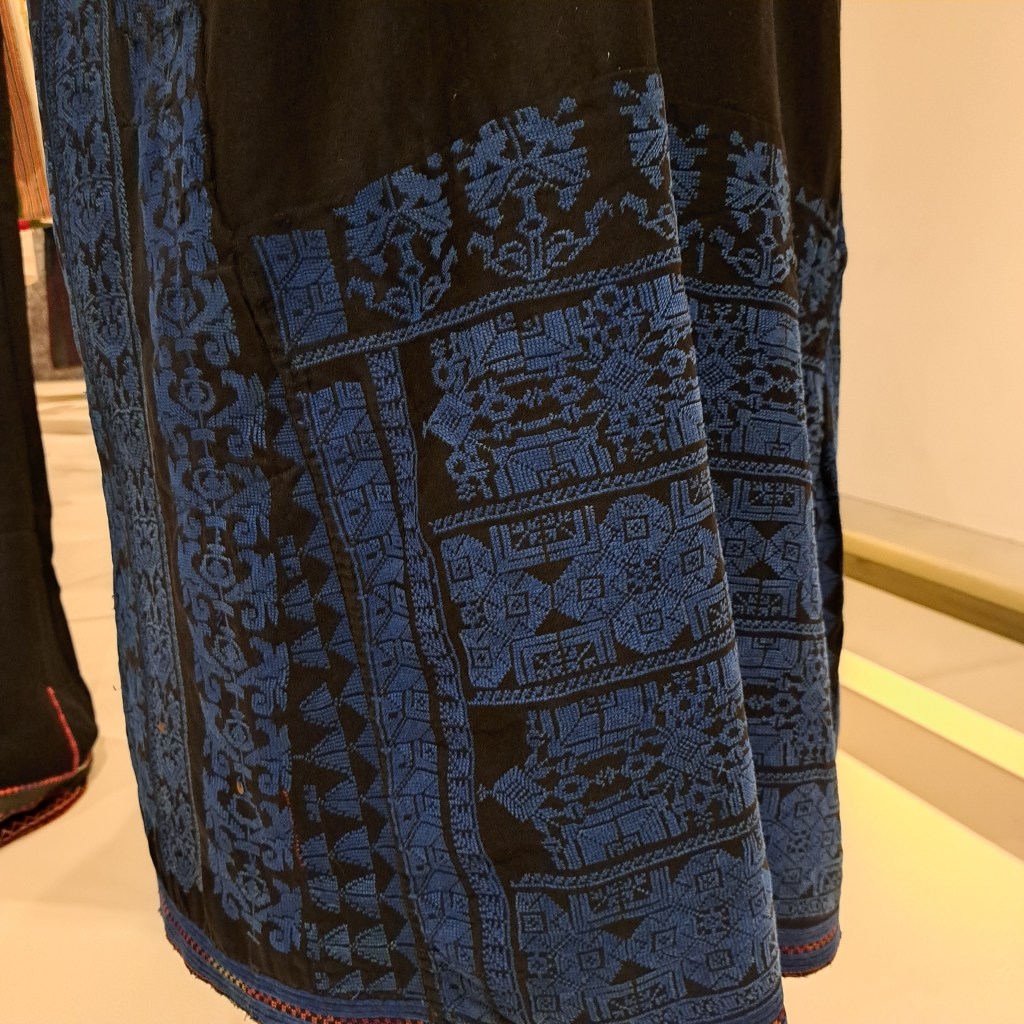
I started the meeting showing embroidery that I had seen in an exhibition at Kettles Yard, Cambridge in the summer. It was called Material Power:
Palestinian Embroidery
. (It has since travelled to The Whitworth in
Manchester and new embroideries have been added in the light of the awful conflict and tragedies ongoing in the Gaza).

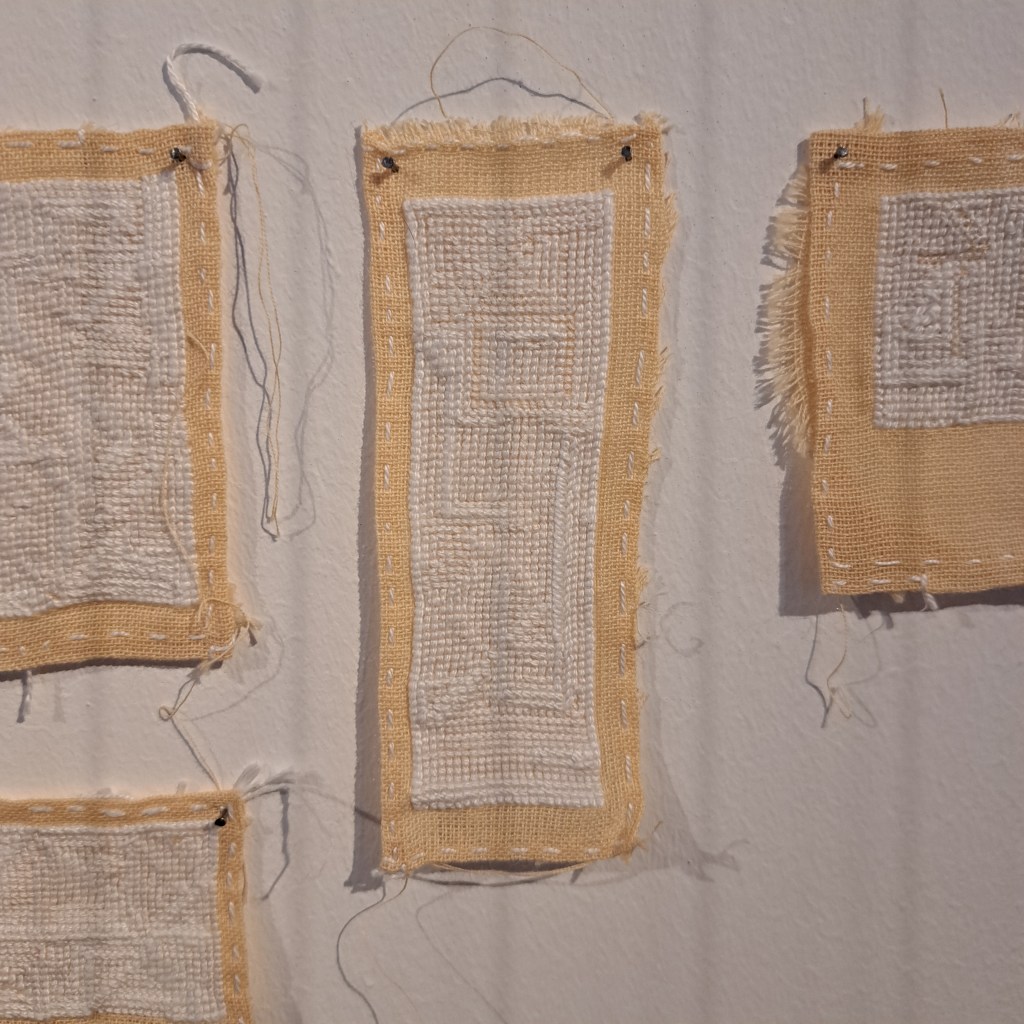
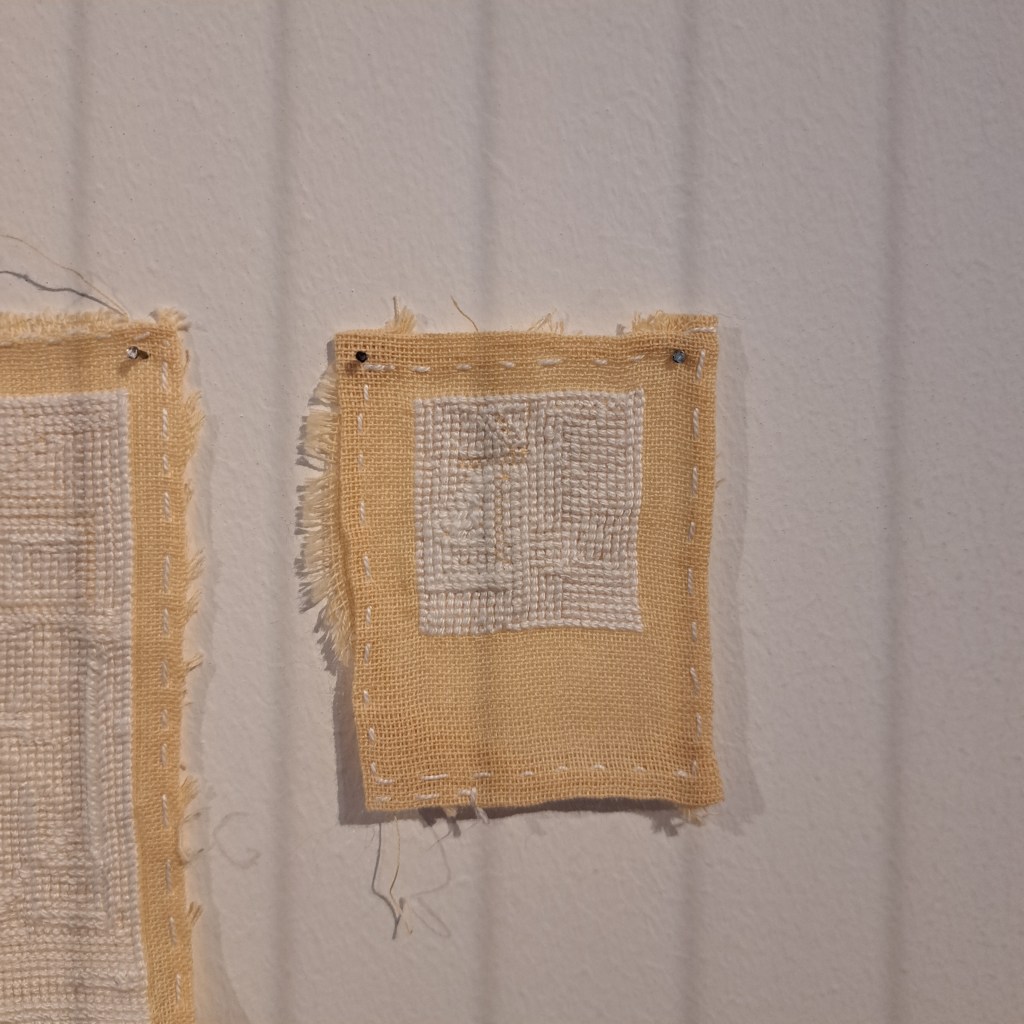
I highlighted the white embroideries of Madj Abdel Hamid, which had caught my eye in the exhibition, despite their small scale. He stated he was
reflecting on embroidery as labour and ritual practice, one that he had found himself performing daily and his works had become maps demarking time. The title of each one referred to when it was made. He saw it as ‘reactivating a traditional medium as a mode for engaging with the present – and as a timeless gesture, an accumulation of form, meditative and abstract’.

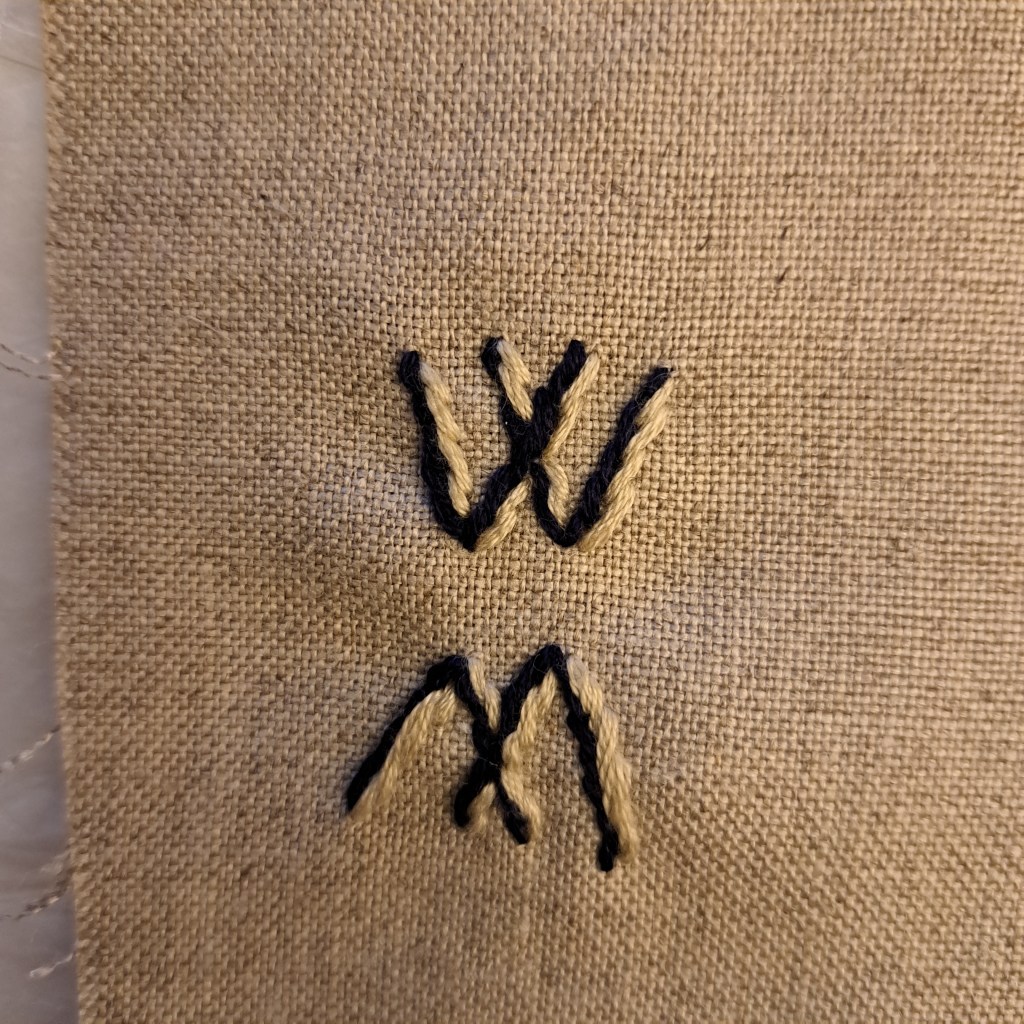
Focussing on ritual, next I showed different types of apotropaic marks or ritual protection symbols, found in medieval buildings often over fireplaces, doorways and windows placed to keep witches, demons or evil away. The Greek apotrepein means “to warn off” from apo – “away” and trepin “to turn”. Rhys Griffiths, Senior Archivist from HARC had sent me an image of one – a daisywheel – he had recently seen carved on Colchester Castle, and I had attempted to stitch it, when visiting The Museum of Witchcraft and Magic in July. I also showed an image of concentric circles carved into wood of the old Mill at Mortimer’s Cross that I has seen in January 2020. The third common type of mark is the Marian symbol which is the letter AM, M or V and thought to refer to the Virgin Mary. A fourth type is the pentangle which looks like a star but I could find no record of this recorded in the UK in a public response survey carried out by Historic England. 
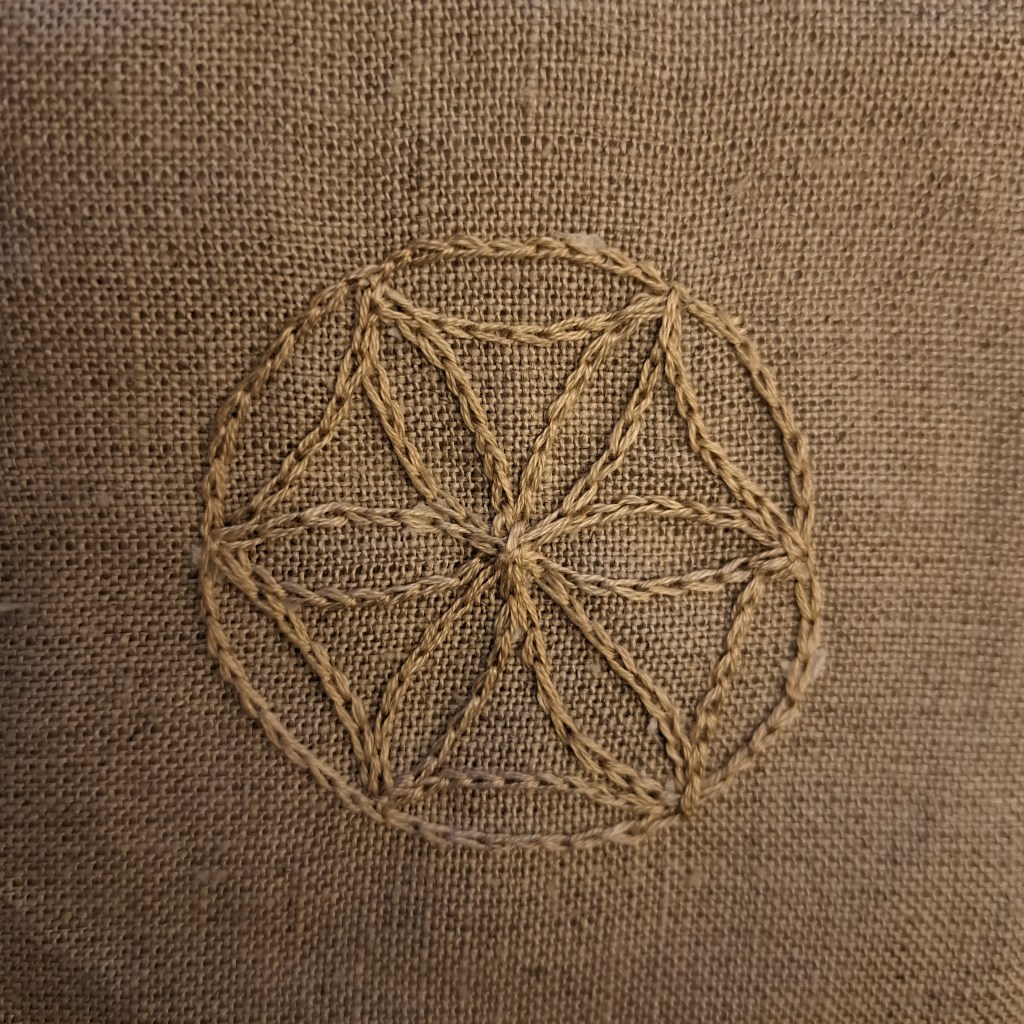
I invited participants to stitch a protective symbol, if they wished, whilst I presented the nine places related linked with stories of devils and demons as found in Ella Mary Leather’s book.

To end, I shared information and a handout about poisonous plants found in Britain. The purpose was to ensure that if participants decided they might like to gather plant material from their chosen place in order to make natural dyes for threads and fabric, that they would be aware of which plants to avoid or be cautious with. Mainly this meant not eating them, although some plants can also cause burns. It was a surprisingly long list and I encouraged participant to re-read the handout before picking plants.  A rule for gathering natural dye materials is that only 10% or less of a plant should be taken. A piece of material needs its equivalent dry weight in plant materials for the dye bath.

We discussed the possibility of further into the programme having a session dedicated to trying out dyeing methods if participants wished, and Helen who has experience in this area, generously suggested she could help me with running a session such as this. She explained that a new way of mordanting is to use soya milk, which avoids using harsh chemicals. Hence I said participants might choose to collect some materials in the place that they are investigating with a view to making some natural dyes.

It was observed by Annie that some of the plants on the list were also used as medicines, and that size of dosage was a factor. And this itself suggets another topic of ‘Plant lore’ for another week!

25th September 2023 – Folklore Material (Session 2)

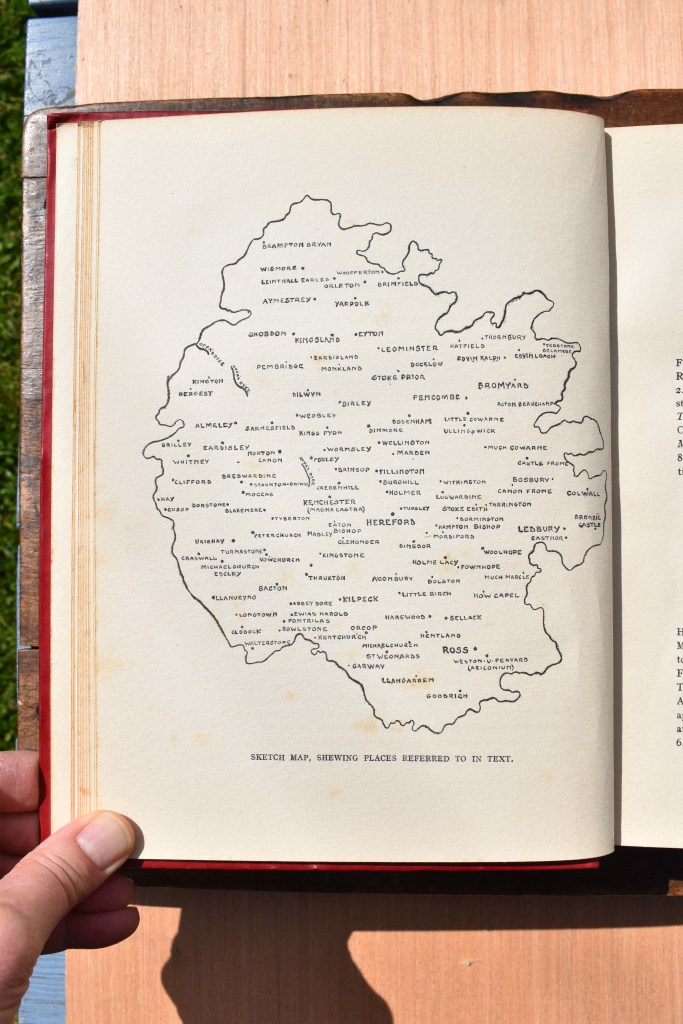
This session introduced the scope of the folkore material as collected and collated by Ella Mary Leather. I had examined her book Folklore of Herefordshire (1912) and her Notebook in Vaughan Williams Memorial Library.

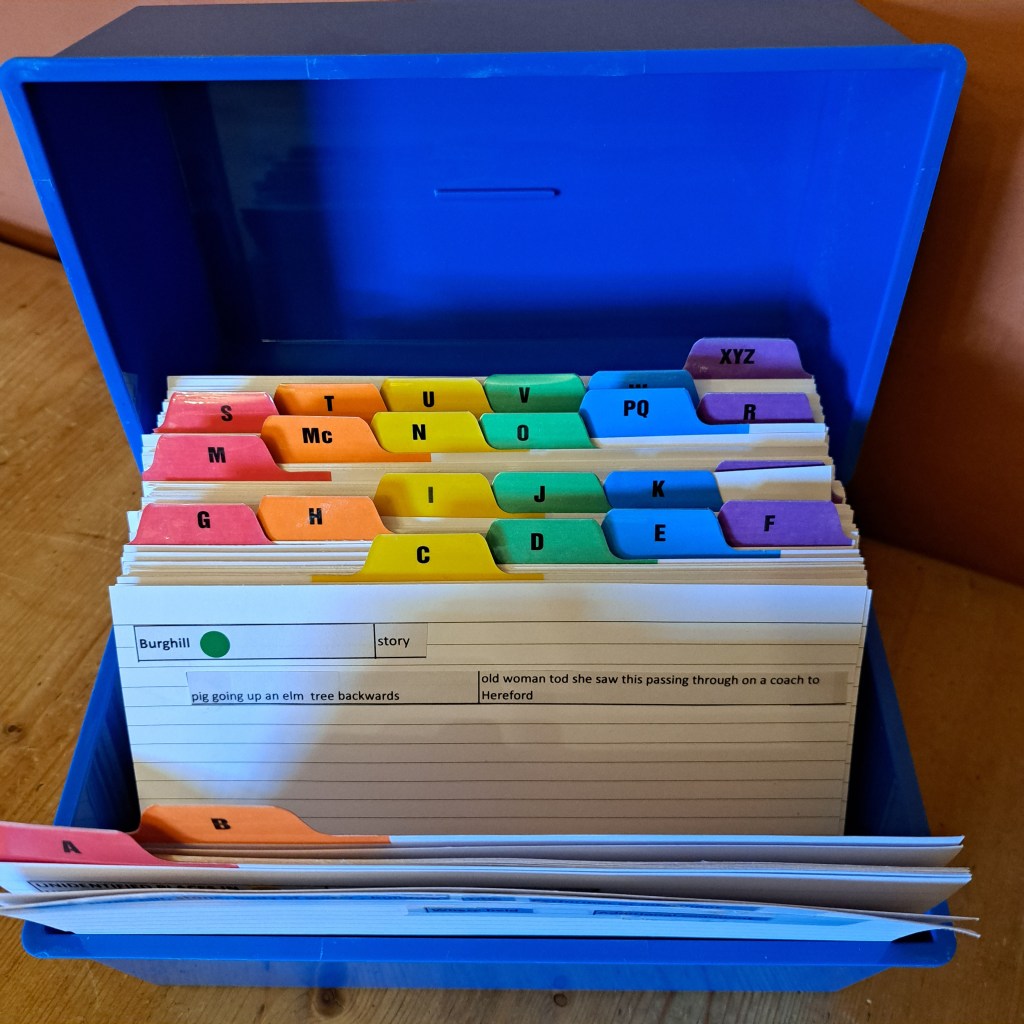
From these I had created two spreadsheets of topics/categories of folklore or songs linked to their respective Herefordshire places, namely towns, villages, and hamlets etc. I also prepared a box file listing the folk items by alphabetical place so participants could easily flick through to choose an individual place that caught their attention.

At the beginning of these meetings though, I wanted to introduce different embroidery or stitching styles used by artists, mainly to encourage people that mark making with thread can take many forms and that I considered there is no wrong or right way to do it and to encourage experimentation. I wanted the walking in place to be a kind of stitching too, with the ‘body as the needle’ and the ‘ground as the fabric’ with the revisiting of often immaterial ‘commons’ such as folk stories or songs, in their associated place.

Today I showed images of Matthew Harris’s work which I had seen that weekend at Ruthin Craft Centre. I had not seen his work ‘in the flesh’ before so to speak, but had previously written about his collaboration ‘Field Notes’ with leading Britsh Composer Howard Skempton in an essay on music and textiles during my MA at Swansea (Individual proposition for a creative venture: a critical examination of the interrelation beween textiles and music as a liminal space.) It was a thrill to finally see it.

I started the folklore material exploration with a breakdown of all the topics linked to place, which I had pinpointed on a large map in my studio. In the image below, not all points were yet marked but I was visually taken aback even at that early stage to see just how much material there was attached to various places in the county. Understandably, this quantity was also daunting for my participants and so I explained that we would begin the year long project spending time examining the different topics and they did not have to rush to decide a place , and that I would rather the take time and choose something because it really sparked their interest.


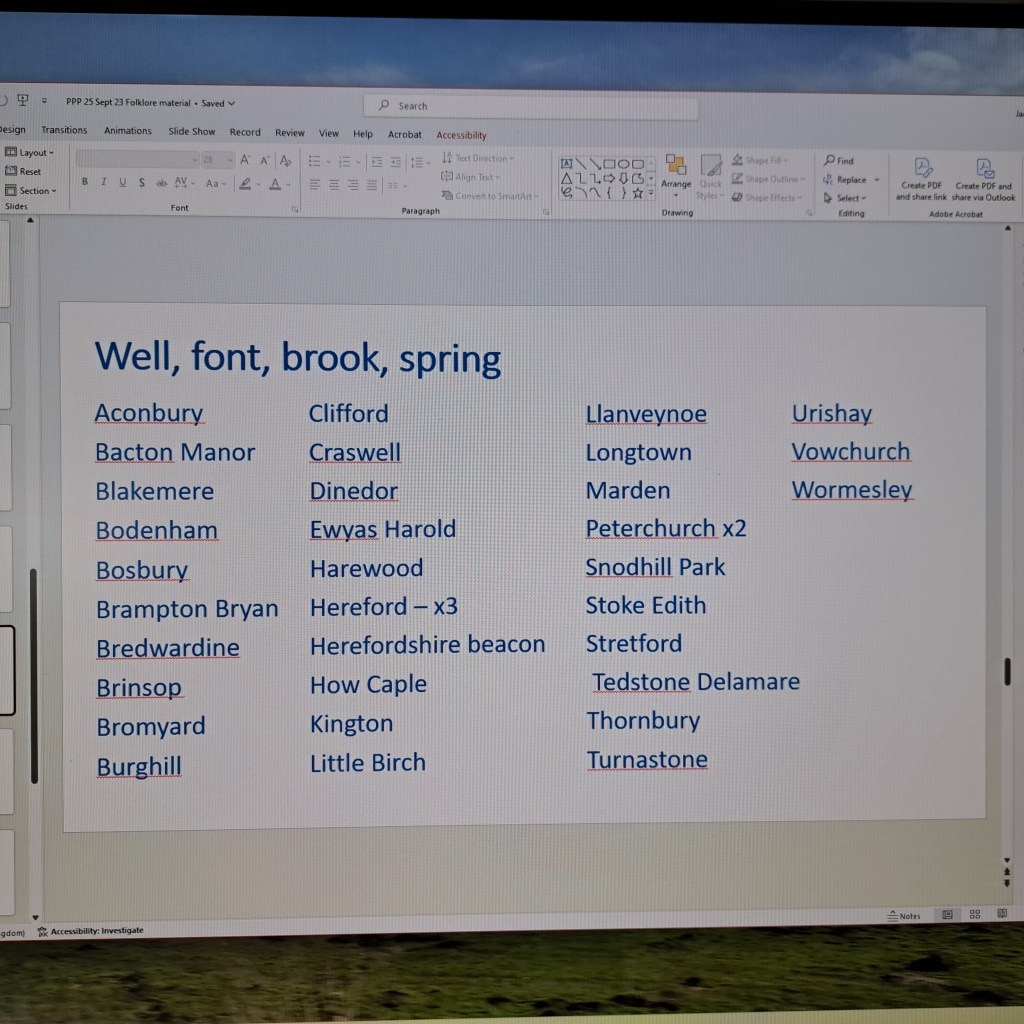
Today’s session then focussed more specifically on water related places such as wells, fonts, brooks and springs.

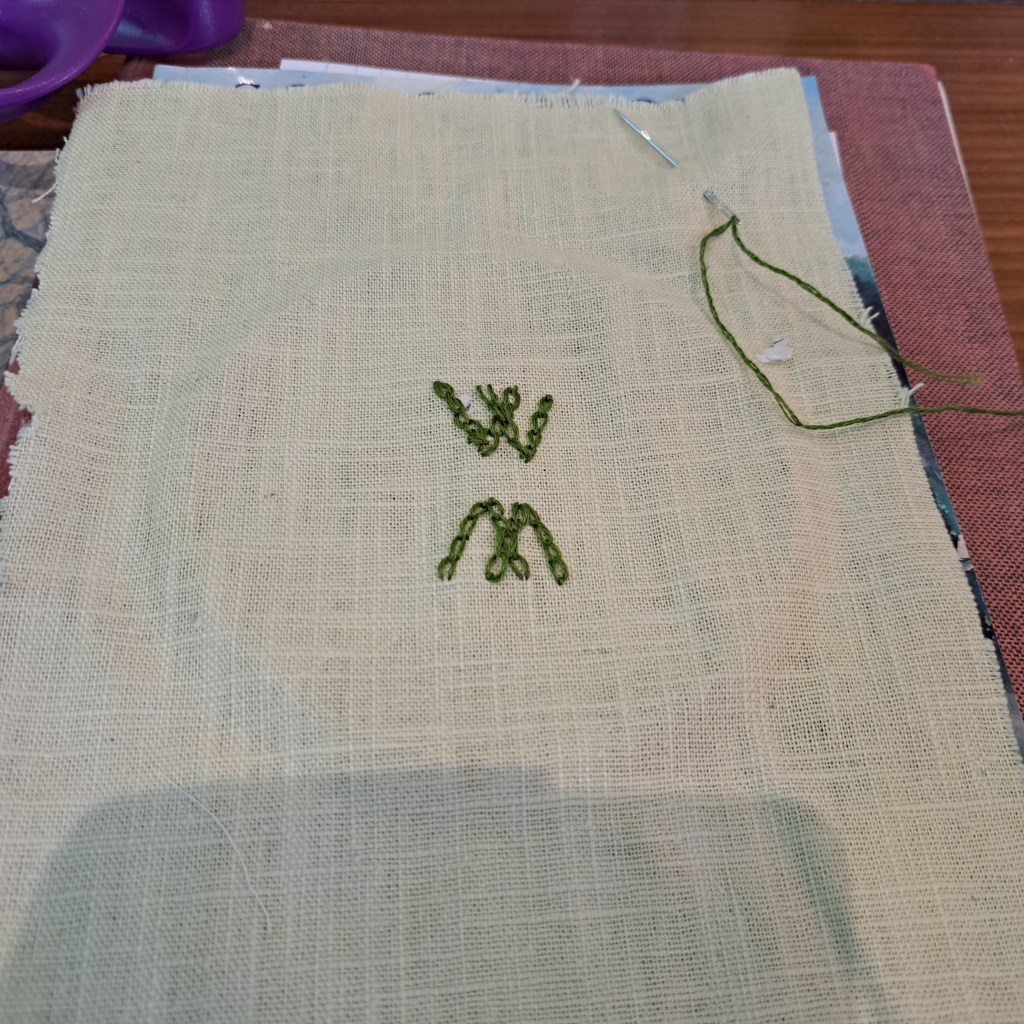
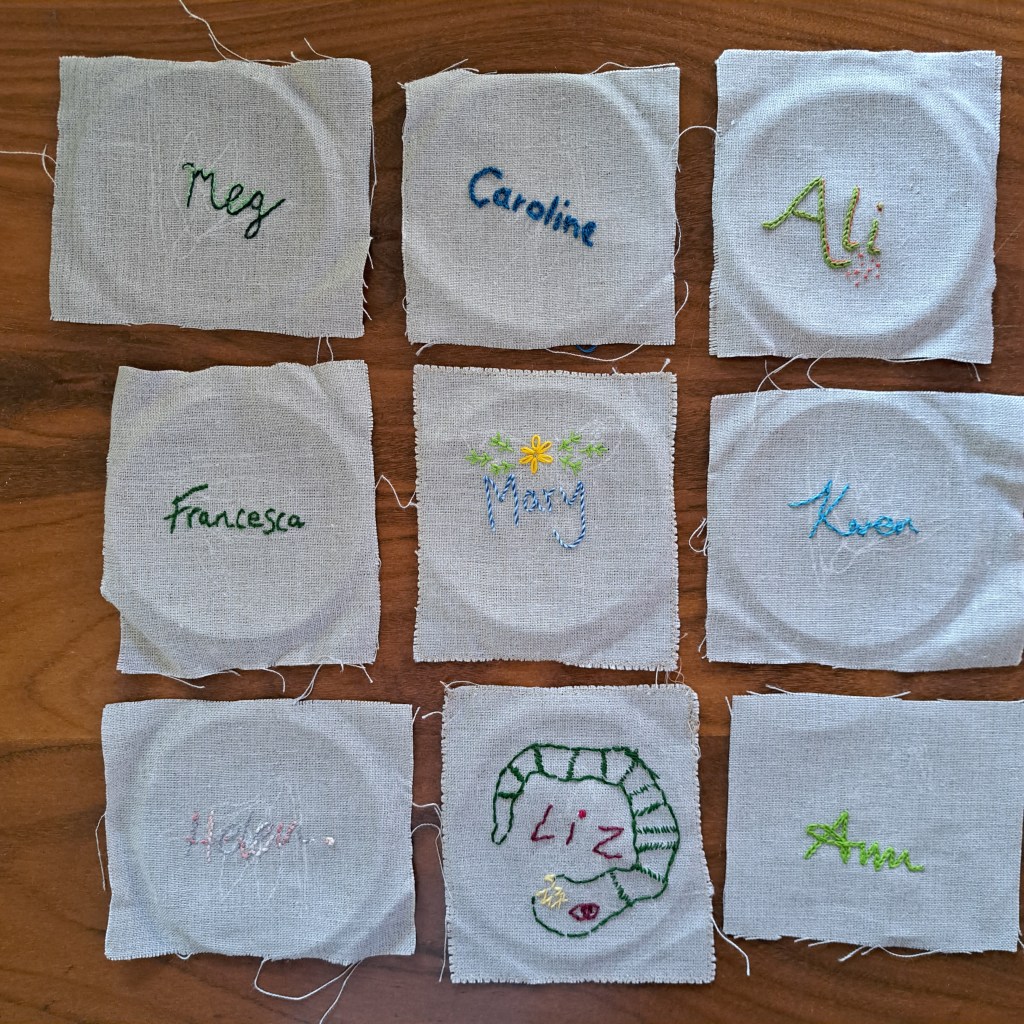
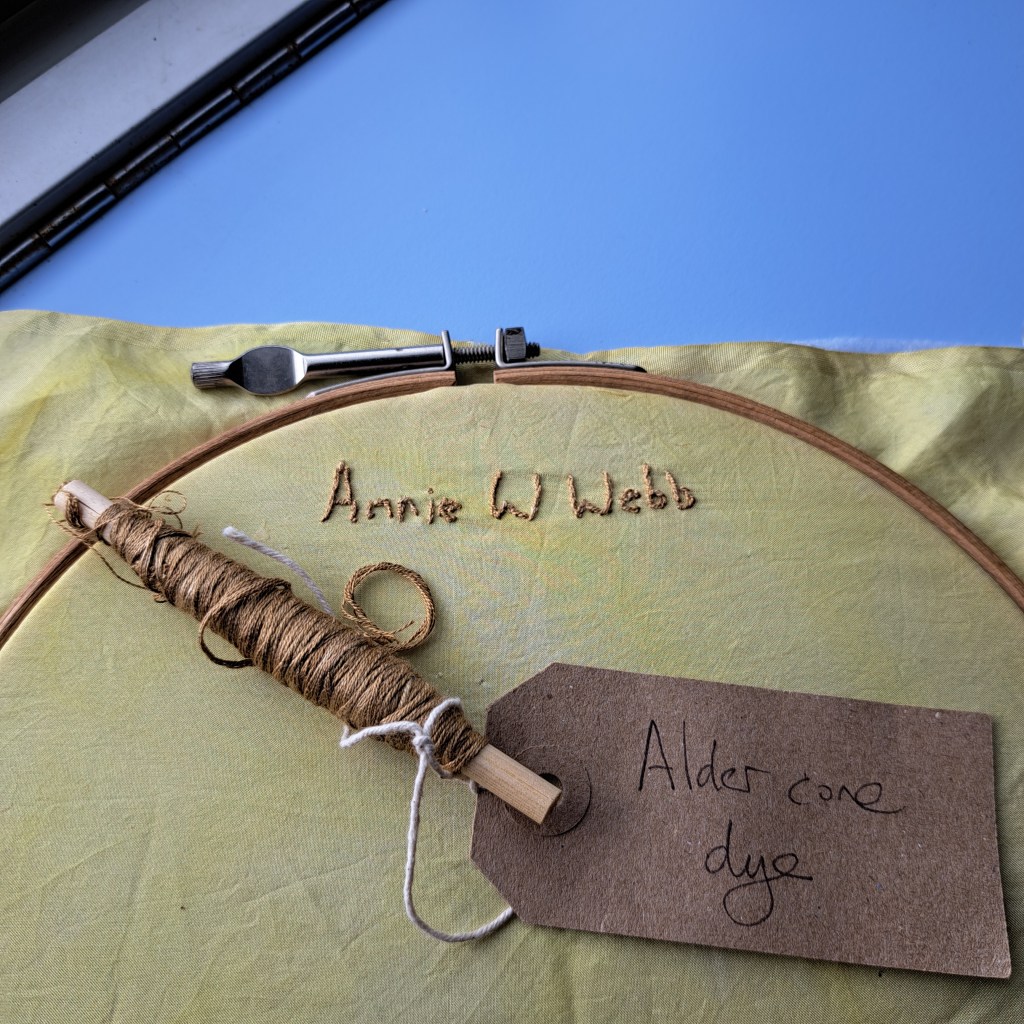
I had also brought along a large old Times Atlas that I had purchased locally for £1, and I suggested we use this as a ‘mock’ atlas to formulate and gather our ideas for our main stitched atlas. Whilst I presented the summaries of the folklore material, participants stitched their names on scraps of Valencia linen left over from my pilot project ‘The Lugg Embroideries’ (in which I had tested my proposd method of stitching and exploring heritage simultaneously in a textile group). This was a nice activity to just get started stitching.

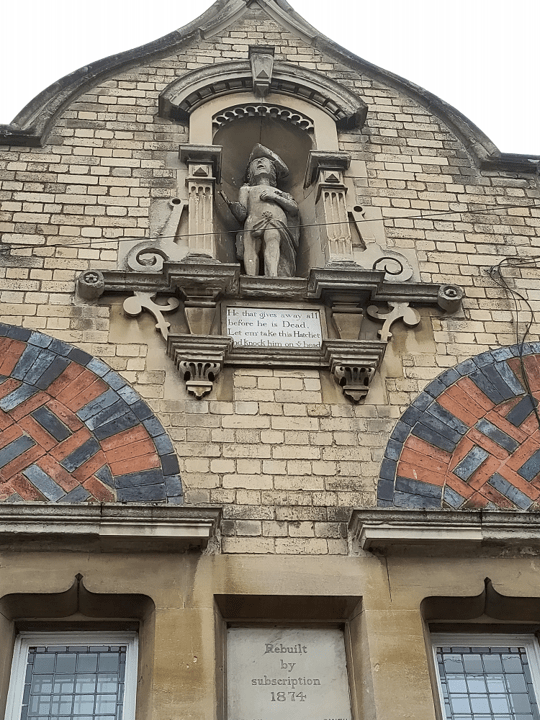
The idea was to put these on the cover of the ‘ideas atlas’. Annie had already sent me some photographs of two items in Leominster that she had seen on her intial exploratory walk, and that also featured in Ella Mary Leather’s book, namely the Almshouse and the Ducking Stool. I added her images to the ‘ideas atlas.’

Some of the group had already decided the place and associated folklore they wished to investigate and they shared their early work with the group, some examples shown below.

18th September 2023- The first session

Fifteen people come along to the first session and consent to take part in the research. This is exactly the number I have put on my ethics form, so this feels serendipitous! My husband sometimes wisely says ‘be careful what you wish for’, on this occasion it has worked!

The group will be working to co-research the places where Ella Mary Leather collected folklore and folksong. She originally worked with her community to collect records. We will be co-creating a stitched atlas which will be exhibited next year in Leominster Museum. This will document our explorations of the places we choose to focus on.

There is a lot of material in Mrs Leather’s book, so somewhat daunting for participants to decide a place. Hence, I plan to break it down and focus on specific subjects from the book and archives over the following weeks. I reassure the participants that there is not a rush to decide what place to choose to explore. I am asking them to visit their chosen place a minimum of four times over the year, once for each season. Autumn does not finish officially until 21st December so there is plenty of time to decide! I would like them to choose a place or story or song that particularly captures their imagination.

We will be using hand stitch in the main as a method to explore and create the subject, but I tell them that I am also considering walking in place as a way of stitching with the body, where the earthy ground is the fabric instead, and their body is the needle. I have already given examples of other artists who walk trailing threads or see their body as a needle.

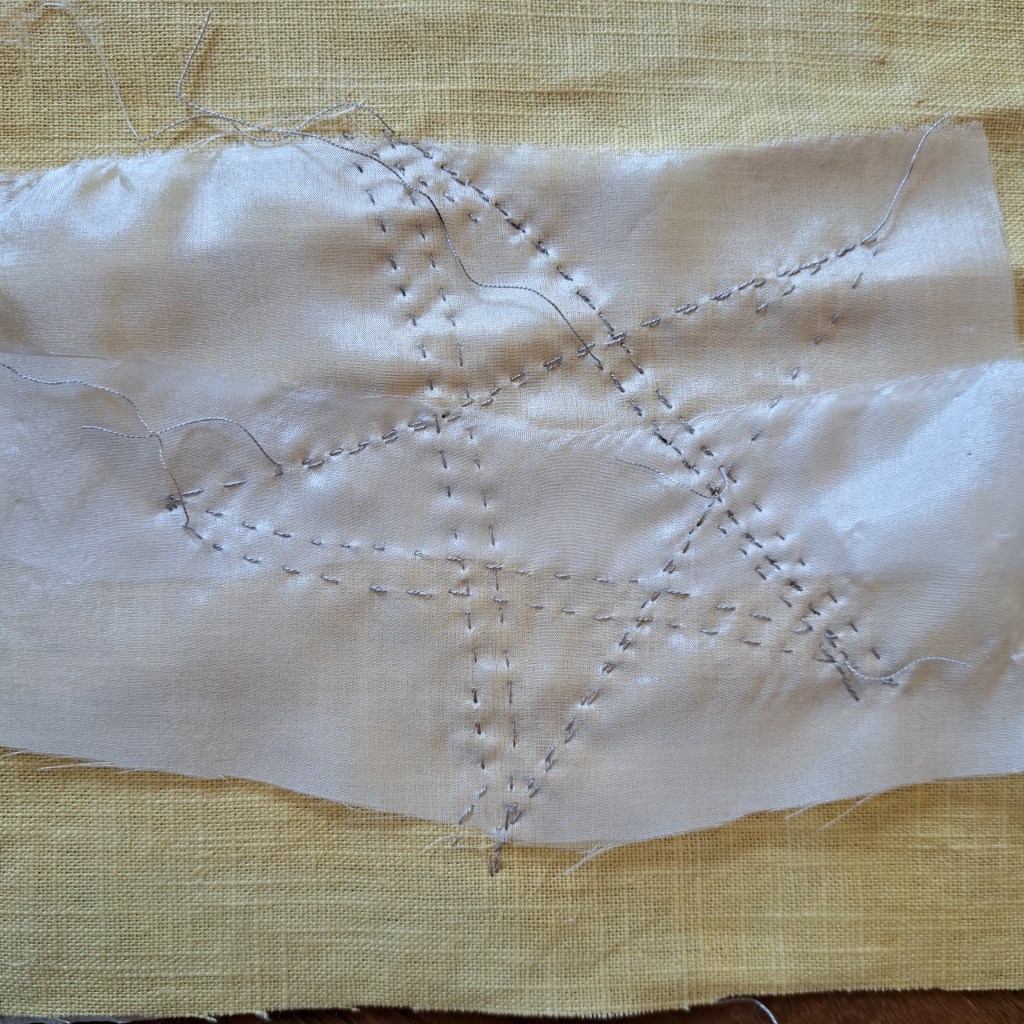
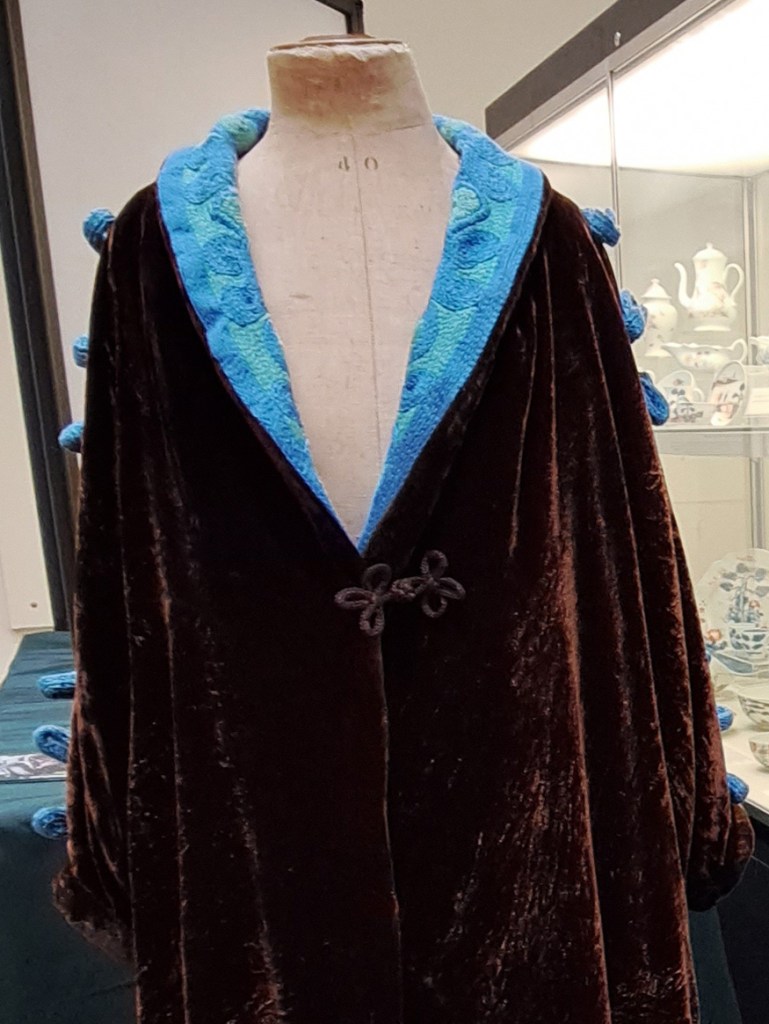
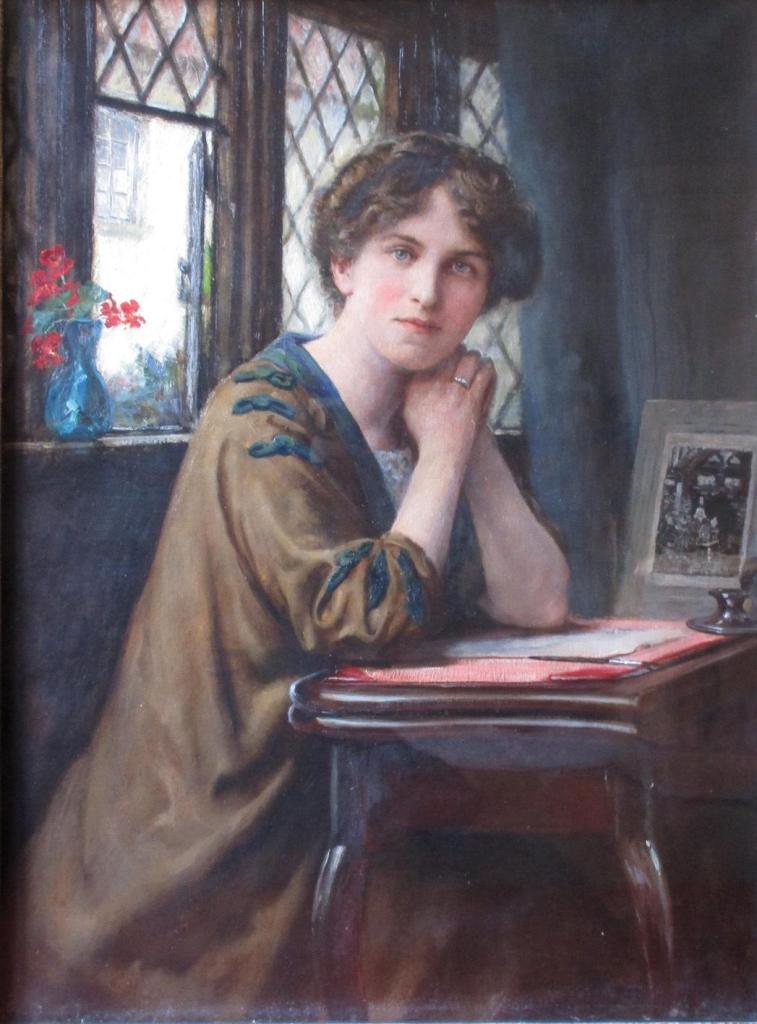
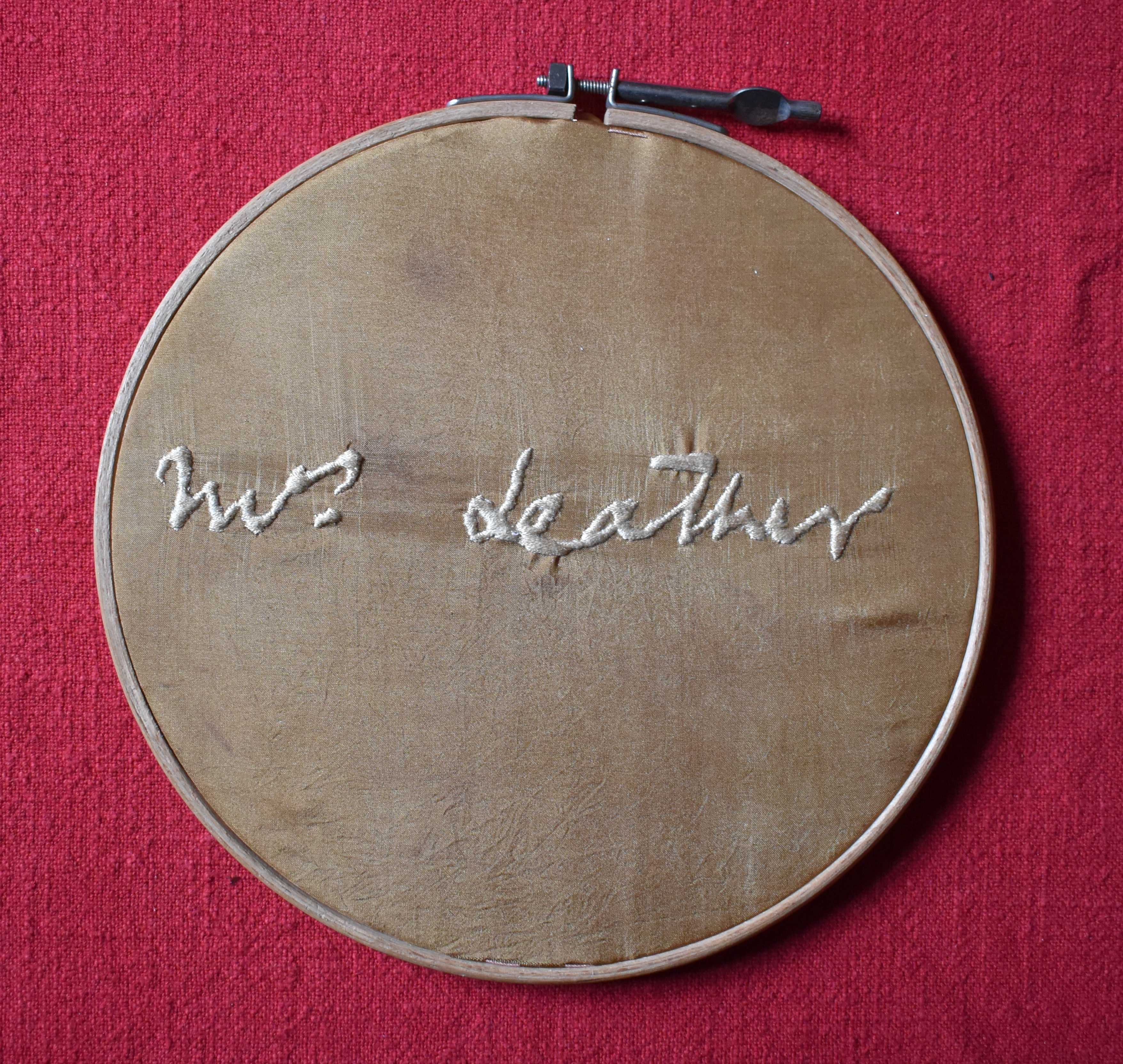
To prepare for this project I have recreated the dress Ella Mary Leather is wearing in a posthumous portrait and am planning to stitch all the names of her collaborators who collected folksongs or tunes for her or performed for her. I have already asked quite a few people to ‘donate’ their handwriting to rewrite these old names and have stitched them onto naturally dyed silk. I will be stitching these onto the lining of the dress, patched on to resemble the piecing together of scraps of notes as seen in her scrapbook in Ralph Vaughan Williams Memorial Library at Cecil Sharp House in Camden.

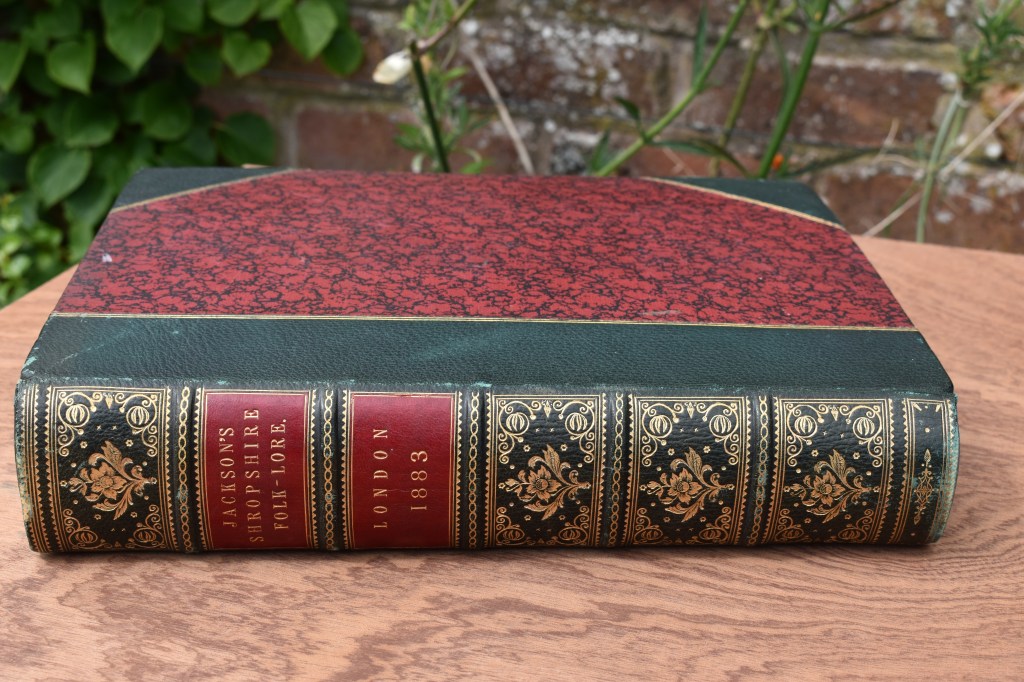
In the session I show a PowerPoint I have prepared with photographs showing my exploration of places of Mrs Leather’s life in Weobley, her book and that of folklorists who preceded her in Shropshire namely Georgina Frederica Jackson and Charlotte Sophia Burne. Ella had corresponded with Charlotte. There are about 25 years between each of the three women’s birth years. Burne went on to become the first female President of the Folklore Society, and probably of any society in Britain.

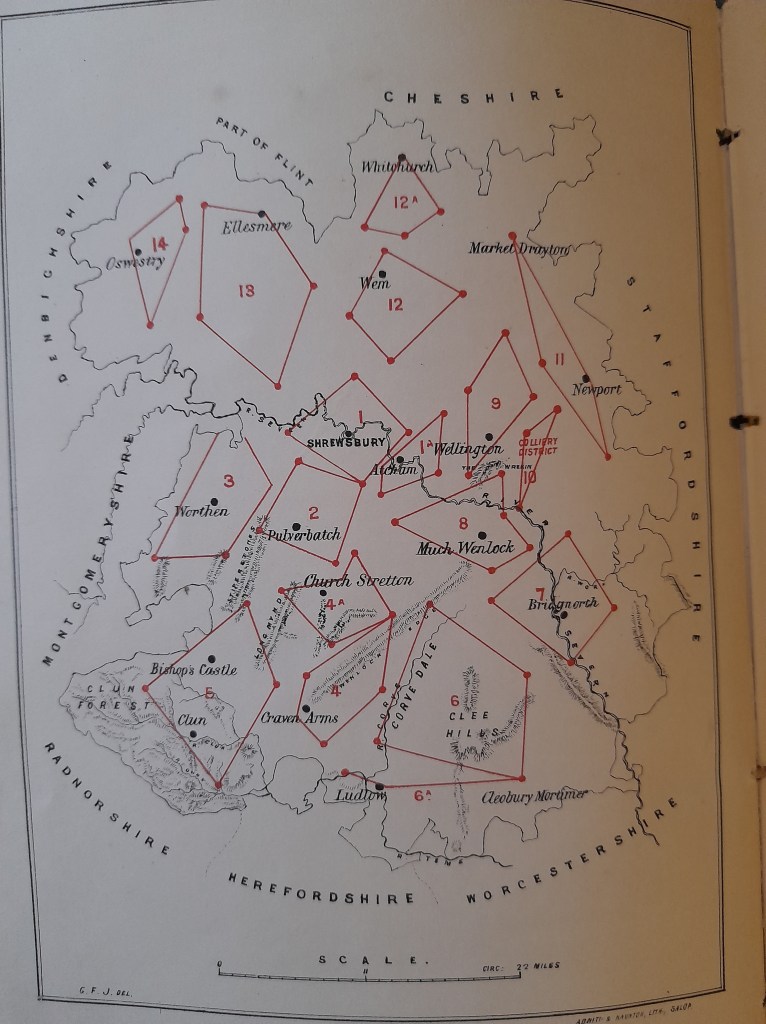
I love the map in Georgina’s Shropshire word book which shows her ‘dialecting tours’ – she divided Shropshire into areas of 18 distinct dialects and then wetn to stay in those places and interview local folk to determine words in local usage, their meaning and pronunciation. In doing so she was also told for example names of flowers by schoolchildren, names of crafting tools, and learnt about stories and customs. She became too poorly to publish the folklore herself, so her younger friend Charlotte Burne did so on her behalf.

Originally, I had planned to include Shropshire in my research but the area and amount of material across the two counties of Herefordshire and Shropshire was too huge to physically cover.

I also show photographs in the power point of my initial exploration of the location of Gospel Trees mentioned in Leather’s book and how this led to my pilot project about the River Lugg. This project tested my proposed method of stitching and heritage combined in a participatory textile project. This is documented at https://theluggembroideries.uk/

The Stitched Atlas project is one case study in my research about rural place, so finally I talk about myths, legends, folklore, my research aspirations, and I outline the records from specific places that I have gleaned from the archives and from Leather’s book. I have brought along two huge spreadsheets showing these places and linked folklore and songs, a file of songs linked to named villages or places and one of songs just linked to Herefordshire, and a cardex of individual places with the specific folklore / song attached to them. The session is just an introduction and a reckoning of the amount of possible material to explore and shows that Mrs Leather collected a huge amount in her relatively short life.    

12th September 2023 – Joshua Dyer’s wonderful film about Ella Mary Leather

There is a fabulous fifteen minute film on YouTube about the Life of Ella Mary Leather made by Joshua Dyer of Mad Pie Productions last year with music from Ben McElroy. Joshua has interviewed John Simons who wrote a short biography for the latest edition of Leather’s Folklore of Herefordshire published by Logaston Press in 2018. I bought my copy at its launch at The Globe Theatre in Hay on Wye.

Joshua has expressed interest in this project too, he has kindly offered to assist with some spontaneous morris dancing if required as he is a member of Leominster Morris. I am certainly hoping to take some of the music and dances back to places they were originally collected and I am very interested in movement, whether walking or dancing, as a method to experience rural place.

11th September 2023 – The project recruitment session

I am nearly completely thrown by how many people turn up to hear the introduction for my final research project ‘The Stitched Atlas’. It is lucky I had arranged to use a bigger room – it is the Council Chambers so rather grand and overlooks Corn Square which feels the heart of Leominster. I explain the rationale for my research and my focus on rural place through the stories and songs of Ella Mary Leather and that the group will be working collaboratively to create a ‘Stitched Atlas’.

It is a bigger commitment than my other case study looking at shared places of common lands, as I am holding weekly drop in sessions for one year, with quite a few gaps for bank holidays. In these sessions I will gather some of my data by reflecting on the conversations we have, so it is important to me that potential participants are able to make a lot of the sessions. Some people realise the project is not quite for them, so after the first three sessions it is looking like I will have just about the right number I was hoping for, and that can fit comfortably and safely in the lovely room.

I will be documenting the progress of this project on this blog, through session summaries and participants’ contributions where they give permission to share them.