Revisiting places of Herefordshire folklore: stories, songs and dances
Author Archives: jackiehmorris
I am a folklorist investigating our place in the world through creative and participatory practices. As an artist maker with a textile sensibility, I craft engagements, events, workshops and year long projects. I have a BA(Hons) Fine Art and MA in Contemporary Dialogues. I am currently writing up the thesis of my research investigating rural place in Herefordshire (UK) with its community through its folkloric heritage and landscapes of common land. I live in Herefordshire and study at Manchester Metropolitan University. I am Australian born to British parents and have lived in both countryside and cities of Britain. Rural conversations and fieldwork with my art collective 'Fold' supports and inspires my thinking. My art practice, Volka Arts, is named after my recent investigation into the now enclosed Volca Common Meadow, a short distance from my home. j.morris@volka-arts.org
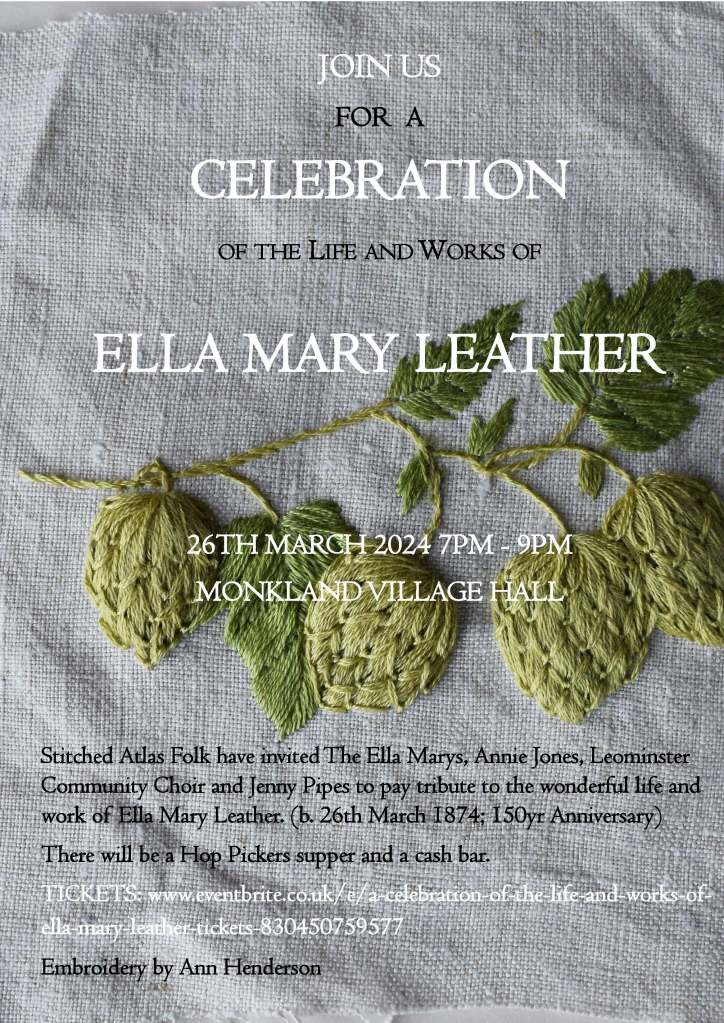
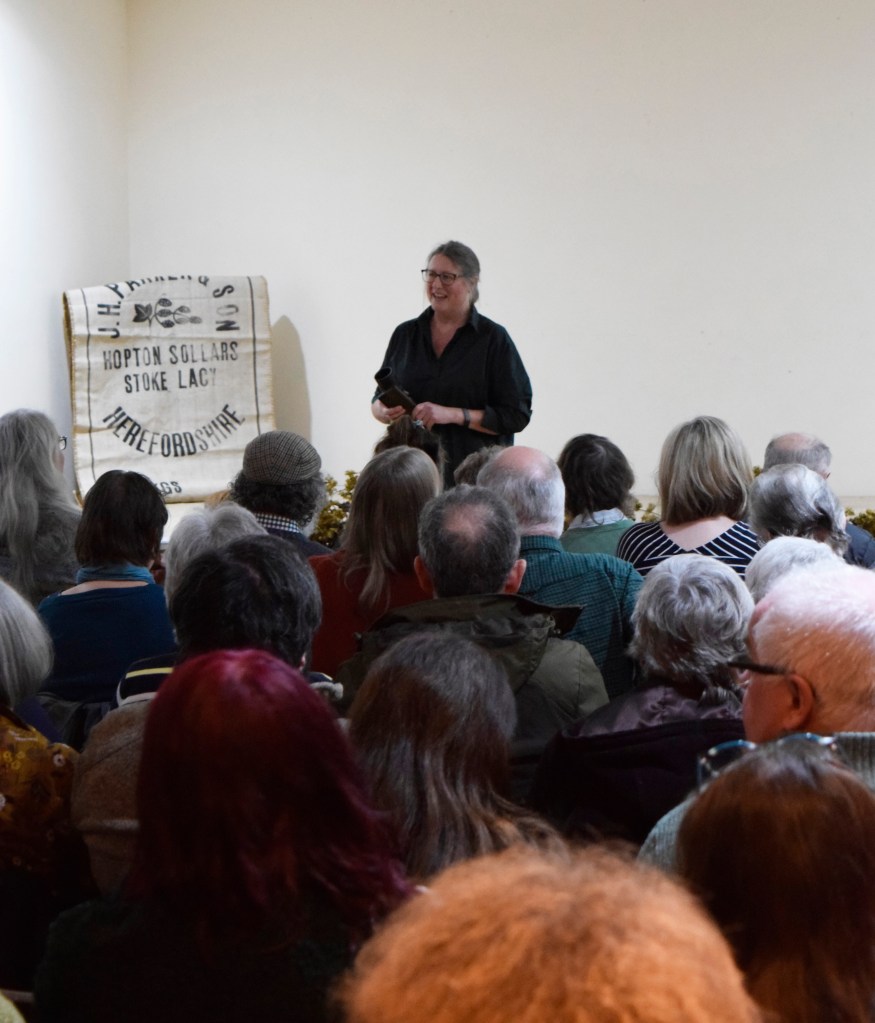
On this occasion of the 150th anniversary of Ella Mary Leather’s birthday, on behalf of Stitched Atlas Folk, I organised an event in Monkland Village Hall to invite people to celebrate her life and achievements. She is relatively unknown outside of folk circles and even in her village of Weobley. I started off thinking it would be a small event but underestimated the desire for it. Kathy Bland helped in discussing it with me early on, alongside Annie Wood and they put me in touch with Rebecca Tully of The Ella Marys, Annie Jones, Leominster Community Choir and The Mummers Boys. Jenny Pipes had previously helped me in an event celebrating The River Lugg in July 2022 at Eaton Barn Community Garden (Save the Lugg : Love the Lugg) so I was very pleased they could take part in celebrating Ella Mary Leather too.
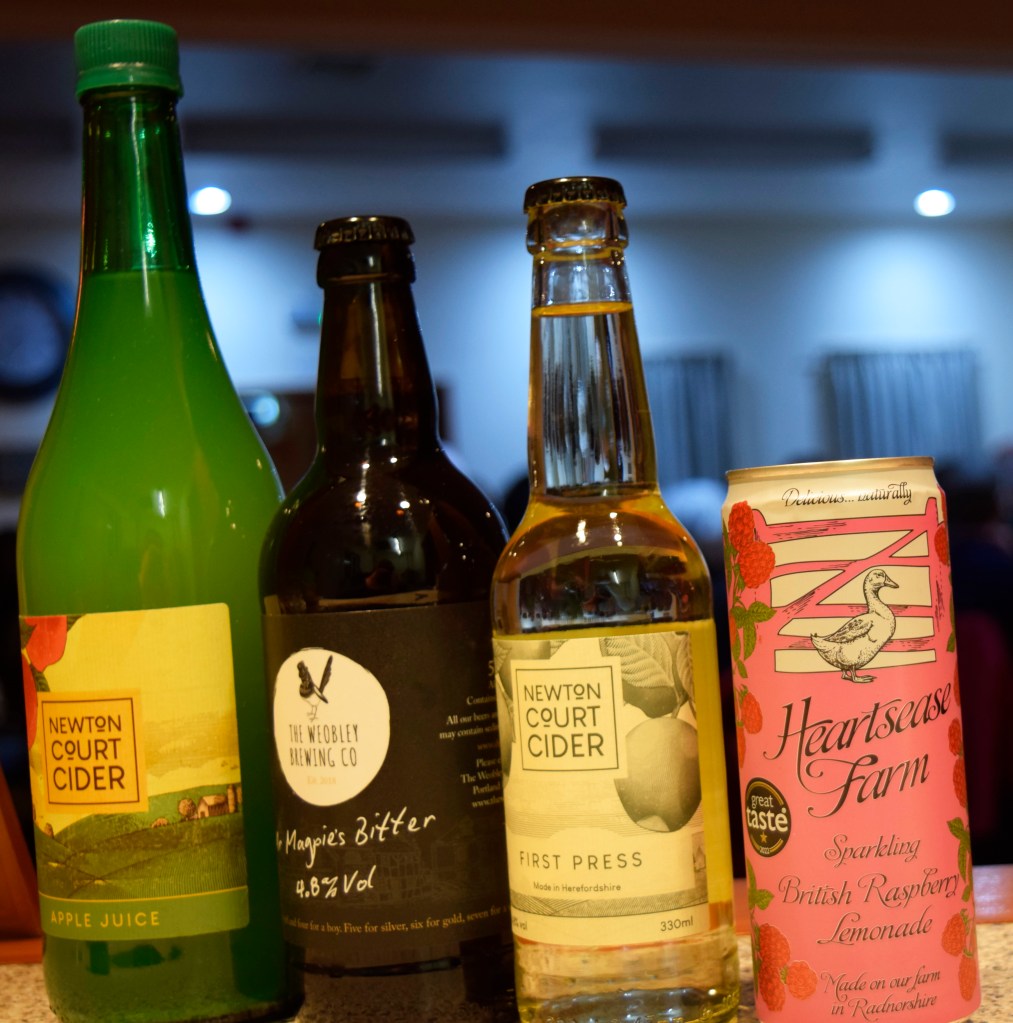
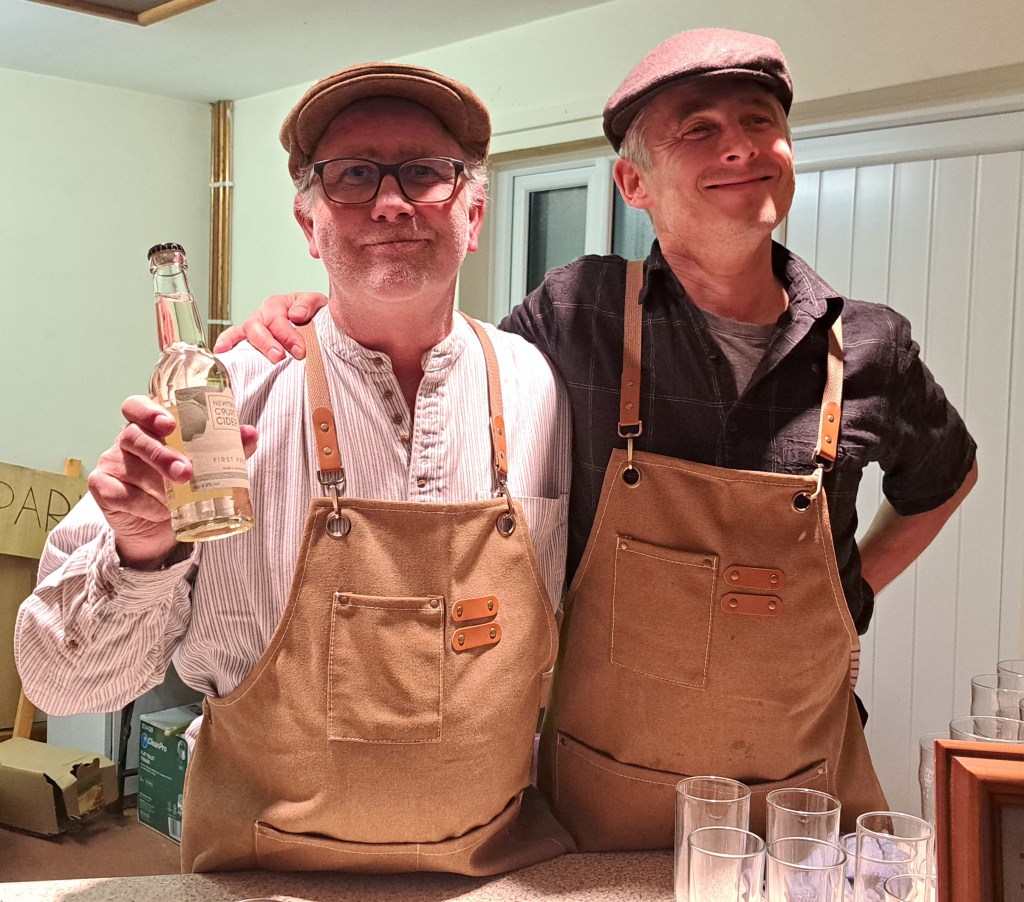
Stitched Atlas Folk would also like to give thanks to Wendy Jancey of Monkland Village Hall, Carol Lewis of Haven Hops, and food and drink purchased from Monkland Cheese Dairy, Peter Cooks Bread, Newton Court Cider and Weobley Brewing Company. On the dark, wet night of the event, Monkland Cheese Dairy also very kindly let us park in their yard as the Farmer’s field we had hoped to use was quite wet. Thanks to Graham and Felix for squeezing cars into the Village Hall car park too. A huge thanks to Bryony and Ben for helping with setting up, food prep, bar work and clearing up. And thanks to Felix for photography on the night. Finally, a huge thanks to all the audience and performers who came along and made it a wonderful evening.
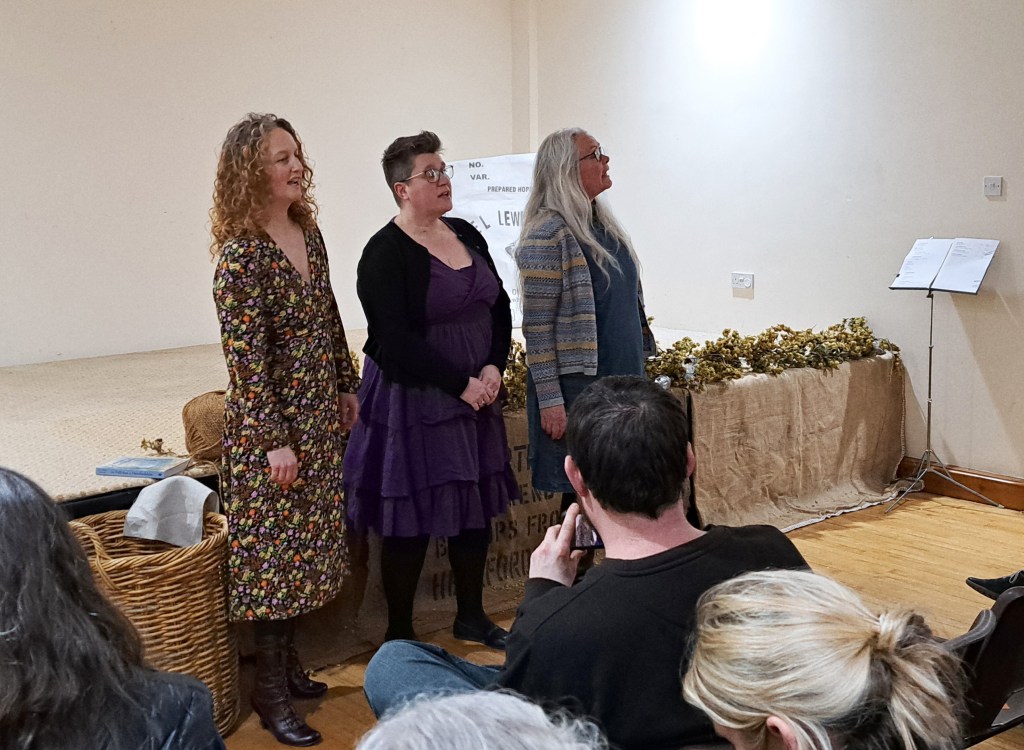
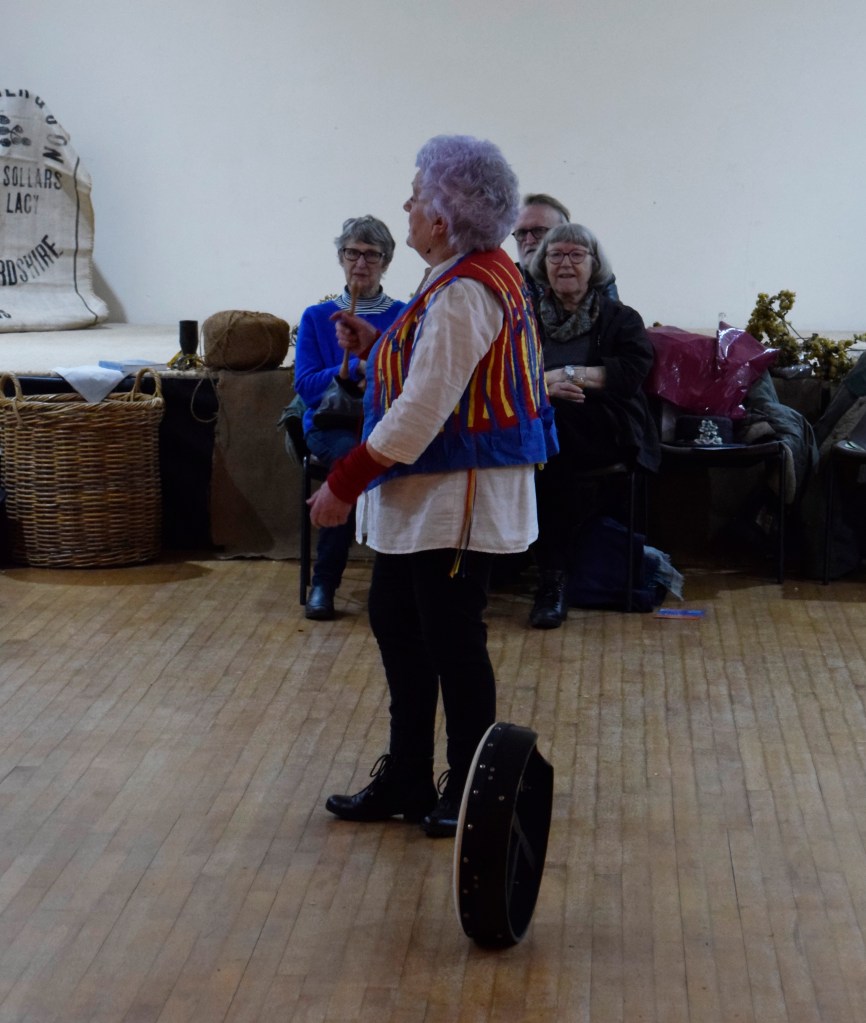
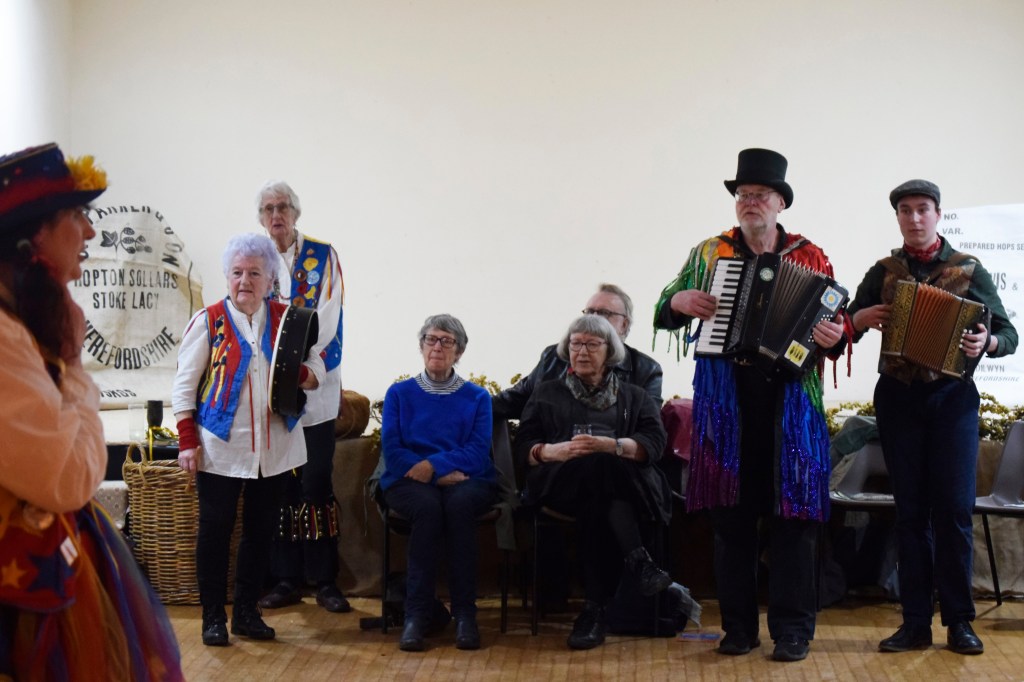
To kick of the entertainments The Ella Marys sang a little ditty they had prepared to gather everyone in after the hop pickers supper.
The Ella Marys
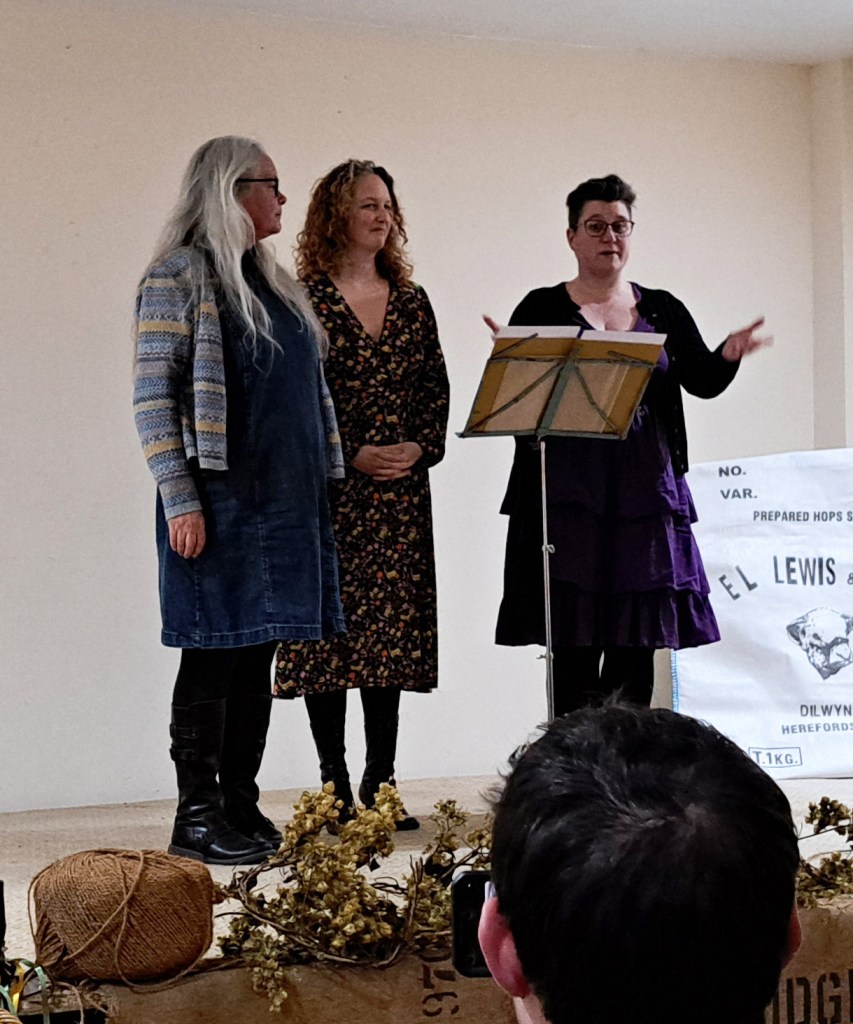
I then introduced the evening as firstly a celebration of Ella Mary Leather inviting anyone to make a toast with the ribboned wassail cup, and secondly its other purpose to hear the performance of Cold Blows the Wind. This was the folksong and tune collected by Ella Mary Leather and Ralph Vaughan Williams from Gypsy tenor Alfred Price Jones in a Monkland hopyard in 1912. The Ella Marys had been rehearsing this song, keeping the first verse as Ella recorded it and the next their own acapella arrangement of harmonies.
Leominster Community Choir
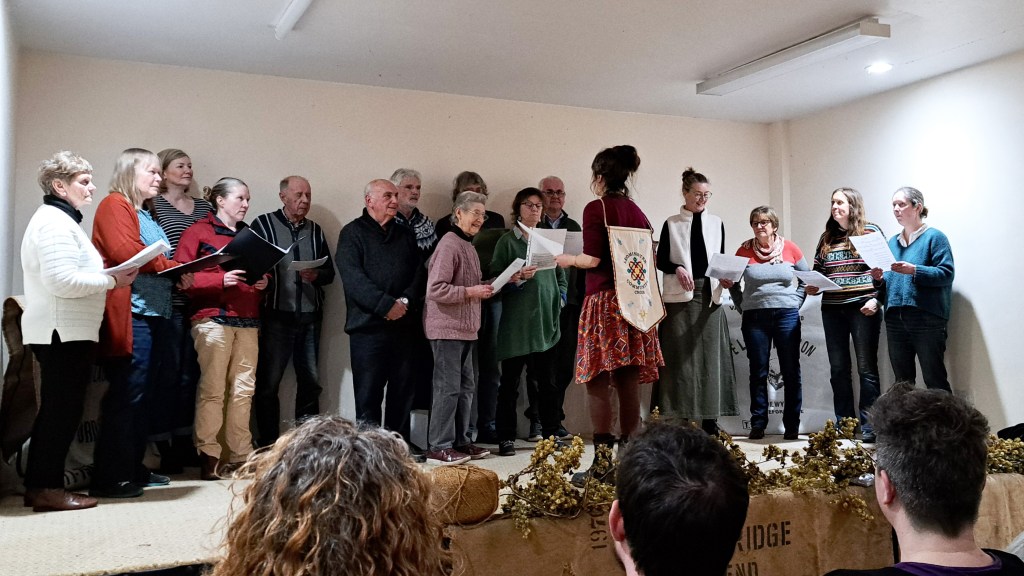
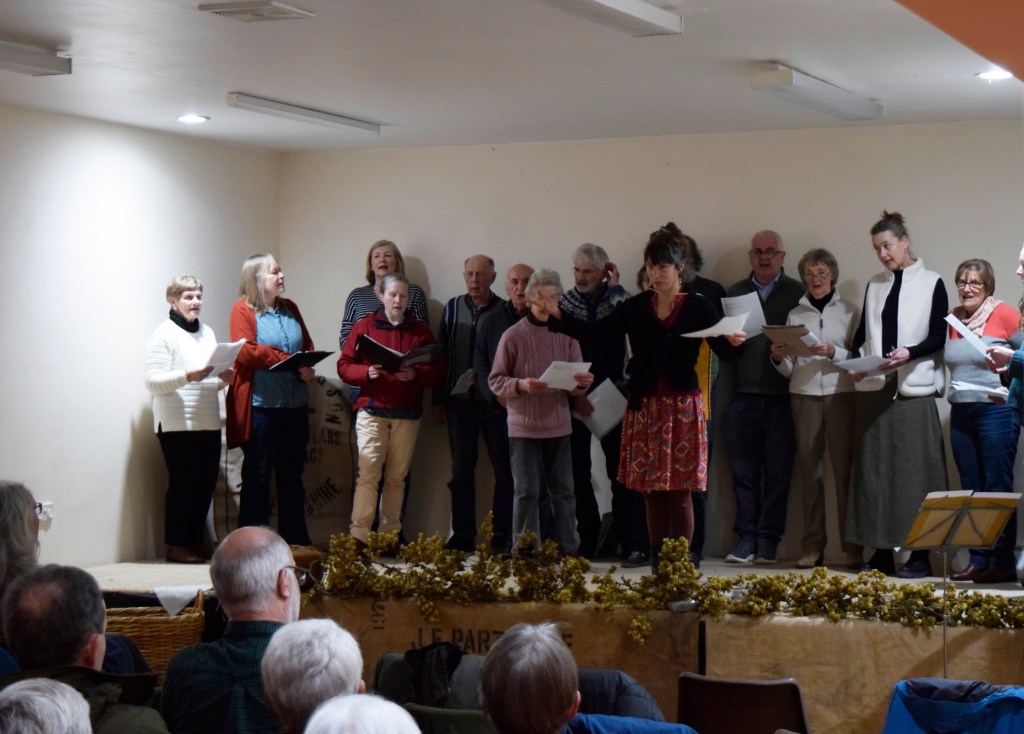
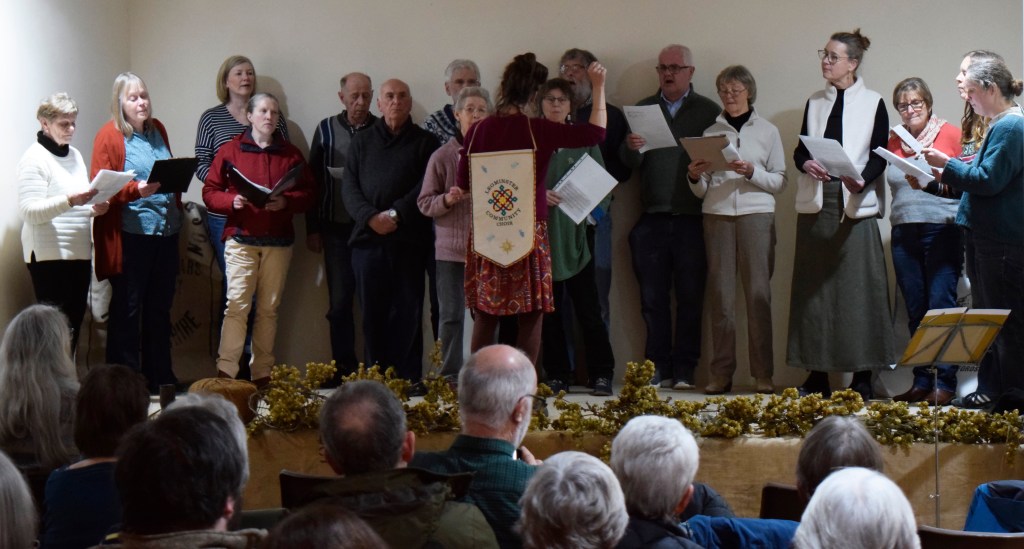
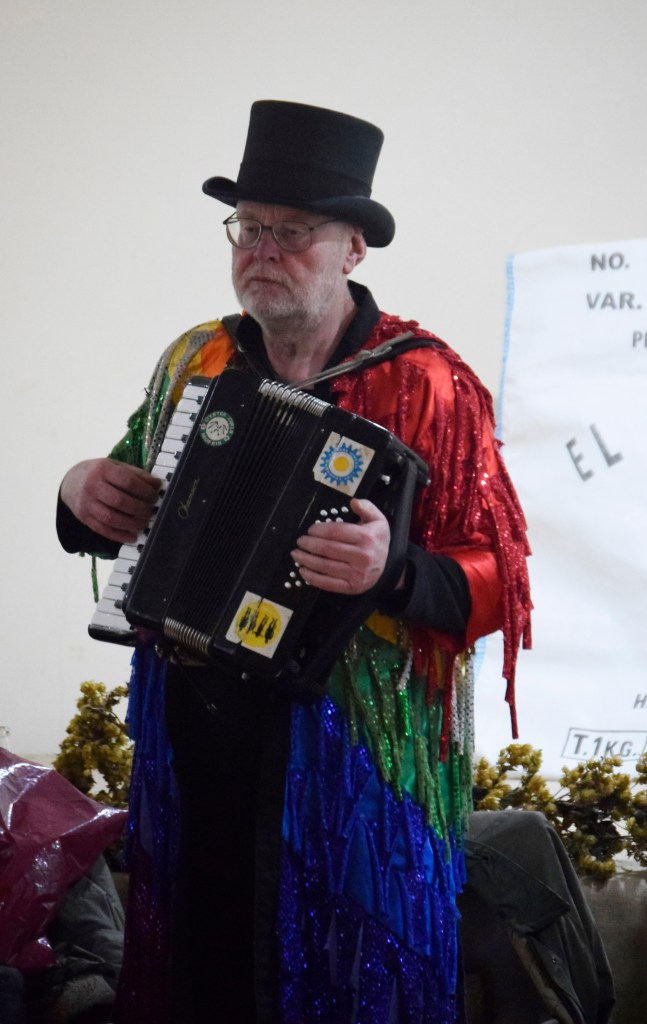
First off, Leominster Community Choir took the stage, introduced and led by Liv, and including a couple of the Stitched Atlas Folk Karen and Annie.
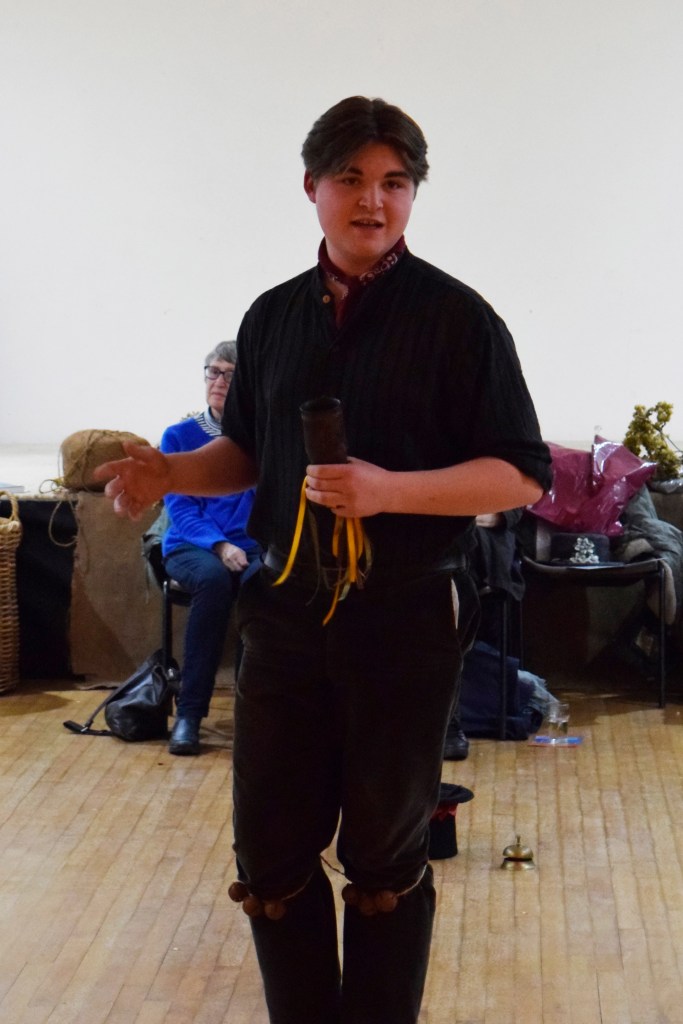
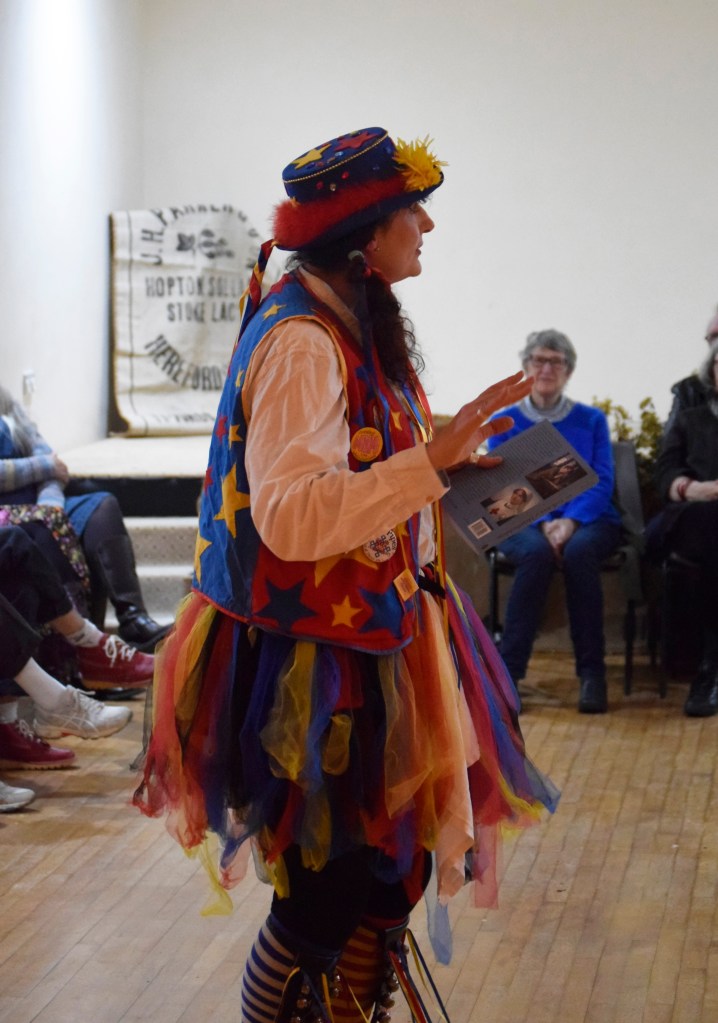
Leominster Community choir sang Brang-y-welland The Marden Forfeit SongThe Ella Marys sang Cold Blows the WindThen they sang two more songs, as arranged by Lady Maisery, and they finished with Whittingham Fair, a song from Sheila’s hometown in NorthumberlandAnnie JonesAnnie Jones introduces the second half with a wonderful song A Broomstick dance from The Mummers Boys (Archie couldn’t be here tonight)A wonderful toast and tribute to Ella Mary Leather by Joshua DyerIntroducing Jenny PipesThree Jolly Sheepskins dance, hats by The Mummers Boys
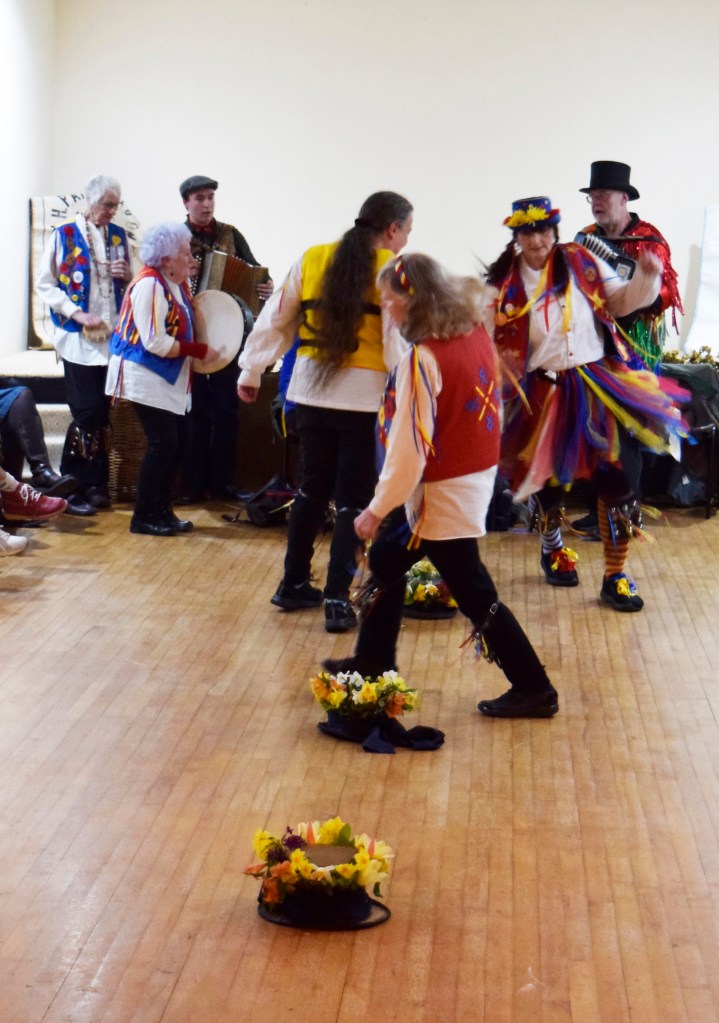
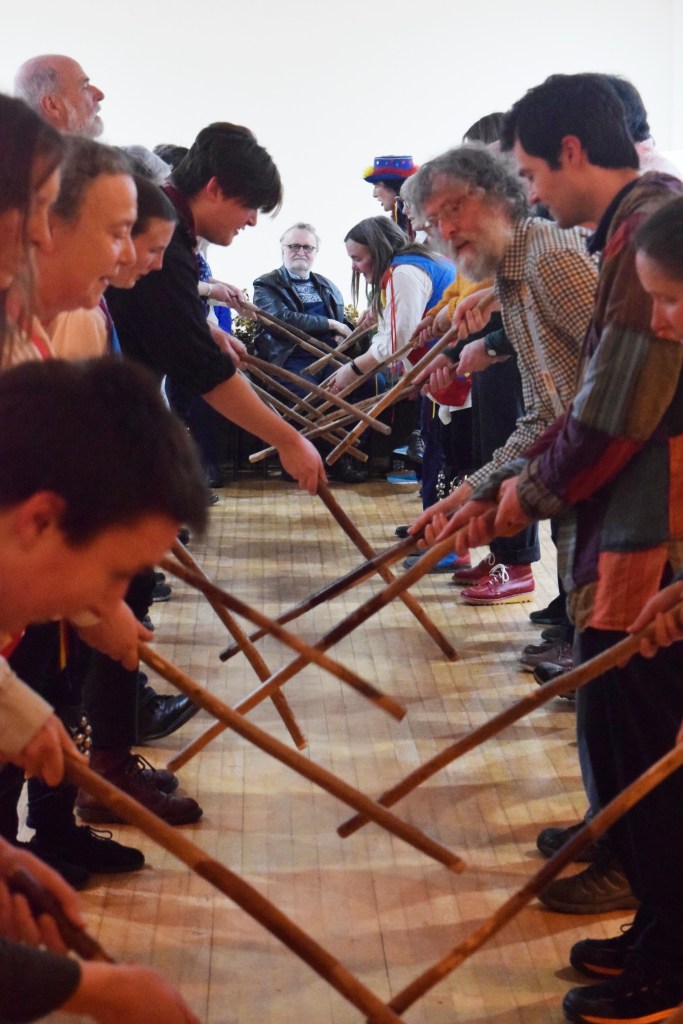
Jenny Pipes danced their wonderful Leominster Knot Dance – a delight to watch
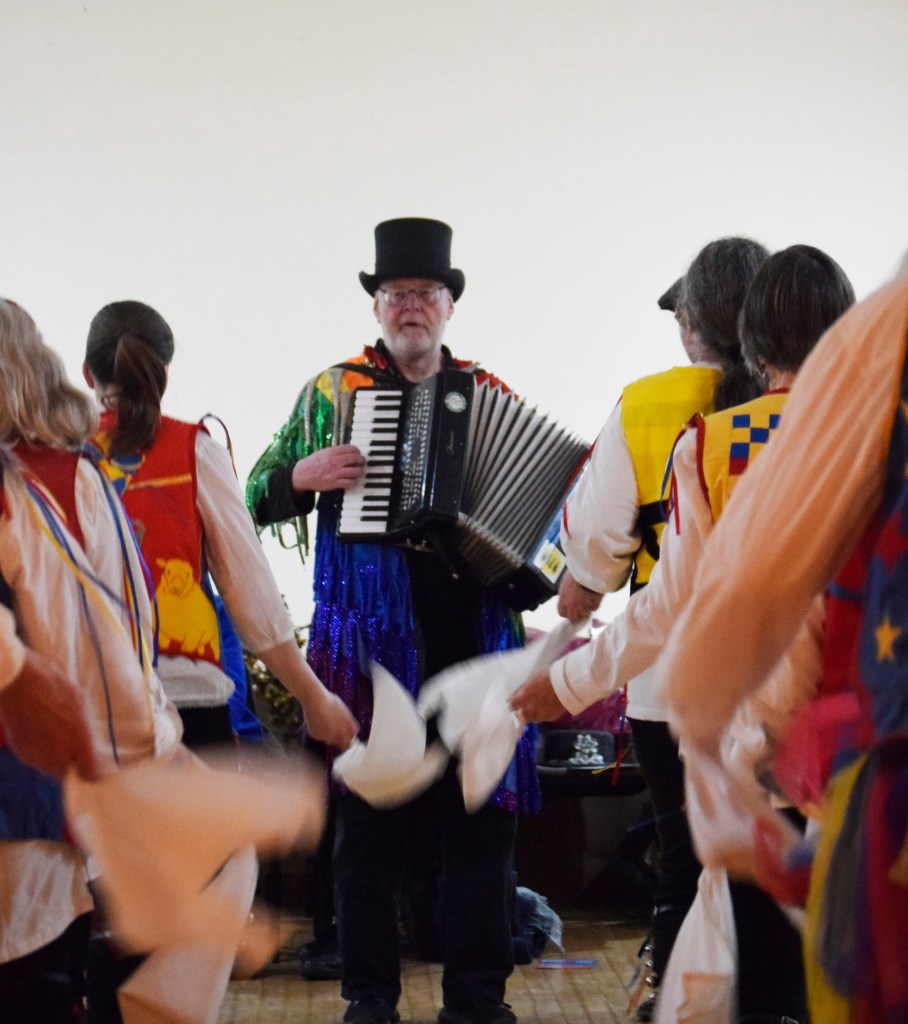
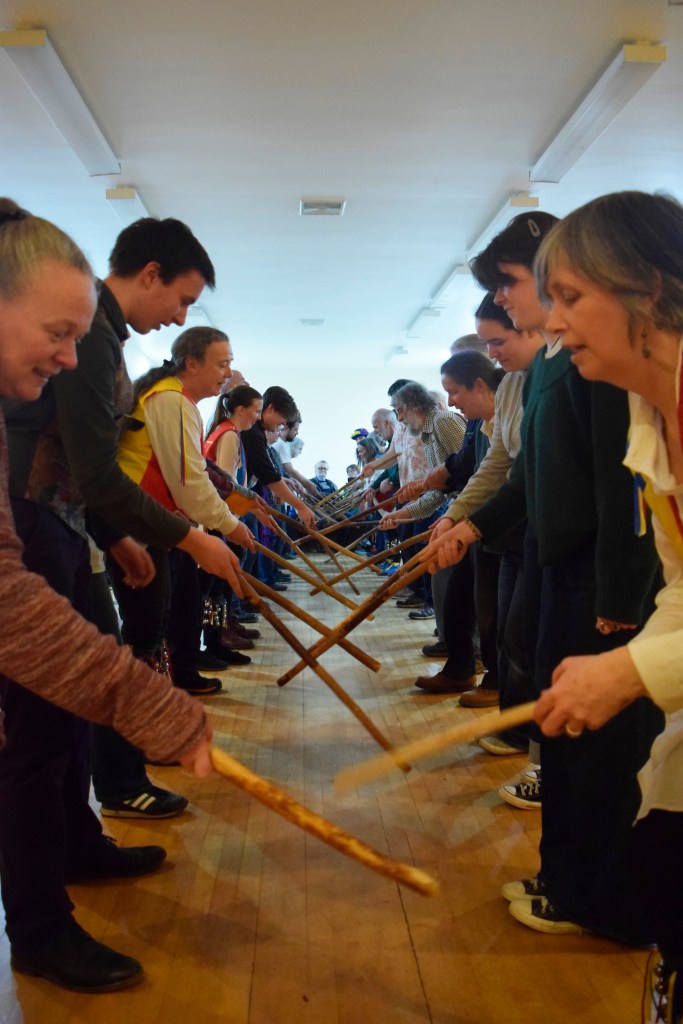
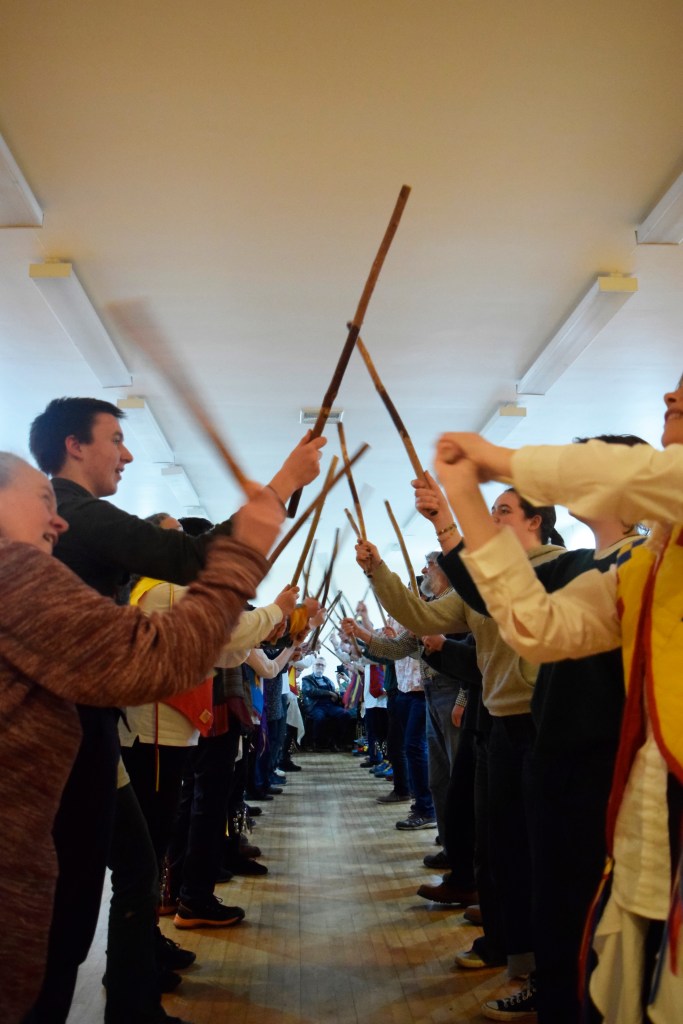
Jenny Pipes then led a dance for everyone at the end …
Thank you to everyone for buying drinks at the bar and making generous donations towards the costs of the evening. It pretty much covered it leaving out some boxes of drinks left over for next time… Also, a huge thank you for writing your name on the tissue paper – to be stitched on my Monkland page of The Stitched Atlas, bearing witness to this occasion.
All that remains is to say a huge THANK YOU from Stitched Atlas Folk for making this such a memorable occasion. The audience and performers together created a wonderful atmosphere which was the very best tribute to Ella Mary Leather.
Stitched Atlas Folk met at Herefordshire Archive and Records Centre (HARC) on Monday 11th March to set up our halfway exhibition of our work in progress and demonstrate our processes towards creating The Stitched Atlas. The day was exactly the halfway point since the introductory session last 11th September. Six months have flown by and I feel very lucky with the group who are all volunteering their time and creative ideas in this project. The group are so very generous with sharing and helping each other and stimulating new ideas and directions in each other’s work.
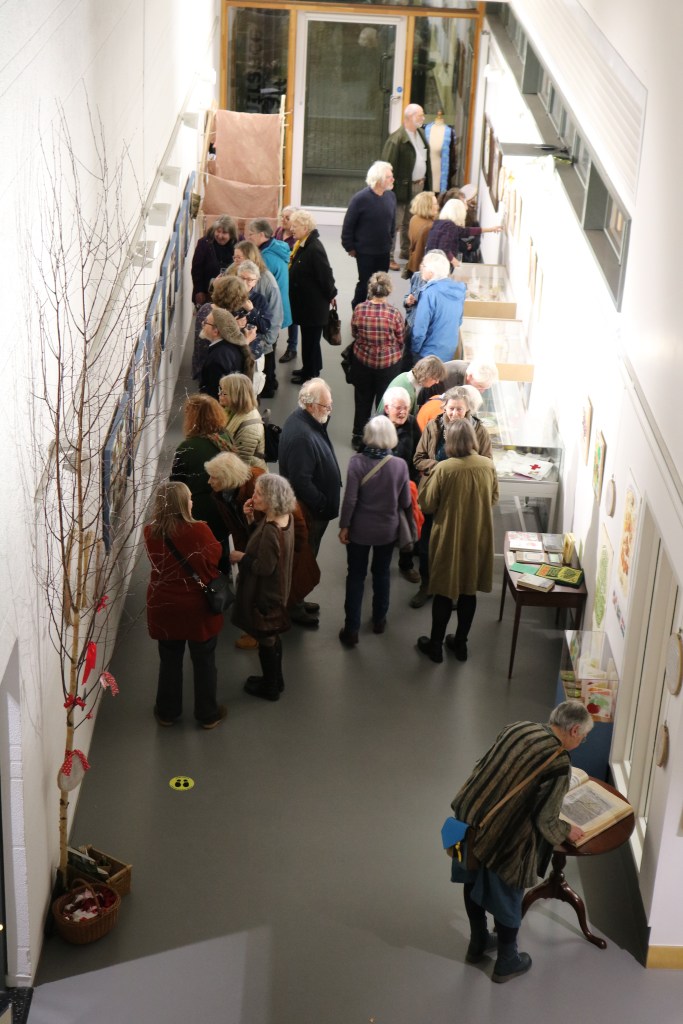
Setting up the exhibition was a joy, everyone working together to build the displays, some staying way into the afternoon and others returning over the next two days to complete the displays. We had an evening opening event on the Thursday 14th and sang Maggie’s new folk song.
Photo by Rhys Griffiths
A big thank you to HARC for hosting us and Senior Archivist Rhys Griffiths for his wonderful introduction at the opening. We have included interactive elements in the exhibition, in the hope that children may also be brought along and be inspired by the folklore and folksongs of Ella Mary Leather and the ways in which Stitched Atlas Folk are responding to these in the places they are investigating. We hope you can pop along to see the exhibition. It is on until 20th June 2024.
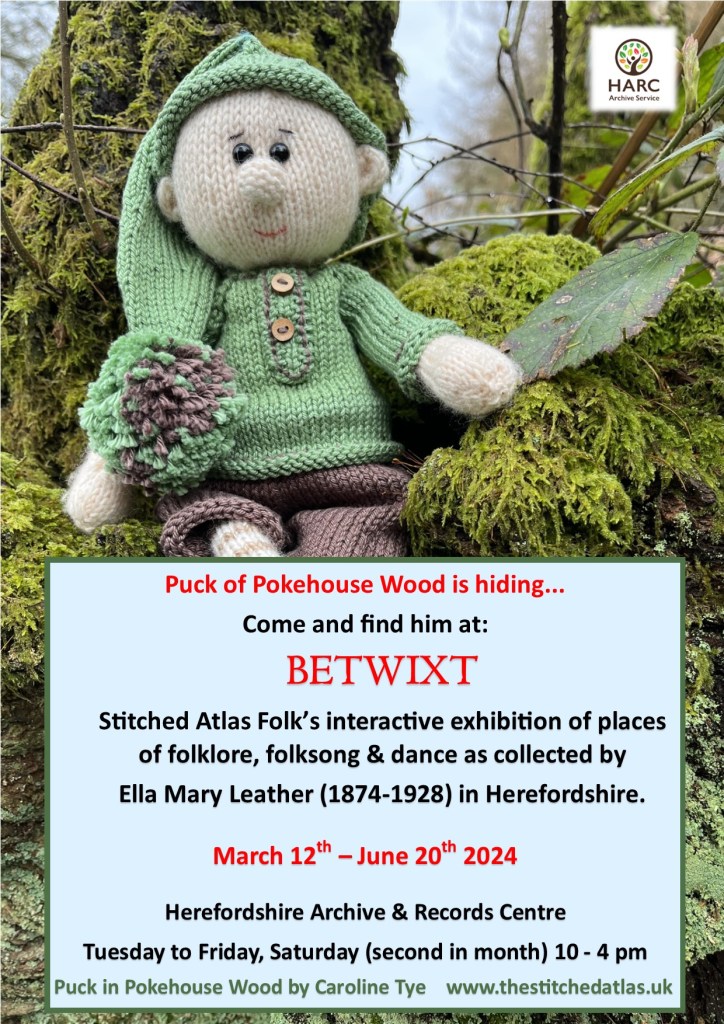
We have added elements for children to interact with in the exhibition, and a sticker to collect if they can find Puck…
Below is the information sheet I have written to go with the exhibition.
BETWIXT

An exhibition by Stitched Atlas Folk at Herefordshire Archive and Records Centre
March 12th - June 20th 2024

About the exhibition
This exhibition is at the halfway point of a community participatory textile project exploring rural places in Herefordshire through the stories, songs, tunes and dances collected by folklorist Ella Mary Leather (1874 - 1928) at the beginning of the 20th Century. It is one of two case studies contributing to my arts practice PhD research which is investigating rural place. For this case study, I invited participants to meet weekly for a year to each explore a personally chosen place from the substantial material that Leather collected. My primary sources are her published book The Folk-lore of Herefordshire (1912) and her notebook of songs and tunes held in Vaughan Williams Memorial Library (VWML), Cecil Sharp House, London.

Creating a Stitched Atlas together
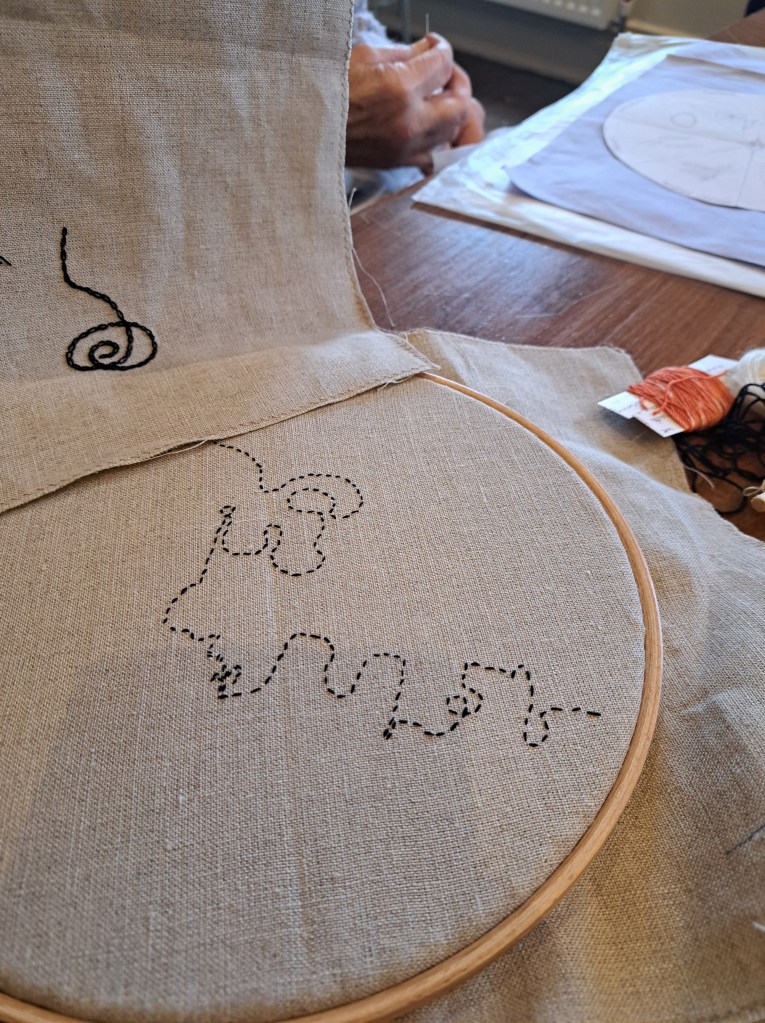
Sixteen women volunteered for the project and together we are creating a Stitched Atlas of the places we investigate. The group decided to make the finished Atlas the same dimensions as Leather’s notebook and this will be completed in September this year.  We are using embodied methods of ‘walking as stitching’ (imagining our body as a needle as we walk on the land) and ‘stitching as mark making’ (requiring no prior knowledge of needlework) to re-experience this folklore material in the places it is associated with. I have tasked participants with visiting their chosen place a minimum of once each season.

The folklore and folksong material were originally collected from ordinary ‘uncelebrated’ rural people of that time, and it feels appropriate that ordinary folks from today’s community are revisiting and responding to this heritage. However, working with the material from the former group and the wonderful generosity and sharing I’ve found in the creative process with the latter group, I will say that I consider both groups of people extra-ordinary!

The 150th anniversary of Ella Mary Leather’s birth
The 26th of March this year is the 150th anniversary of Ella Mary Leather’s birth. She was born on a farm in Bidney near Dilwyn, and then lived in Weobley after her marriage at age 19 years. The latest edition of her book by Logaston Press (2018) has an excellent biography written by John Simons. There is also a great film by Mad Pie Productions  on YouTube ‘She who saved the stories – The Life of Ella Mary Leather’(2023). Leather was also the Commandant for the Red Cross Voluntary Aid Detachment at Sarnesfield Court during the First World War, and the exhibition shows copies of some pages from its book of patients, held here at HARC.  I have replicated her uniform apron and medals as seen in a portrait of her. I have also found a list of names of other staff she worked with at Sarnesfield Court, at least one already familiar from the folksong archive.

Inspiration and development of my research project ‘Stitching Folklore in Place’
In 2012 when walking in Hough Woods I first heard of the legend of The Dragon of Mordiford and then The Mermaid of Marden and was astonished when I came across the Marden bell in Herefordshire Museum and these led me to Ella Mary Leather.  In 2018 I conceived my PhD arts research idea to revisit these places of legend and was accepted for part time study at Manchester Metropolitan University in October 2019 supervised by Professor Fiona Hackney, Dr Elizabeth Kealy-Morris and Dr Lynn Setterington.

In February 2022 I spent three fabulous days with Leather’s notebook and was hugely inspired by the snippets and scraps of paper within it, so suggestive of the community of people who helped her collect the folksongs and tunes for fear of them being lost. One was a folded note and I imagined it being passed hand to hand, pocket to pocket.  There was a sense of paper not being wasted, with one note written on the back of a programme for an entertainment that Mrs Leather organised.

In 2022 I ‘took’ Ella Mary Leather to Reykjavik for RE:22 Nordic Ethnology and Folklore Conference and gave a presentation about her life and work as well as the findings from my pilot project ‘The Lugg Embroideries’. The latter was directly inspired by my seeking out the Gospel trees, which Leather records as a last remaining trace of the custom of ‘Beating the Bounds’.  Whilst searching for The Gospel Oak at Mortimer’s Cross, I found the River Lugg, or perhaps it found me?  It is a river under threat from pollution.

Research progress
Since 2022 I have been planning this halfway exhibition as a creative outcome to showcase our work in progress as The Stitched Atlas develops. It is great to have this coinciding with Leather’s anniversary to redress the balance of her relative obscurity compared to the more famous men associated with the First Folklore Revival. Certainly, just one of the themes emerging from this research is of women hidden or misrepresented in history in Herefordshire. There is a resonance with Leather’s own life that this contemporary group of women have stepped forward to restitch some female stories in place.

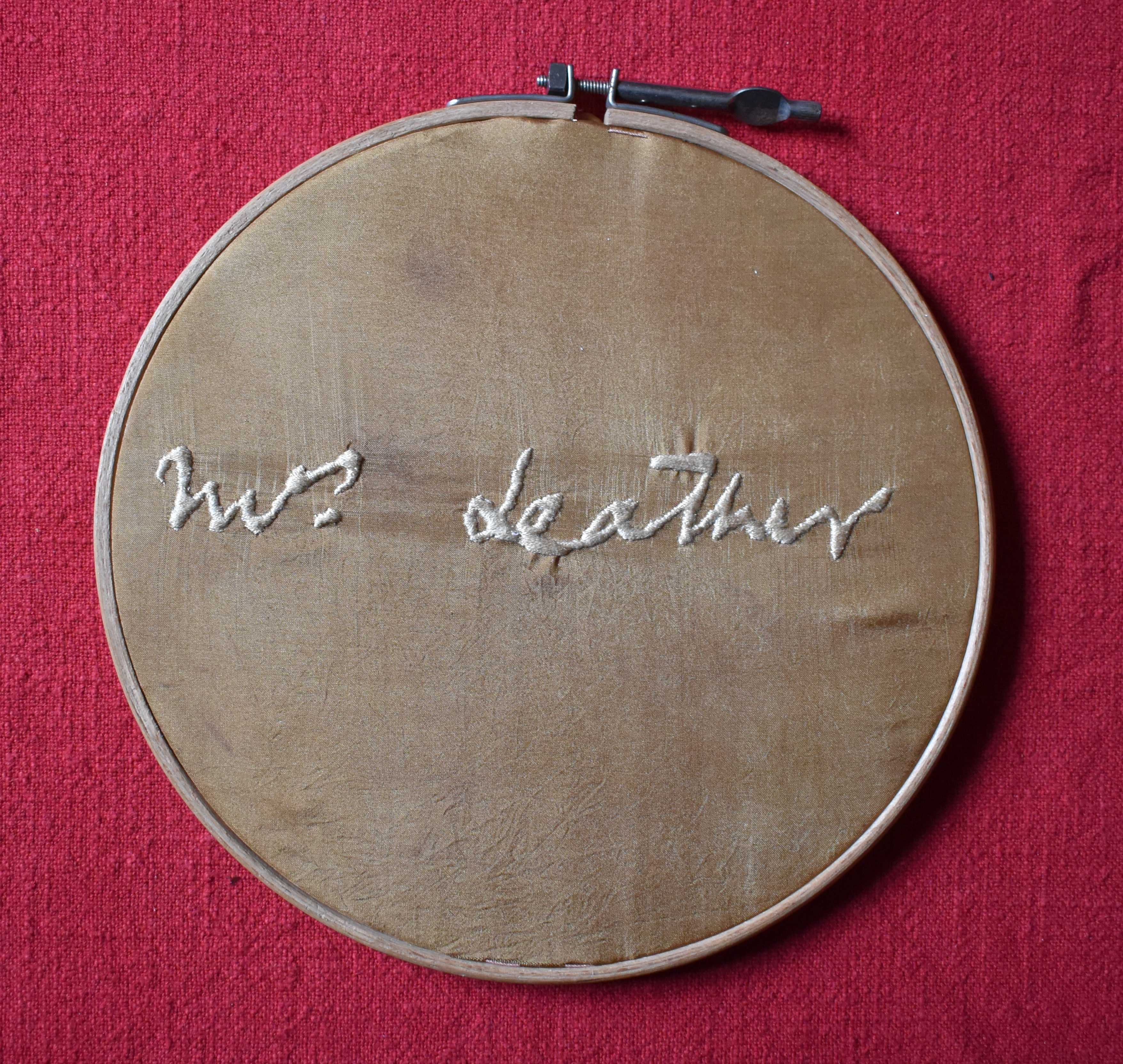
In July 2023 I asked Leominster Priory Choir if they might be able to perform some of the ‘Twelve Traditional Carols from Herefordshire’ that Leather and Ralph Vaughan Wiliams (RVW) published in 1920 to launch Leather’s anniversary year and was delighted when they agreed and incorporated three into Leominster Priory Christmas Service. My huge thanks to Hilary Norris and her choir for all their work. It was amazing to hear the songs, which sounded quite tricky to perform. The choir also ‘donated’ their handwriting to rewrite some of the names of the past collectors/transcribers/performers that worked with Leather. You can see these stitched onto the lining of the dress in this exhibition.

To re-experience a folksong in its place, I have organised a performance of a song by Gypsy tenor Alfred Price Jones that Leather collected in a Monkland hopyard in September 1912, alongside RVW. This is on her actual birth date and the event has expanded into a community celebration in the style of one of the entertainment’s that Leather used to organise.

Recreation of the dress Ella Mary Leather is wearing in a posthumous portrait
Part of my research methods are to create a key piece for each of my case studies. The dress exhibited is a re-creation of Leather’s dress which she is pictured wearing in her posthumous portrait by F. M. Bennett. The portrait was commissioned by her husband after her unexpected death at age 54 years in 1928. She is pictured in her study at Castle House, Weobley. I sought advice from many people about the materials and the style of the dress. My thanks especially to Gerry Connolly at Worthing Theatres & Museum who advised that it is in the style of the Dress Reform Movement of the late 19th and early 20th century where design was more fluid and less structured. He also commented that the background of the portrait has a feel of the Arts and Craft Movement and wondered if Leather was influenced by this, as it would fit with her subject of folklore. The Royal Horticultural Society also advised me that they believe the red Nasturtium flowers in the portrait to be ‘Empress of India’ which were an 1885 introduction to Britain often seen in late Victorian paintings to symbolise ‘victory in struggle’.

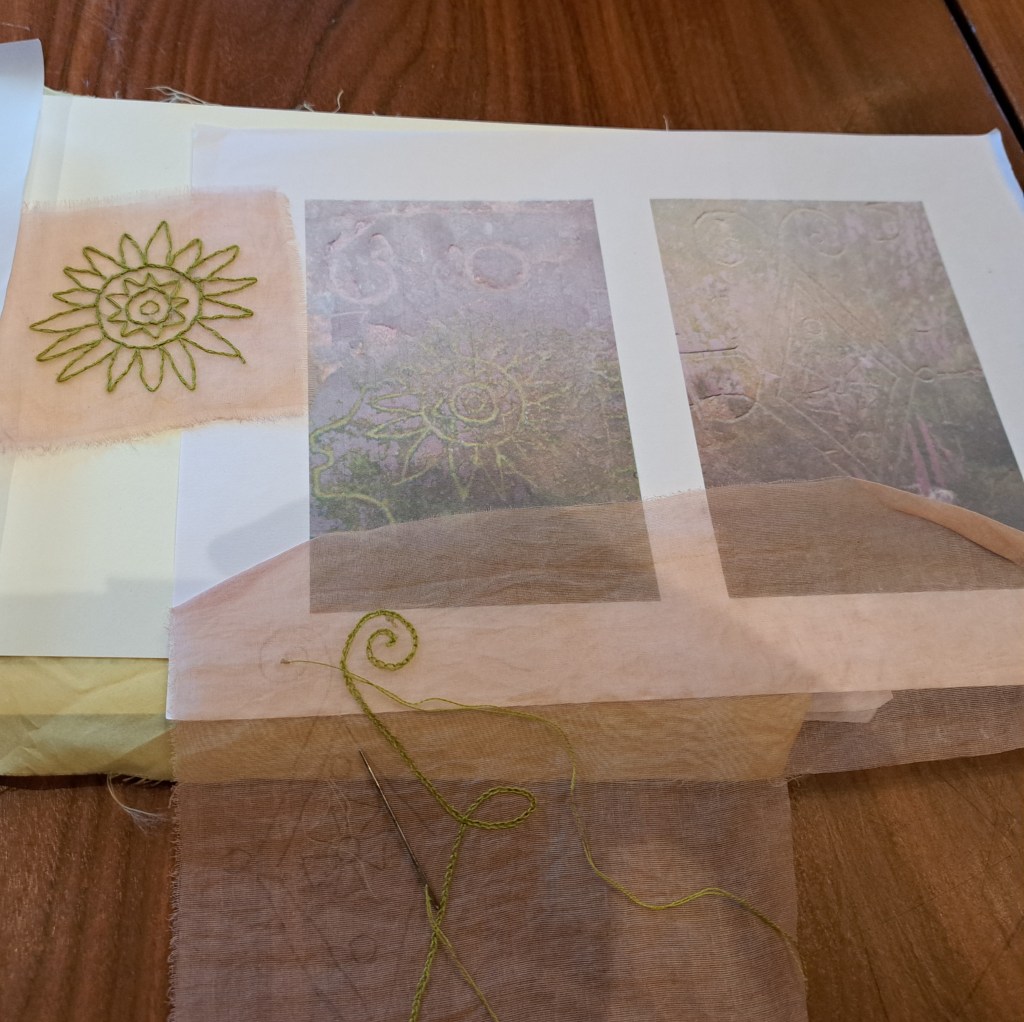
The dress is made from scratch, with the velvet material hand dyed, and the blue lining reused from a 1930s cloth which already had some hand embroidery on it.  The Celtic knot embroidery pattern on the lapels is taken from Leather’s gravestone in Weobley Churchyard. Please do look at the lining to see all seventy-six names of people who helped Leather collect folksong/tunes or performed for her. These are patched onto the lining of her dress, referencing her notebook of snippets of tunes / songs. The colours of the silks and some threads are hand dyed with plant materials. Some of the dyes were made in a workshop in October 2020 led by the remarkable textile artist, the late Linda Row. The stitched names of the people from the past are written in handwriting ‘donated’ by contemporary people in Herefordshire.

Stitched Atlas Folk
This exhibition has been put together by Stitched Atlas Folk with the purpose of showing how our ideas are developing as we move through the intersection of folklore and place.  The boards show data gathered from participants’ fieldwork of their chosen place. The cabinets have individual embroideries completed which will contribute to Atlas pages about apotropaic marks, autumn and winter seasons, music, and dance. Some completed pages are framed. Apples and pigs and associated folklore have also been emerging themes.  We are embroidering pages with the bell rhymes to add another rhythm through the Atlas, and photographs of these are in the book on the chair. Another theme has been the handing down of tradition be it a skill or a story and a few items in the exhibition were our grandparents or great grandparents.

Additionally, we have added activities for primary school age children to engage with both the map, folklore, customs and traditions, as well as the creative process. This idea came from the arrival of a knitted Puck from one of the stories of place!

The Stitched Atlas Folk & their personal places under investigation

Maggie Crompton: 	Leominster (& all poems)
Francesca Davies: 	Mordiford & Dorstone
Caroline Gerstad: 	River Wye in Hereford & Hay
Chris Hemming: 		Bodenham
Annie Henderson: 	Much Cowarne
Jackie Morris: 		Monkland
Liz Morison: 		Brinsop & Burghill
Maggie Percy: 		Dilwyn
Ali Price: 		Eaton Bishop
Karen Ramsay: 		Kings Pyon
Julia Reynolds: 	Places of Apples
Helen Richards: 	Upper Hill
Mary Roberts: 		Hereford
Caroline Tye: 		Aymestrey
Helen Watkins: 		The Bacho, Madley
Meg Williams: 		Withington
Annie Wood: 		Leominster

Acknowledgements: Our grateful thanks to all the team at HARC and the friendly team at Leominster Information Centre where Stitched Atlas Folk meet in the Council Chamber.

Notes on The Stitched Atlas project by artist: researcher: facilitator Jackie H Morris
jacqueline.morris@stu.mmu.ac.uk
Project blog: www.thestitchedatlas.uk
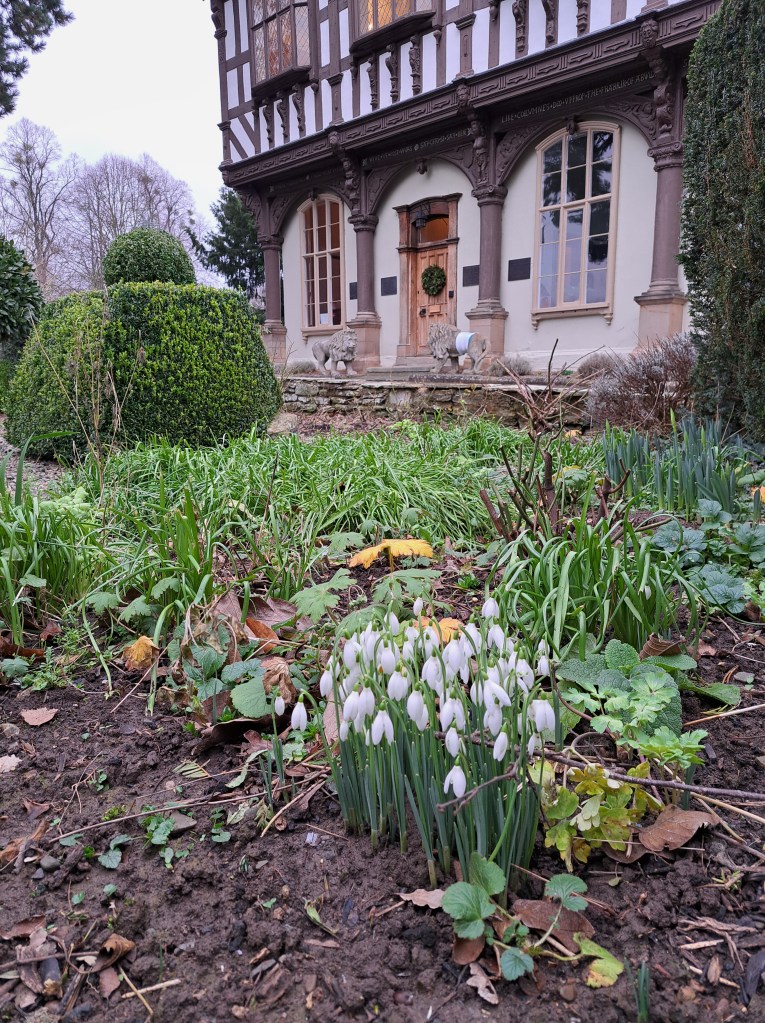
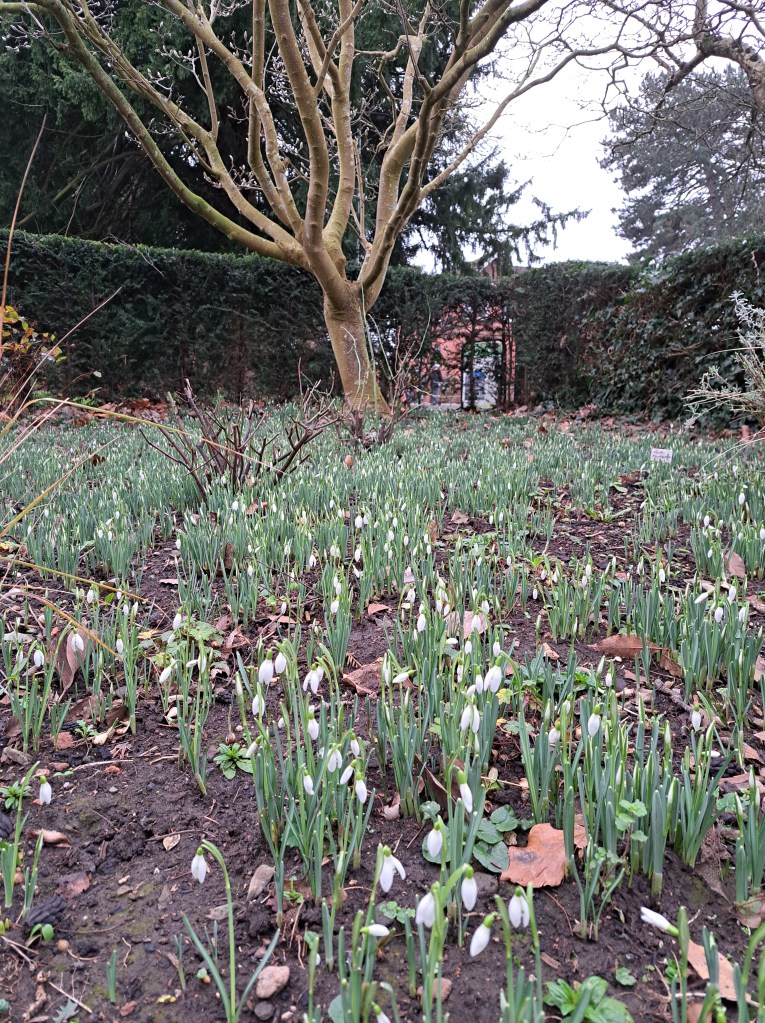
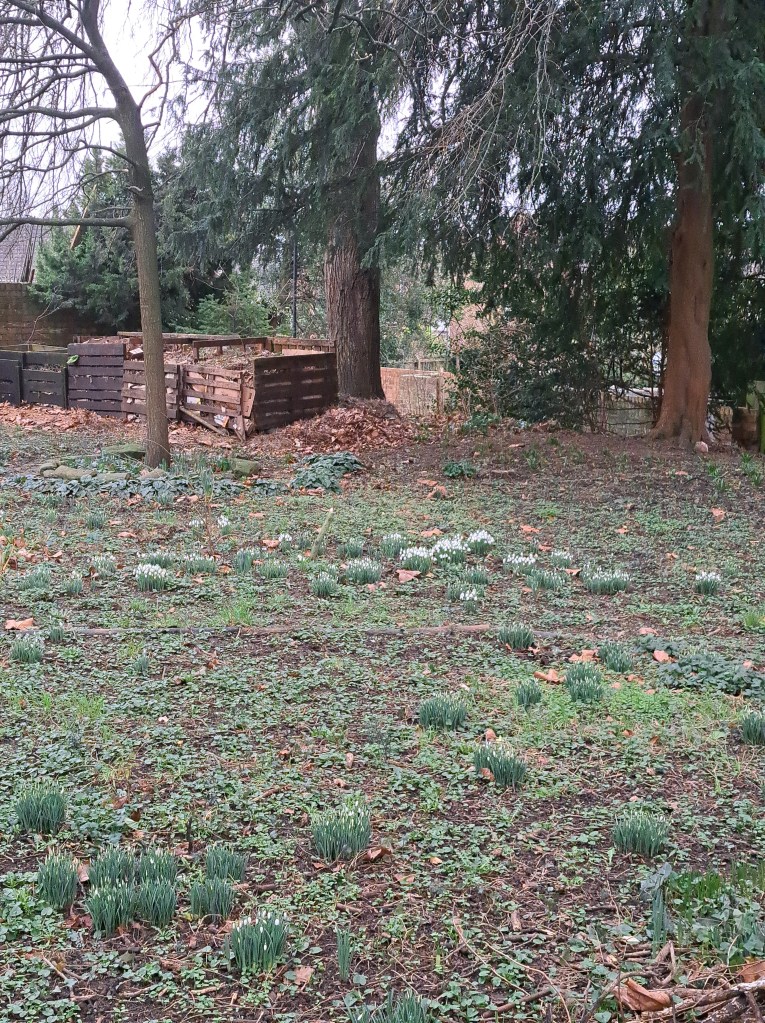
Twelve people come the meeting. I neglect to take any photos of work this week, only a sole group photograph. Afterwards I walk through Leominster’s Grange and spy my first snowdrops outside Grange Court (complete with its bandaged lion awaiting repair!). It’s my son’s 17th birthday today too so a lot of excitiement in our house as now he is allowed to drive!
The sight of the flowers take me back to my pilot project of The Lugg Embroideries in which 42 stitchers joined me to spend 12 weeks stitching snowdrops and testing my proposed method for these current projects. It was amazing how the work from that small pilot ended up being shown in seven exhibitions in the end, with the last showing of the snowdrops all together at The Glasgow School of Art in October 2023.
The snowdrops had started out as symbol of the Miller’s gesture of remembrance for soldiers that died during the Battle of Mortimer’s Cross when the river was said to have run red. I had come across a gorgeous riverbend on the River Lugg and met the miller who told the story whilst I was searching for a Gospel Tree mentioned in Ella Mary Leather’s Folk-lore of Herefordshire. Seeing the snowdrops today I recall that that the anniversary of the Battle is not far off, its either 2nd or 3rd February and Leather also describes the story of how a parhelion sun was seen in the sky before the battle and taken as good omen for winning the battle.
I think the project arrived at the right time to highlight the plight of the polluted River Lugg when we were just realising action needed to be taken to restore the health of our rivers across the country. This factor certainly led to some of the extra exhibitions of the snow drops and the millsacks embroidered with the River bend.
I’ll have to look at my notes to see all that we discussed in the group today. Some of my pilot project participants have joined me in this Stitched Atlas project and or in the Walking the Commons project which I am running concurrently; the two case studies being used to research a contemporary feel of rural place. It is quite surprising really how now the language of embroidery does not seen half as daunting as it did when we started the small embroideries and used templates to stitch snowdrops. It now feels much freer and more experiemental and I feel very lucky to have the people in the two groups who are researching with me.
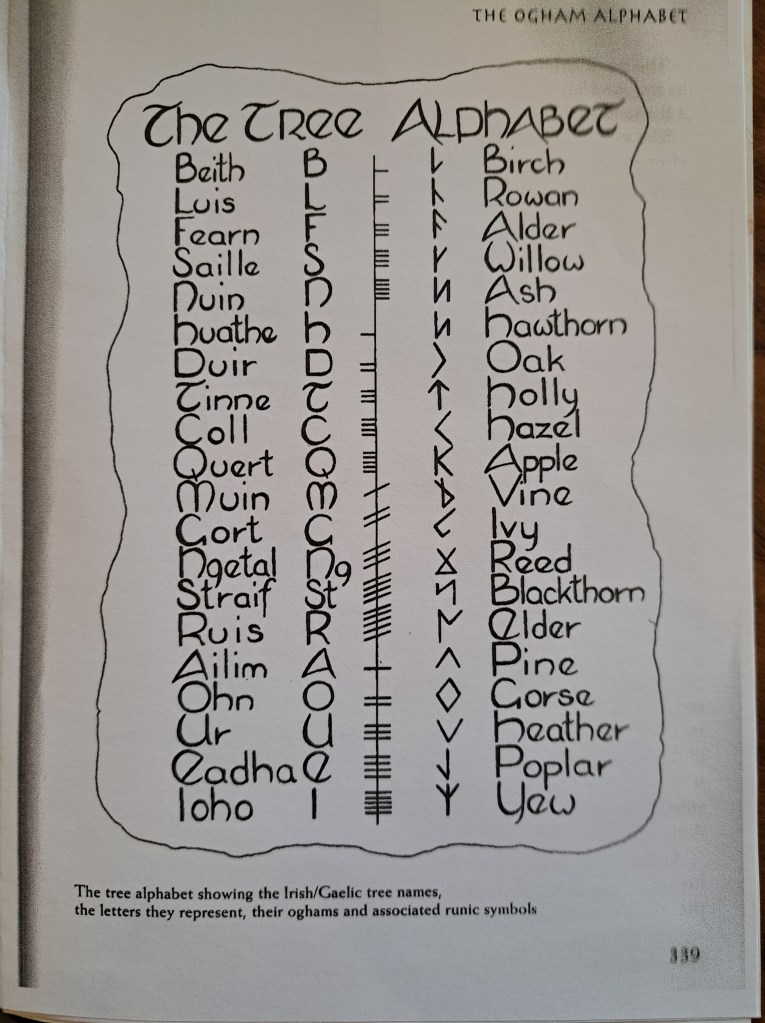
A lot of work in porgress and completed pieces were brought along this week. Julia delights us with her sketch book of apple folklore,; shje is researching trees and apples. She tells us about the tree alphabet called the Ogham Alphabet.
Julia’s sketchbookThe Ogham Alphabet
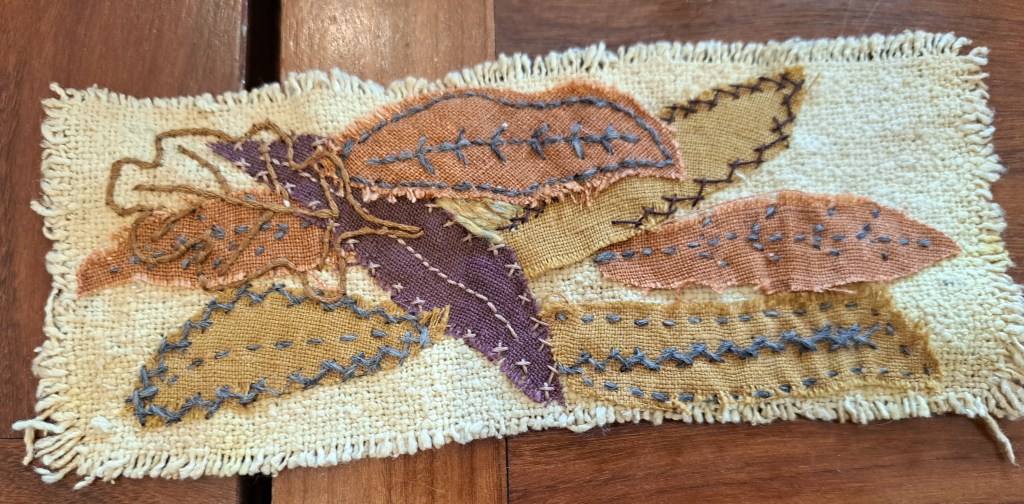
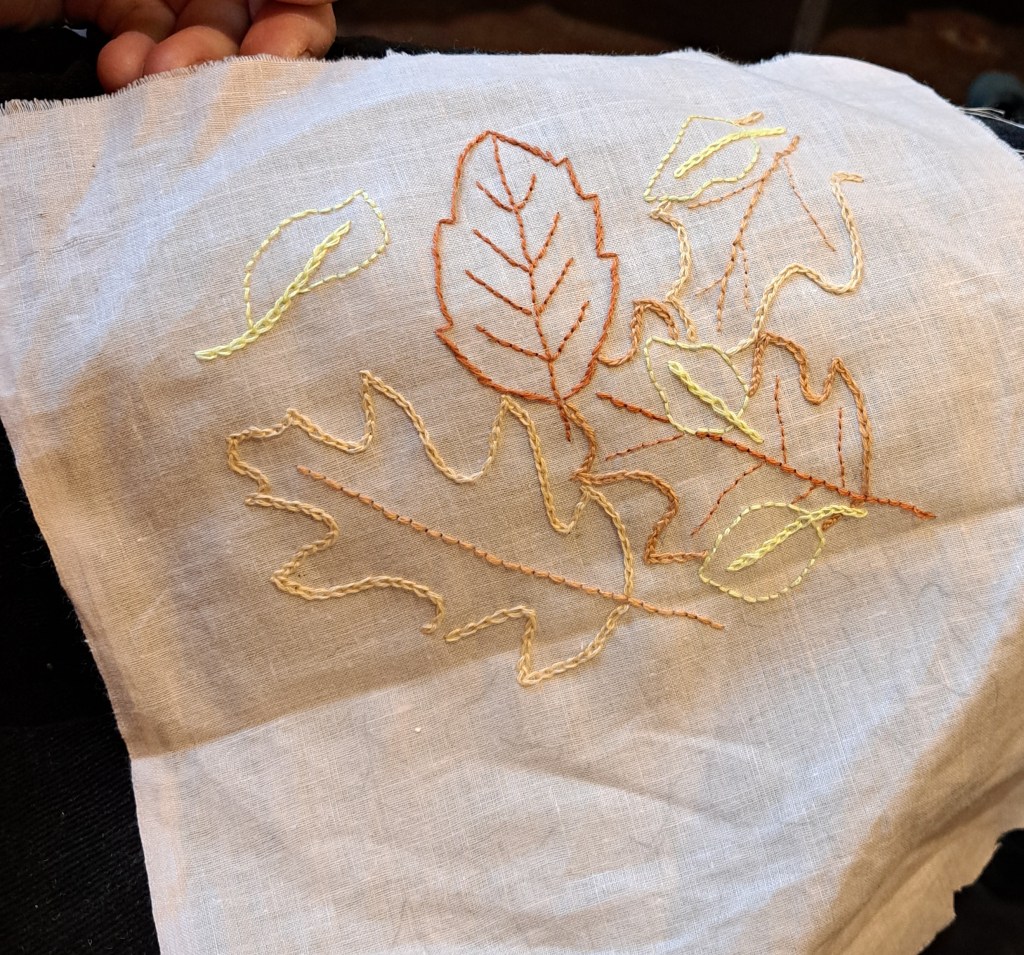
Ali hands in this delightful Autumn piece
Ali’s autumn leaves
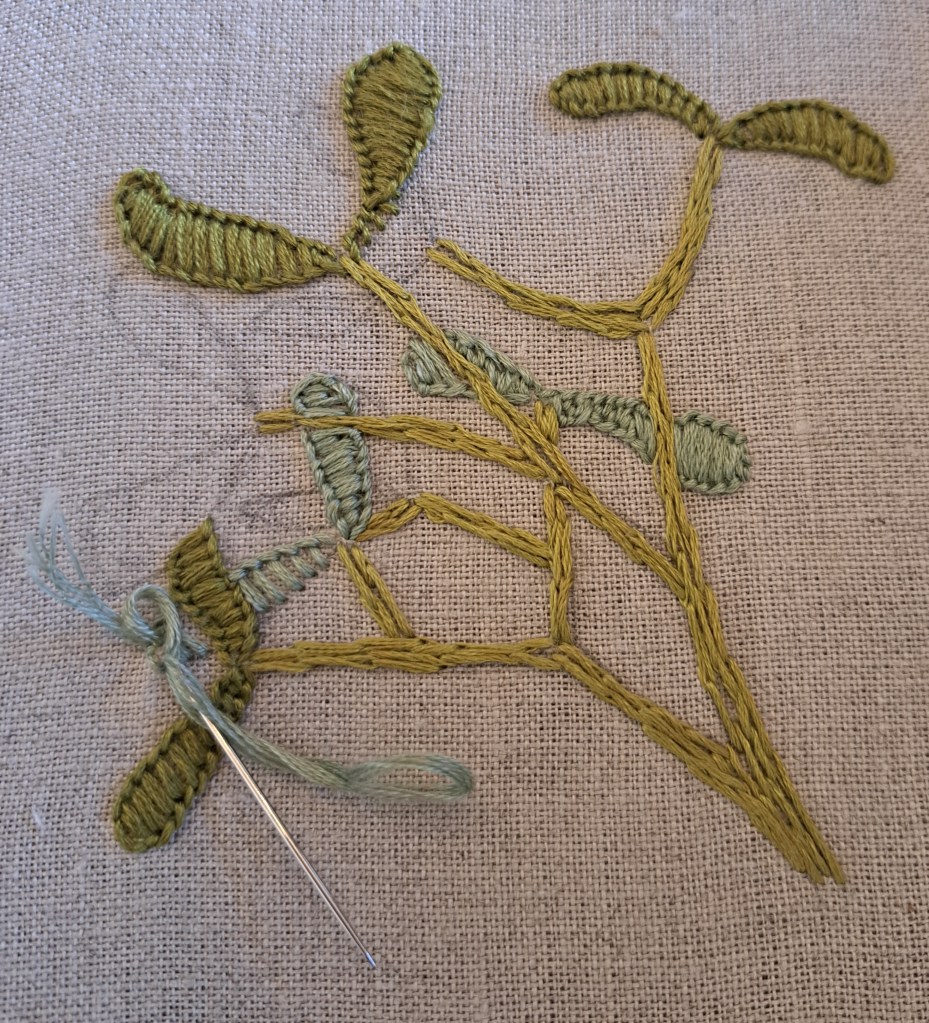
Ann has started to work on her piece for the winter page
Ann’s mistletoe
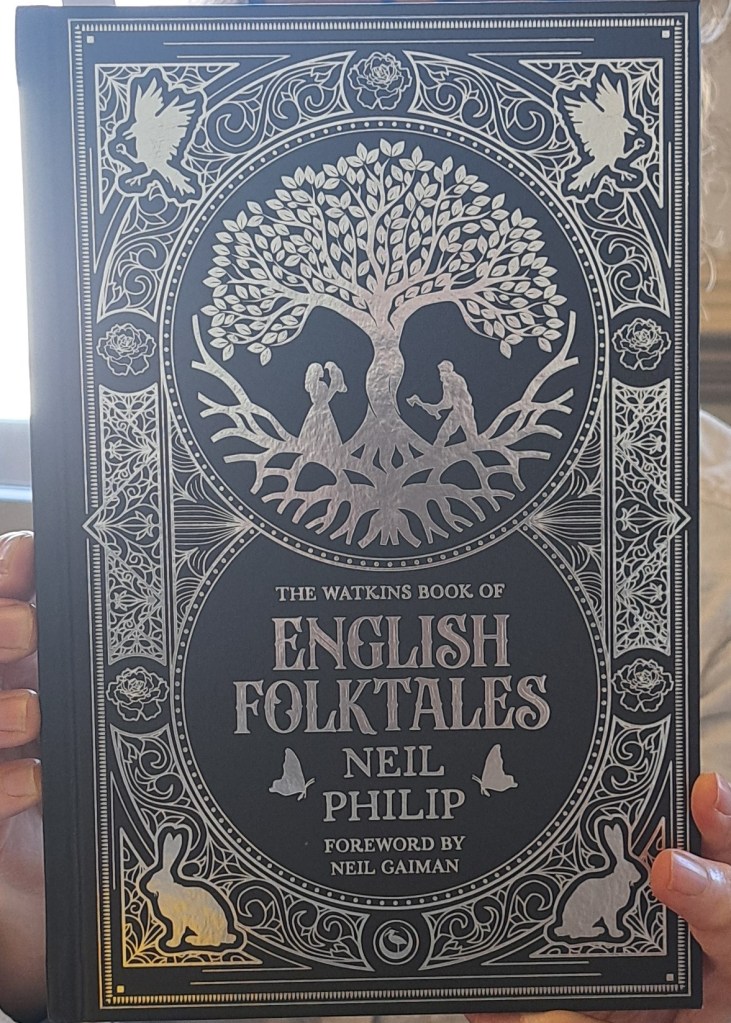
Annie has started her page with its map of Leominster and shares with us The Watkins Book of English Folktales.
The beginnings of Annie’s Leominster map
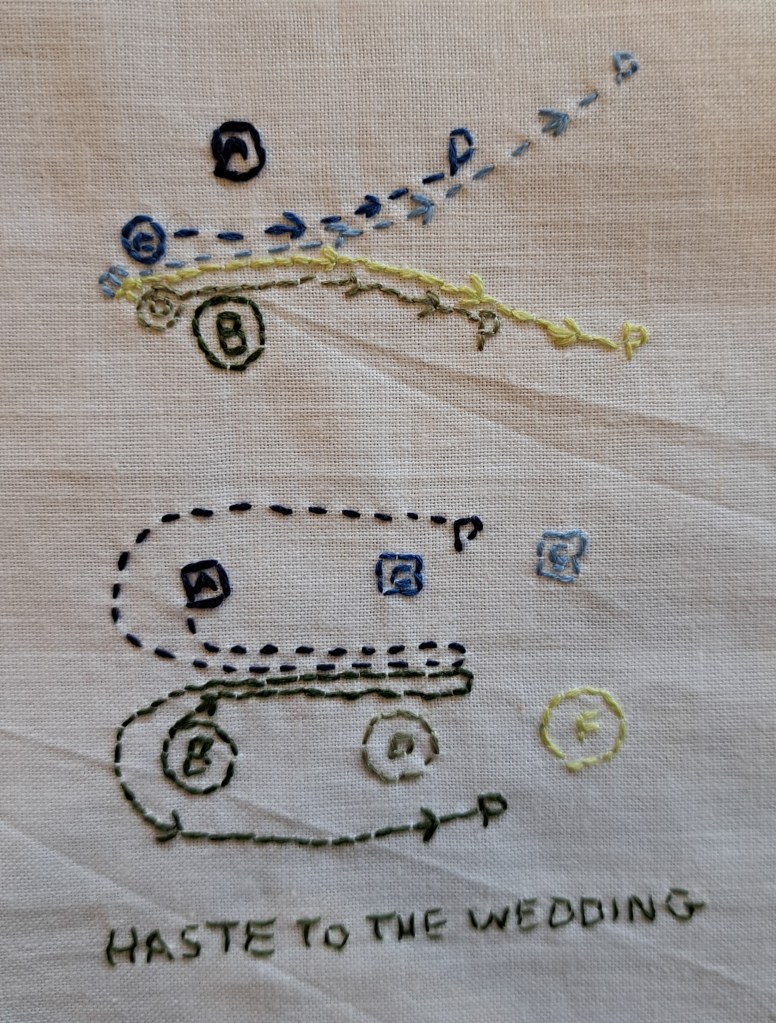
She has also stitched these dance diagrams as in Leather’s book. Mary kindly offers to teach us some dances on 5th February.
Annie’s embroideries of the dance diagrams
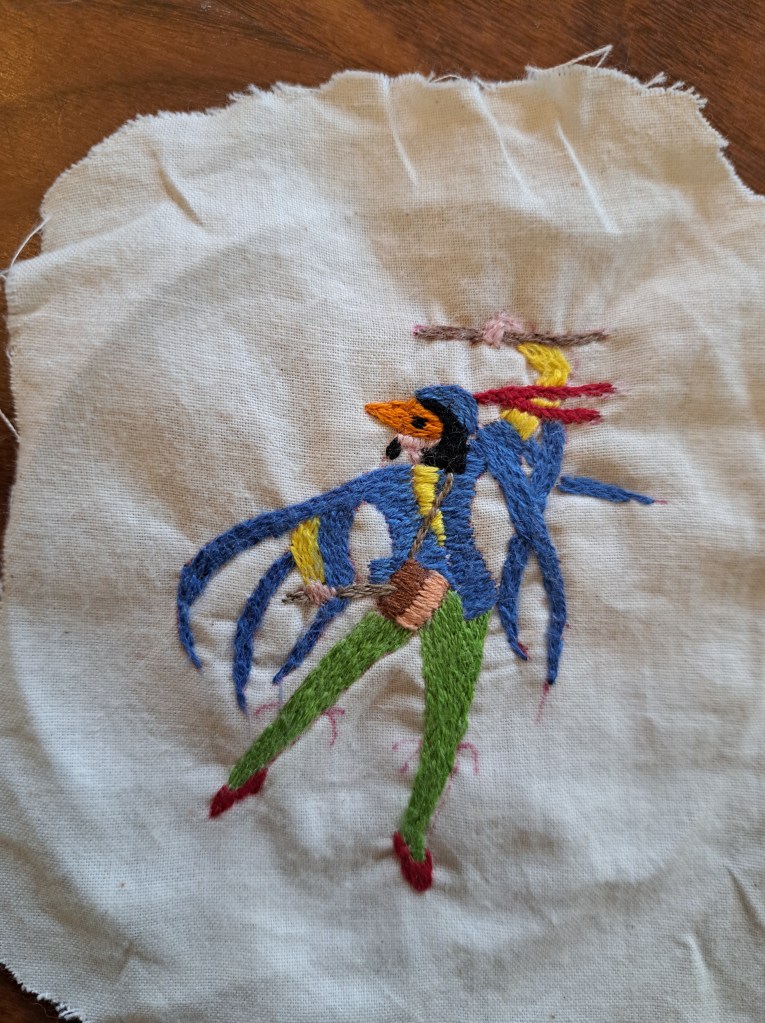
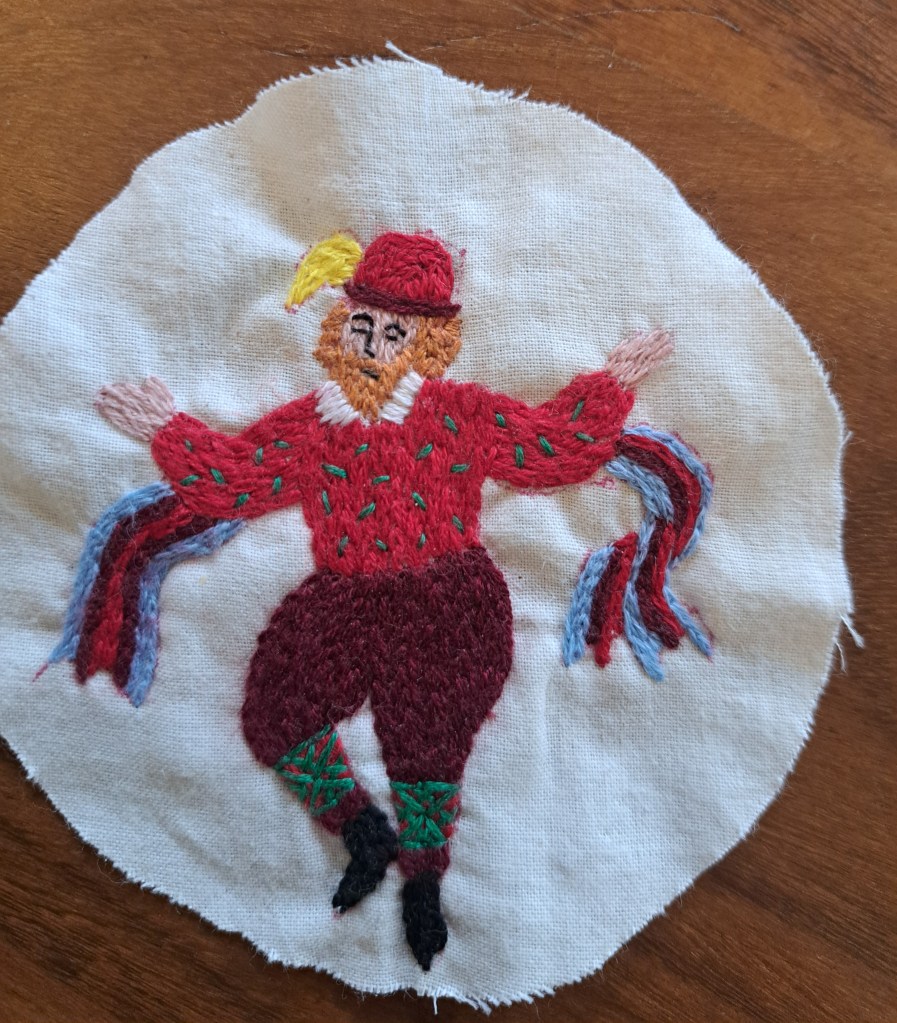
Mary has embroidered these dancers from the ilustrations in Old Meg of Herefordshire that Ann had previously brought in. This small book was originally published in 1609 and is a record of morris dancing where the twelve dancers were said to be over 100 years old each! (One that falls over at the end of the dance is described as a ‘”nimble-legd old gallant” and “his fellowes are of such little strength, that all their Armes are put under him (as Leauers) to lift him vp, yet the good olde boyes cannot set him on his feete.” Old Meg is a short form of old Margaret which the book title suggests will become a Mayd-Marian.
Mary’s embroidery from the figure on the front cover of a more recent editon of Old Meg of HerefordshireMary’s embroideryMary’s embroidery
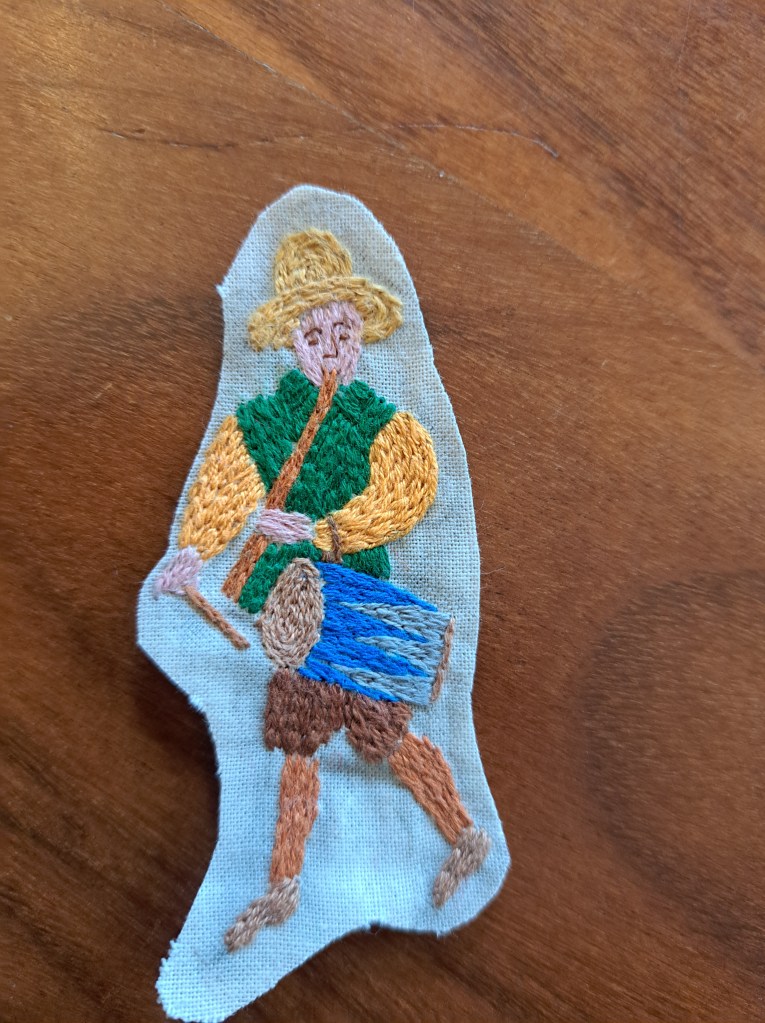
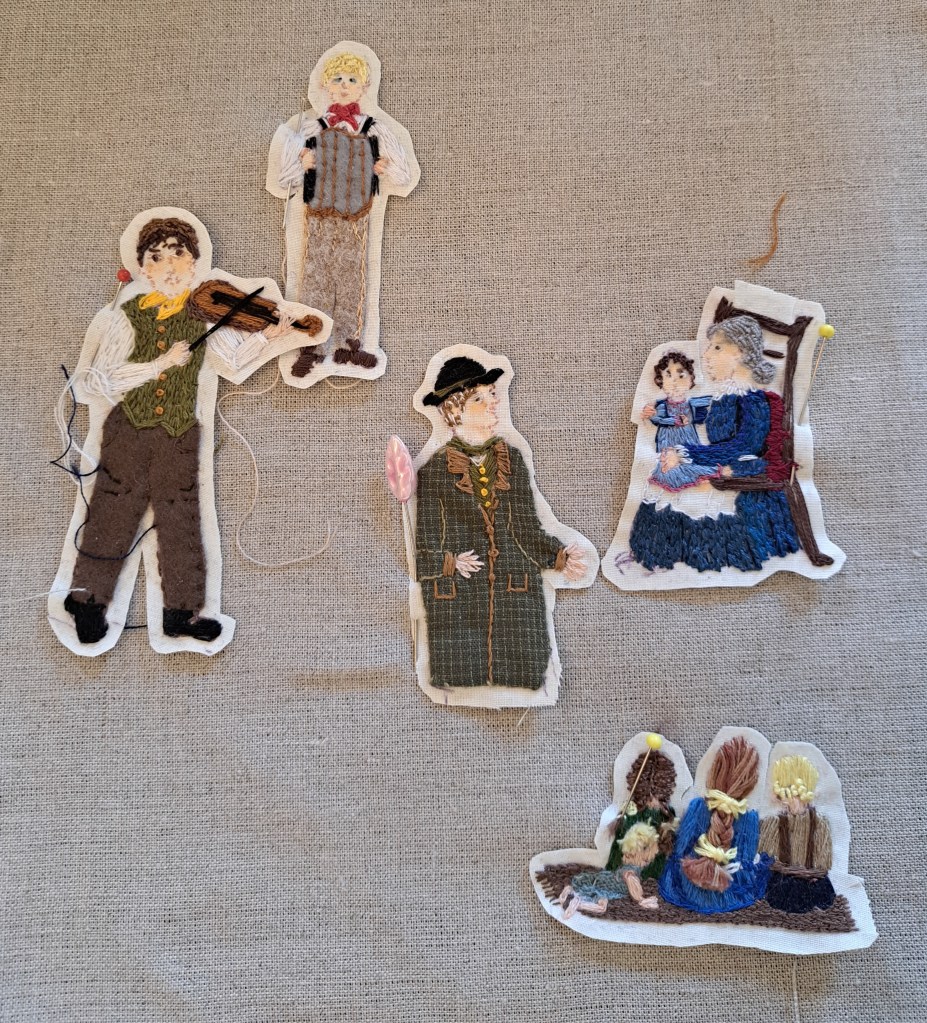
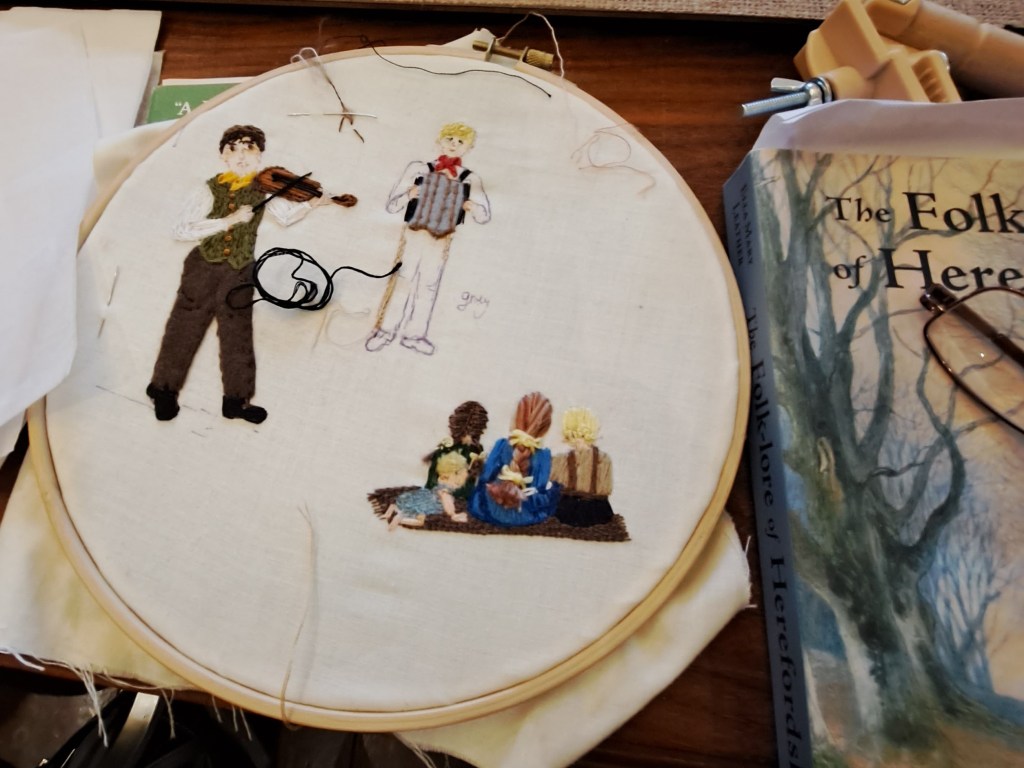
Our Meg had been busy embroidering figures to display the transmission of traditional music and song from adults to children, as she imagined it happened in the time of Ella Mary Leather.
Meg’s embroideries
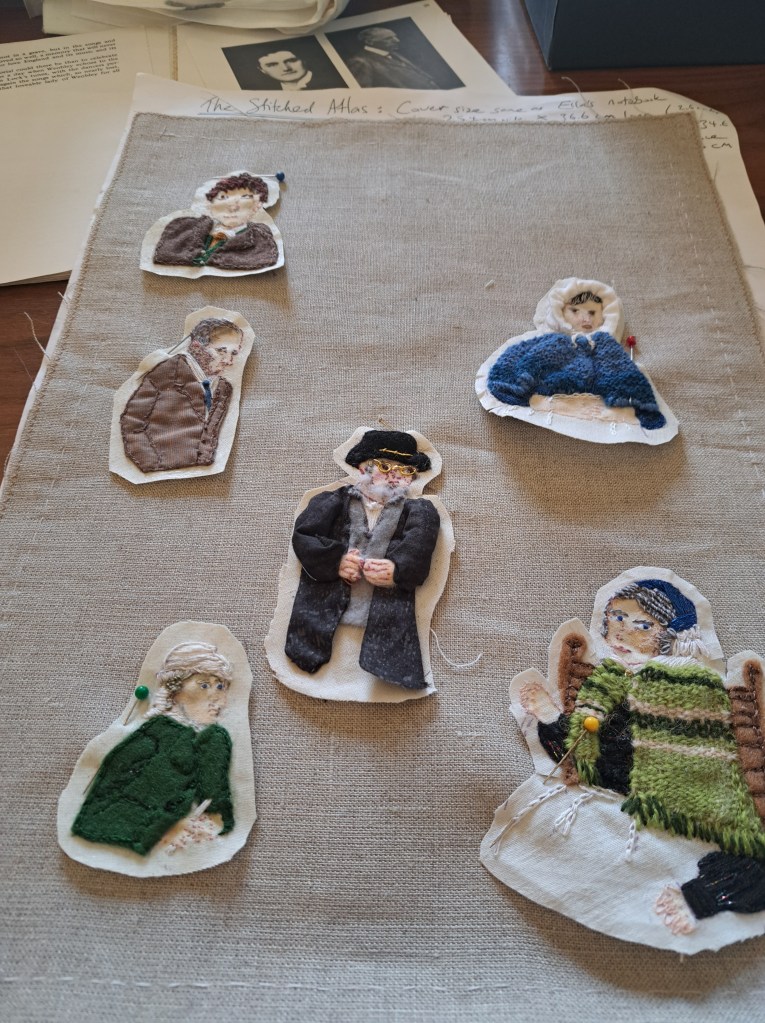
She is also stitching more famous or well known figures from Ella Mary Leather’s book and the illustrations on the cover of Lavender Jones biography of Ella Mary Leather called ‘A Nest of Singing Birds’.
Meg’s embroideries of figures from Leather’s book and Lavender Jones’ biography of her.
Caroline G is starting to put together her atlas page of the story of the spectral voyage on the River Wye
Caroline’s ghost story
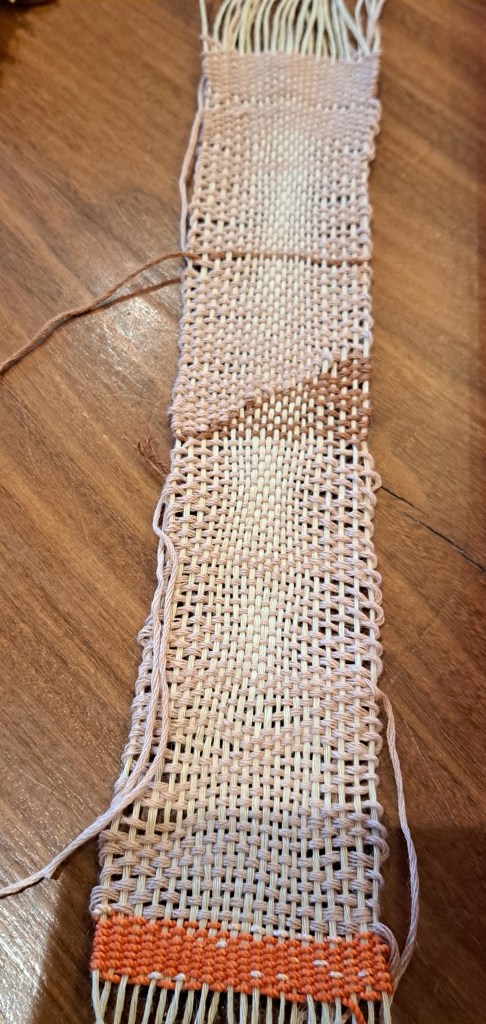
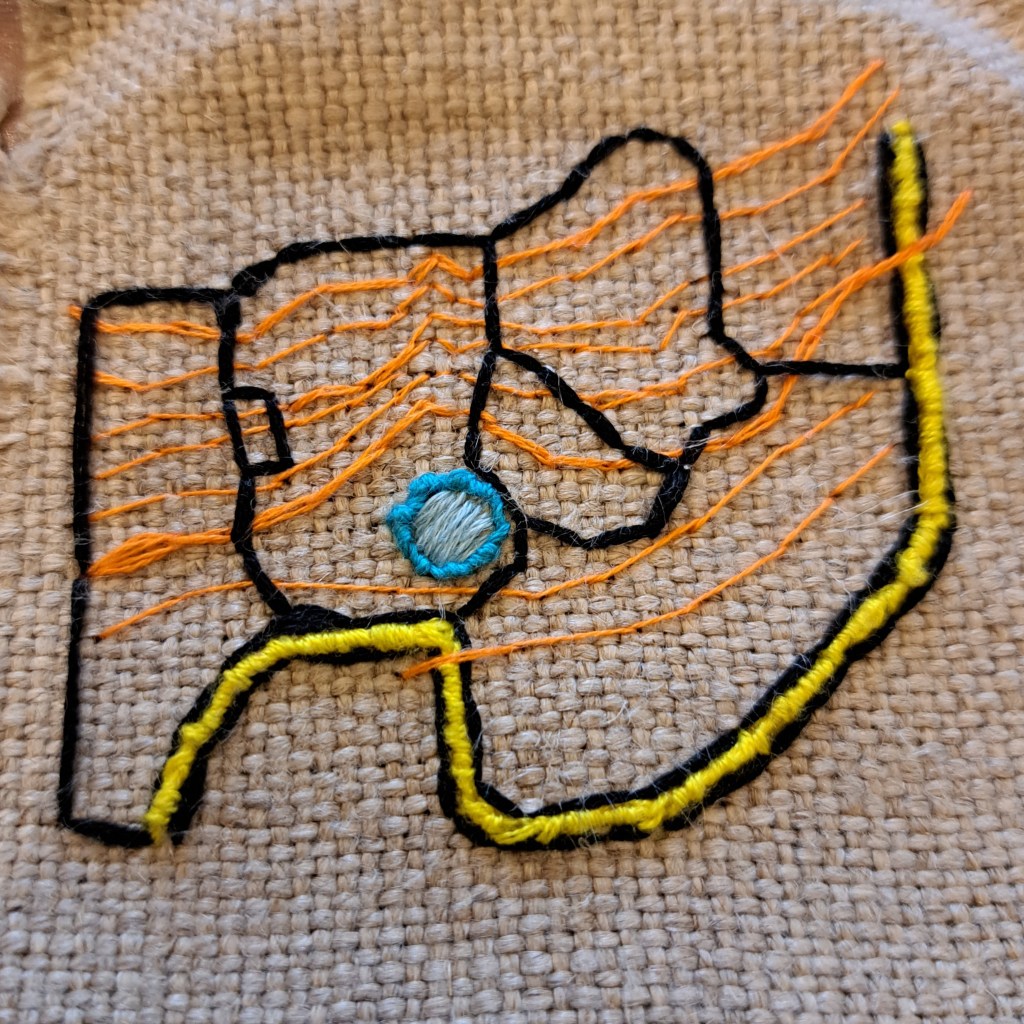
Helen is weaving and stitching the movements of the Scottish Queen found at Bacho Hill. She cleverly uses running, chain and arrow stitches to tell the story of the Queens captivity, and being pursued by the Welsh.
Helen’s weaving encapsulating the flight of the Scottish QueenHeln’s running and chain stitch experiments to represent movment
Maggie C. is struck by how many lion’s there are in Leominster and also present in The town’s origin tale which she is invetigating and reimagining at the site of the two river’s meeting. She plans to stitch a lion; here is one sketch influenced by one design found in Leominster Priory.
Maggie C’s lion sketch
We finish the session with a plan to focus on fairies next week.
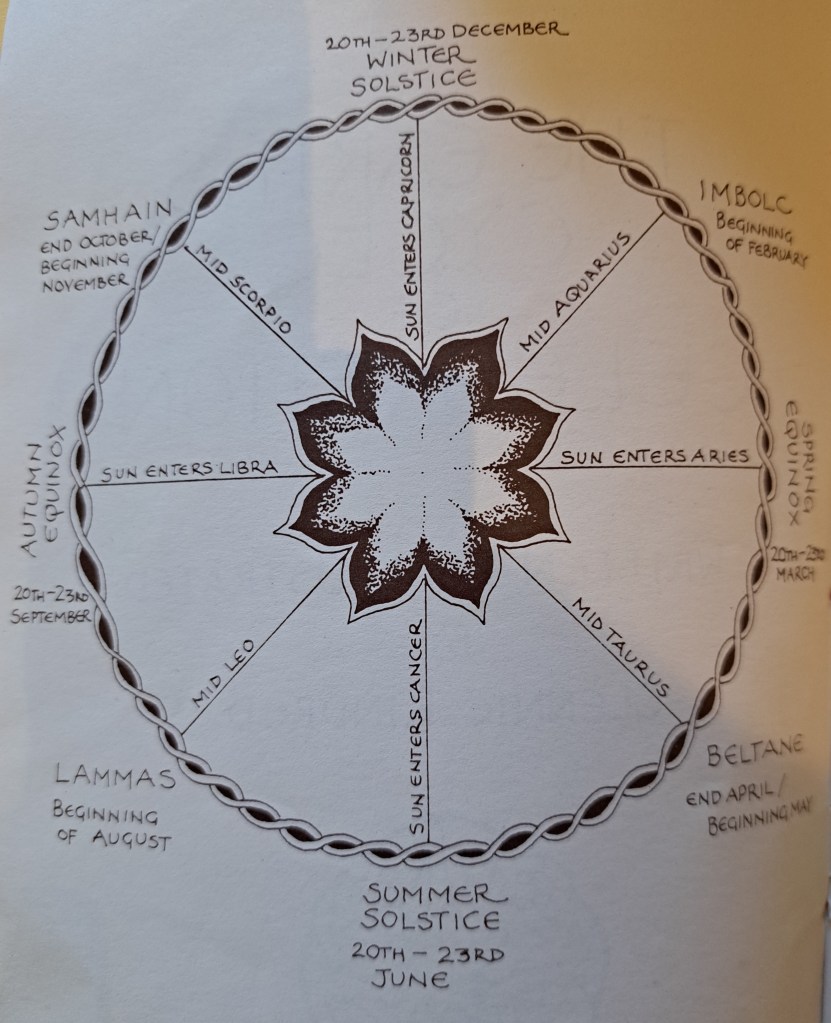
Caroline G has brought in this diagram of the Wheel of the Year showing the seasonal celtic festivals and decides to embroider it onto a page. It feels a sif more and more groups are clebrating these festivals, particularly with dancing, be it in groups or indivdually.
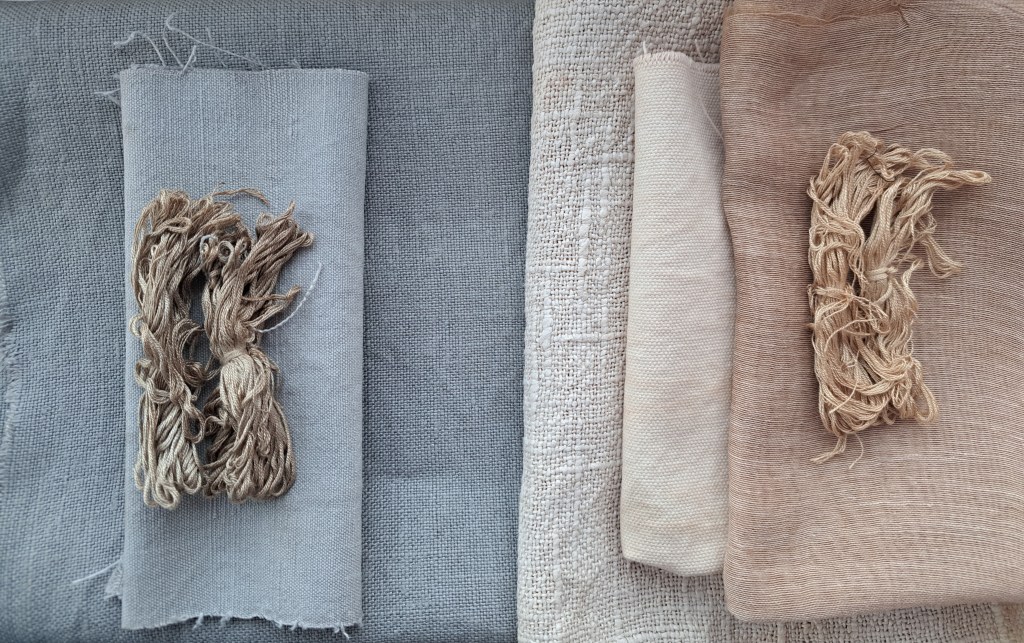
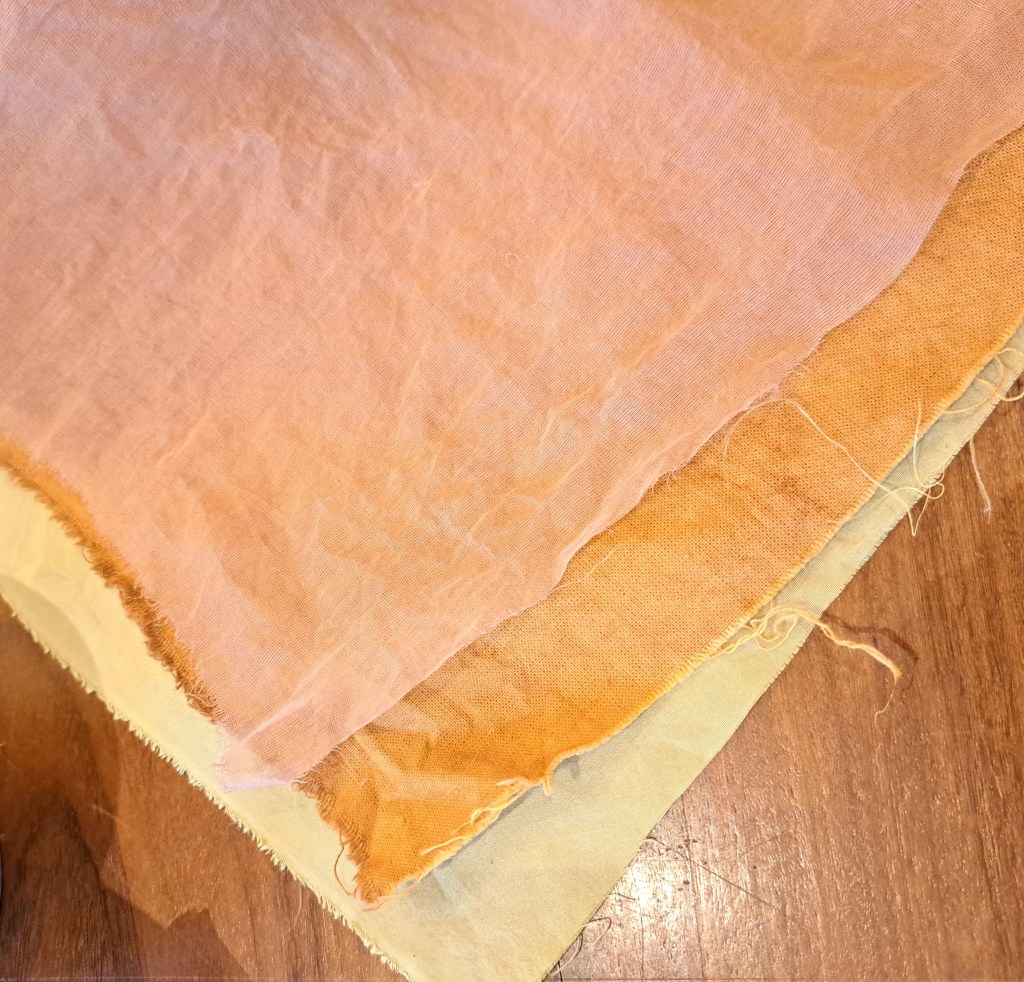
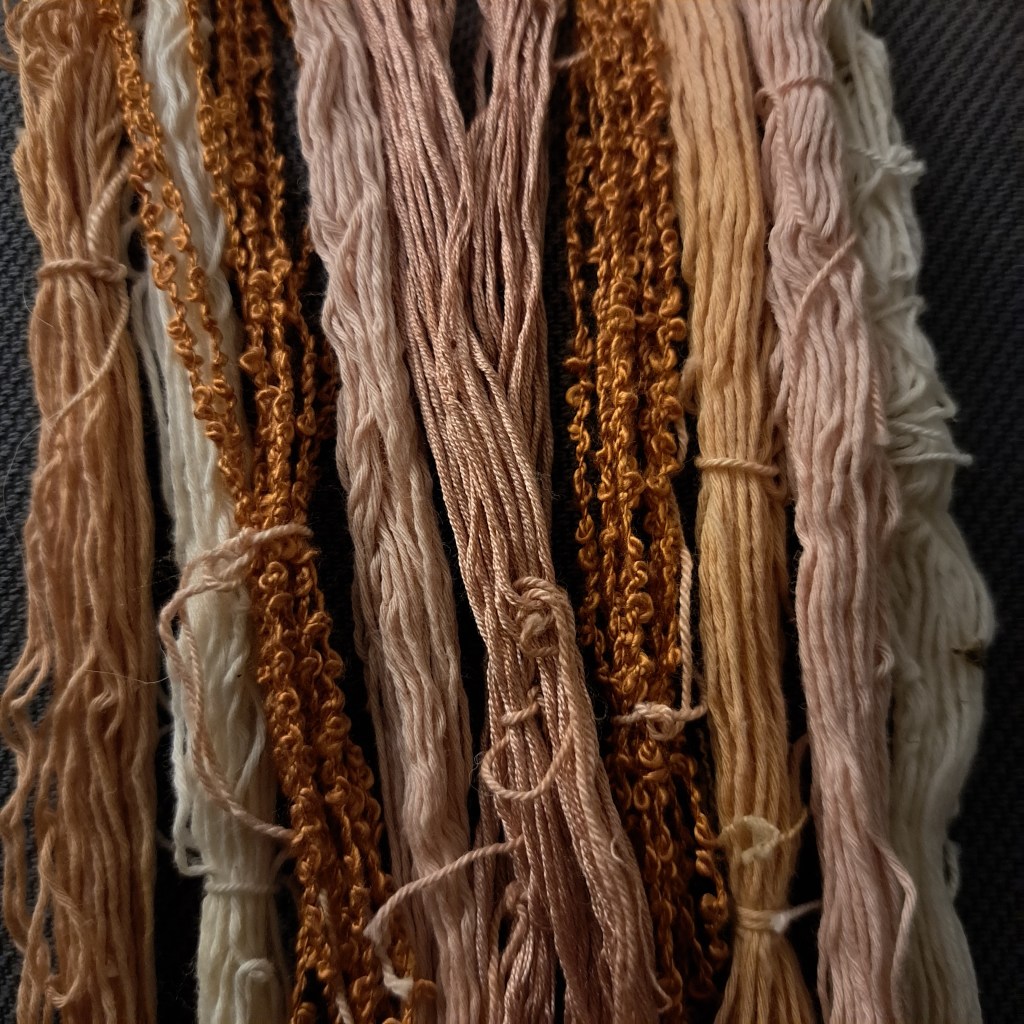
I have succesfully achieved these grey and pink colours from a dye bath of rose hips using a soya milk mordant, and modified with iron wter to achieve the grey colour or wood ash lye to achieve the pink. I think the grey will make a great base page for the winter season page in our atlas. Thank you to Helen Vine for the fabric.
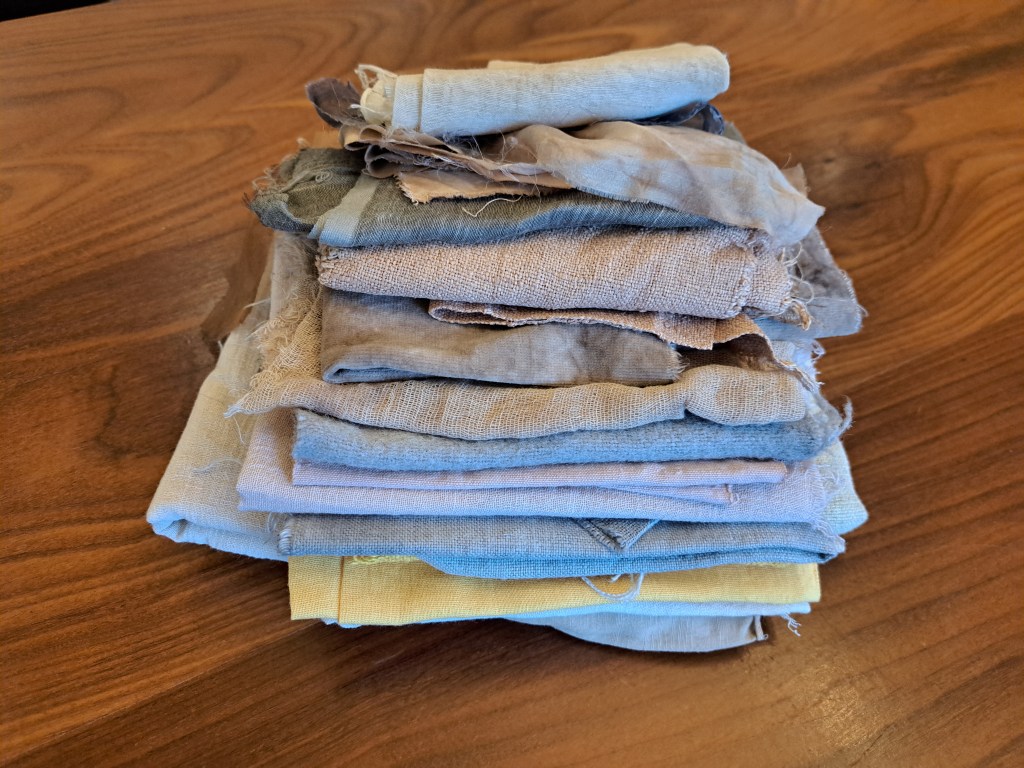
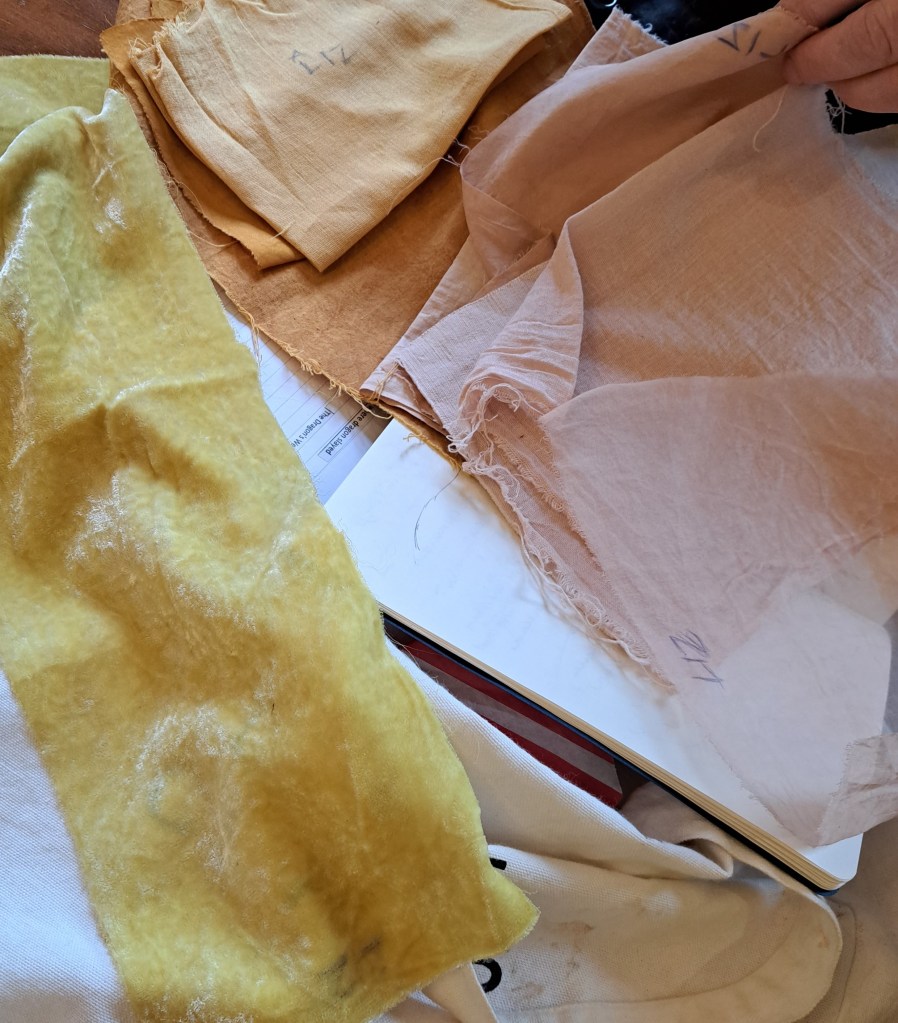
It’s the first meeting of the new year. I don’t plan the session apart from the wish to have a catch up and see how everyone is faring in their research. I bring in a pile of fabric from the natural dye session, that people can use if they wish.
I also have to discuss the exhibition we have been working towards as its become apparent that the space we were to have it is no longer available on the terms I had originally agreed. In order to carry out my research plans as outlined to my participants in my collaborative research methodology, I will have to look for another space where all our work can be shown together.
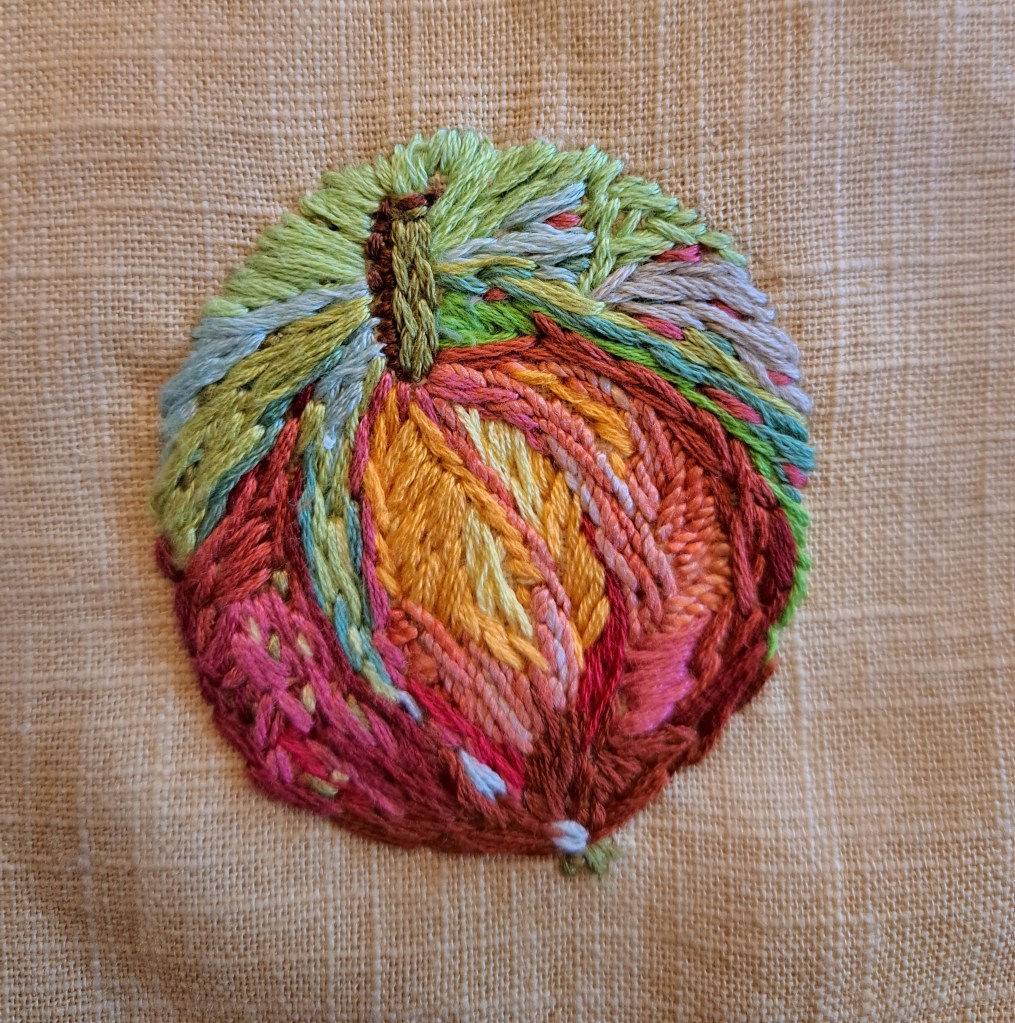
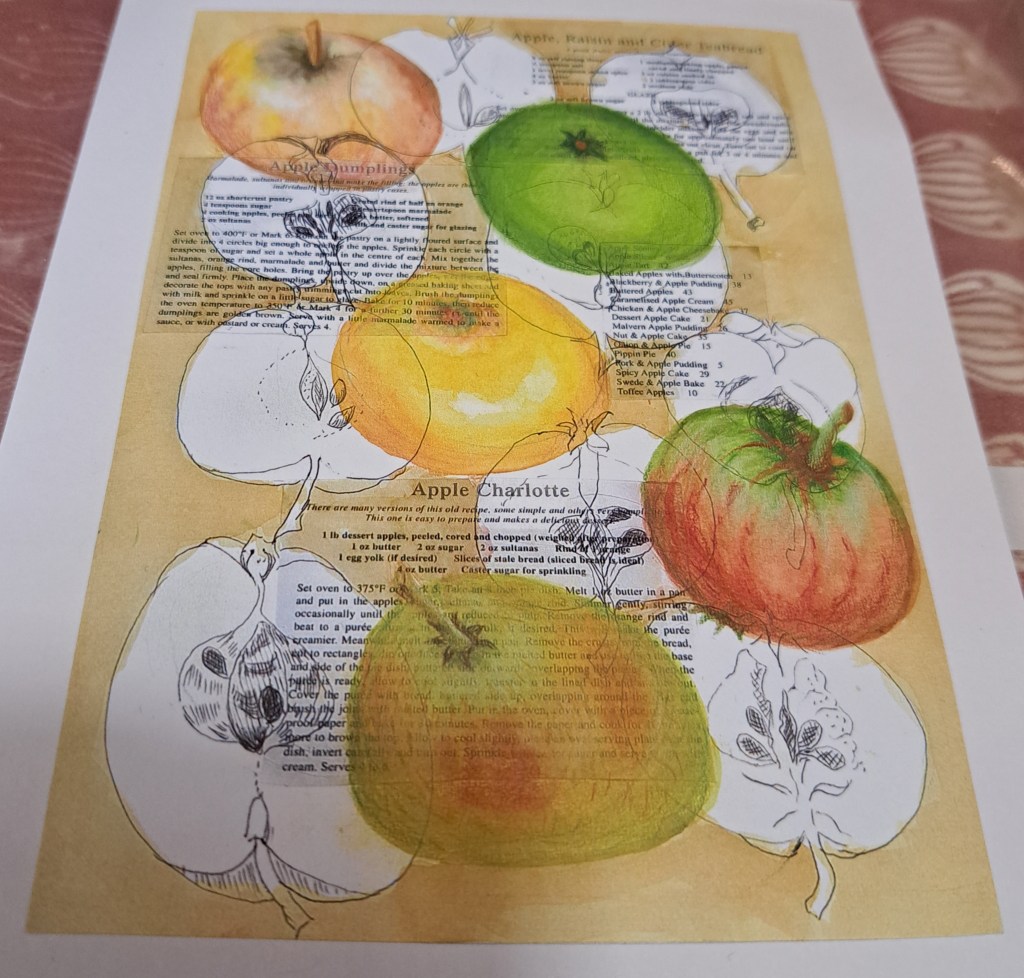
Chris has finished this apple embroidery. Her notebooks showing her research into Bodenham and its orchards are a delight. It seems that apple varieties are very much tied to place in Herefordshire, which I had not appreciated before.
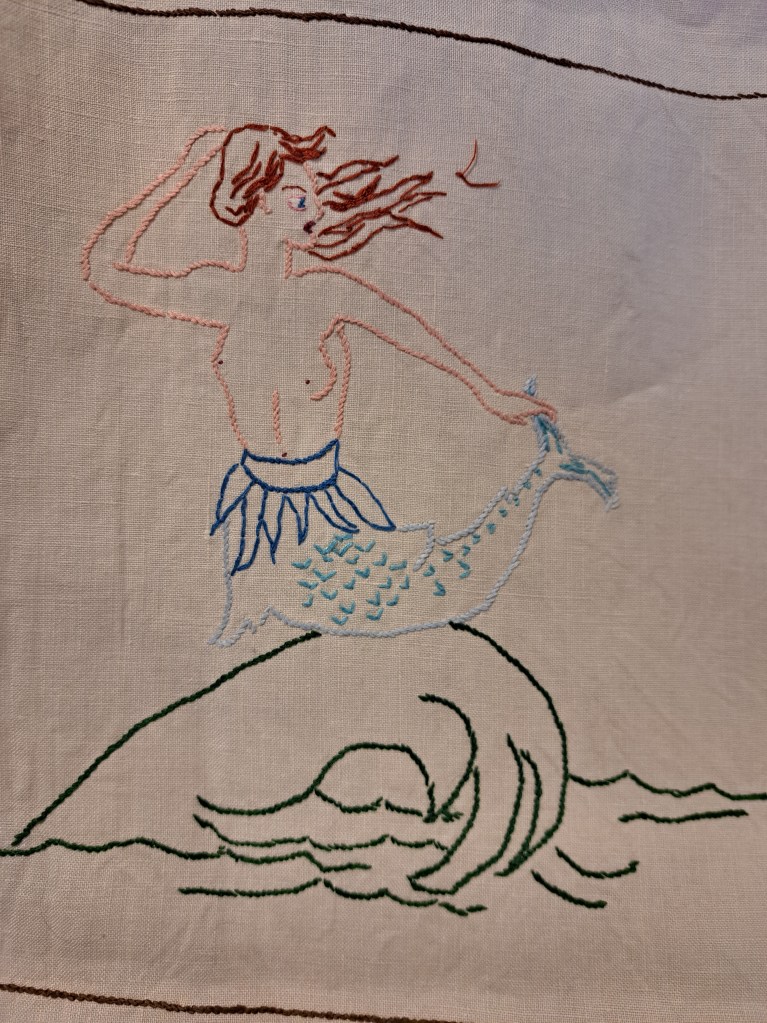
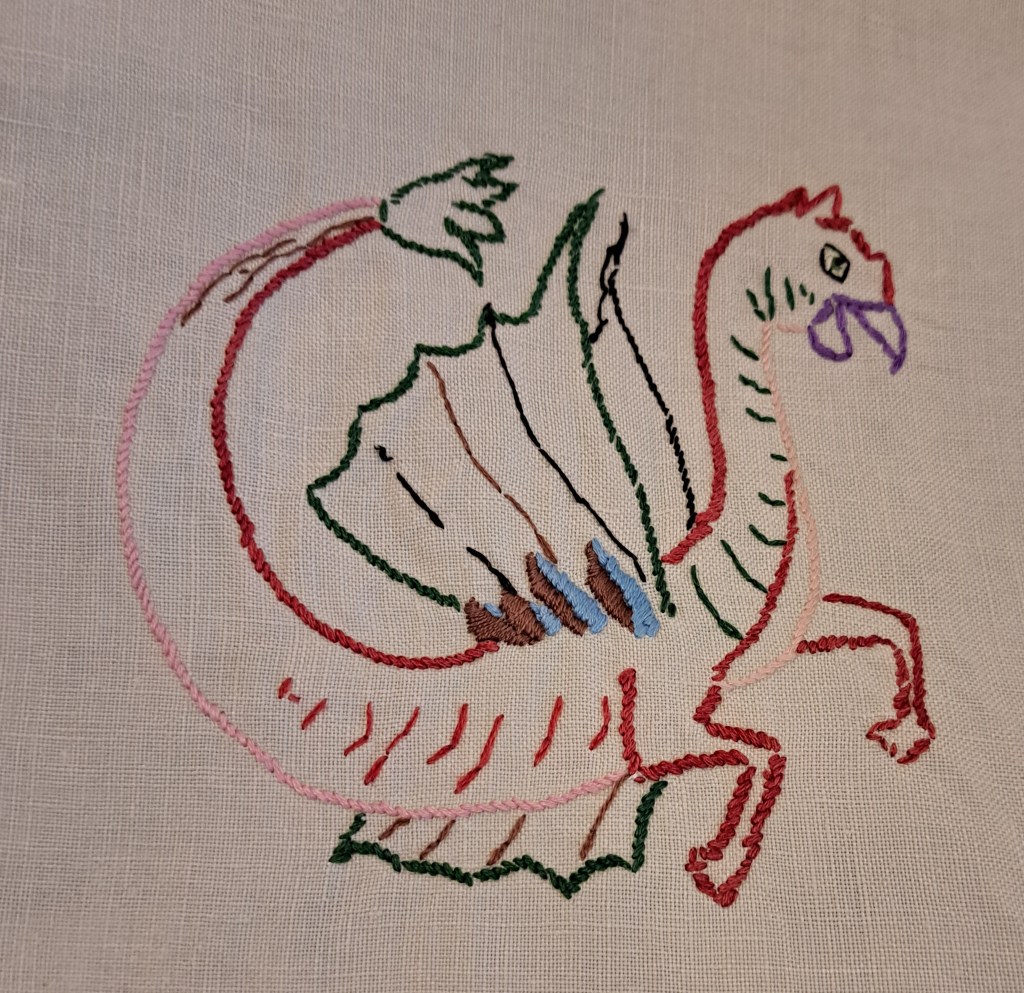
A found tablecloth from a charity shop has been brought in and we look at the folkloric characters embroidered on it, including a mermaid and a dragon.
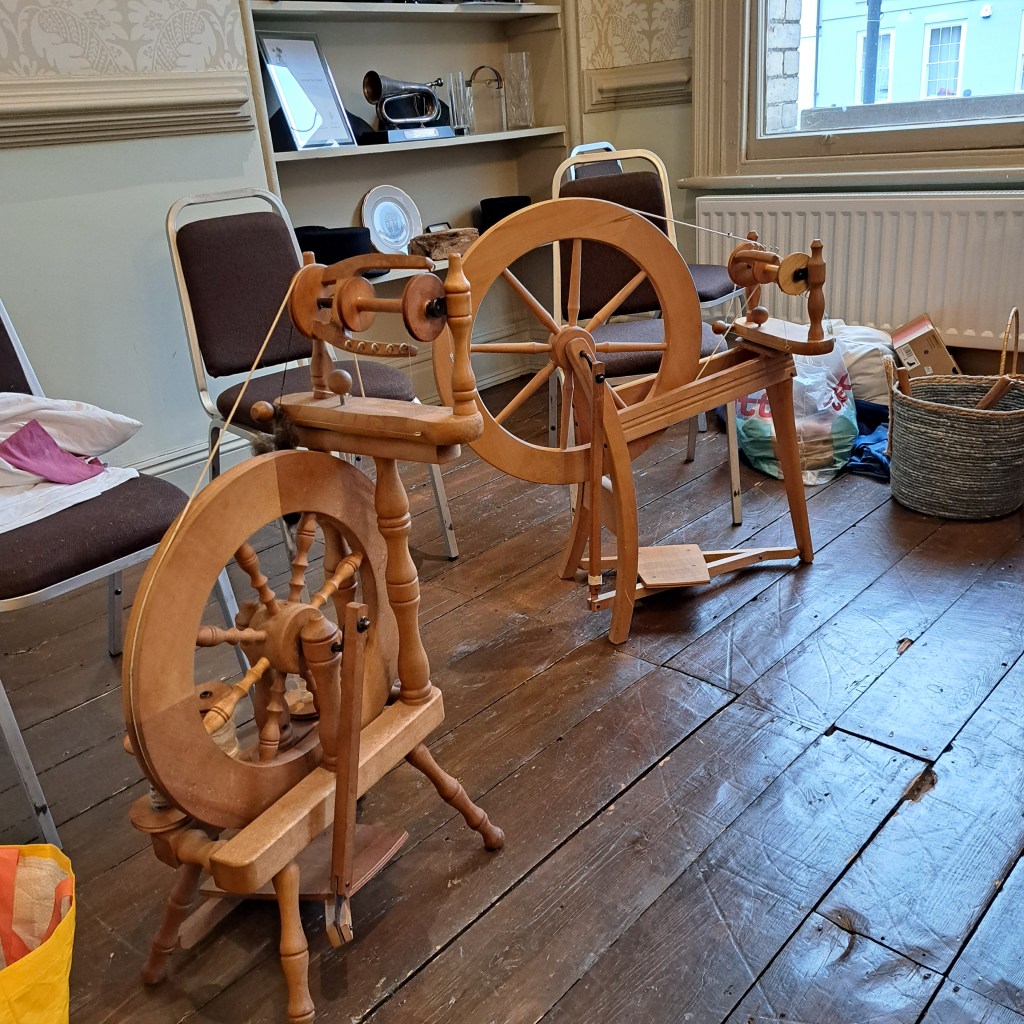
It’s the last meeting before Christmas and Maggie P has kindly agreed to teach us how to spin, and brings in drop spindles, carders, wool and a couple of spinning wheels. She is a fabulous teacher and we surprise ourselves by eventually getting the knack of it. Rhythm is all important. Lots of fun is had and she teaches us the terminology. We learn that the spindle which the wool is wound onto is called a distaff and Ann says this also pertains to the female/mother’s line of descent in family trees.
Caroline G has made an apple cake using an old recipe so we can celebrate the approach of Christmas. It is very tasty and we are pleased when she later shares the recipe!
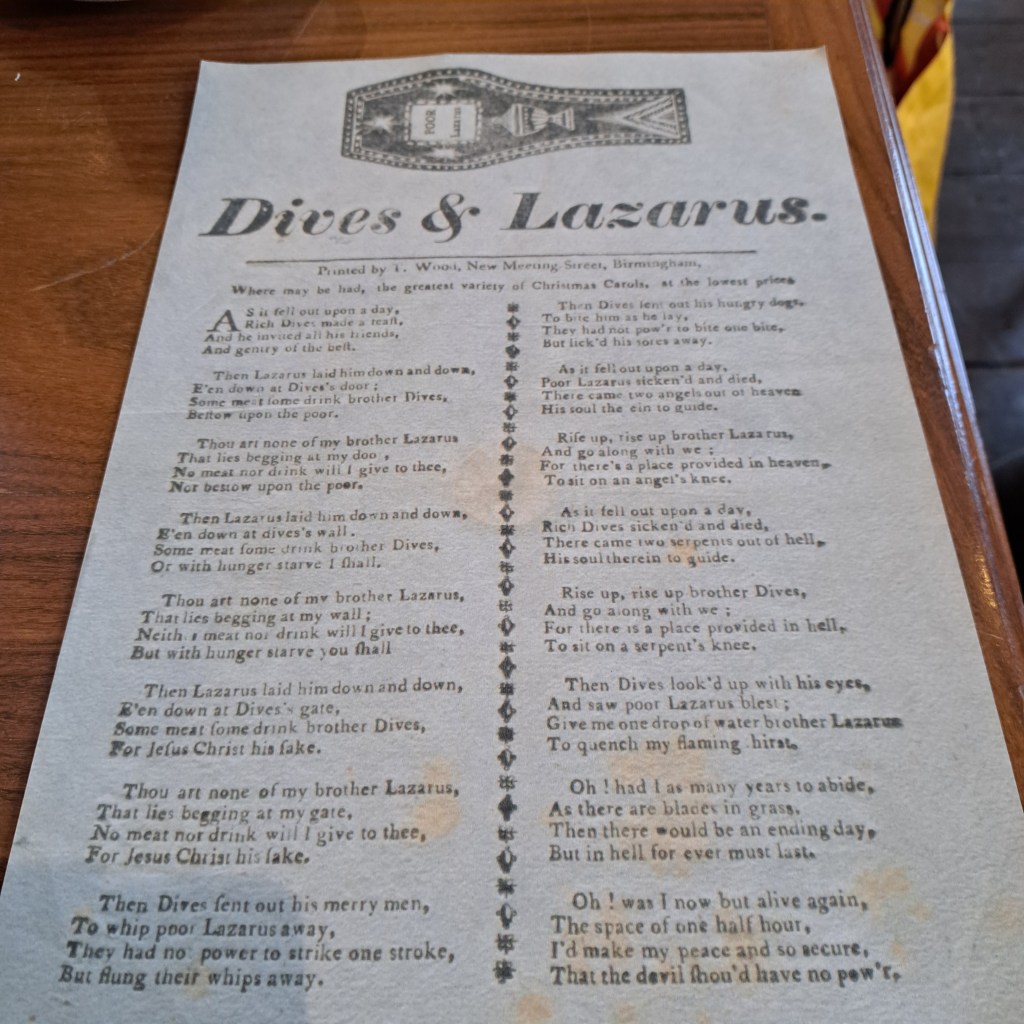
Karen has brought in a copy of the broadsheet ballad Dives & Lazarus, she is fascinated by all things to do with this song, and Annie and I love the wood block images that accompany the broadsheets. Often the same image was used across several different broadsheet songs..
A copy of a broadsheet ballad
Caroline T and Ann give in their detailed contributions for the Autumn page of the Atlas and we all learn a little of the techniques and stitches they have used.
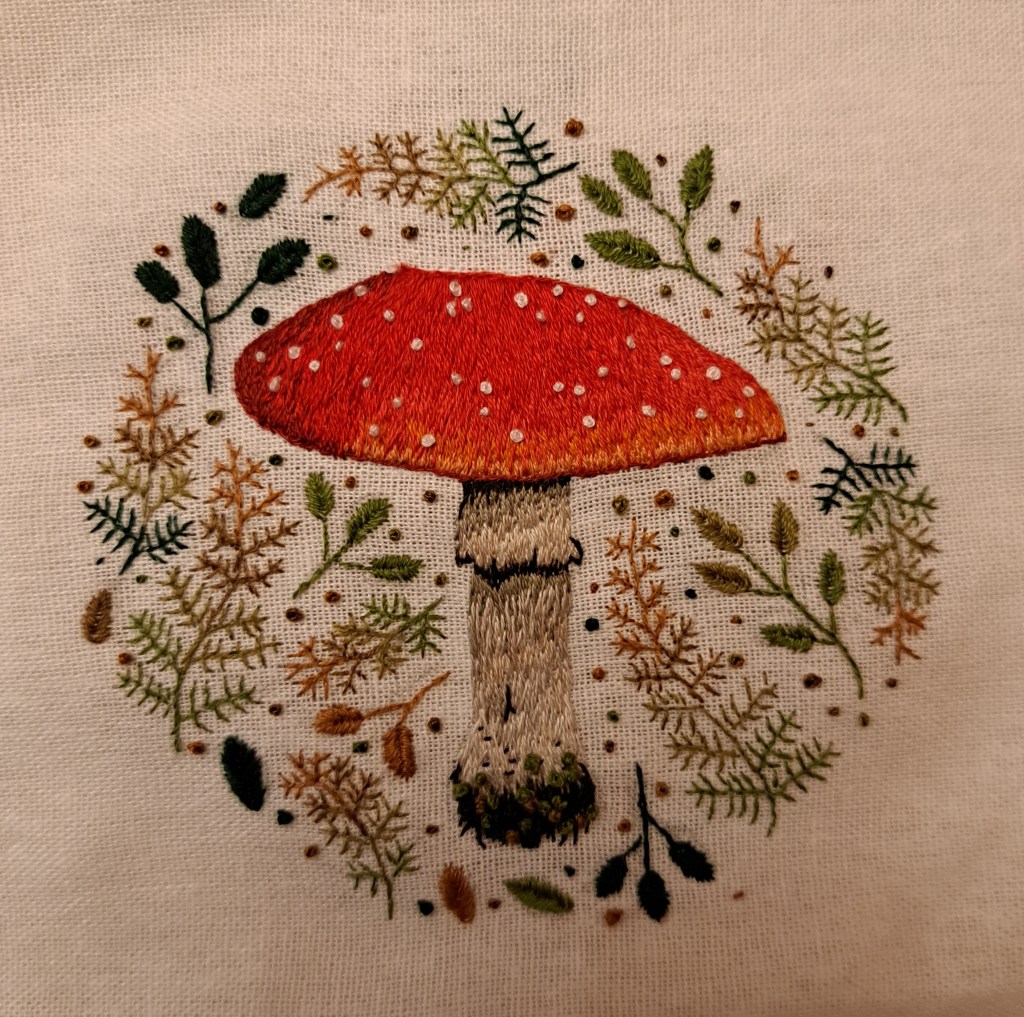
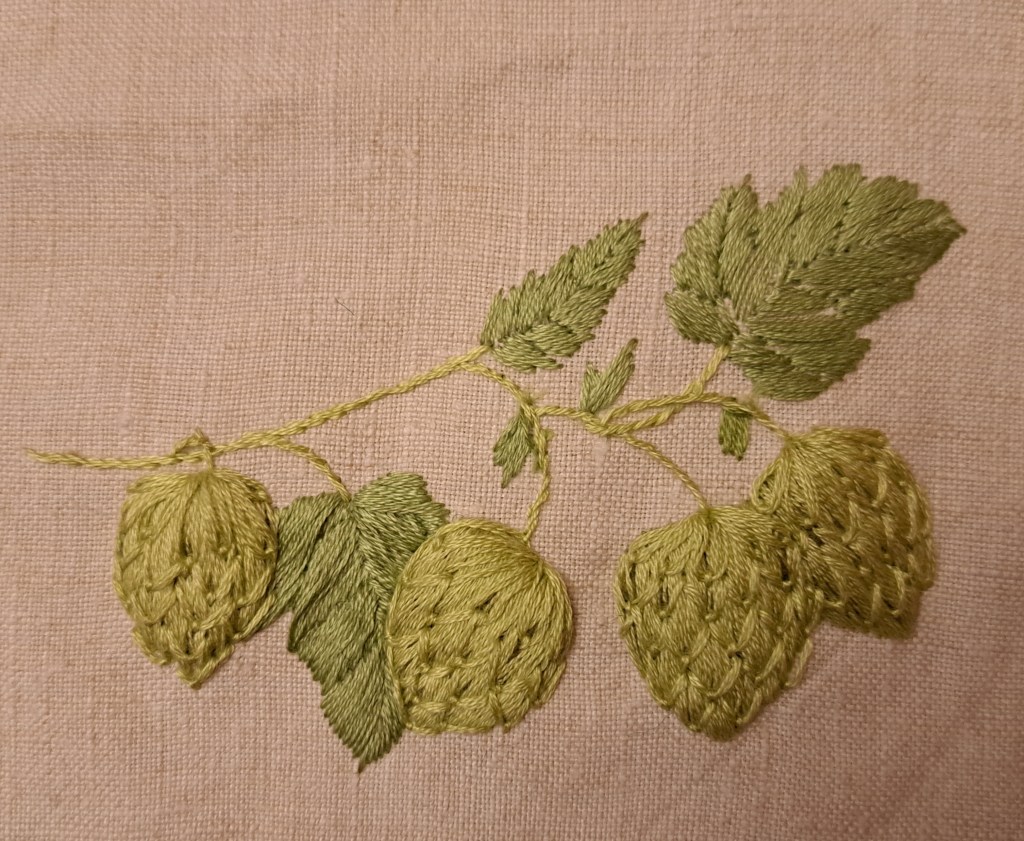
Caroline’s Autumn contribution, these bright toadstools stand out in woodland walks at the moment. Ann’s hops for the Autumn page
Maggie P is stitching the markings from the coffin lids she came across in Dilwyn Church. They remind us a little of the apotropaic marks stitched earlier by the group. She is stitching them on very fine material and the contrast with the chain stitched line is pleasing.
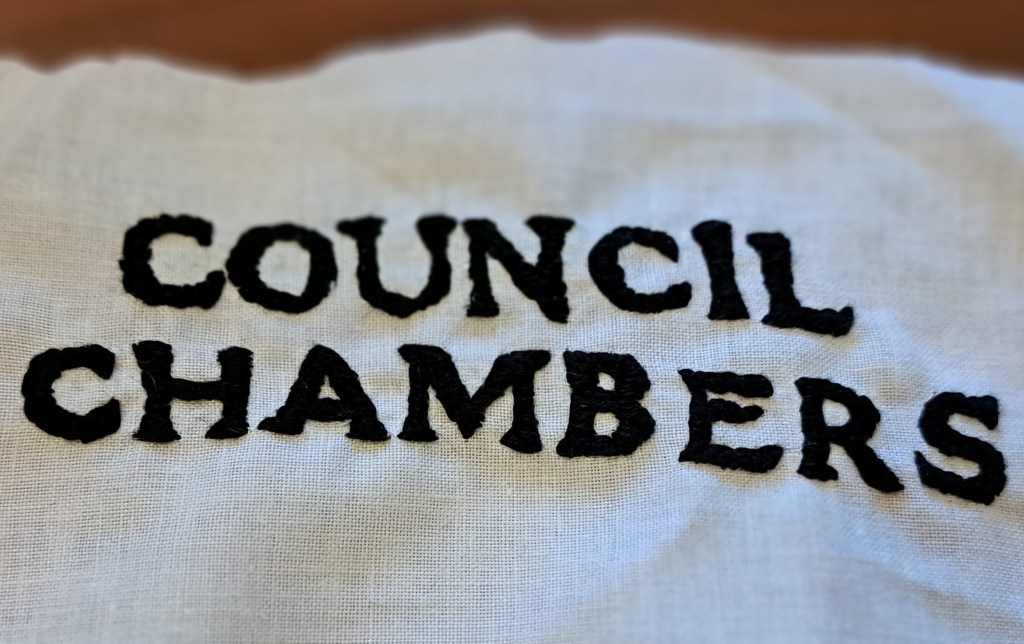
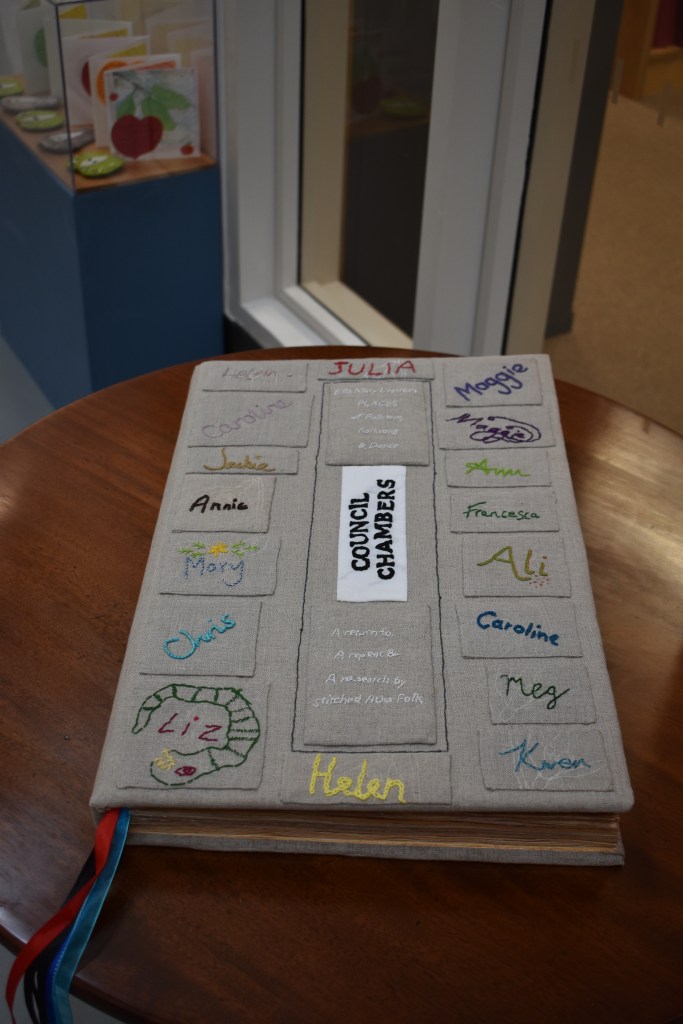
We are meeting in the Council Chamber in Leominster Information Centre every Monday morning, and this week Francesca brought along an embroidery of the sign from theCouncil Chamber door to add to our mock Atlas front cover. We are using an old Times Atlas with the pages repurposed to bring together the information we are finding out about folklore and songs in places as we go along, and to add in photographs from our research walks.
Each week, we meet around a very long wooden table whose shape I have stitched onto the book cover, and everyone has embroidered their first name onto scraps of Valencia linen left over from my pilot project about The Lugg Embroideries. These are stitched on to the mock atlas cover to give a sense of the whole group. You can see traces of the printed snowdrop template on these material scraps and I like that this past pilot project which informs this new one, has bled in to the new project in this subtle way, connecting and linking the projects.
Several participants in my two new case study projects were also original group members of the pilot project, so the pilot project helped with recruiting for this research project. I find I have unwittingly developed a ‘Community of practice’ (CoP) (Lave & Wenger 1991; Wenger 1998). The type of learning in communities of practice has existed ‘…for as long as people have been learning and sharing their experiences through storytelling.’
This week in themeeting we discuss work in progress, and I comment on the importance of people to place, highlighted by Meg recreating in thread some of the photographs of people in Mrs Leather’s Folk-lore of Herefordshire.
Meg’s work in prgress
Maggie Crompton reads the group three poems which she has worked on, inspired by the working processes and stories she is noticing in the group. The first is about Puck of Pokehouse Wood whose story and place Caroline T is investigating:
The second is inpsired by the story of a pig seen from a coach near Burghill, which Liz is investigating:
The last poem, Maggie has written after observing all the processes in the workshop on Natural dyeing with plant materials which Helen kindly taught us:
Here are some other photos of work in progress in this week’s meeting:
Helen is learning to weave, guided by Maggie P. and is exploring the story of the 6th century Scottish Queen pursued by The Welsh at Bacho Hill Francesca’s map of Mordiford Francesca’s map of Dorstone
To end this meeting I brought along E. David Gregory’s (2010) informative text ‘The Late Victorian Folksong Revival– The Persistence of English Melody 1878-1903‘ and I read from it as the group work on their embroideries. The aim is to help us understand how they may have informed the Edwardian Collectors, of whom Ella Mary Leather was one. I do stumble over a few words as I read after having had a huge personal shock in the last week, so please forgive the lack of fluency.
Maggie C and Helen both weaving in different ways!
Seven particiapnts plus myself attended today. First the results of the dyeing experiements from last week were ooohed and ahhed over…
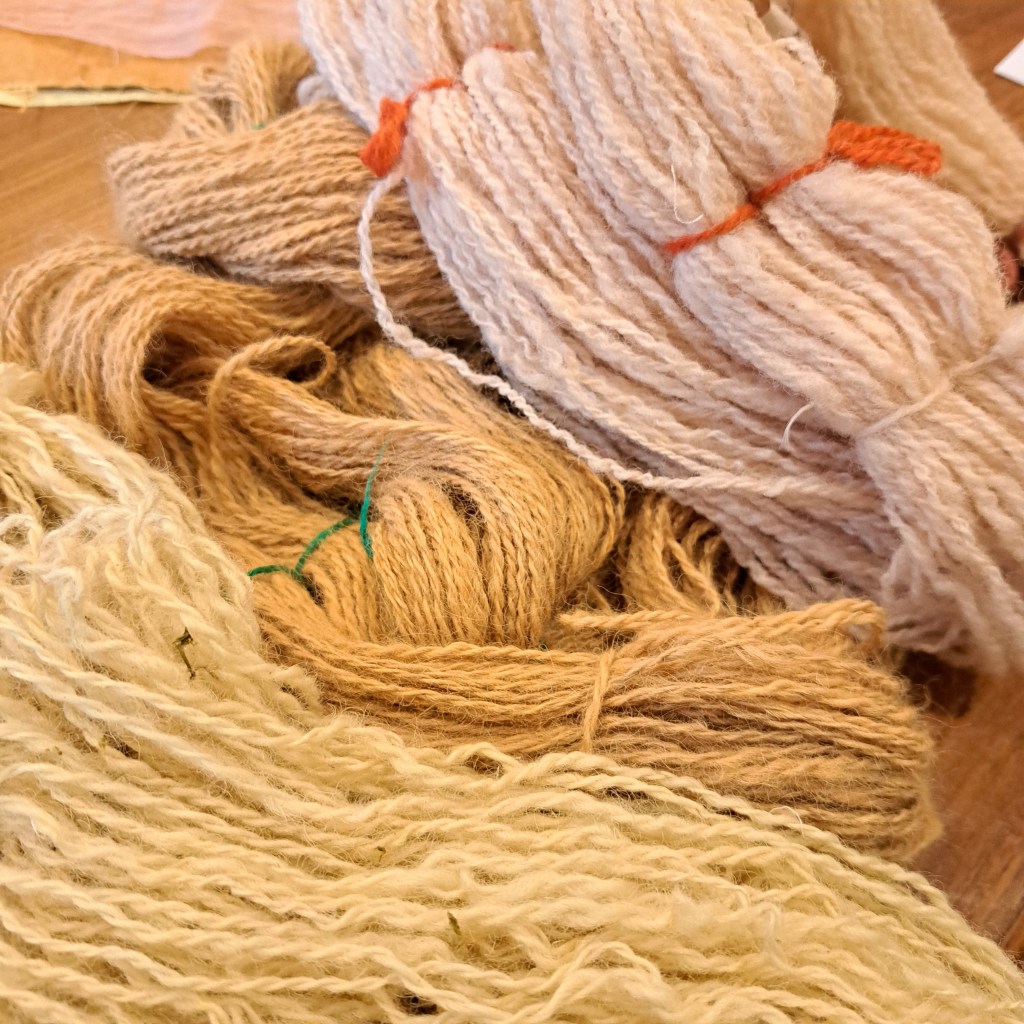
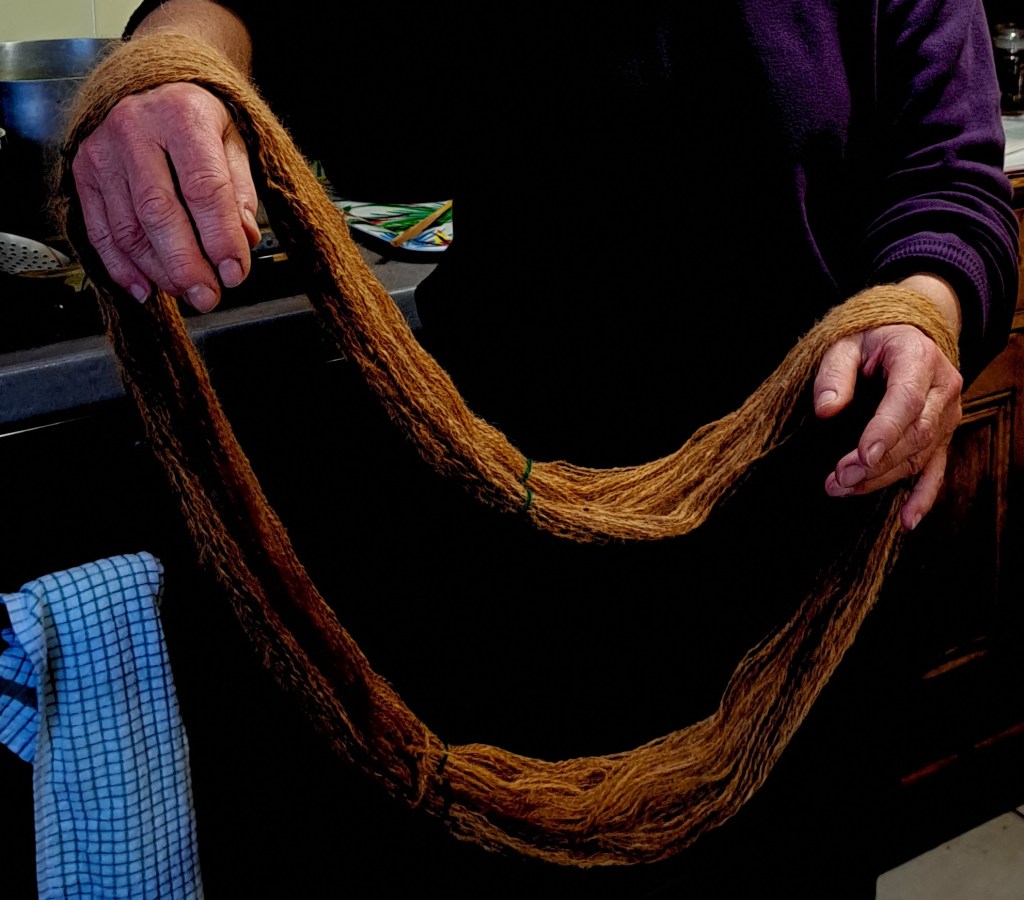
Maggie P’s skeins of woolThree different colour fabrics
Liz has been thinking of the old Brinsop Court and old Estates generally. Below are her results from last week’s natural dye workshop.
Liz achieved the colour she wanted for her recreation of the story about the pig
Work finished or being stitched today…
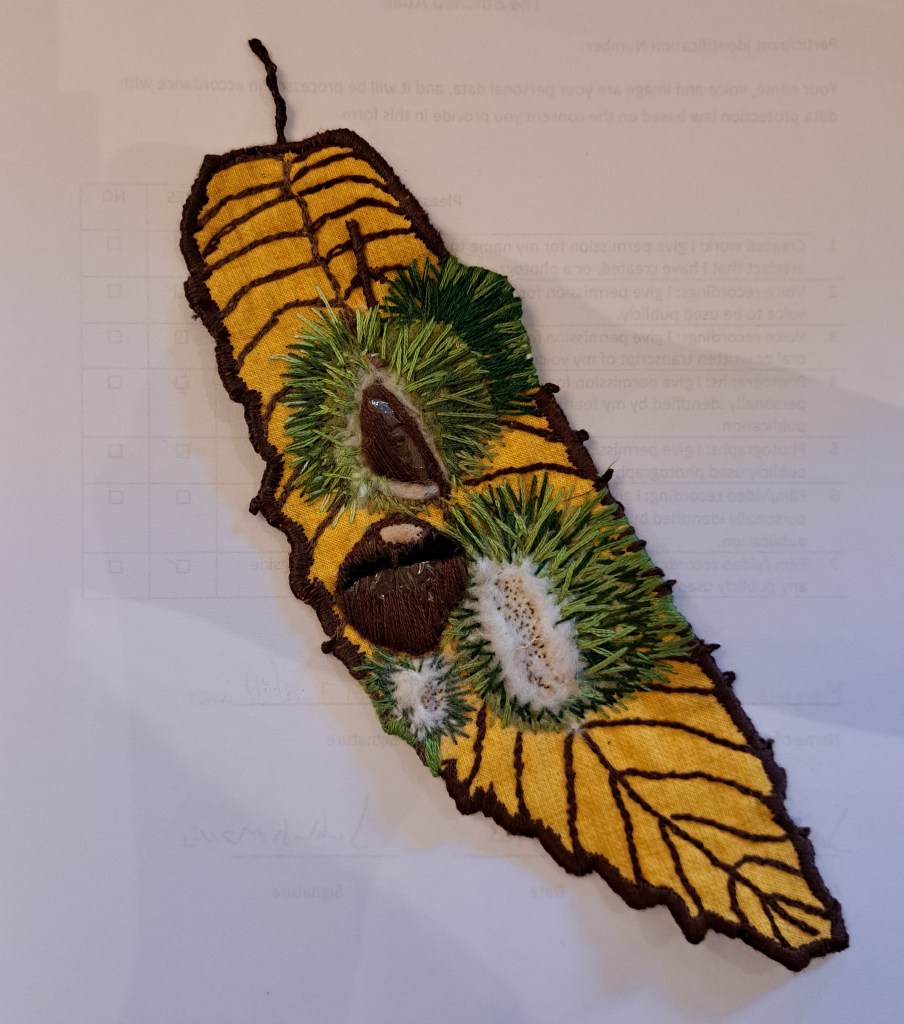
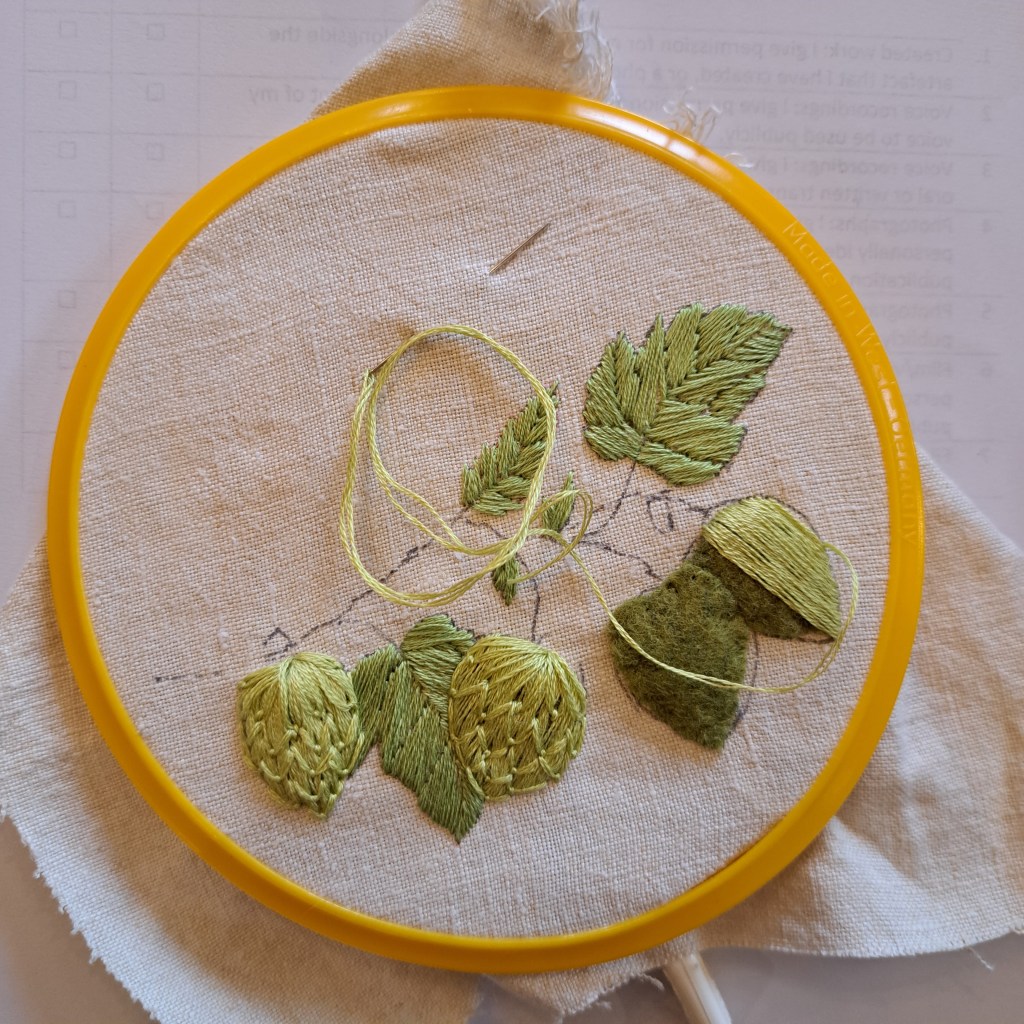
Meg’s wonderful leaf and chestnuts for the Autumn page of The Stitched Atlas
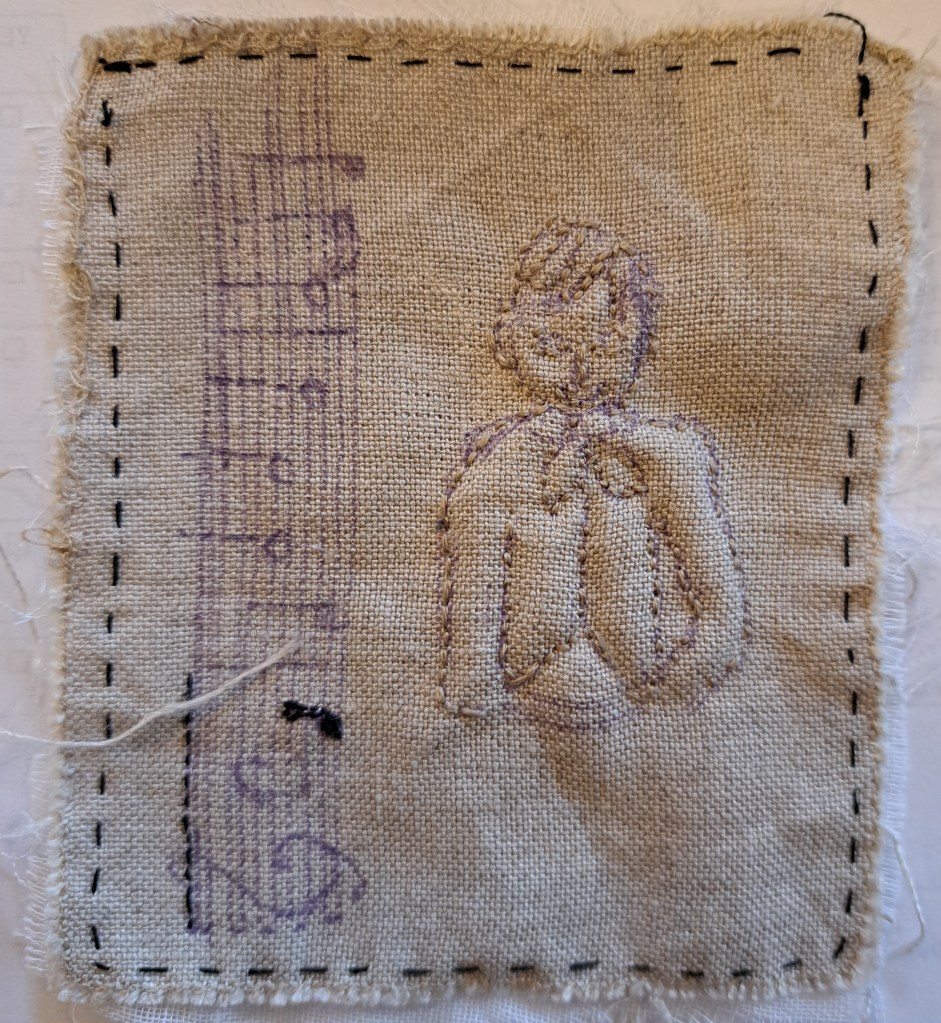
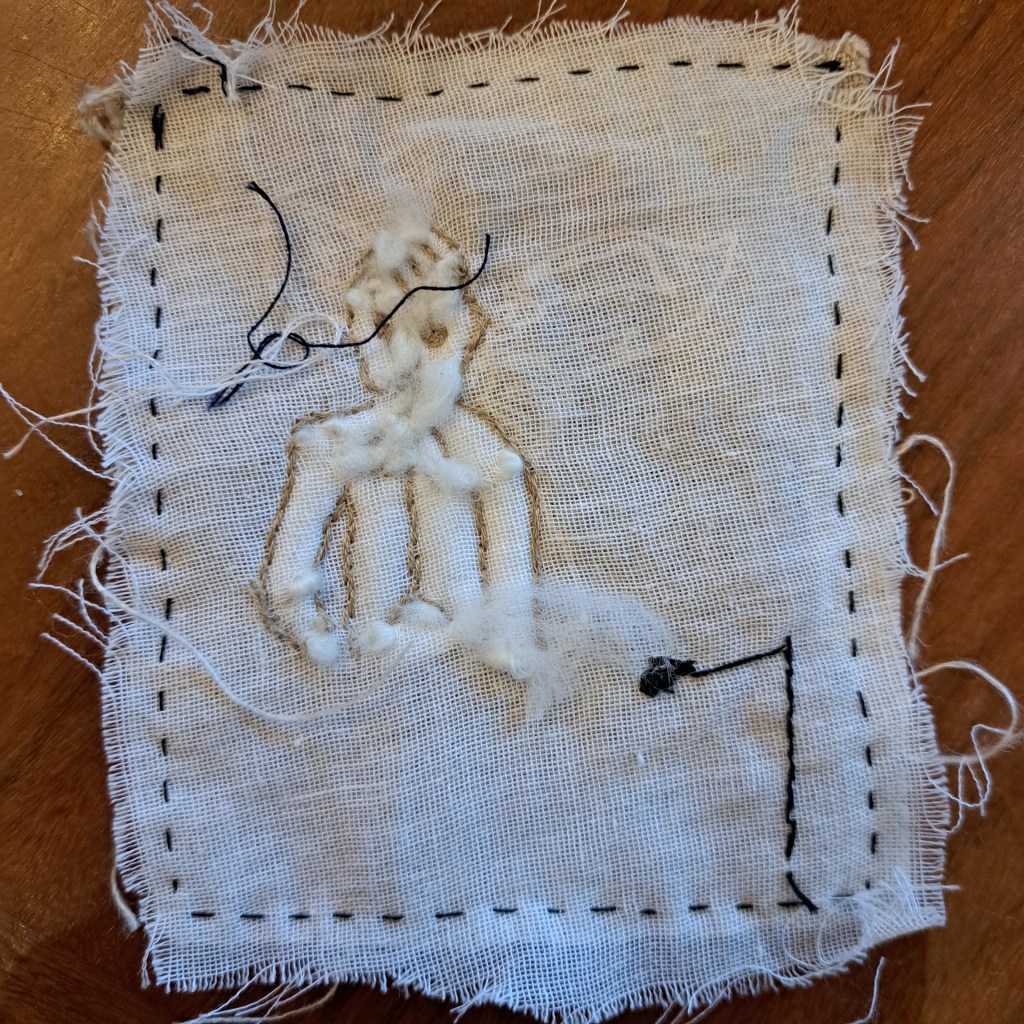
Meg informed us about this technique of raising images called ‘Trapunto’. I am grateful to her for all the stitching knowledge she is so generously sharing with us ‘amateur’ embroidery stitchers!
Meg demonstrating how she is padding her figures. The reverse side showing the padding eased in place.
Maggie P has been much inspired by the markings on the coffin lids she saw in Dilwyn Church. They are reminiscent of the apotropaic marks the group stitched at the beginning of the project, but more developed. She also found some interesting door hinges and diamond leaded windows. Below she is working on her autumn page for the Atlas.
Maggie P’s Autumn page in progress
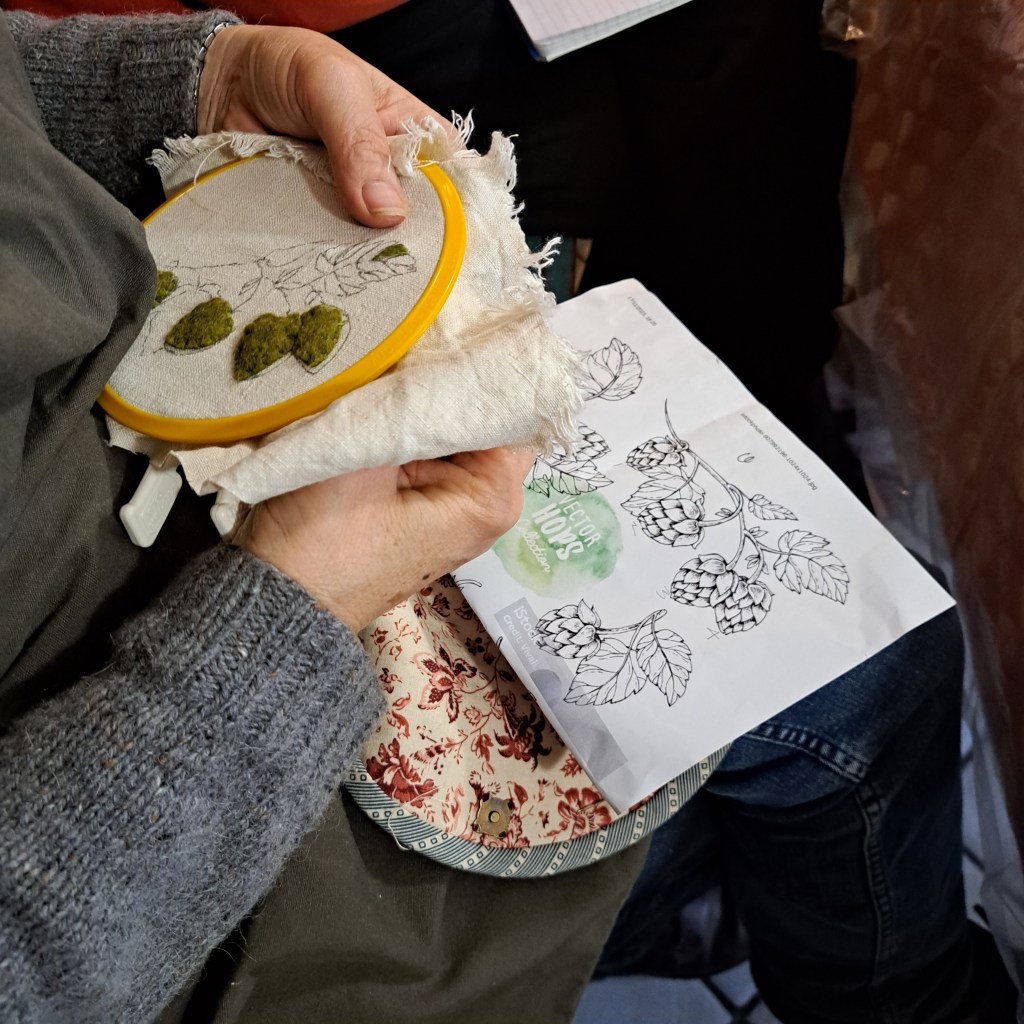
Ann is using flystitch to create these hops, and padding to achieve the raised effect.
Ann’s hops in progress for the Autumn page
Helen is researching the story of the 6th century Scottish queen who was pursued by the Welsh at Bacho Hill. She has borrowed a small weaving loom of mine and is attempting to weave a tartan. She describes it as a “snippet of a legend” from way before 1066 when we are brought up to believe history began in England! The Scottish Queen escaped. Helen wondered what the spoken language would have been at that time, perhaps Welsh and Breton, Irish or Scots? Welsh tartans emerged around 12th century with a plenitude of dragons and Celtic knots. There is no record of the name of the early Anglo Saxon Queen. Helen has also experiemented with dyeing fabrics from an increasingly exhausted dyebath to see what colours could still be attained. Dyeing fabric commercially is usually so water hungry, so this is an interesting development for sustainable making practices.
Maggie C read us two poems she had written – one about Puck of Pokehouse Wood who Caroline T is researching. The other a response to our dyeing experiements last week. This led to a wider discussion about rhythm in music and I shared the ideas I had gleaned from a BBC radio podcast with Peggy Seeger on rhythm, and Caroline Larringon talking about assonance as a technique that helped to make stories memorable. In her stitiching Maggie is working out how to make an outline of a lion who features in the legend of Leominster’s origins.
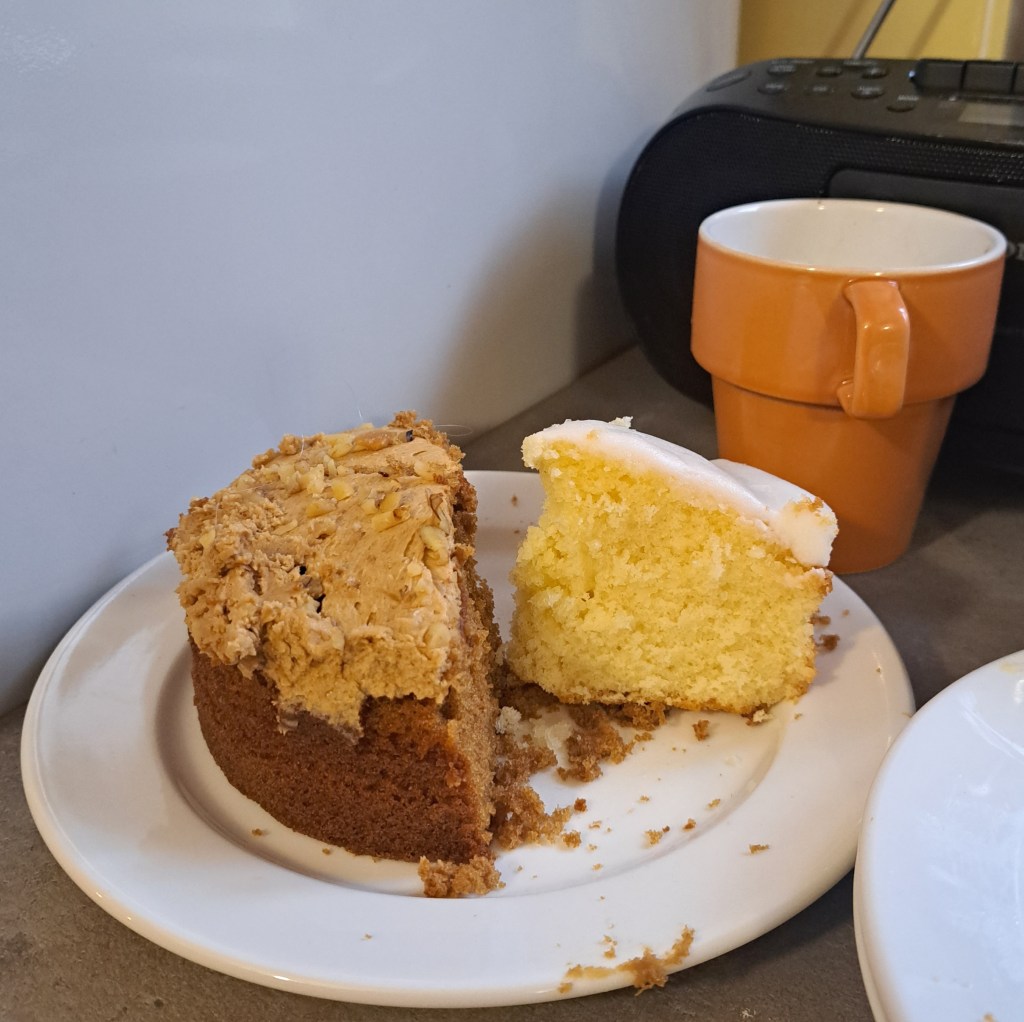
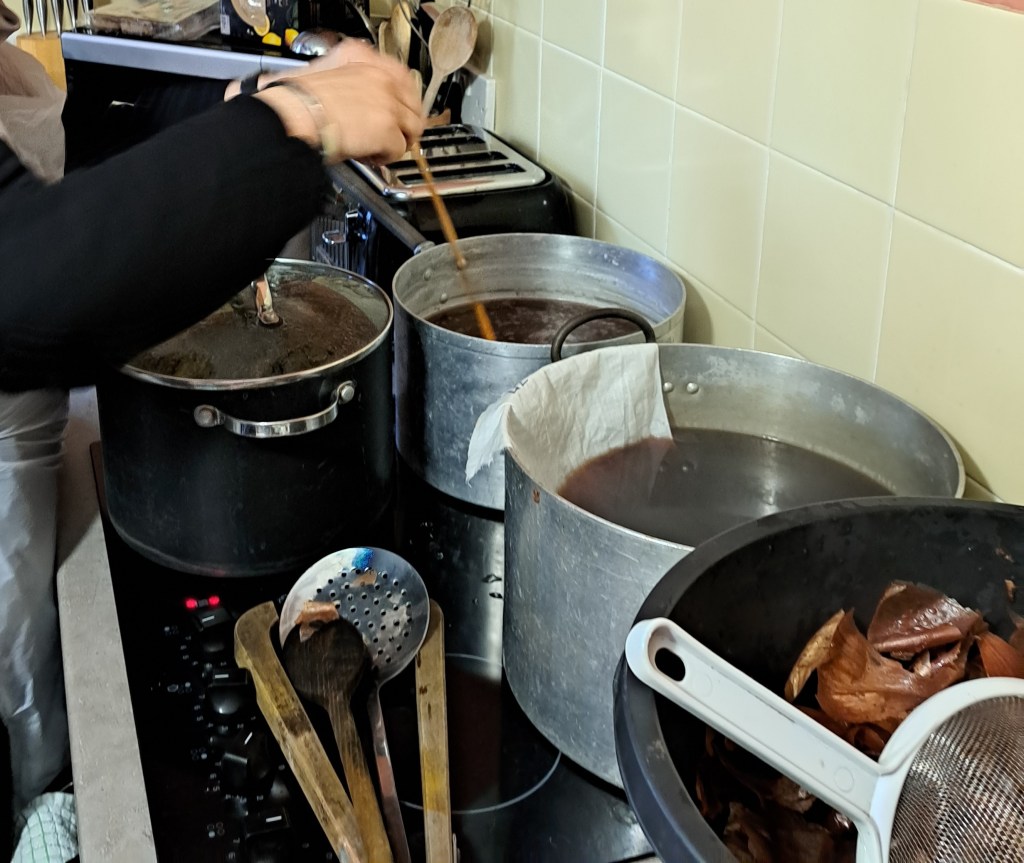
Eight of us decamped to my house for a morning of learning about natural dyeing which Helen kindly offered to lead us through. We started with coffee and cake but had to crack on with the processes as the dye baths can take some time. I was delighted when Julia made it to join us too, all the way from Shrewsbury, she had brought along some of her investigations into Apples – quite wonderful paintings. Some of the group were less interested in dyeing fabric, preferring to stitch, but were happy to come along anyway.
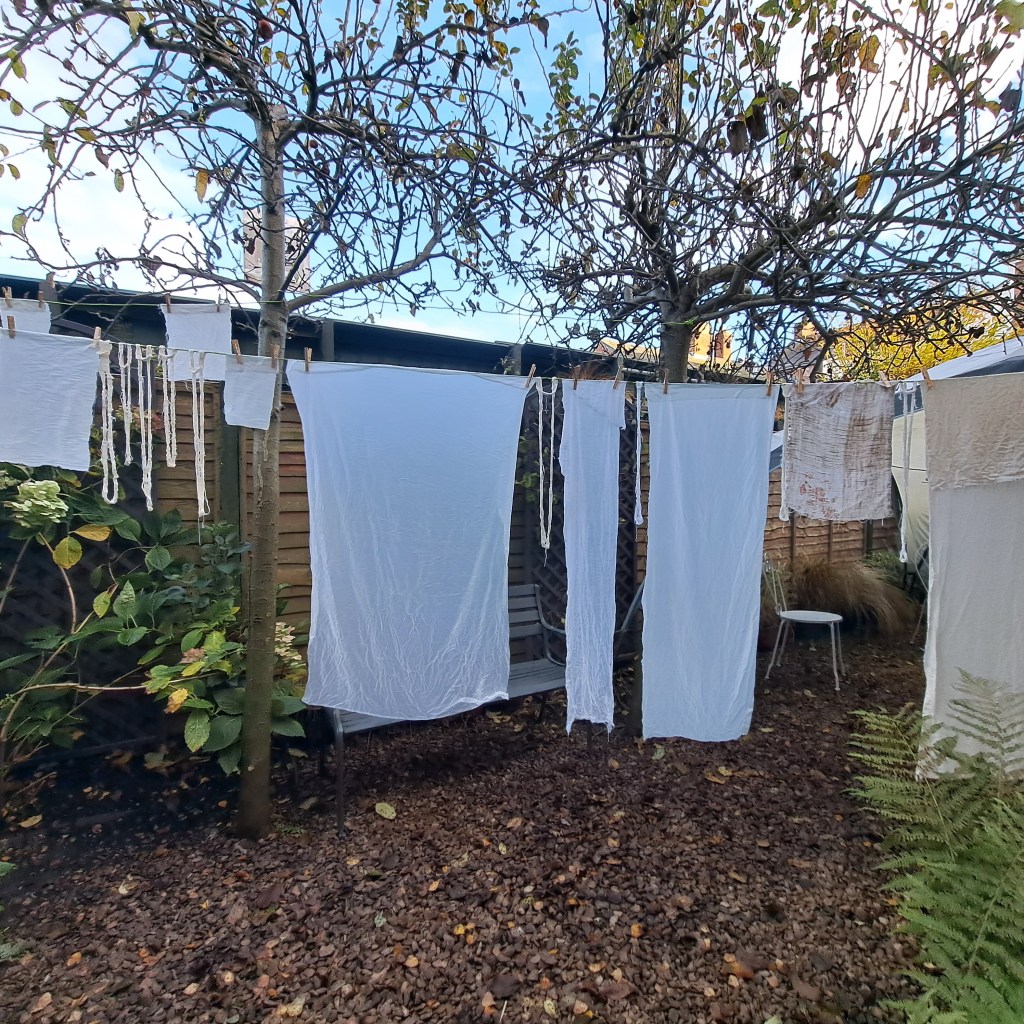
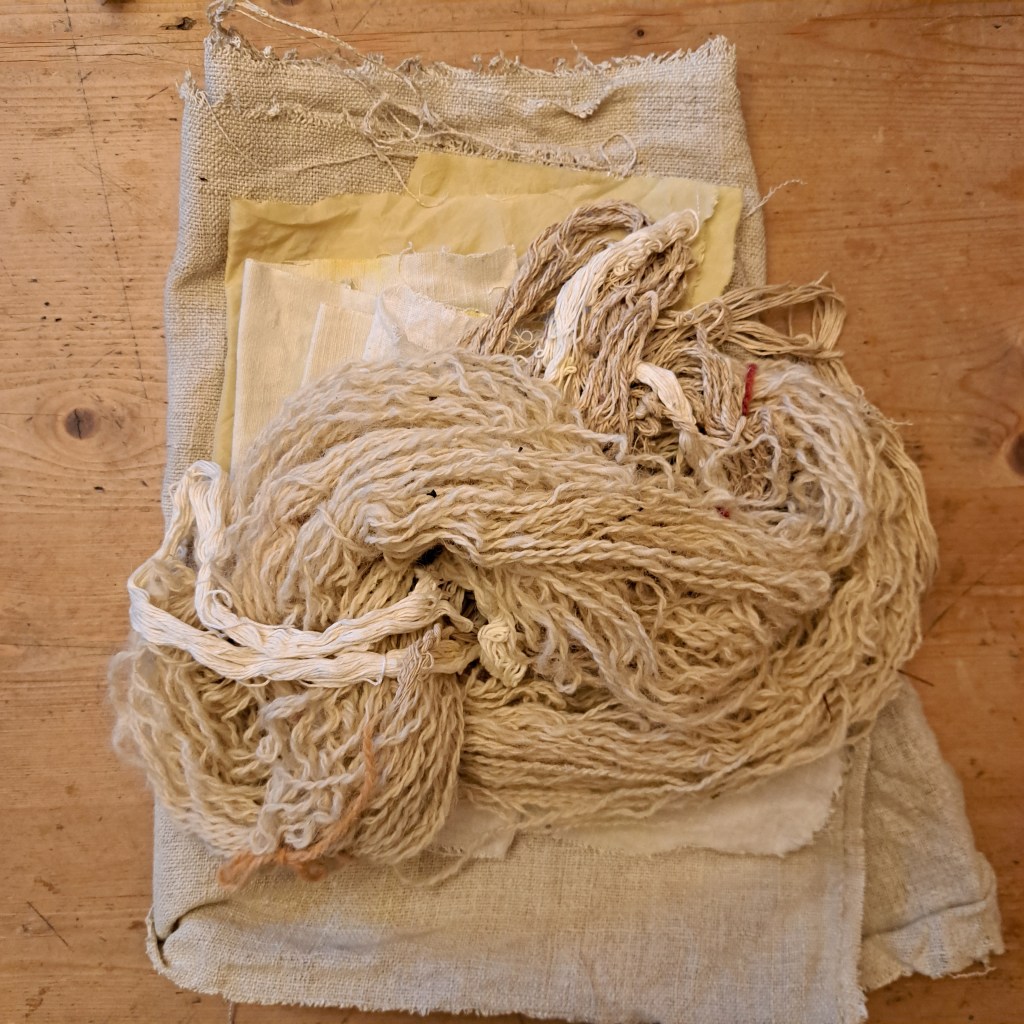
Before the session Helen and I had pre mordanted fabric, I had some done with alum and some with soya milk and Helen had some with soya milk. I learnt that this process takes time, the slower the better, and that the soya milk is an inexpensive and environmentally friendly option. It also makes your hands feel smooth! I followed the instructions from Rebecca Desnos’s book that Helen had recommended.
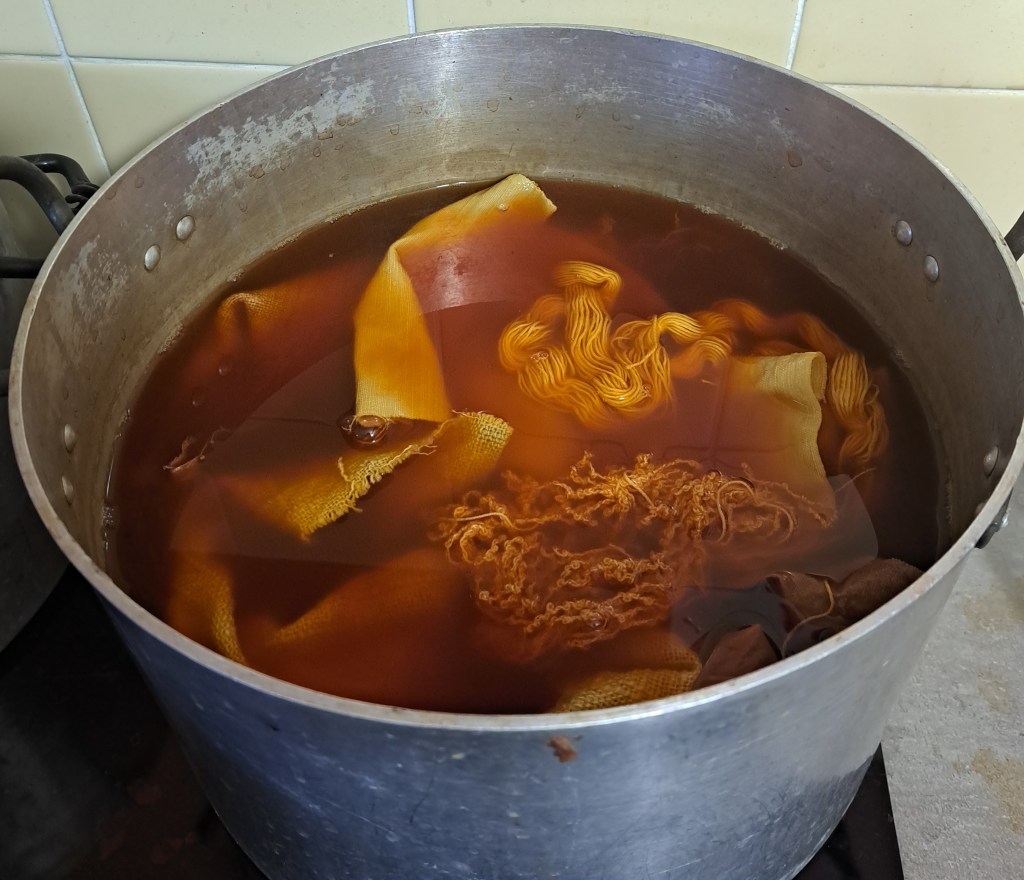
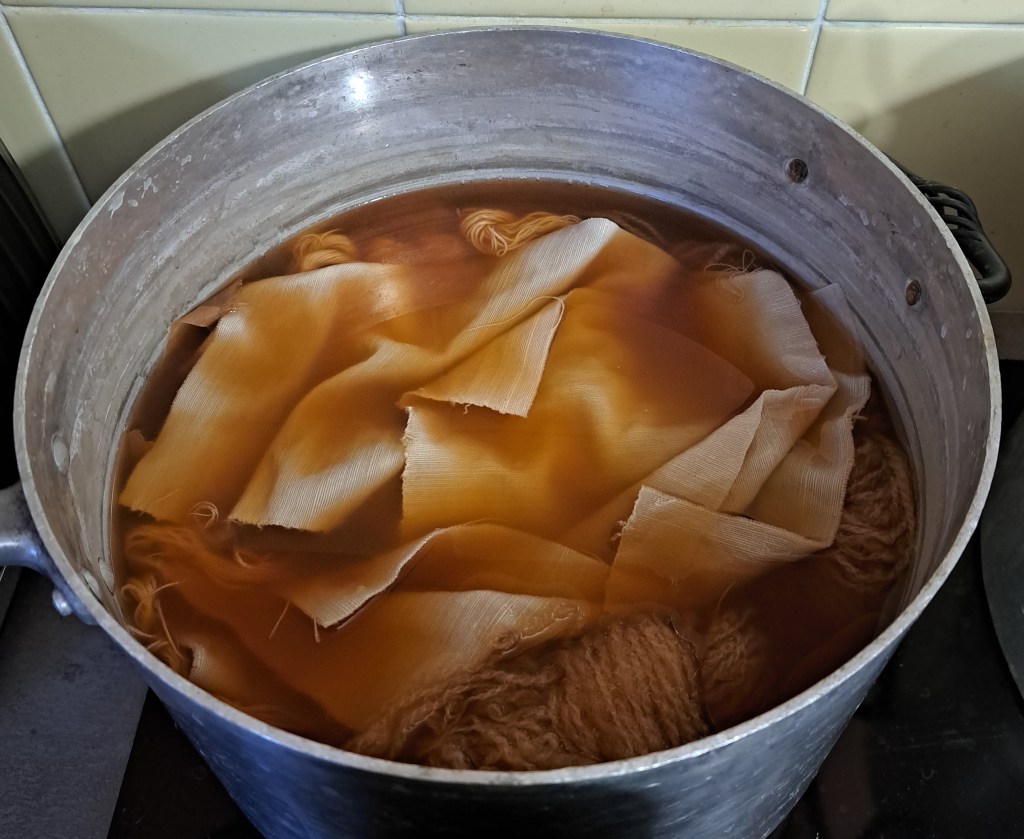
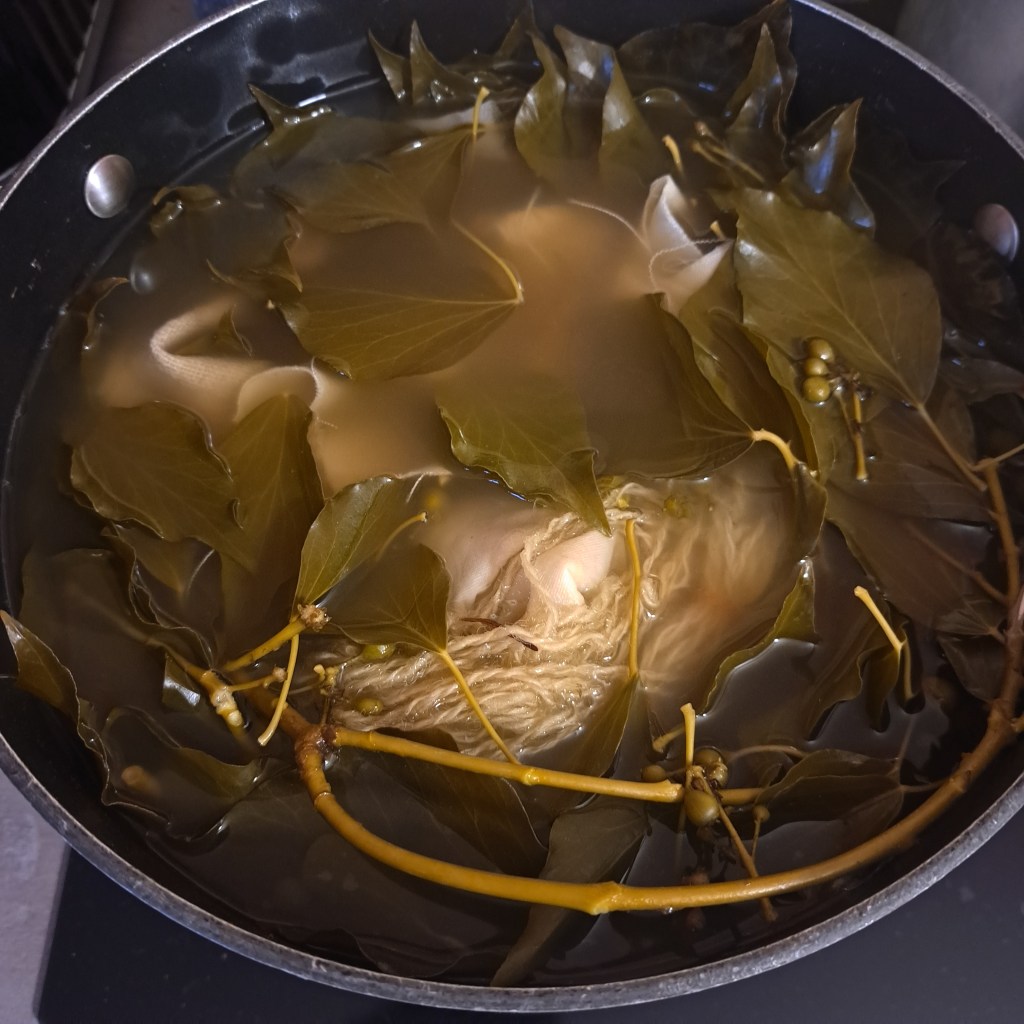
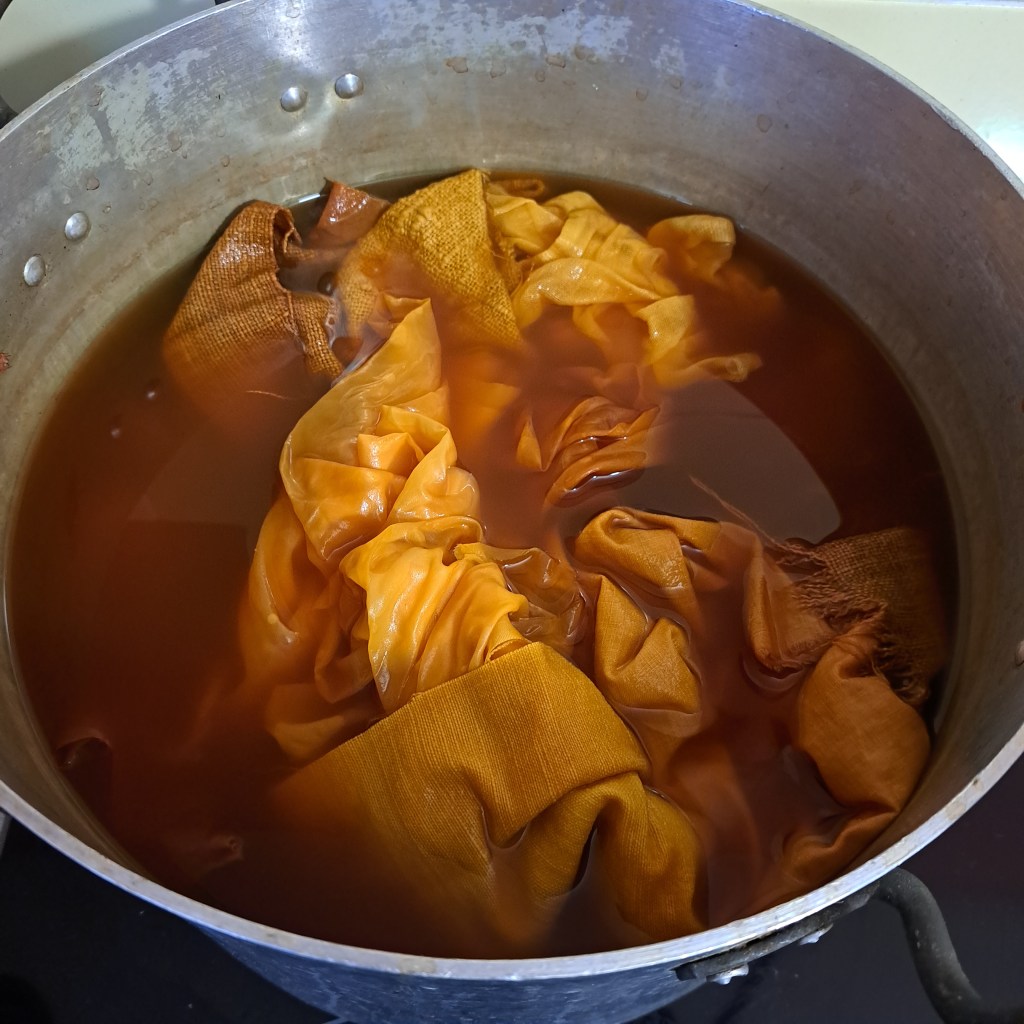
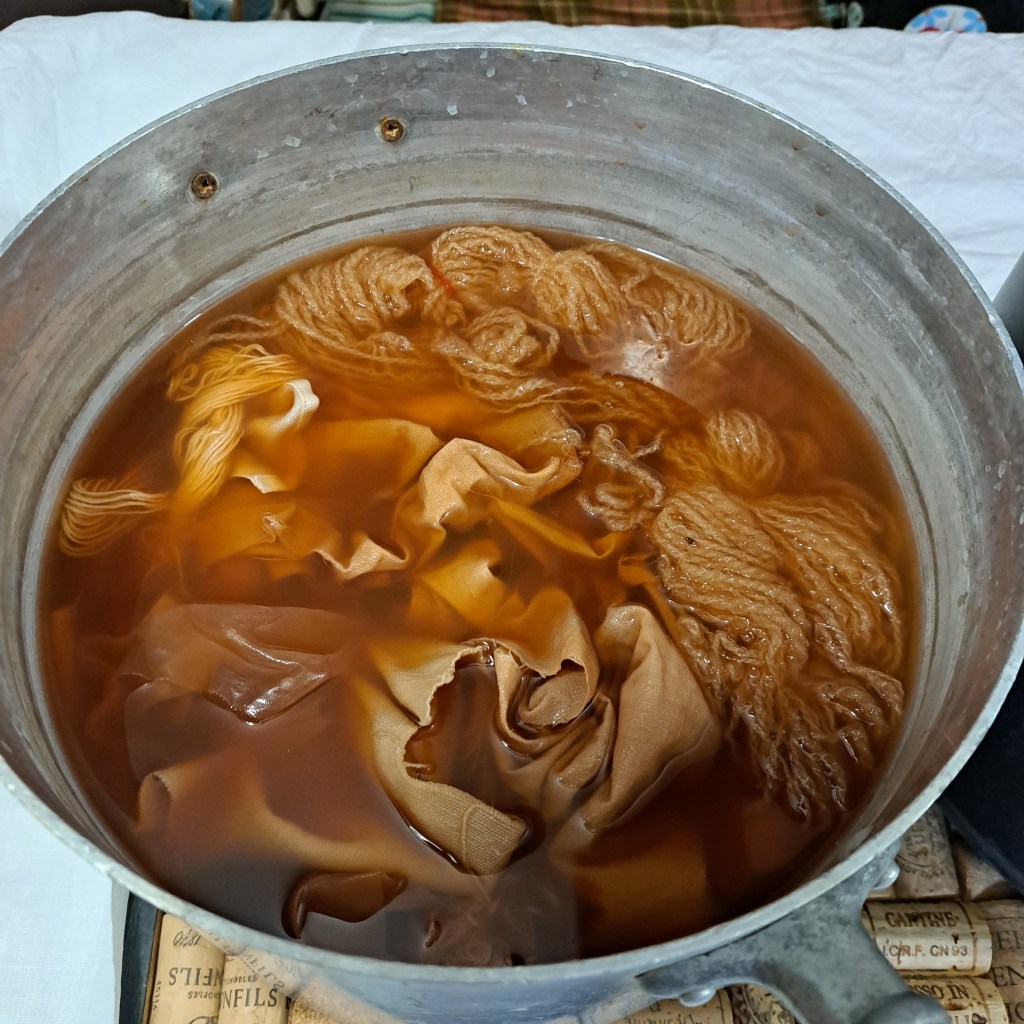
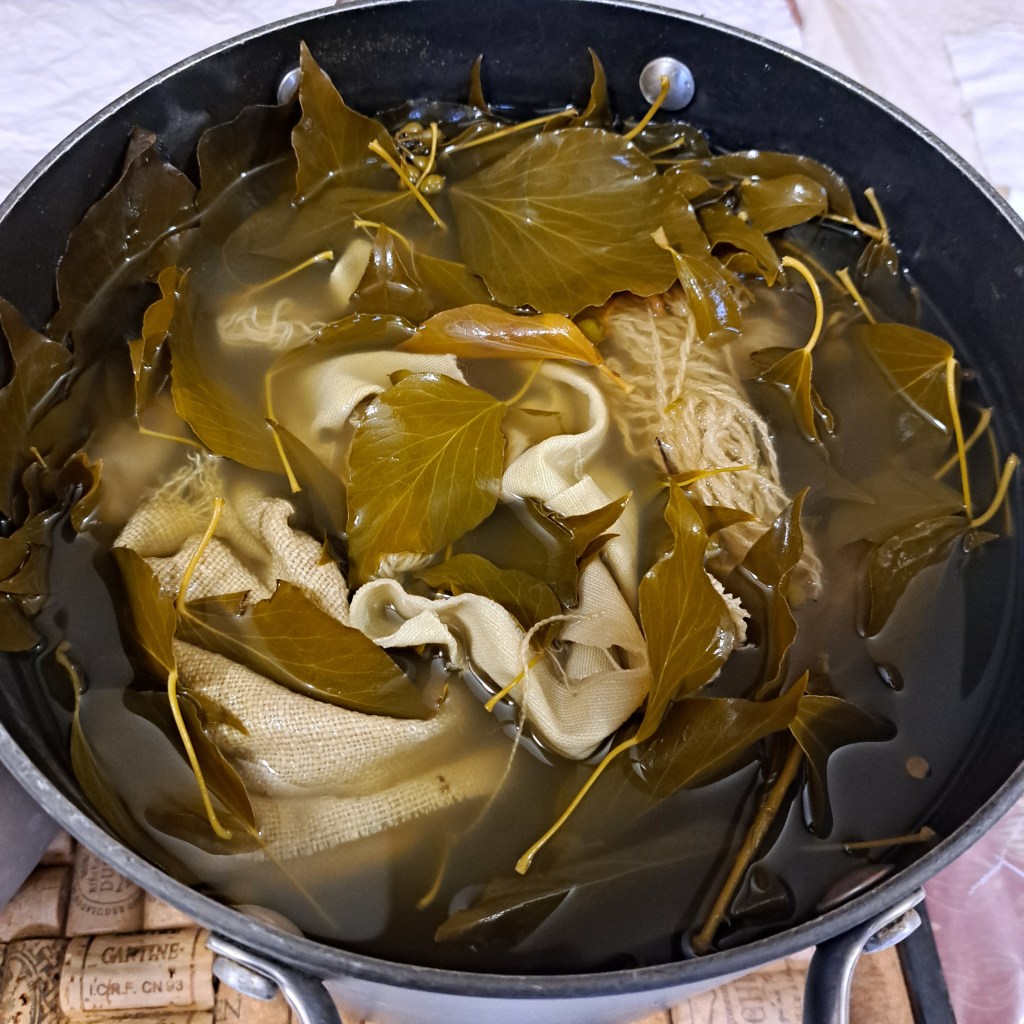
Soya milk mordanted fabric and threads drying on the lineMaggie P (a weaver) brought along some skeins of wool given to her by friends with sheep, she was keen to learn how to naturally dye the wool.Onion skin dye bath Avocado skins and stones dye bathIvy leaf dye bathMaggie’s wool
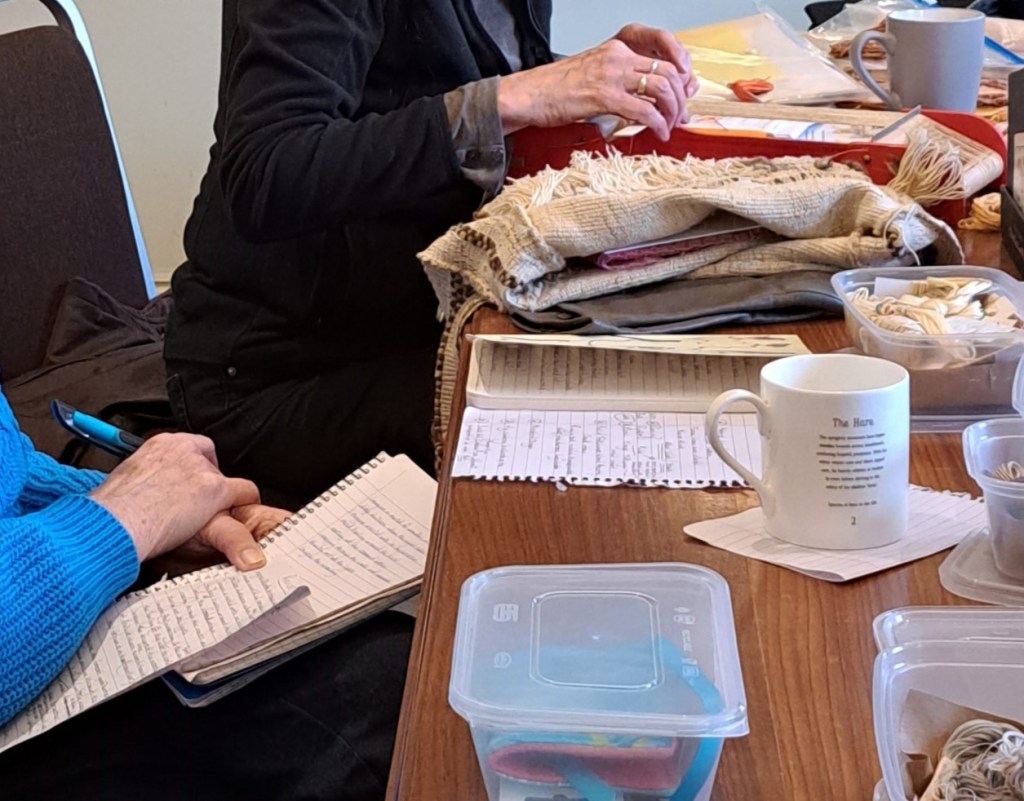
While we waited for the dyebaths to work, we discussed out investigations. Maggie P told a story of how she had cycled to Ella Mary Leather’s place of birth at Bidney but then gotten a puncture so ended up walking to Dilwyn. She then realised she was doing the walk that Ella must have done until she left home and married at age 19 and moved to Weobley. Maggie then found great inspiration in Dilwyn Church. Here are some photos of Ann’s and Julia’s work in progress.
Ann stitching hops for the Autumn page of the AtlasJulia’s notebook of her apple investigations. I hadnt realised quite how tied to place apples are.
Dye bath results five days later
Fabric and threads drip drying over a bath
I experimented with modifying some of the fabric and thread colours using a wood ash lye and a few with some iron water. The wood ash lye immediately deepened the colours, a true alchemic process! The iron water was only a week old so perhaps needed to be developed for a bit longer, but it still had some effect.
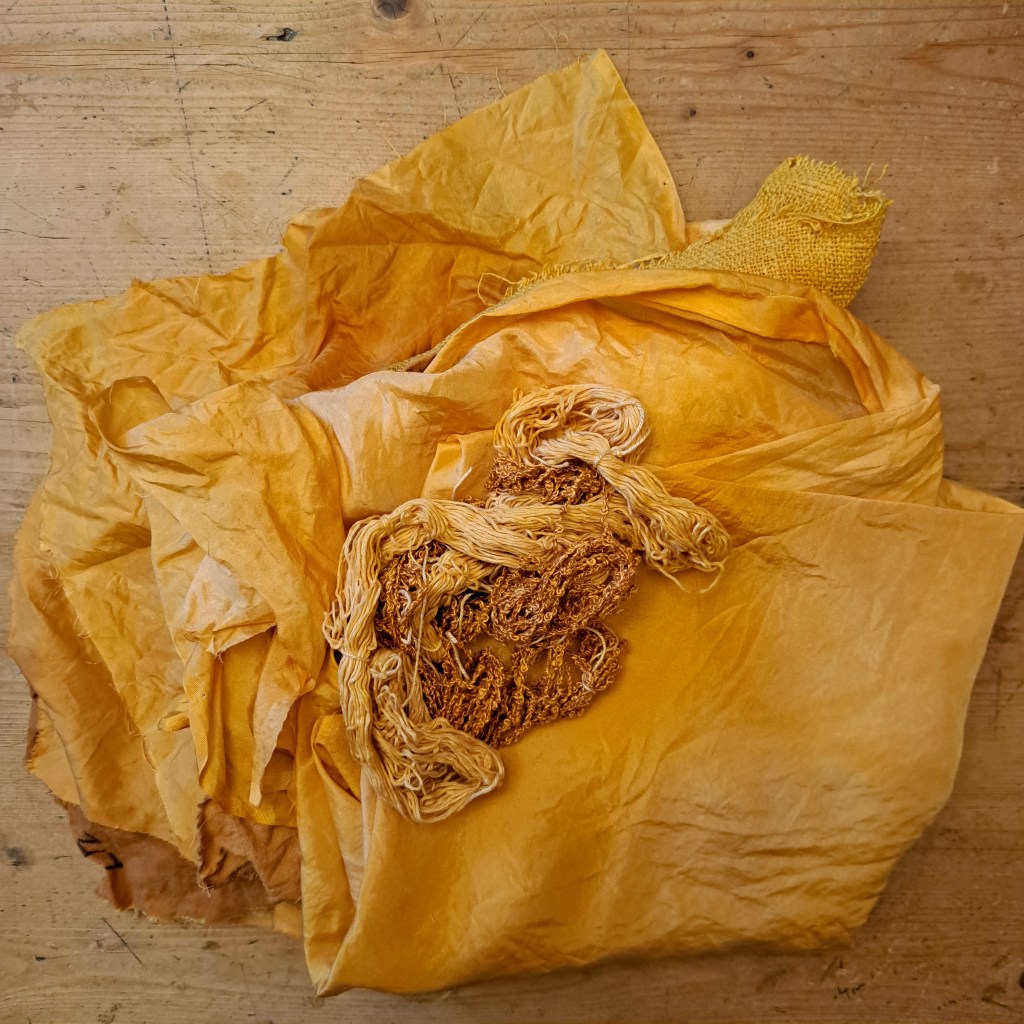
Dyed with avocado Dyed with ivyDyed with onion skinsHere you can better see the variation in the colours form the three dyebaths.














 The Stitched Atlas