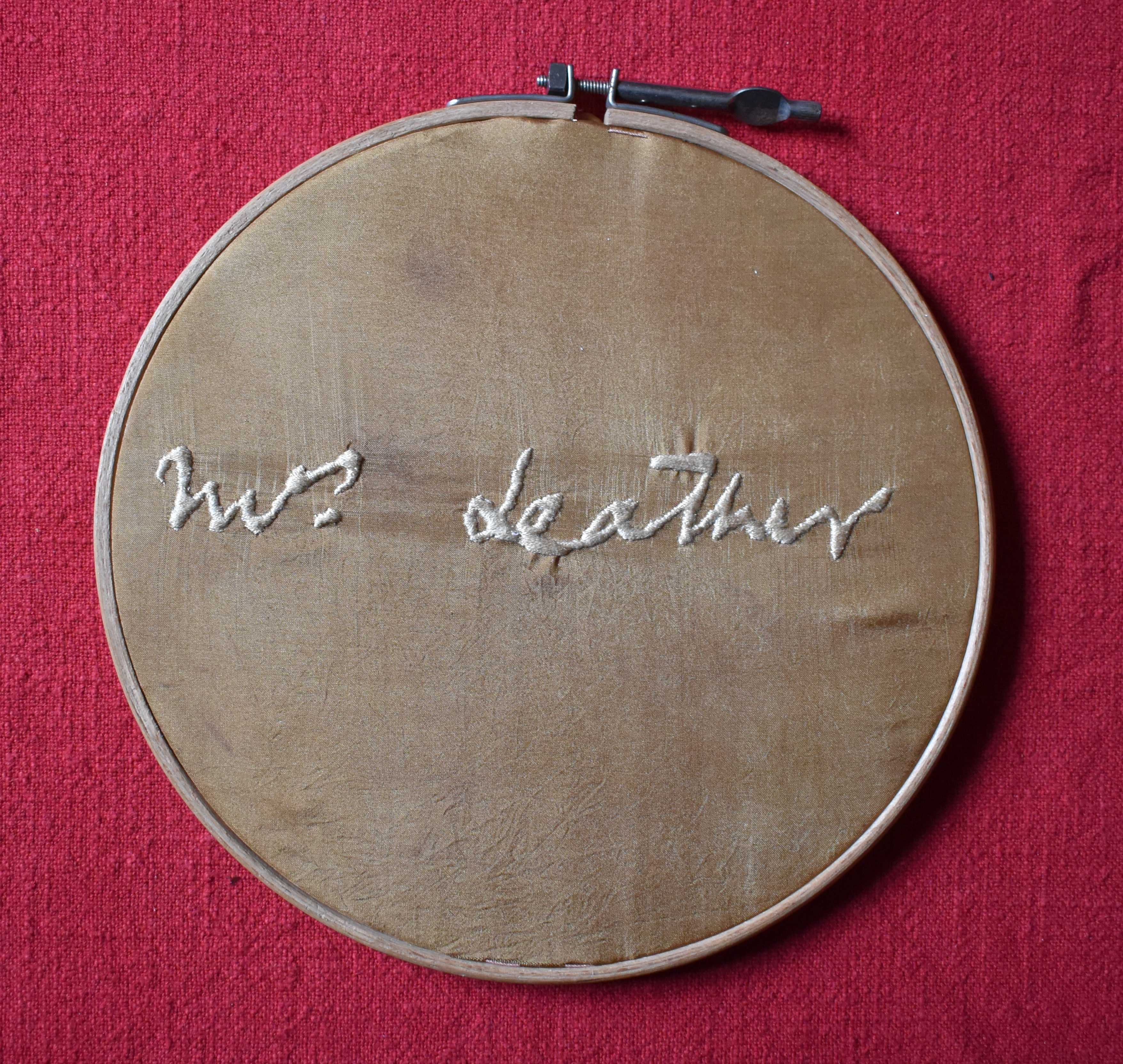
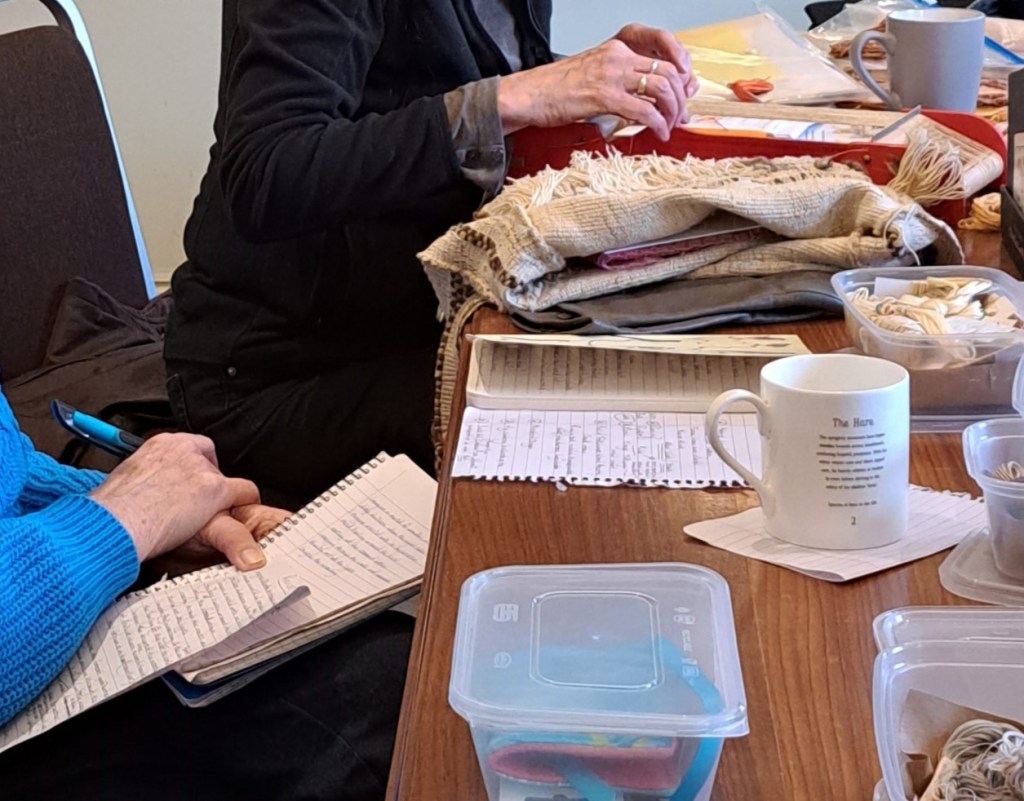
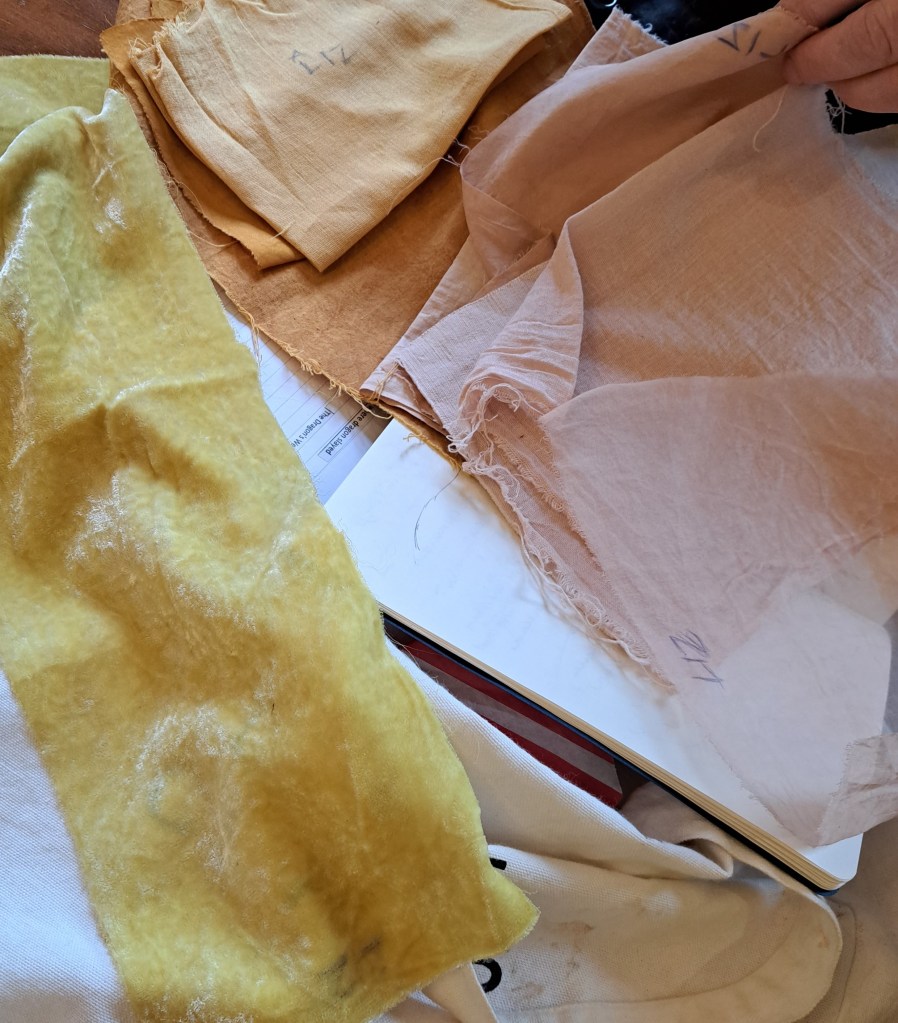
Seven particiapnts plus myself attended today. First the results of the dyeing experiements from last week were ooohed and ahhed over…
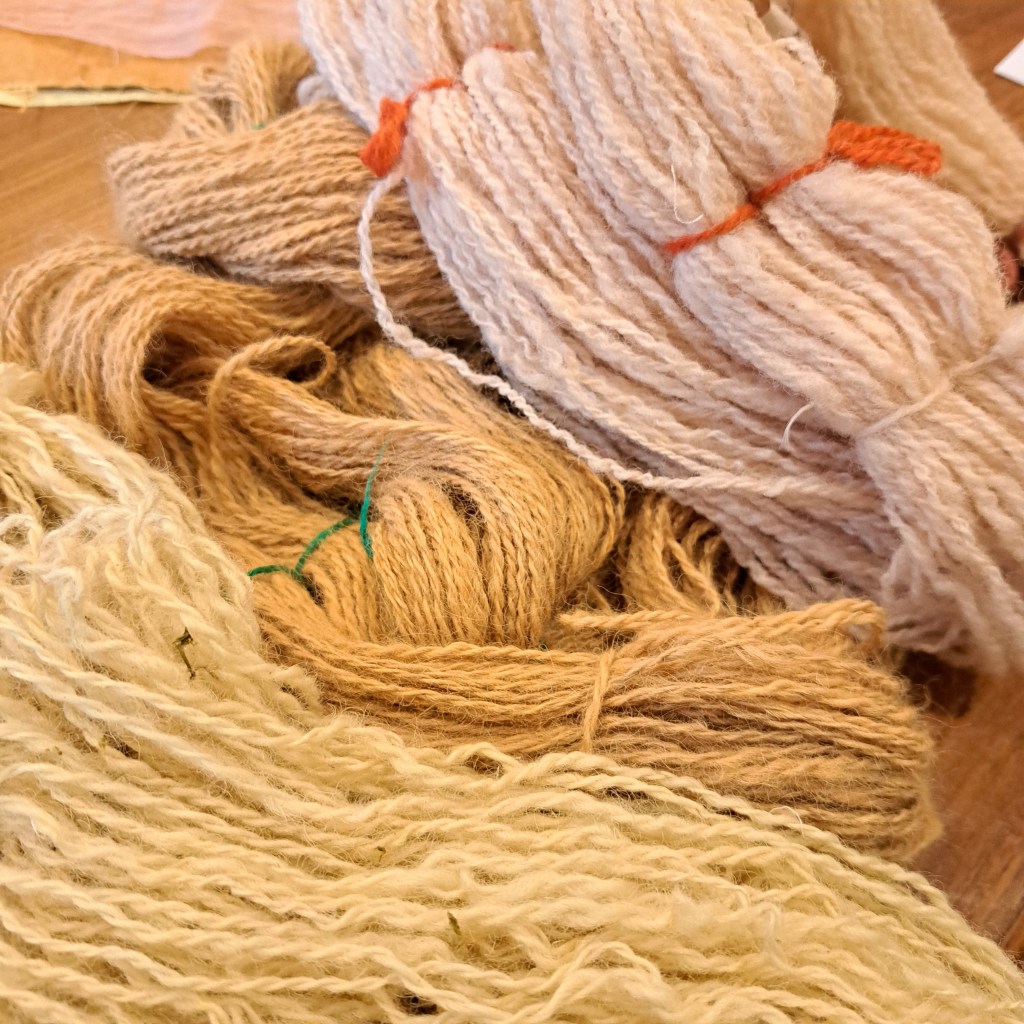
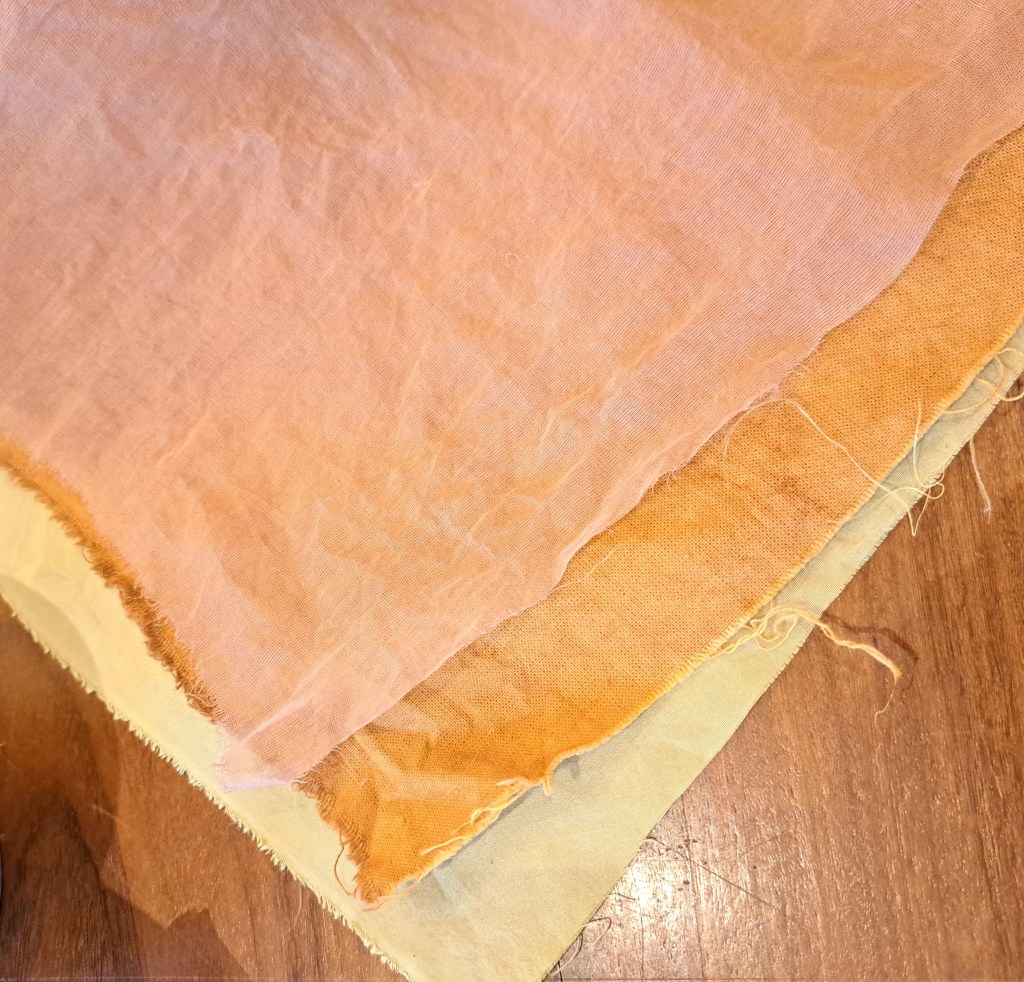
Liz has been thinking of the old Brinsop Court and old Estates generally. Below are her results from last week’s natural dye workshop.
Work finished or being stitched today…
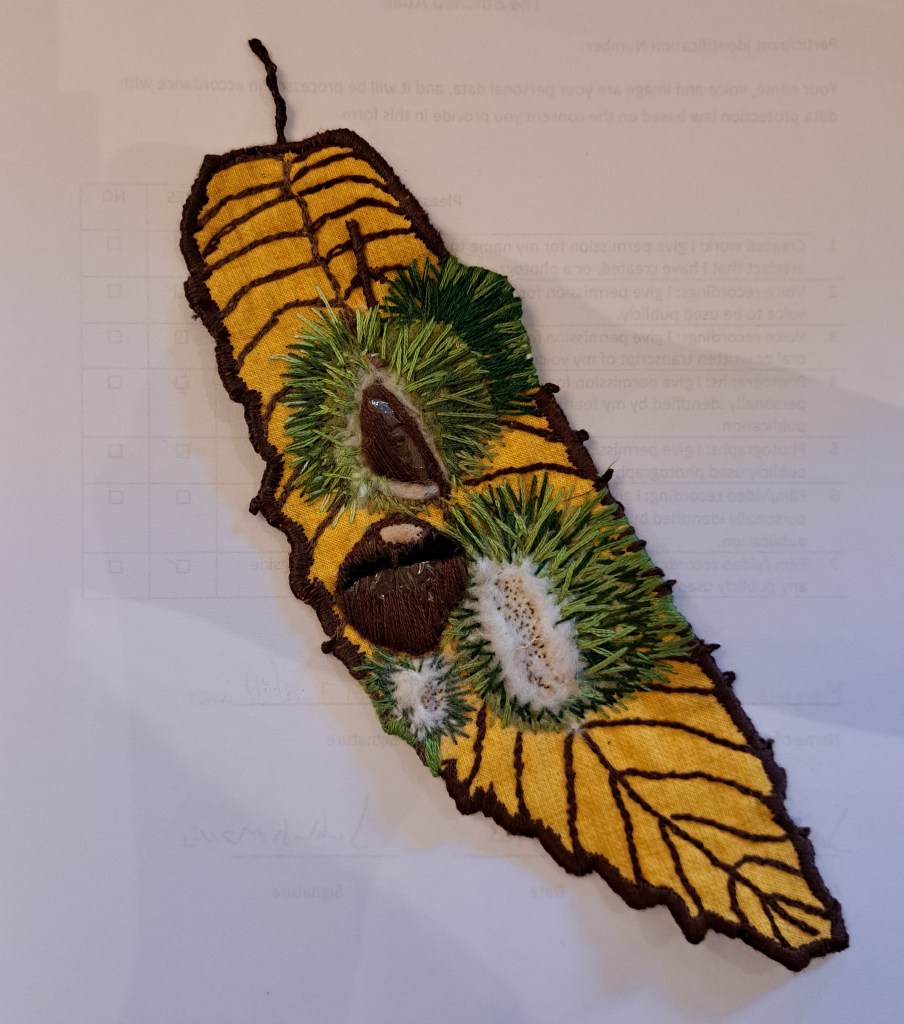
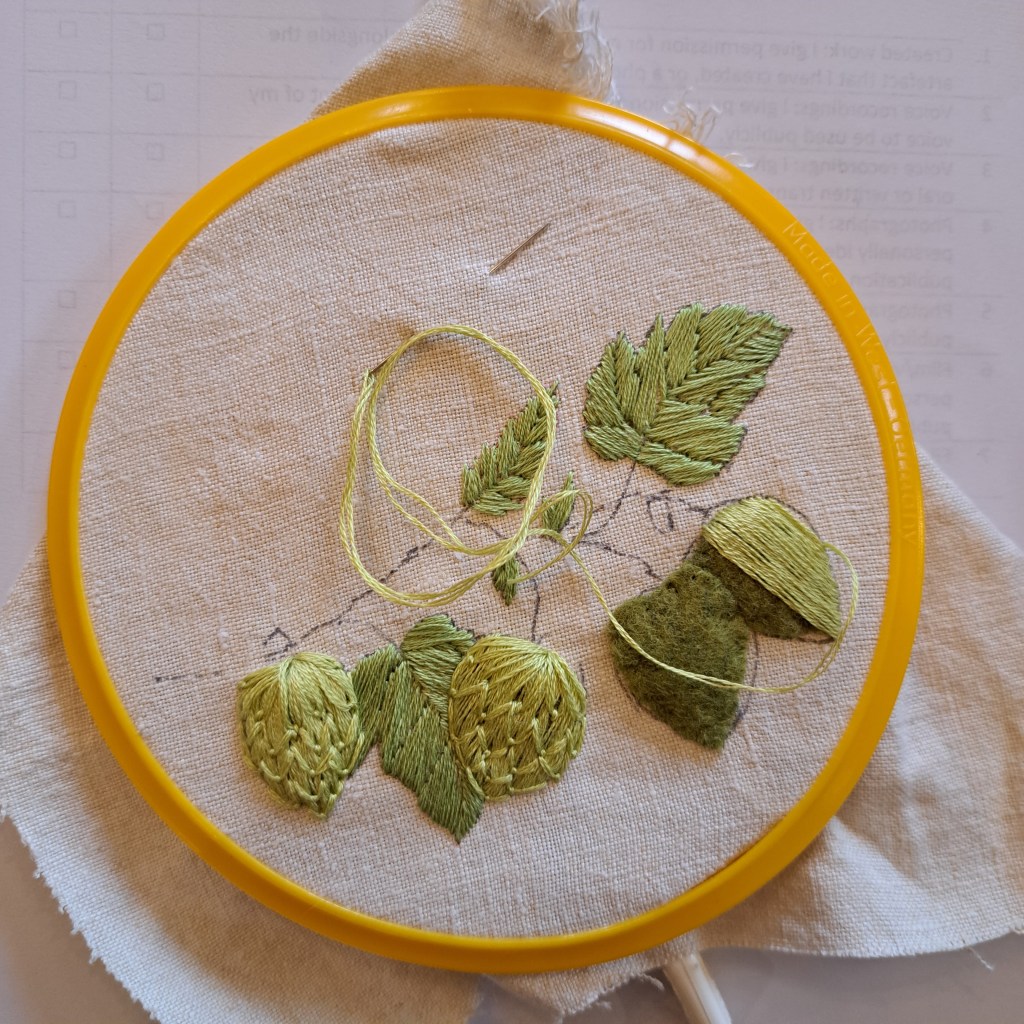
Meg informed us about this technique of raising images called ‘Trapunto’. I am grateful to her for all the stitching knowledge she is so generously sharing with us ‘amateur’ embroidery stitchers!
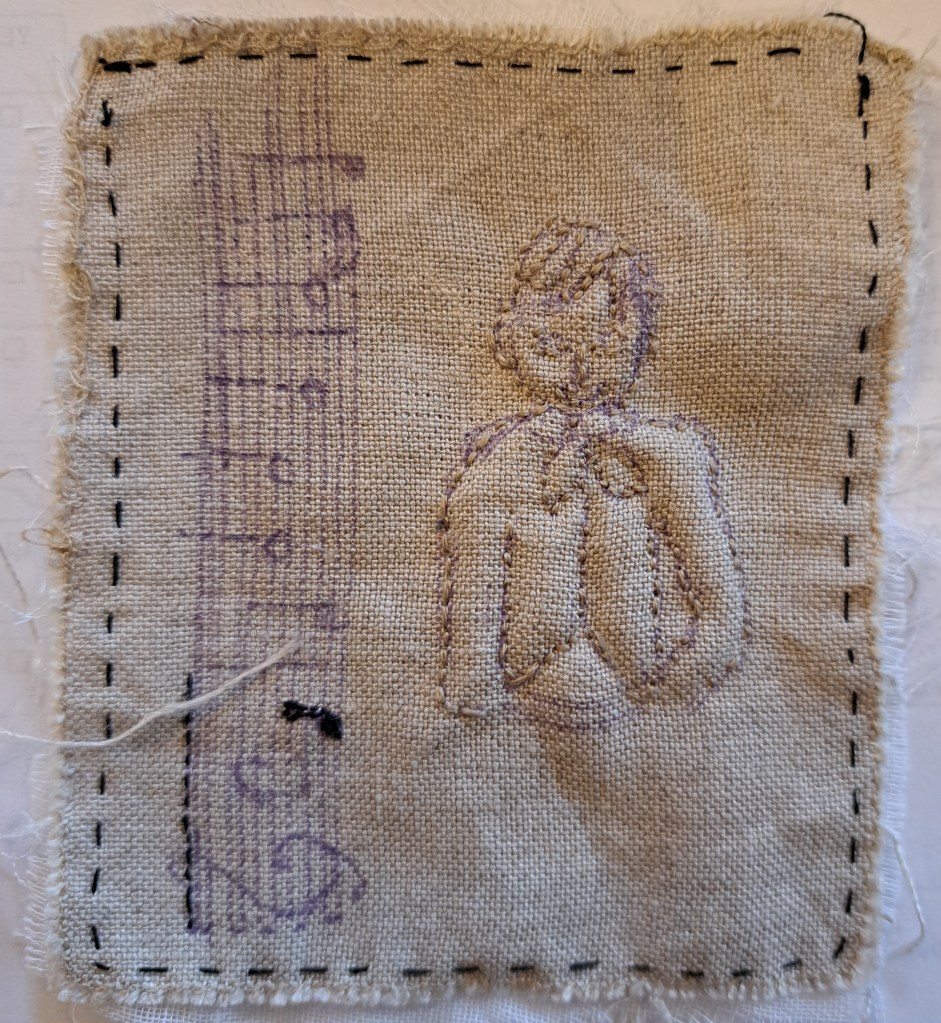
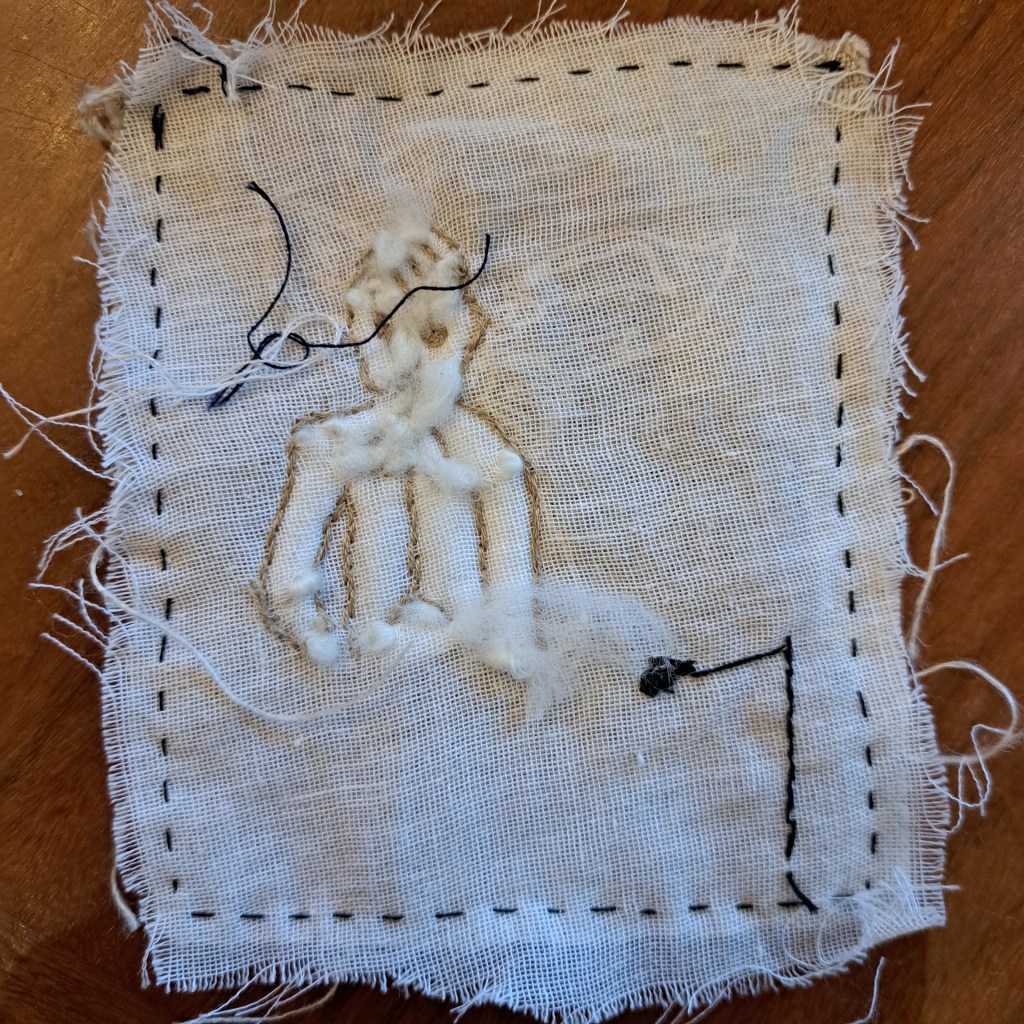
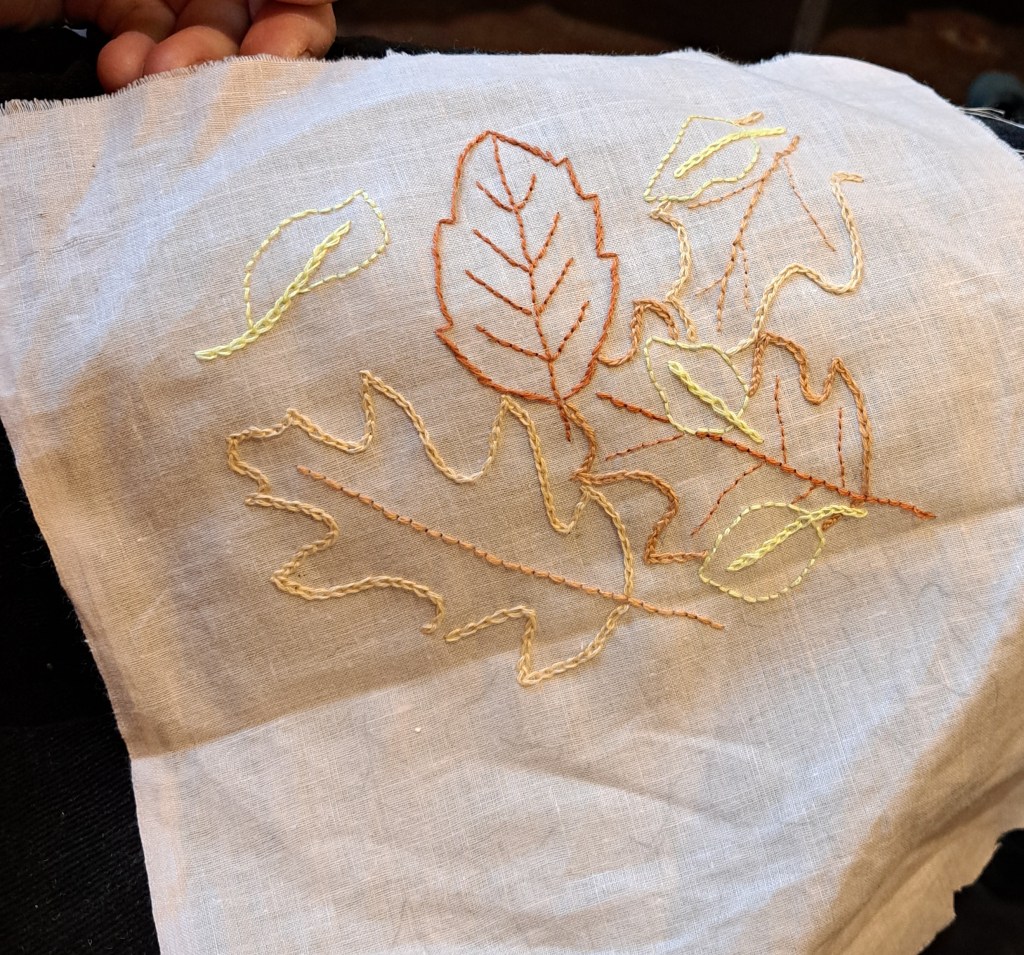
Maggie P has been much inspired by the markings on the coffin lids she saw in Dilwyn Church. They are reminiscent of the apotropaic marks the group stitched at the beginning of the project, but more developed. She also found some interesting door hinges and diamond leaded windows. Below she is working on her autumn page for the Atlas.
Ann is using flystitch to create these hops, and padding to achieve the raised effect.
Helen is researching the story of the 6th century Scottish queen who was pursued by the Welsh at Bacho Hill. She has borrowed a small weaving loom of mine and is attempting to weave a tartan. She describes it as a “snippet of a legend” from way before 1066 when we are brought up to believe history began in England! The Scottish Queen escaped. Helen wondered what the spoken language would have been at that time, perhaps Welsh and Breton, Irish or Scots? Welsh tartans emerged around 12th century with a plenitude of dragons and Celtic knots. There is no record of the name of the early Anglo Saxon Queen. Helen has also experiemented with dyeing fabrics from an increasingly exhausted dyebath to see what colours could still be attained. Dyeing fabric commercially is usually so water hungry, so this is an interesting development for sustainable making practices.
Maggie C read us two poems she had written – one about Puck of Pokehouse Wood who Caroline T is researching. The other a response to our dyeing experiements last week. This led to a wider discussion about rhythm in music and I shared the ideas I had gleaned from a BBC radio podcast with Peggy Seeger on rhythm, and Caroline Larringon talking about assonance as a technique that helped to make stories memorable. In her stitiching Maggie is working out how to make an outline of a lion who features in the legend of Leominster’s origins.

 The Stitched Atlas