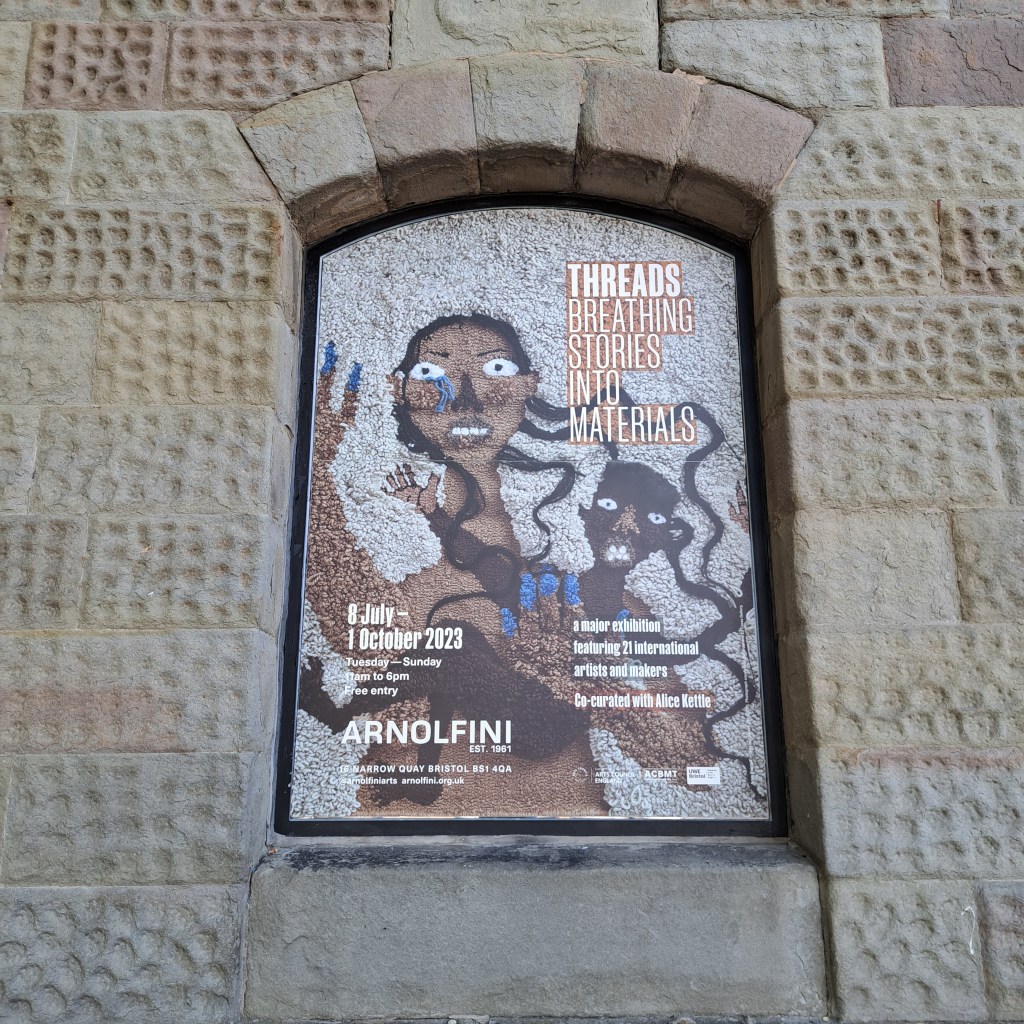
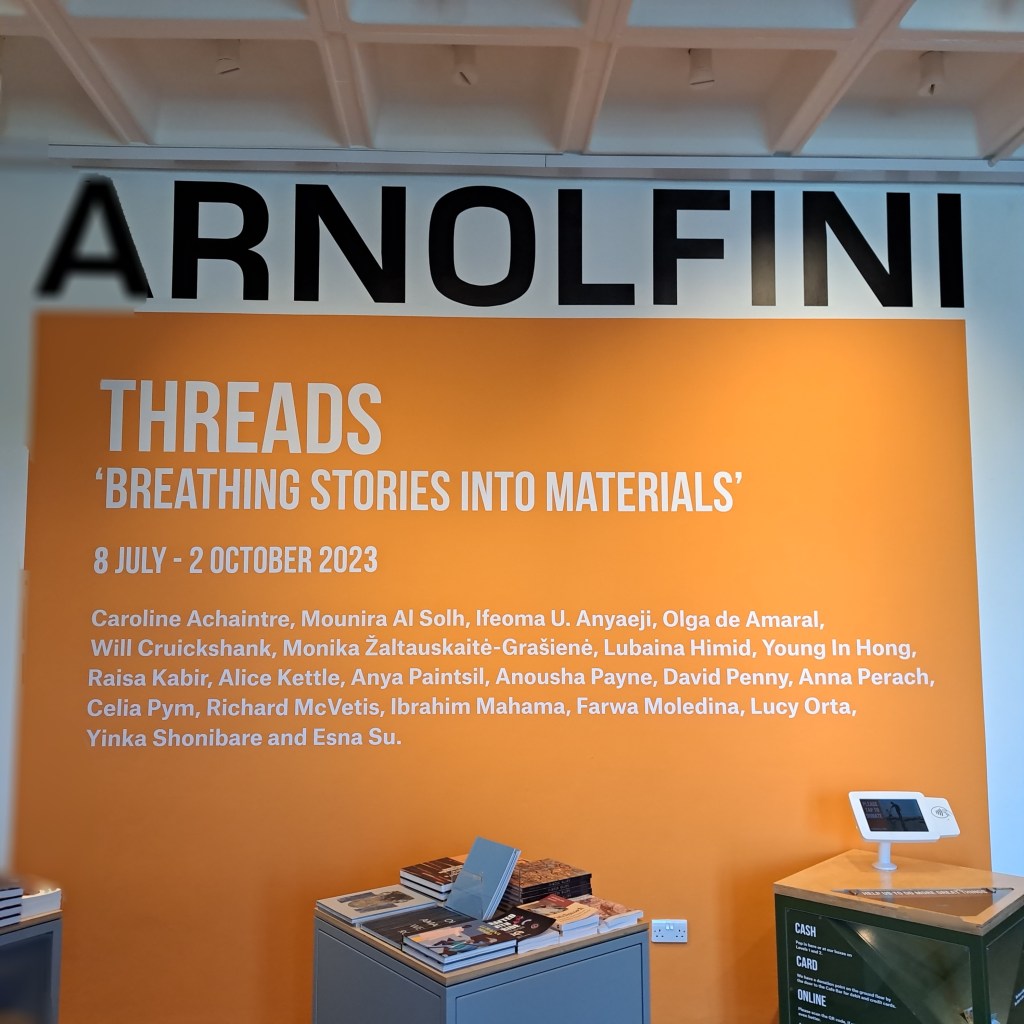
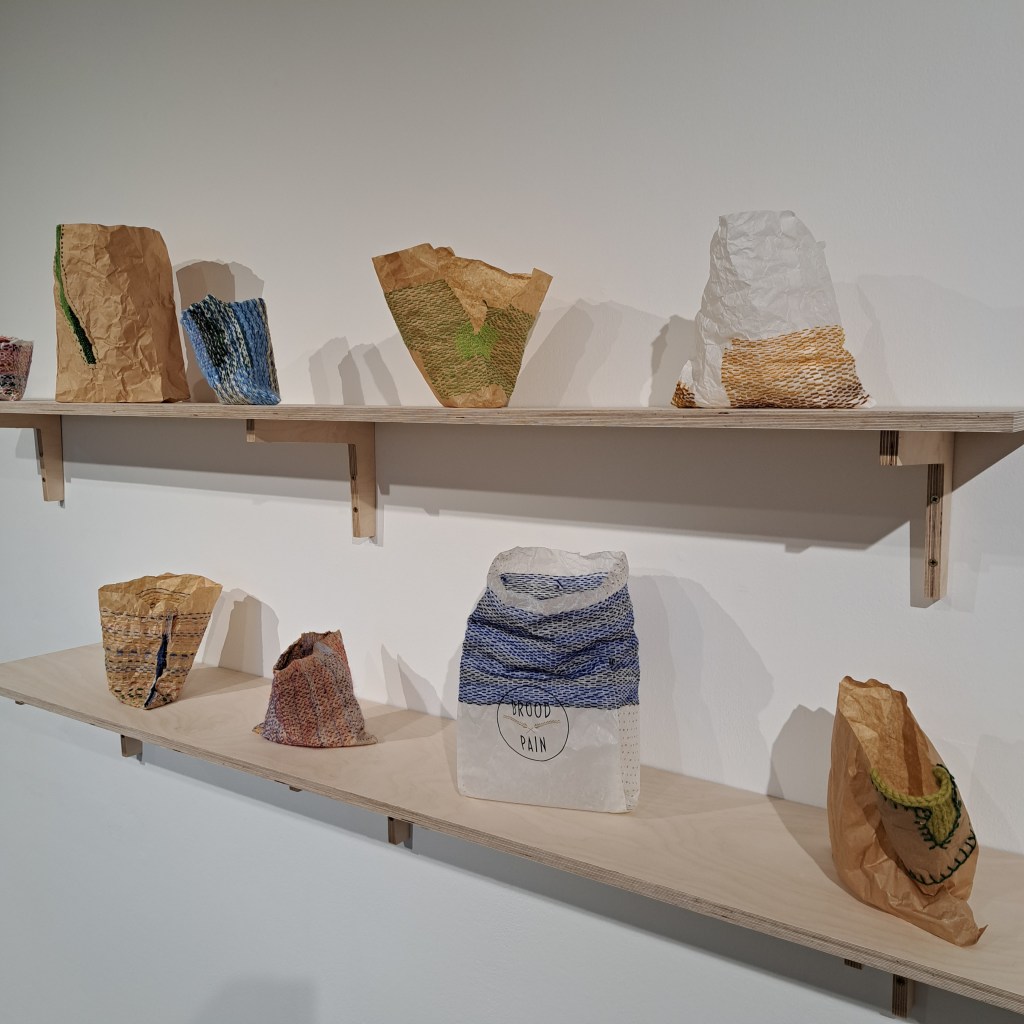
A lot of people couldn’t make the session this week so we were a smaller group of seven. I kicked off with showing lots of images from the current Arnolfini exhibition in Bristol: Threads: Breathing Stories into Materials curated by Professor Alice Kettle who is also a contemporary textile/fibre artist.
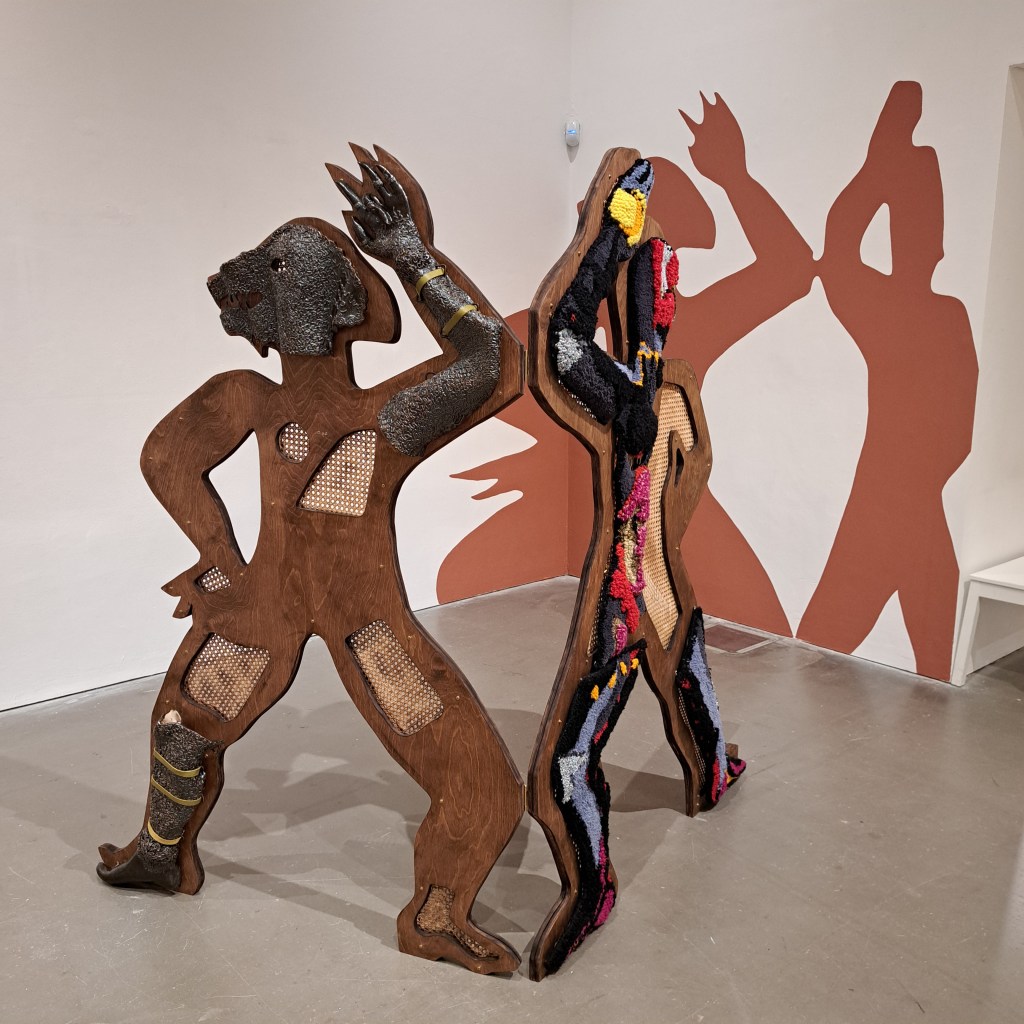
Pearch and Payne’s work As She laughs, 2021 collaboratively combines their ceramic and textile practices, and draws together their shared interest in folklore and myth. It ‘plac(es) women at the centre of the action to create new myths‘ .
(Exhibition notes)
There were some fabulous thought provoking quotes from the artists on the exhibition walls.

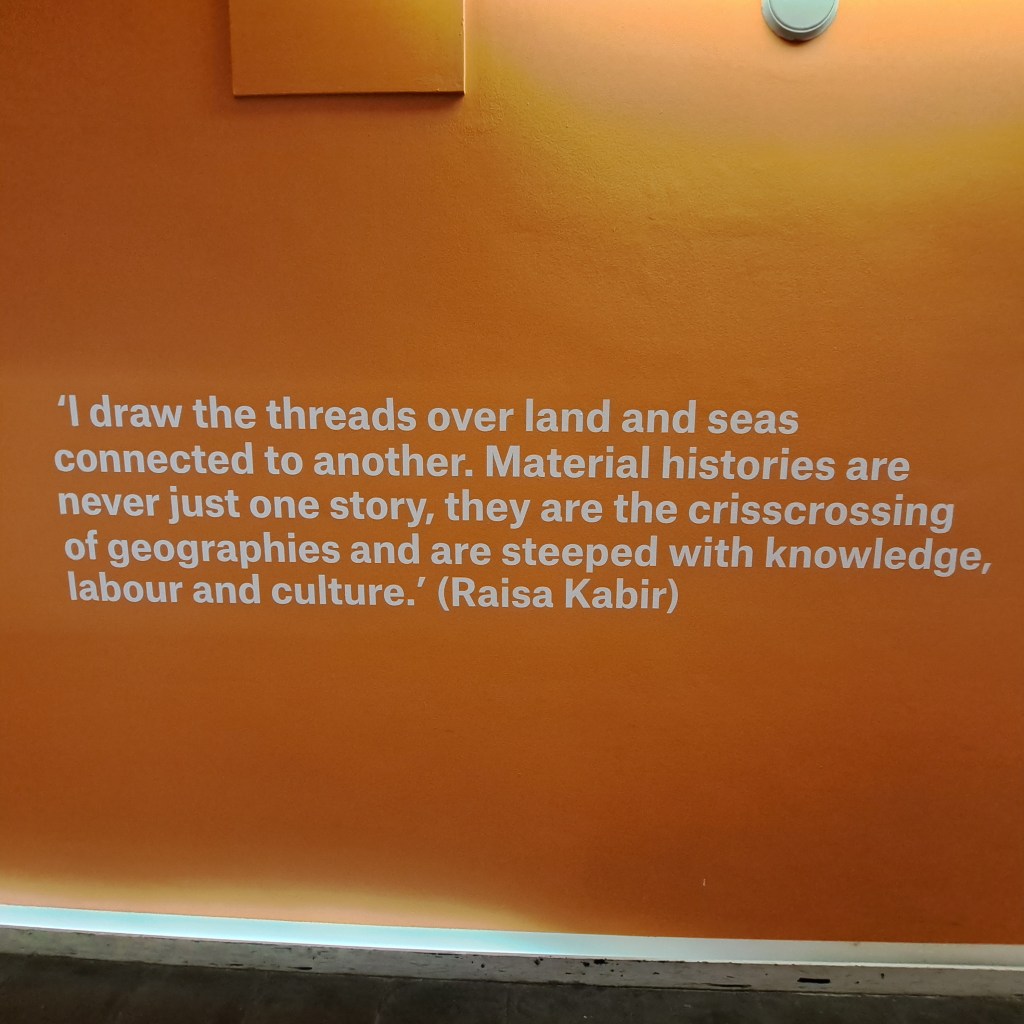
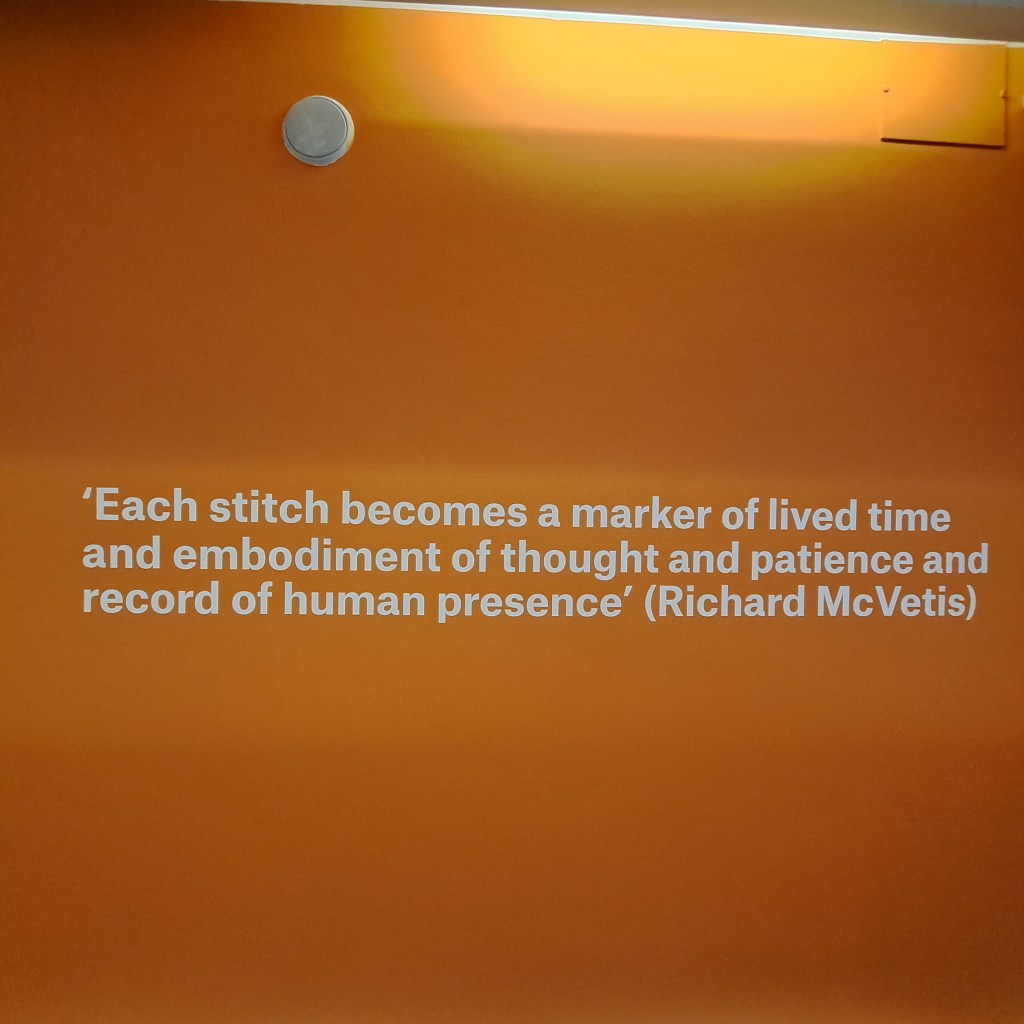
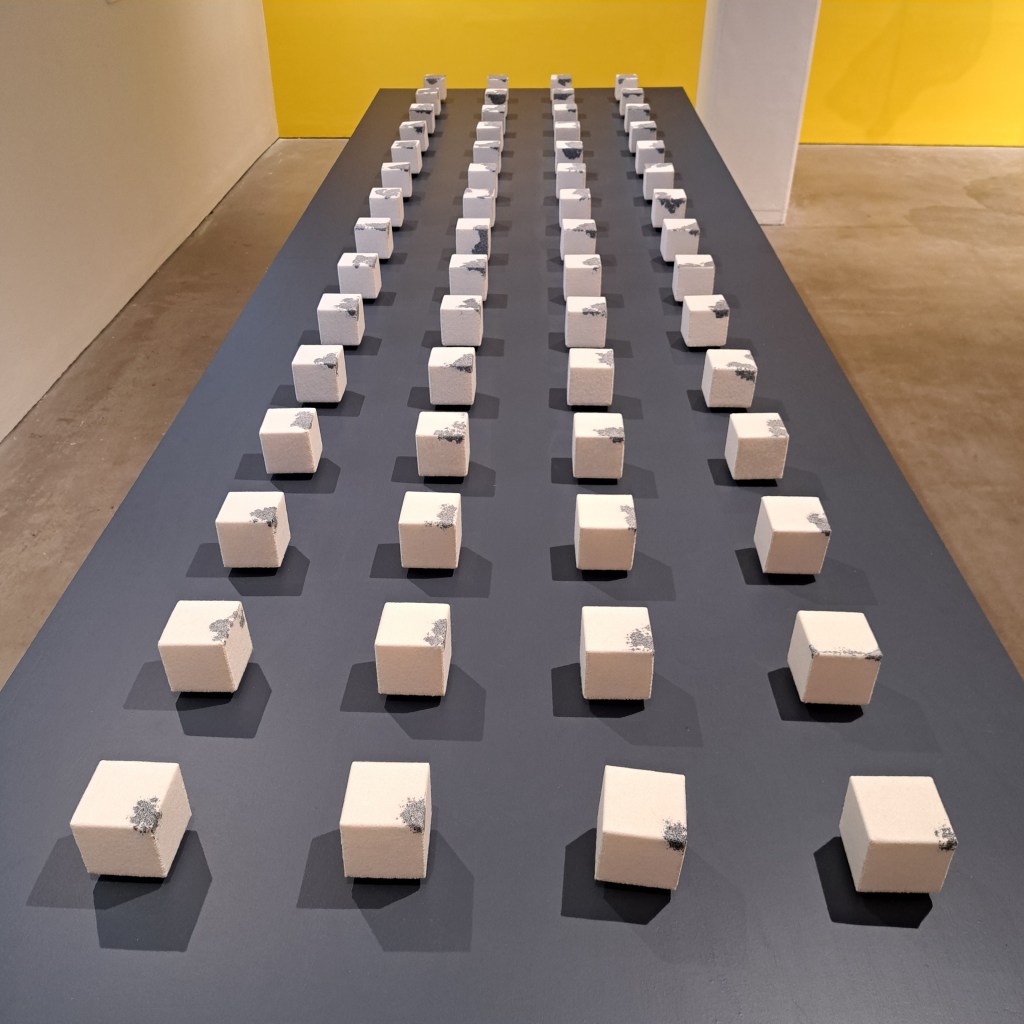

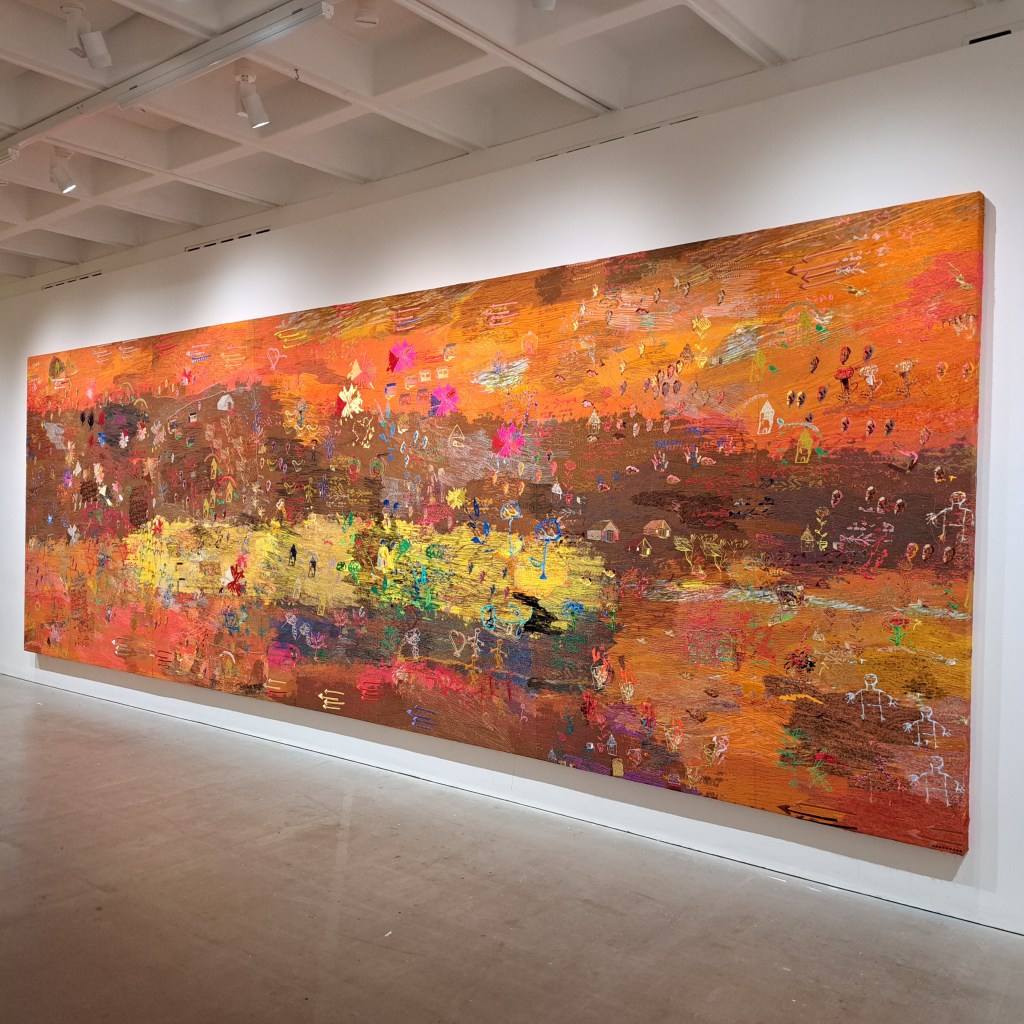


Back in the session, I went over the material covered last week namely apotropaic marks and poisonous plants so that those that had missed that information were up to date. The group got stuck into stitching their protective marks. We had discussed that these could make up a page in the atlas or be scattered throughout it, or both
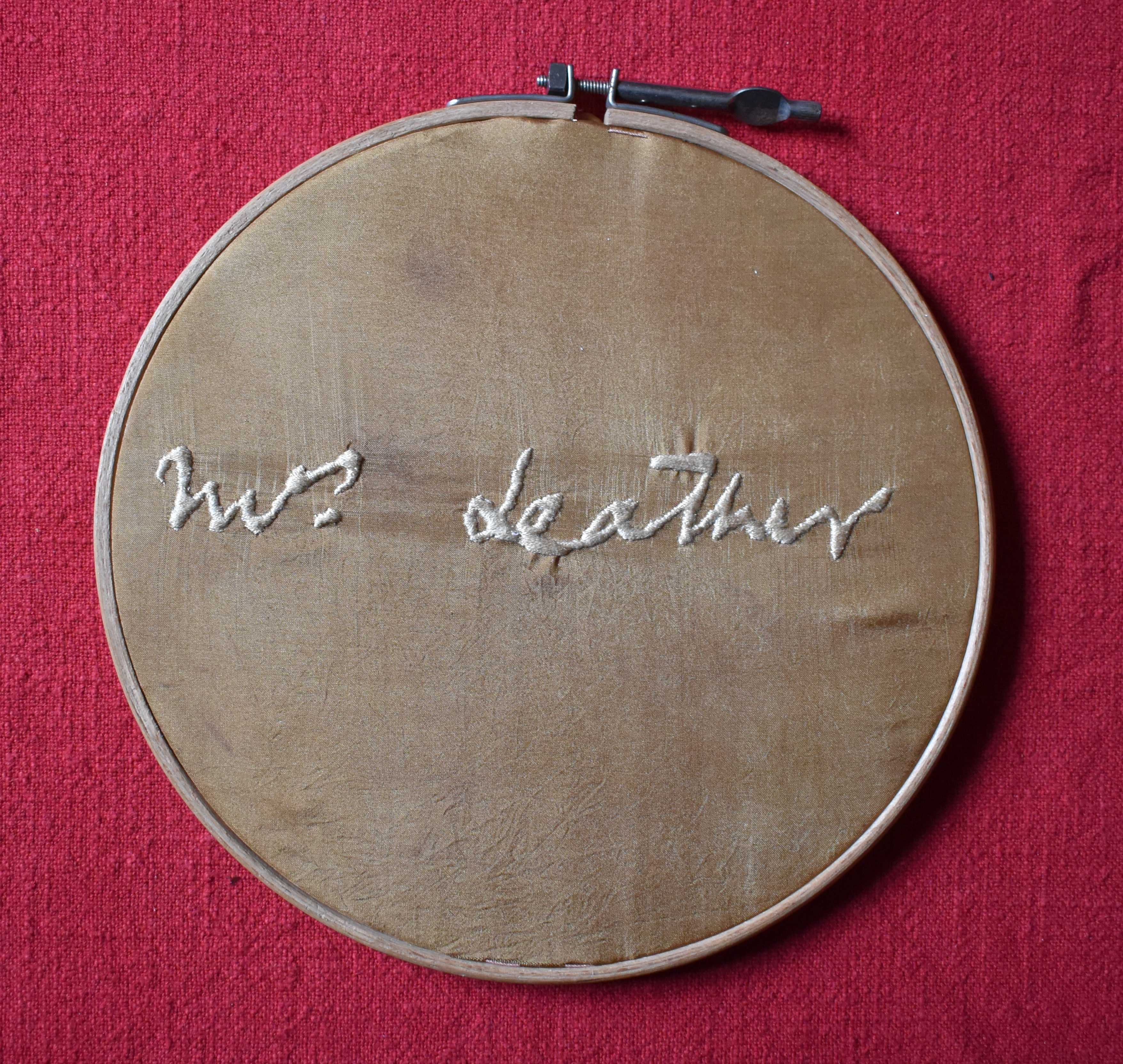
The group had also previously decided the size of the pages for the final atlas and had plumped for making it the exact same size as Ella Mary Leather’s Notebook in the Vaughan William Memorial Library Archive. This idea has a lovely resonance through history! If our Atlas becomes too thick, we decided we could also break it into volumes.
We had also had various discussions through the weeks about seam allowance on the pages and I had given everyone a page template to work to. I had cut out pages from Valencia linen, as used in my previous project ‘The Lugg Embroideries’, and this is a delight to stitch on. I also prepared some pages from material given to me by Textile Artist Helen Vine, which I had dyed with a walnut dye she had also provided. I explained that participants were free to use their own preferred materials for pages. I want participants to feel they have as much creative license as possible, so the only limitations are page size and seam allowances!
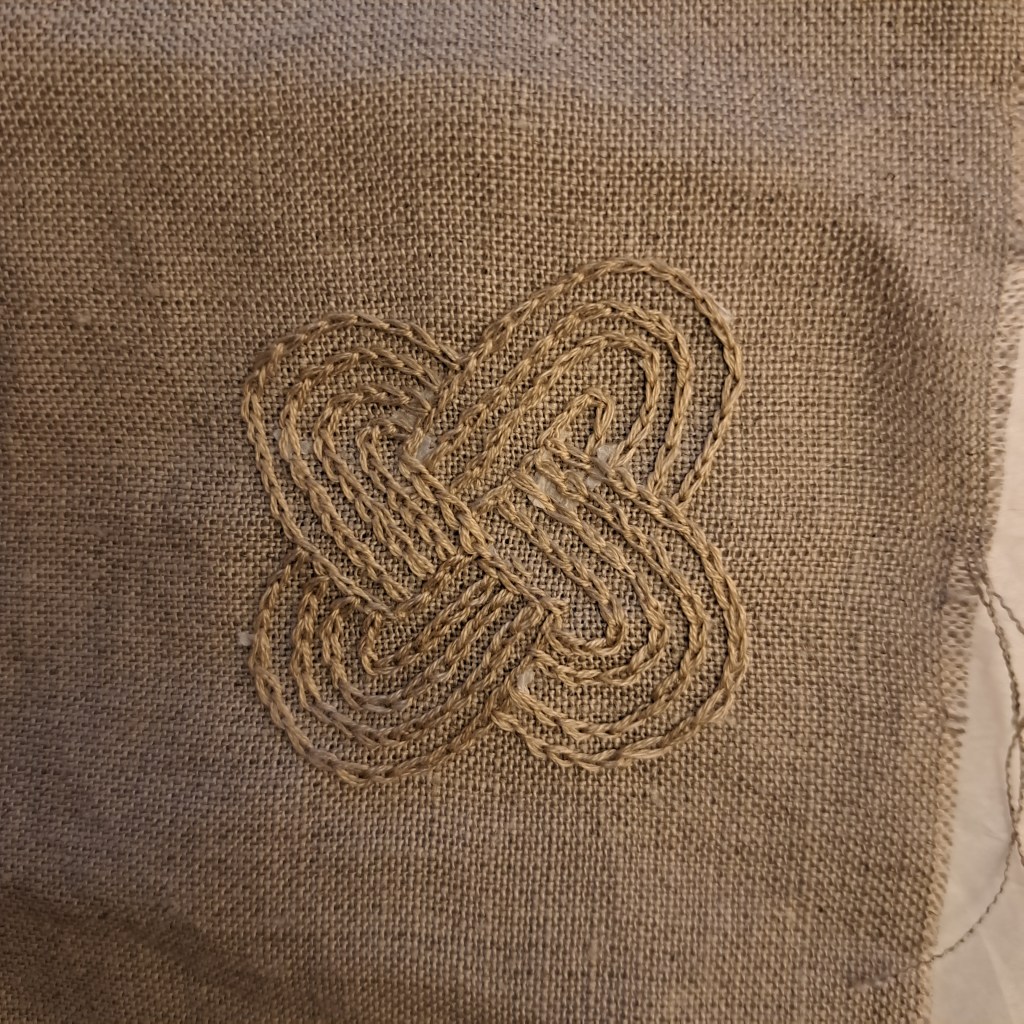
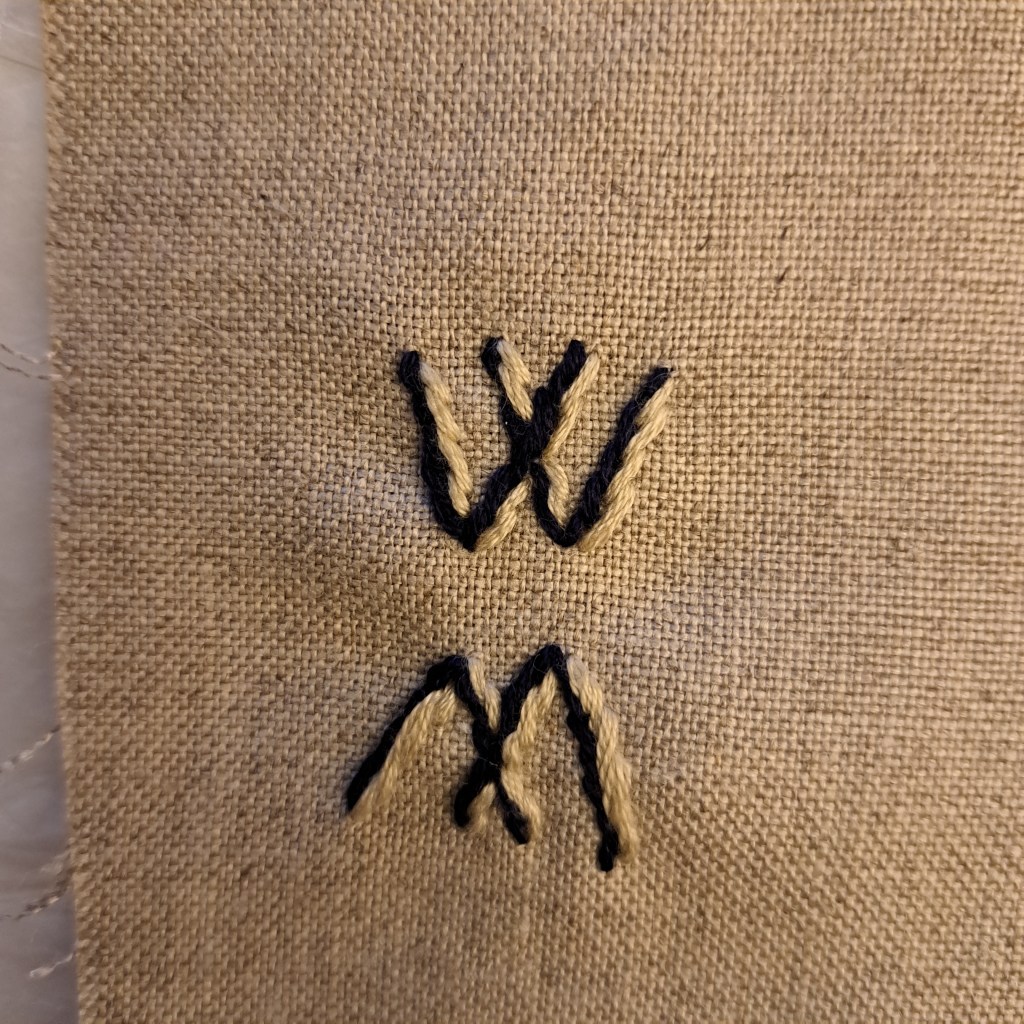
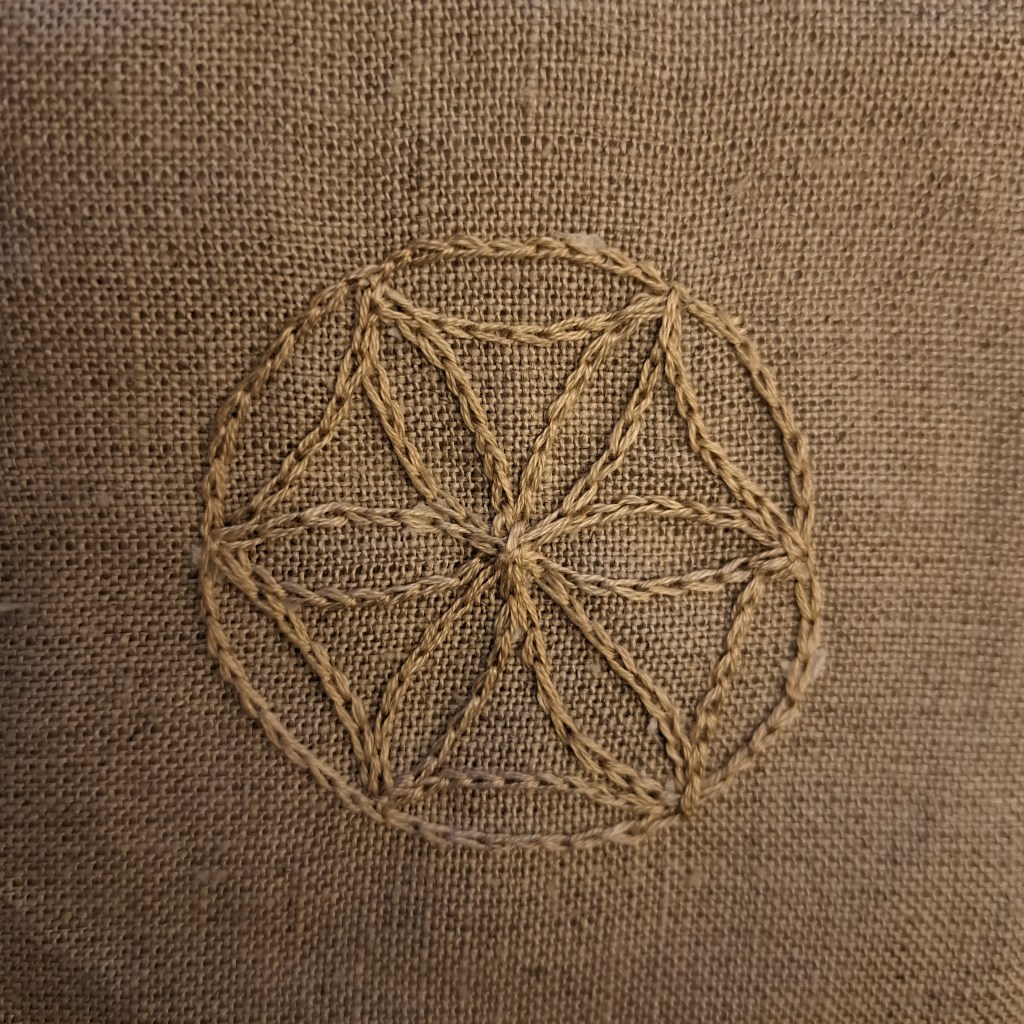
The group stitched whilst I shared information about the 34 places linked to stories of fairies, Puck, Willo-the-Wisp, ghosts and goblins in Herefordshire as gleaned from Folklore of Herefordshire (Leather, 1912). Below are some of the finished apotropaeic marks; we must be well protected from evil in the Council Chamber today!


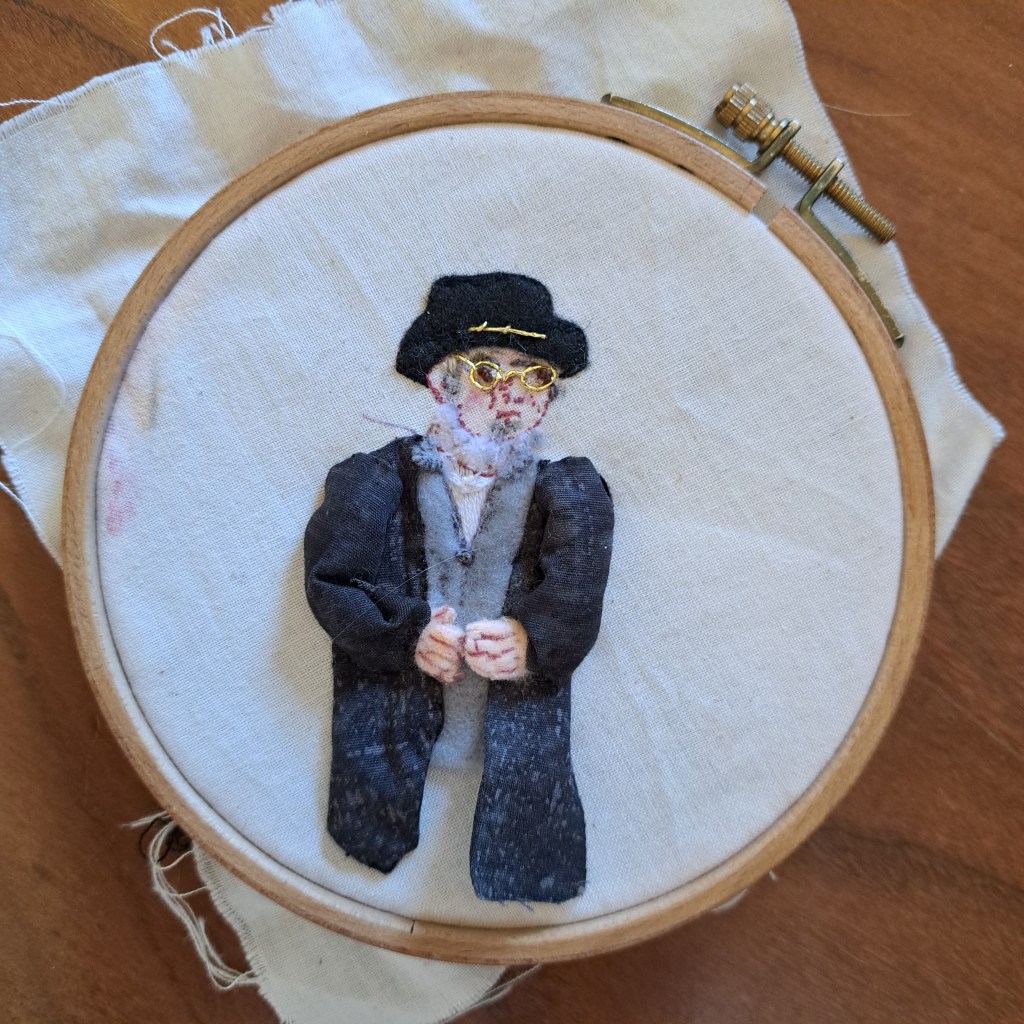
Meg taught us about using Fray Stop, explaining her particular technique for edging her intricate embroidered figures before they will be stitched onto her Atlas page. I am very grateful to her for sharing her knowledge. Additionally we learnt that ‘Frixion pens ‘ are great for drawing a design straight onto fabric, which can then be made to disappear with heat if it is not already covered up by stitching. Meg cautioned us to practice first!

I was surprised to see the embroideries taking sculptural form away from the fabric base. Below is Meg’s work in progress, the figure of William Colcombe who assisted Ella Mary Leather in Weobley with songs and stories.
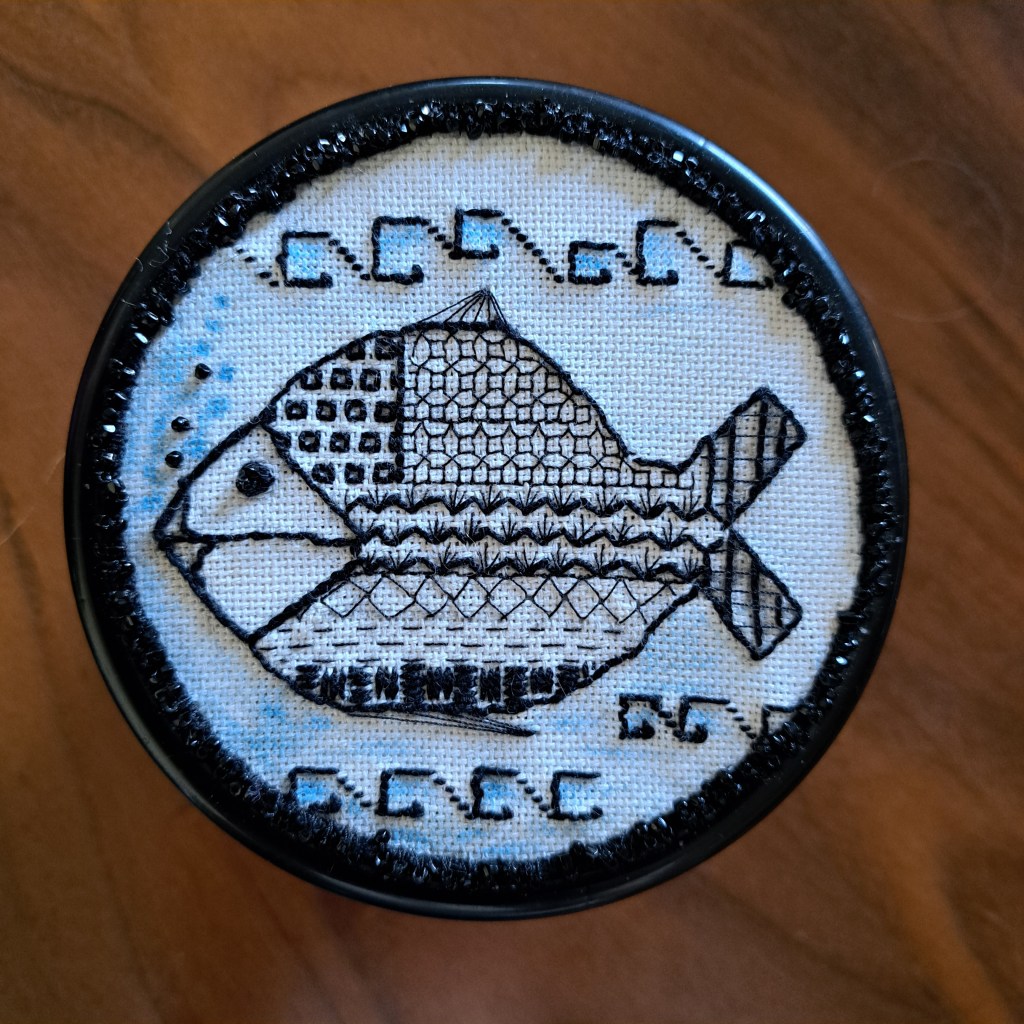
We also discussed blackwork and Meg happened to have this example in her work bag! Another group member is considering using blackwork stitching in their response to place.

 The Stitched Atlas