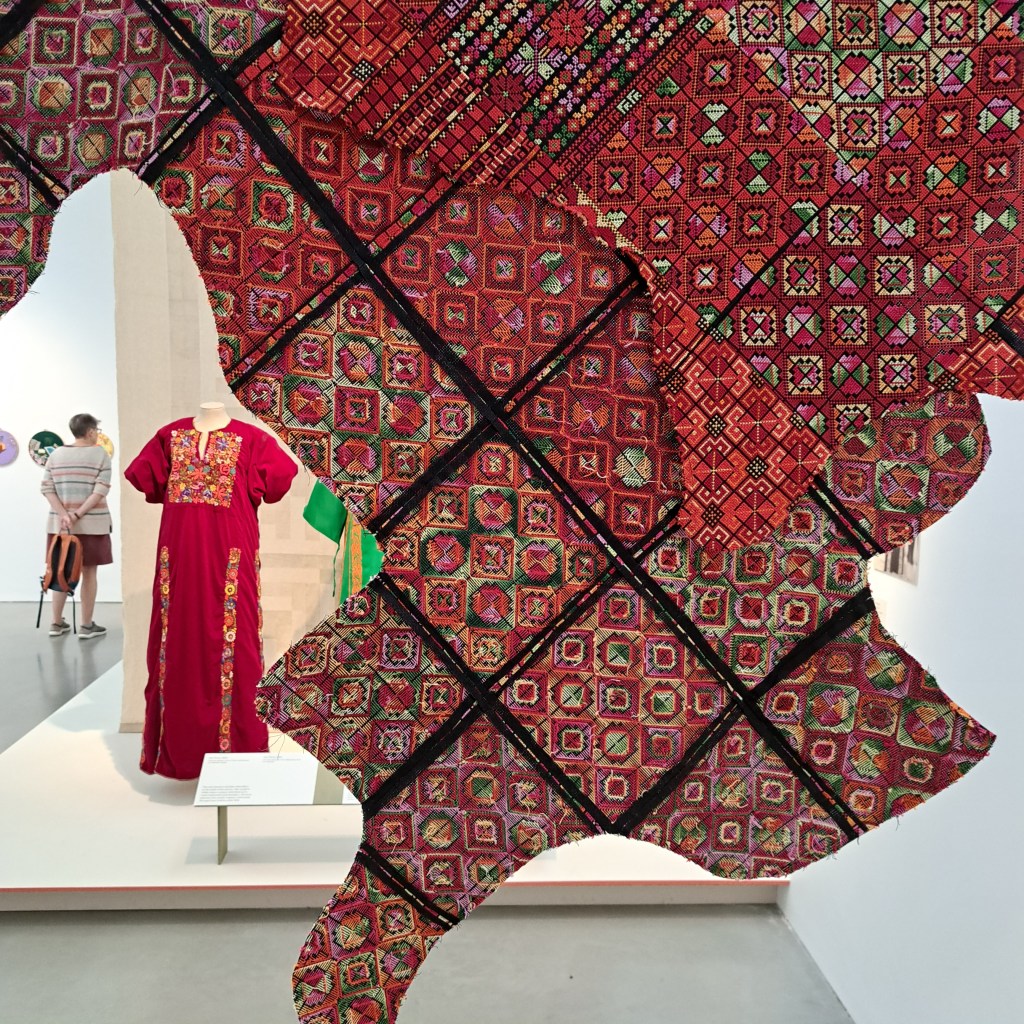
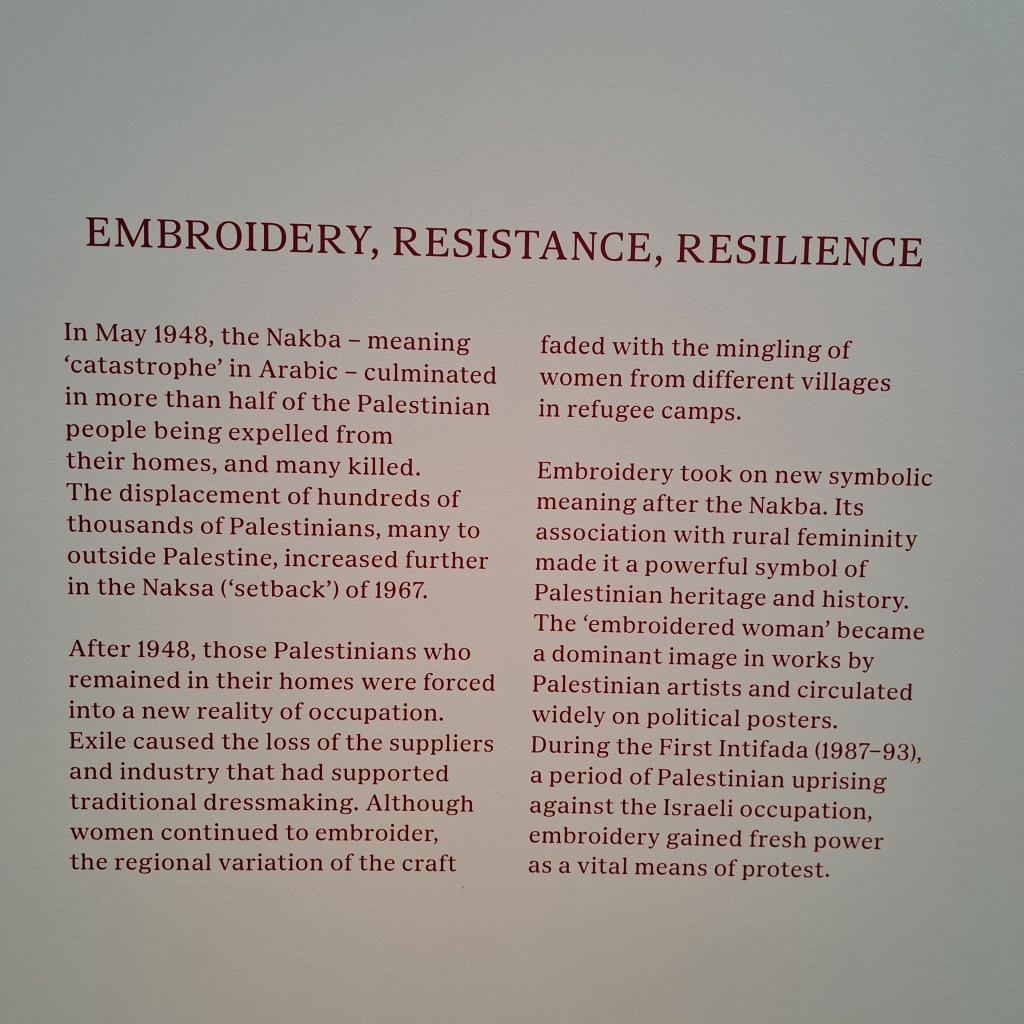
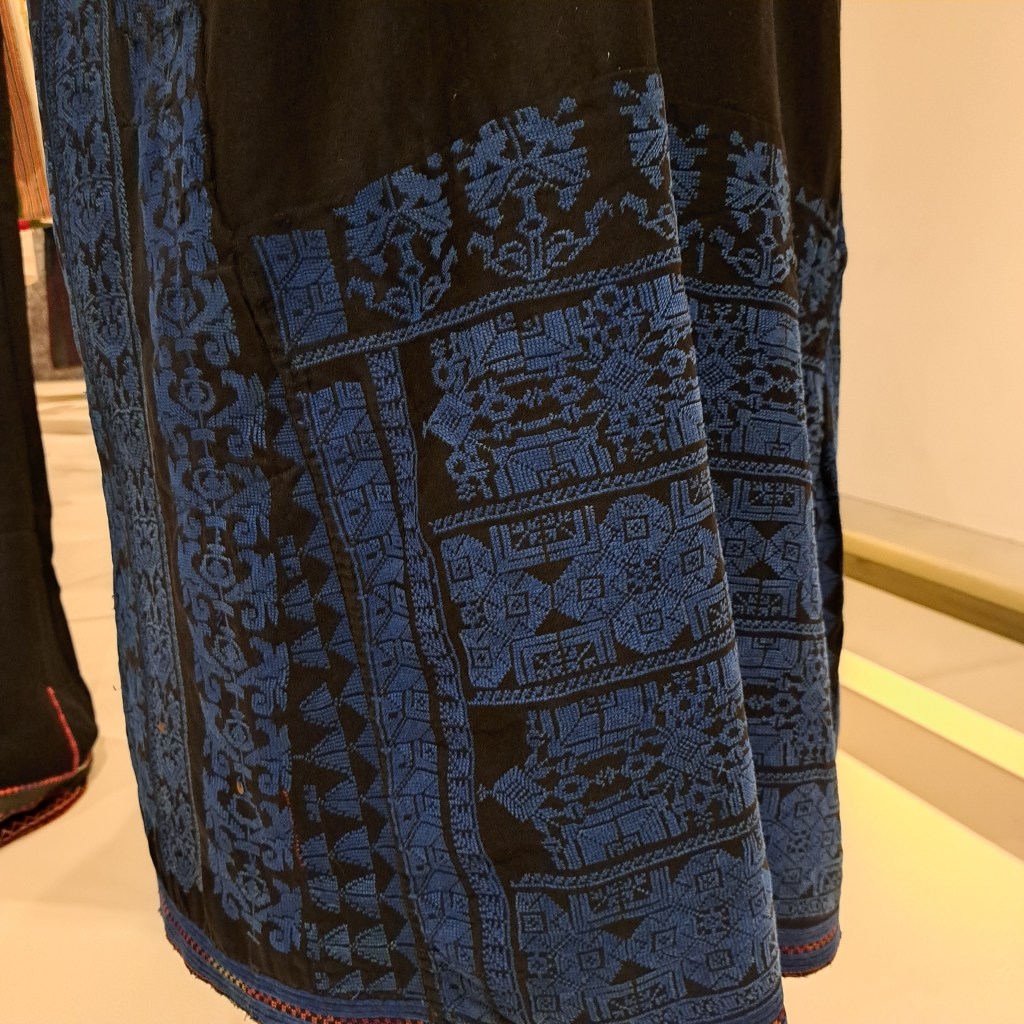
I started the meeting showing embroidery that I had seen in an exhibition at Kettles Yard, Cambridge in the summer. It was called Material Power:
Palestinian Embroidery. (It has since travelled to The Whitworth in
Manchester and new embroideries have been added in the light of the awful conflict and tragedies ongoing in the Gaza).

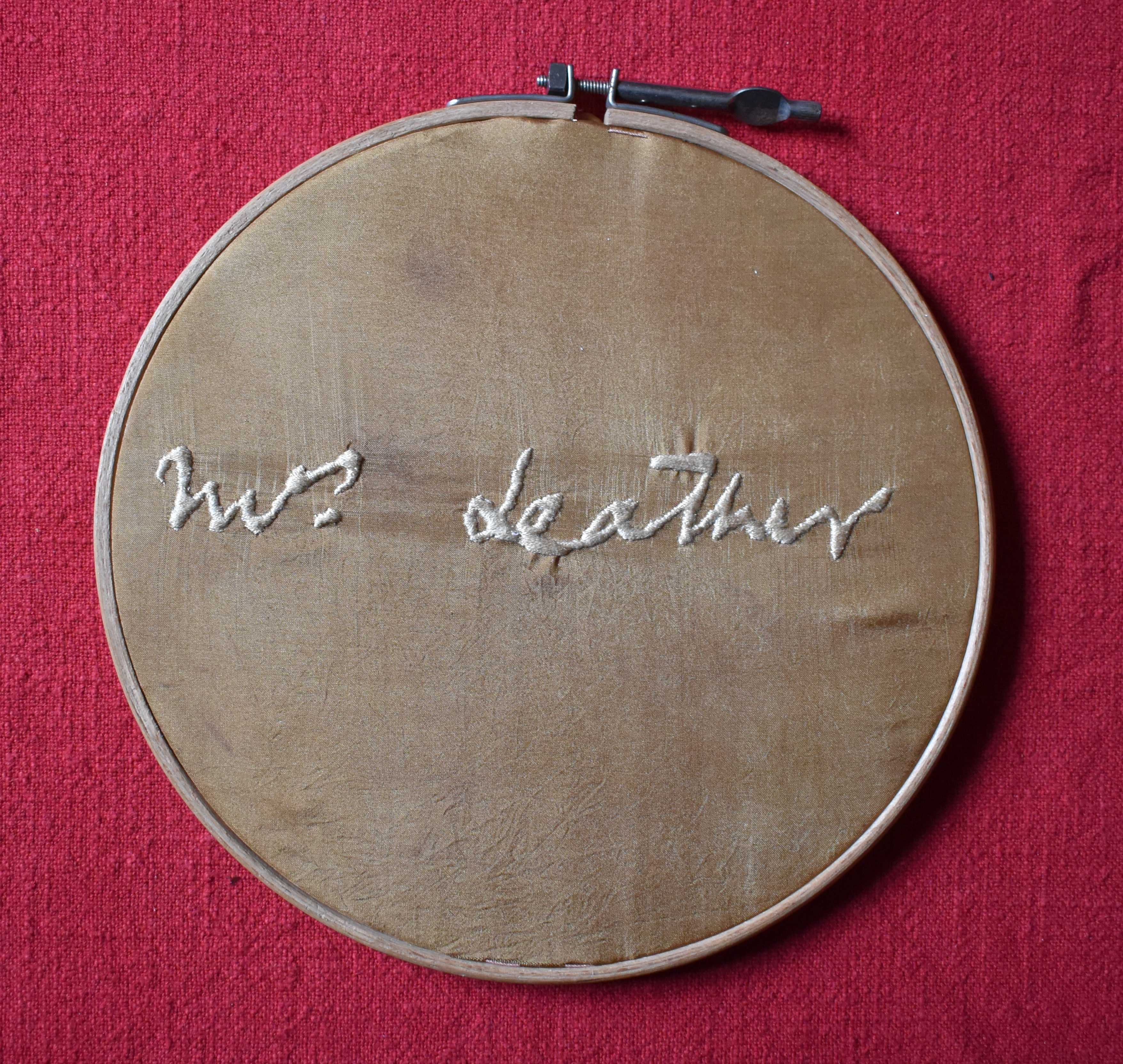
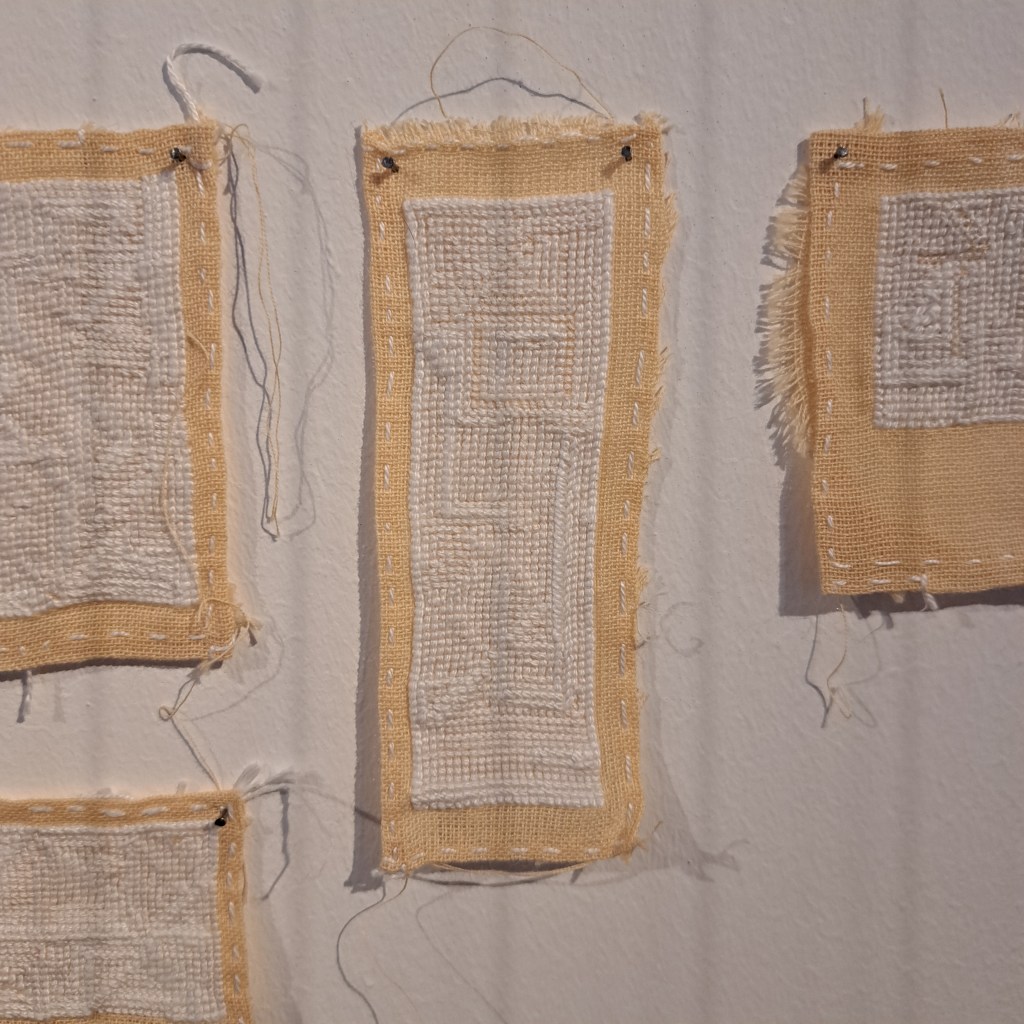
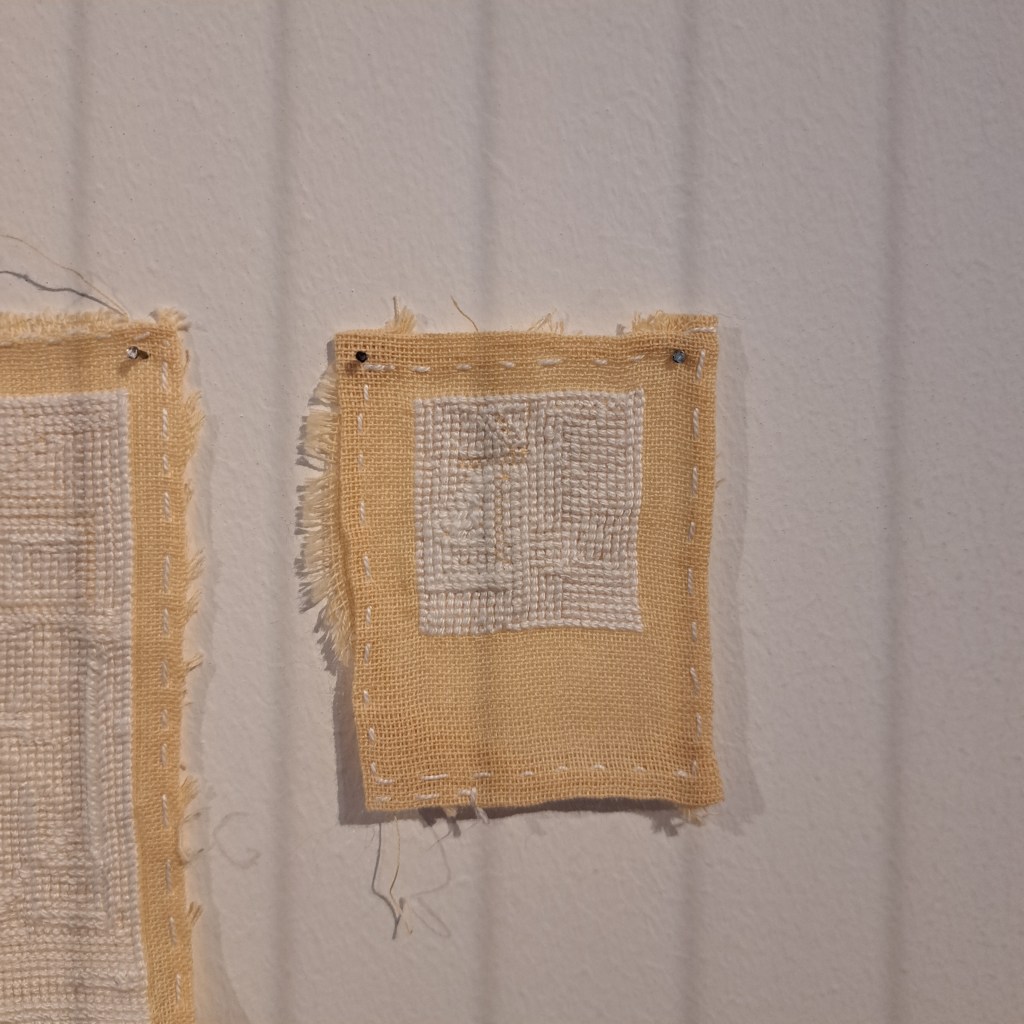
I highlighted the white embroideries of Madj Abdel Hamid, which had caught my eye in the exhibition, despite their small scale. He stated he was
reflecting on embroidery as labour and ritual practice, one that he had found himself performing daily and his works had become maps demarking time. The title of each one referred to when it was made. He saw it as ‘reactivating a traditional medium as a mode for engaging with the present – and as a timeless gesture, an accumulation of form, meditative and abstract’.

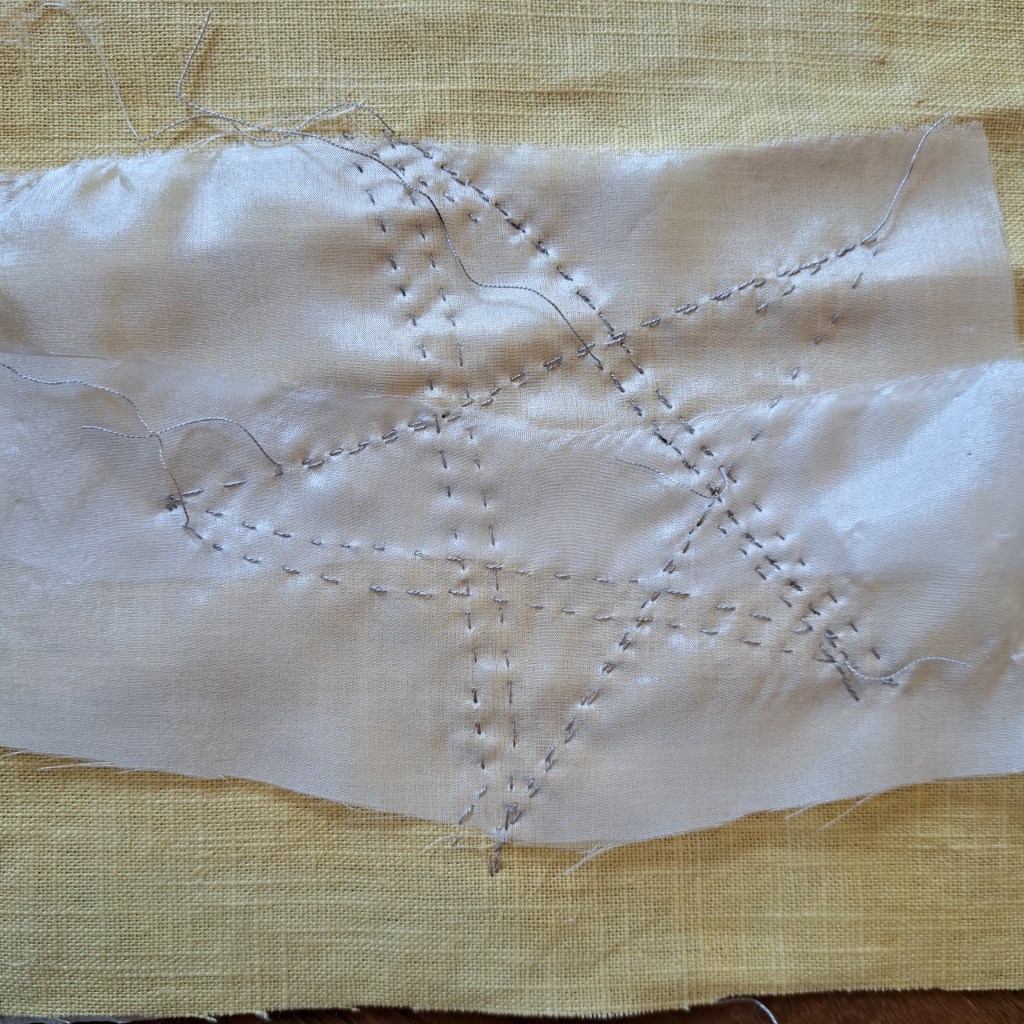
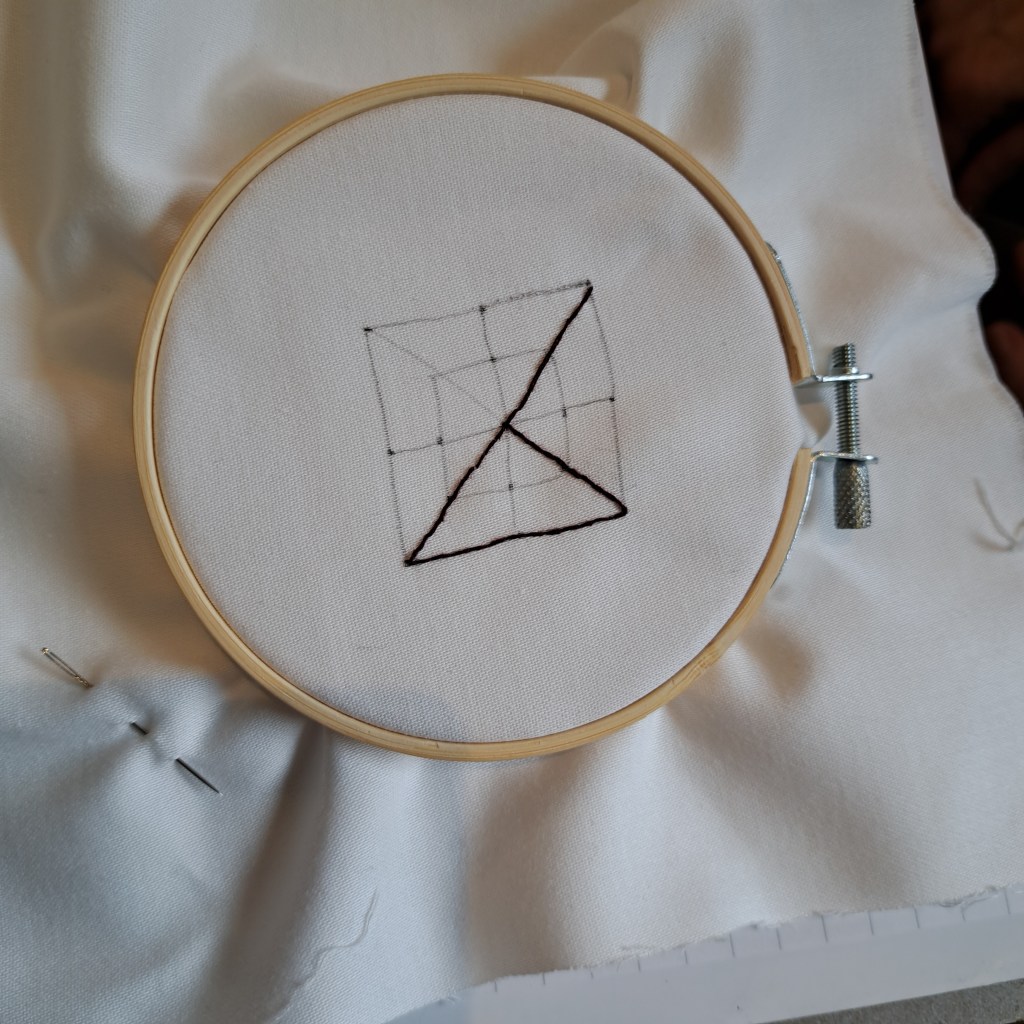
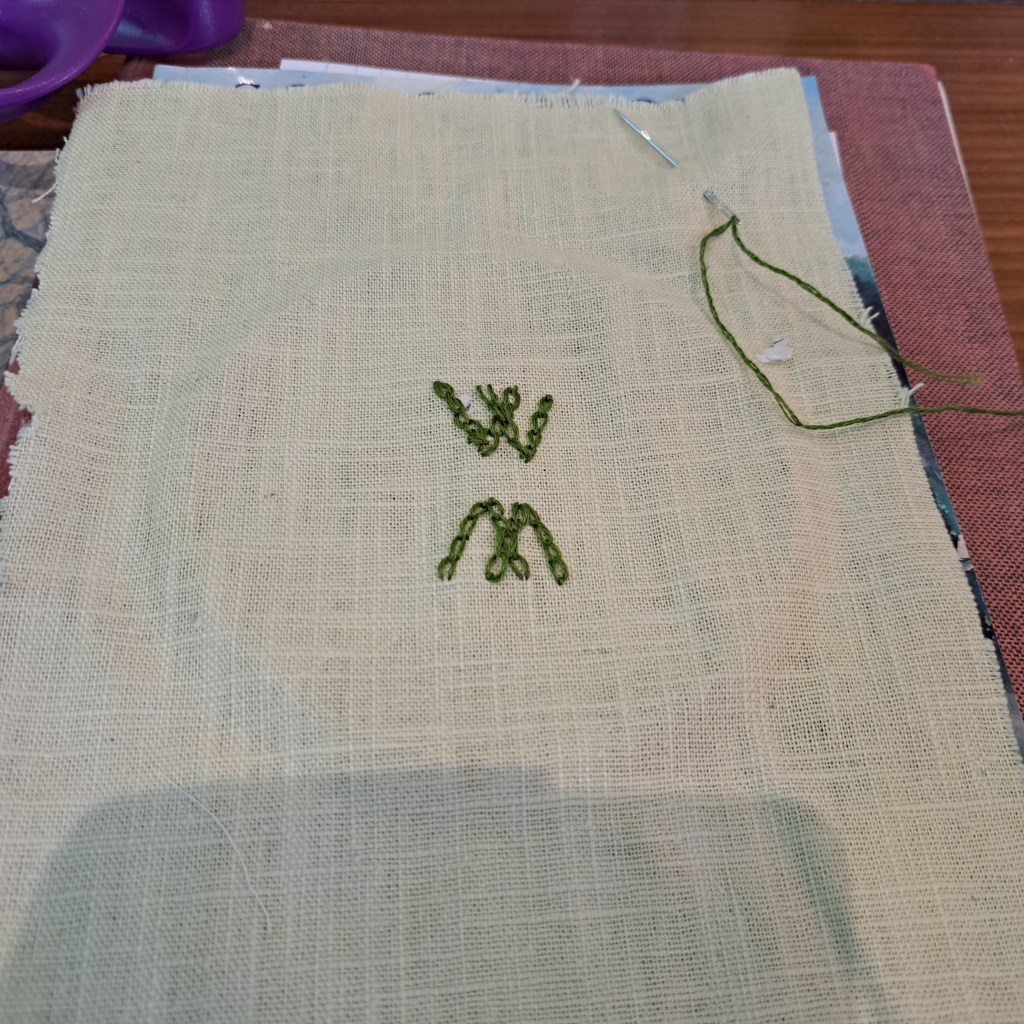
Focussing on ritual, next I showed different types of apotropaic marks or ritual protection symbols, found in medieval buildings often over fireplaces, doorways and windows placed to keep witches, demons or evil away. The Greek apotrepein means “to warn off” from apo – “away” and trepin “to turn”. Rhys Griffiths, Senior Archivist from HARC had sent me an image of one – a daisywheel – he had recently seen carved on Colchester Castle, and I had attempted to stitch it, when visiting The Museum of Witchcraft and Magic in July. I also showed an image of concentric circles carved into wood of the old Mill at Mortimer’s Cross that I has seen in January 2020. The third common type of mark is the Marian symbol which is the letter AM, M or V and thought to refer to the Virgin Mary. A fourth type is the pentangle which looks like a star but I could find no record of this recorded in the UK in a public response survey carried out by Historic England.
I invited participants to stitch a protective symbol, if they wished, whilst I presented the nine places related linked with stories of devils and demons as found in Ella Mary Leather’s book.

To end, I shared information and a handout about poisonous plants found in Britain. The purpose was to ensure that if participants decided they might like to gather plant material from their chosen place in order to make natural dyes for threads and fabric, that they would be aware of which plants to avoid or be cautious with. Mainly this meant not eating them, although some plants can also cause burns. It was a surprisingly long list and I encouraged participant to re-read the handout before picking plants. A rule for gathering natural dye materials is that only 10% or less of a plant should be taken. A piece of material needs its equivalent dry weight in plant materials for the dye bath.
We discussed the possibility of further into the programme having a session dedicated to trying out dyeing methods if participants wished, and Helen who has experience in this area, generously suggested she could help me with running a session such as this. She explained that a new way of mordanting is to use soya milk, which avoids using harsh chemicals. Hence I said participants might choose to collect some materials in the place that they are investigating with a view to making some natural dyes.
It was observed by Annie that some of the plants on the list were also used as medicines, and that size of dosage was a factor. And this itself suggets another topic of ‘Plant lore’ for another week!

 The Stitched Atlas