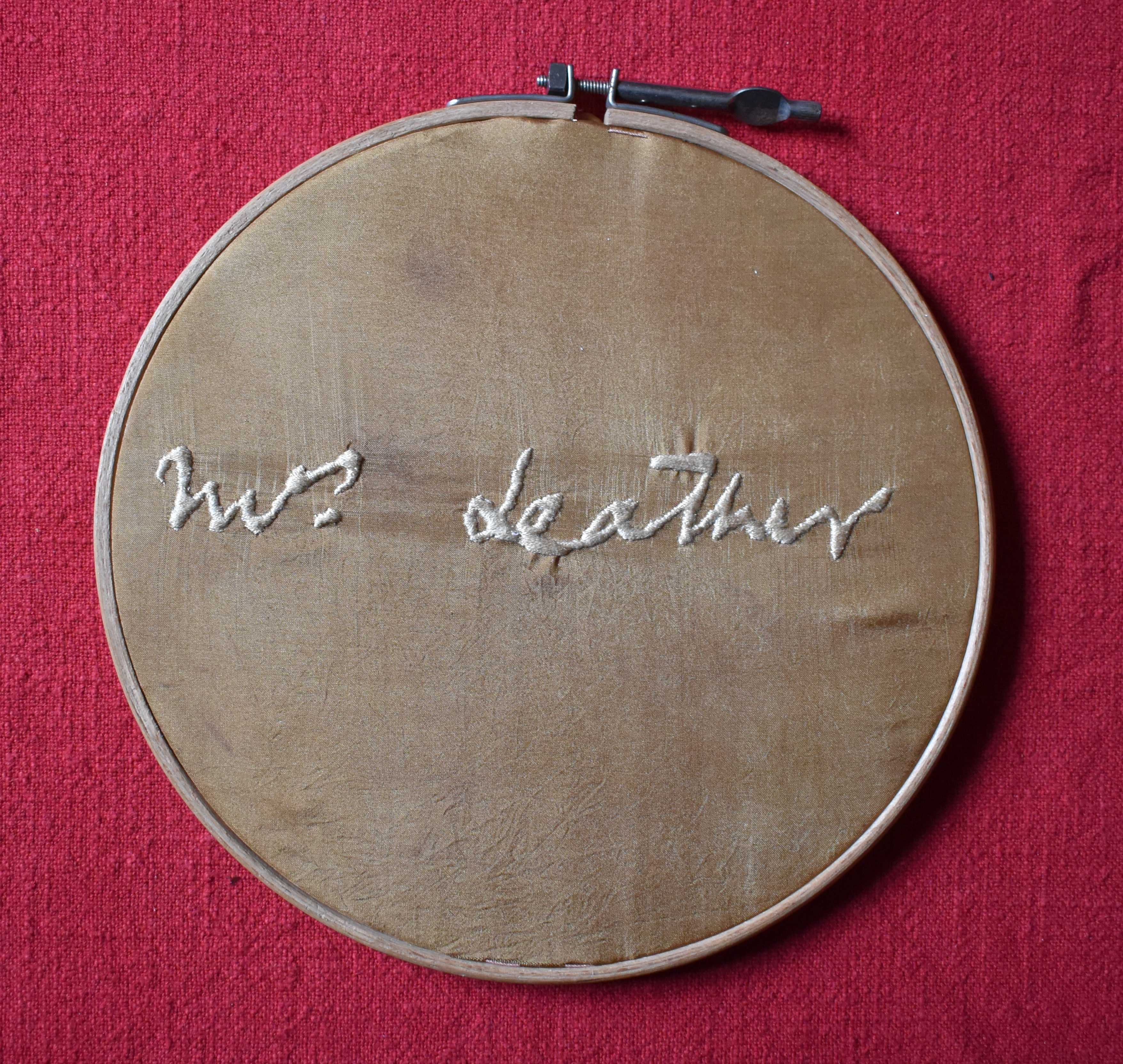
This session introduced the scope of the folkore material as collected and collated by Ella Mary Leather. I had examined her book Folklore of Herefordshire (1912) and her Notebook in Vaughan Williams Memorial Library.
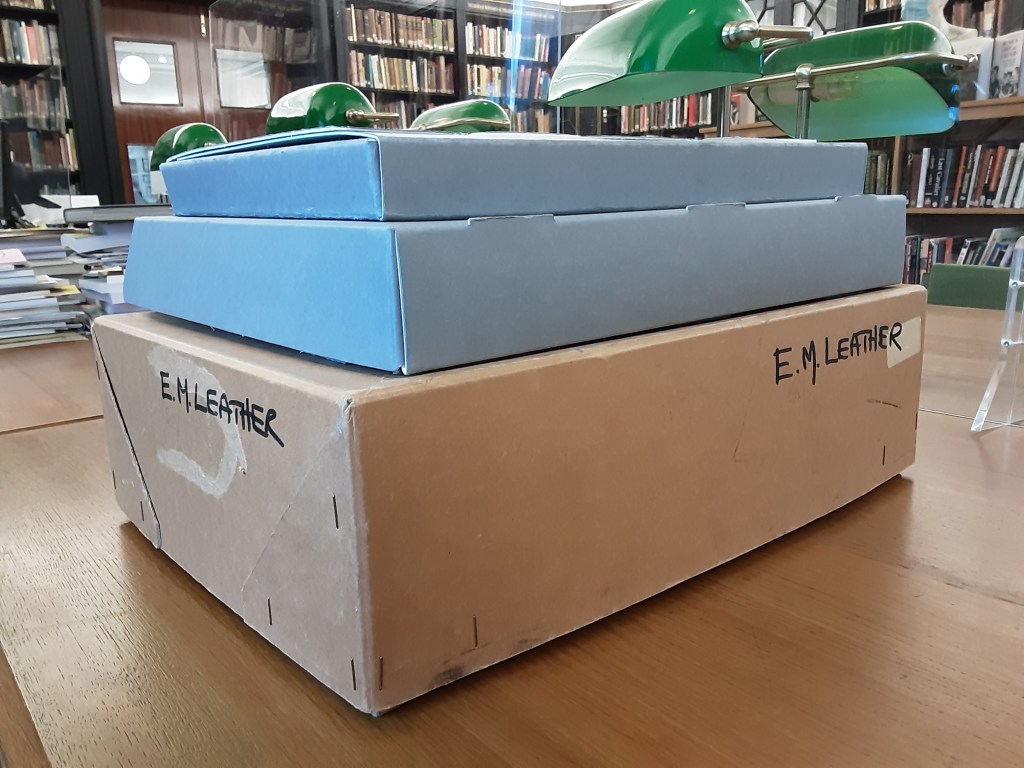

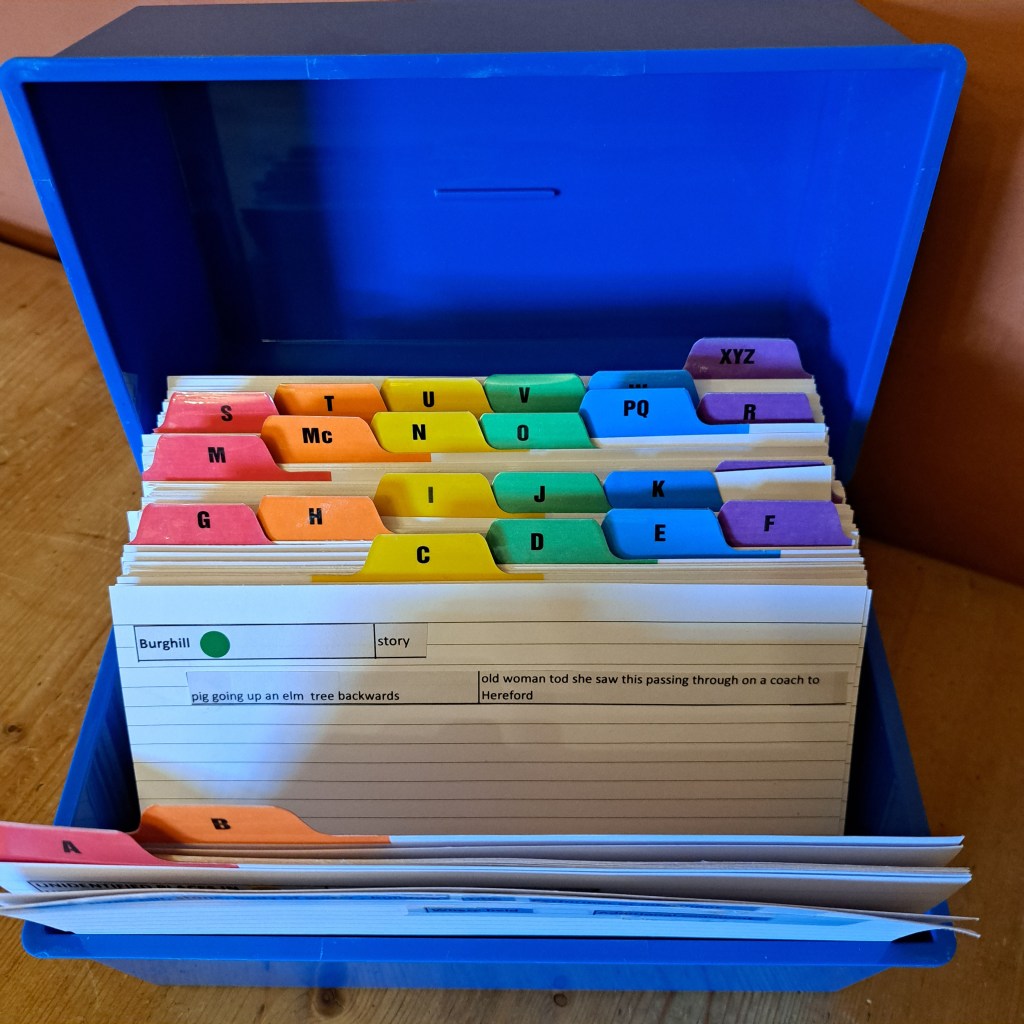
From these I had created two spreadsheets of topics/categories of folklore or songs linked to their respective Herefordshire places, namely towns, villages, and hamlets etc. I also prepared a box file listing the folk items by alphabetical place so participants could easily flick through to choose an individual place that caught their attention.
At the beginning of these meetings though, I wanted to introduce different embroidery or stitching styles used by artists, mainly to encourage people that mark making with thread can take many forms and that I considered there is no wrong or right way to do it and to encourage experimentation. I wanted the walking in place to be a kind of stitching too, with the ‘body as the needle’ and the ‘ground as the fabric’ with the revisiting of often immaterial ‘commons’ such as folk stories or songs, in their associated place.
Today I showed images of Matthew Harris’s work which I had seen that weekend at Ruthin Craft Centre. I had not seen his work ‘in the flesh’ before so to speak, but had previously written about his collaboration ‘Field Notes’ with leading Britsh Composer Howard Skempton in an essay on music and textiles during my MA at Swansea (Individual proposition for a creative venture: a critical examination of the interrelation beween textiles and music as a liminal space.) It was a thrill to finally see it.


I started the folklore material exploration with a breakdown of all the topics linked to place, which I had pinpointed on a large map in my studio. In the image below, not all points were yet marked but I was visually taken aback even at that early stage to see just how much material there was attached to various places in the county. Understandably, this quantity was also daunting for my participants and so I explained that we would begin the year long project spending time examining the different topics and they did not have to rush to decide a place , and that I would rather the take time and choose something because it really sparked their interest.
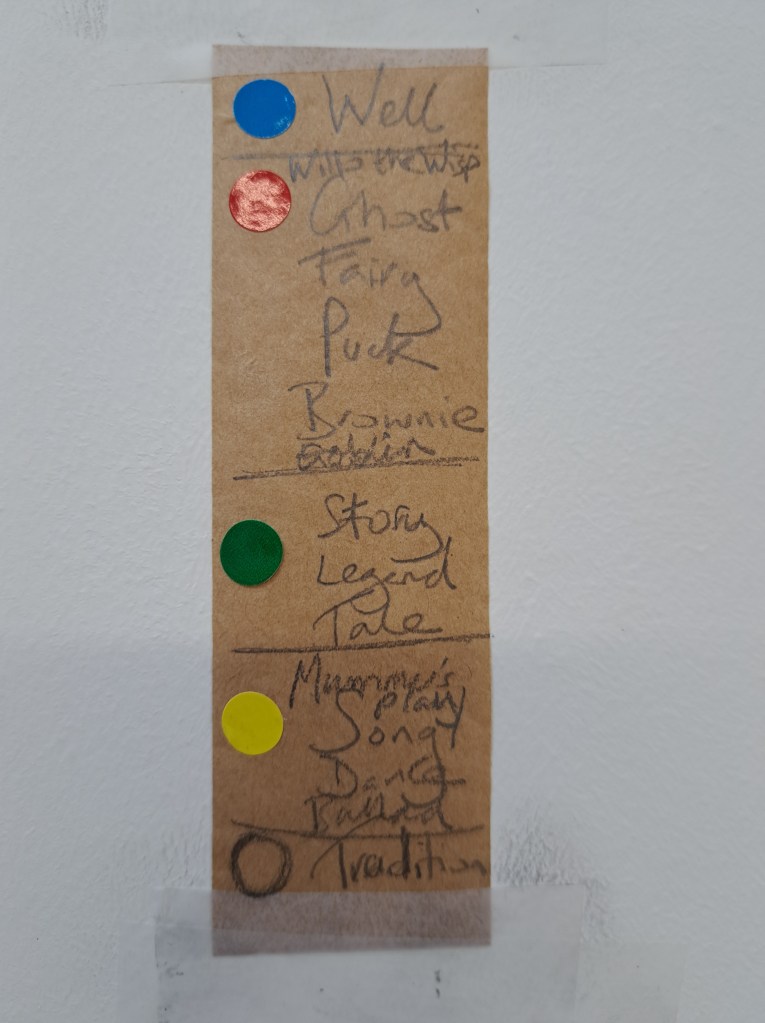

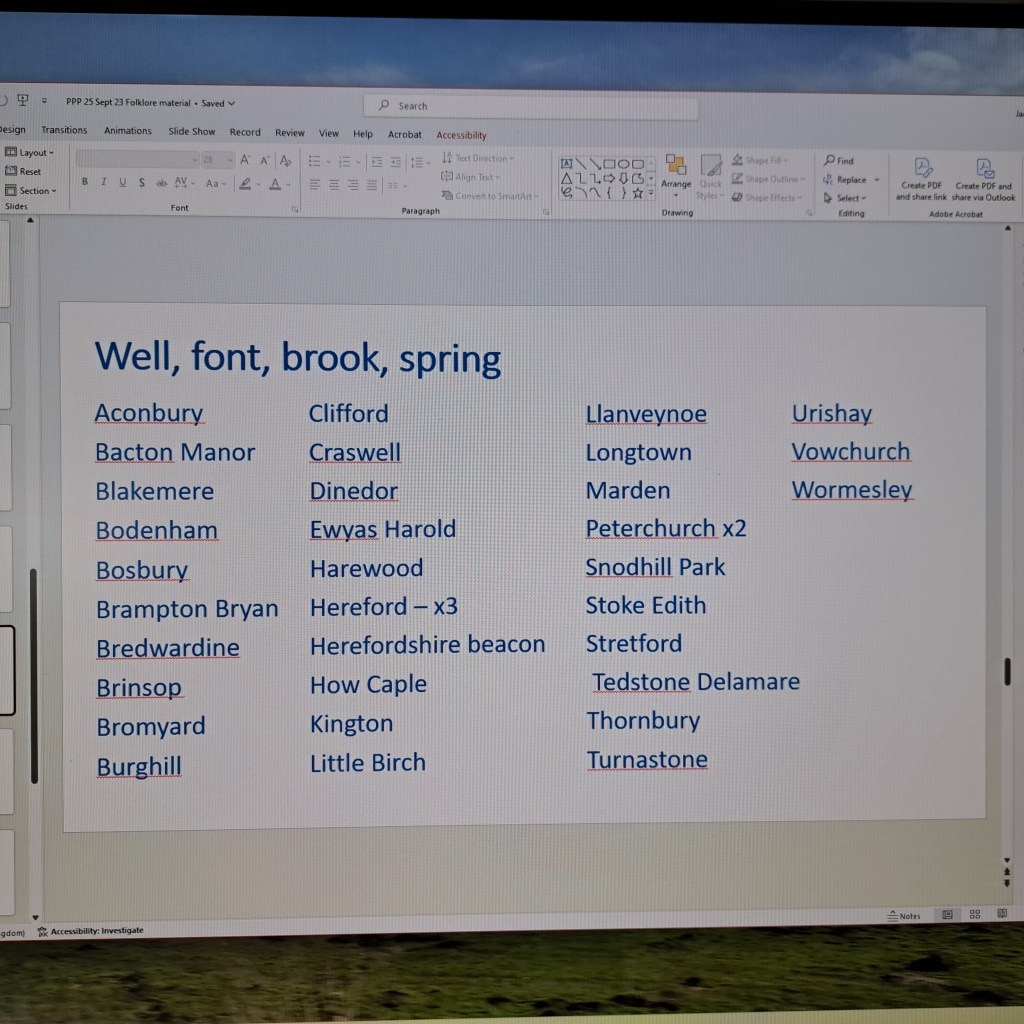
Today’s session then focussed more specifically on water related places such as wells, fonts, brooks and springs.
I had also brought along a large old Times Atlas that I had purchased locally for £1, and I suggested we use this as a ‘mock’ atlas to formulate and gather our ideas for our main stitched atlas. Whilst I presented the summaries of the folklore material, participants stitched their names on scraps of Valencia linen left over from my pilot project ‘The Lugg Embroideries’ (in which I had tested my proposd method of stitching and exploring heritage simultaneously in a textile group). This was a nice activity to just get started stitching.
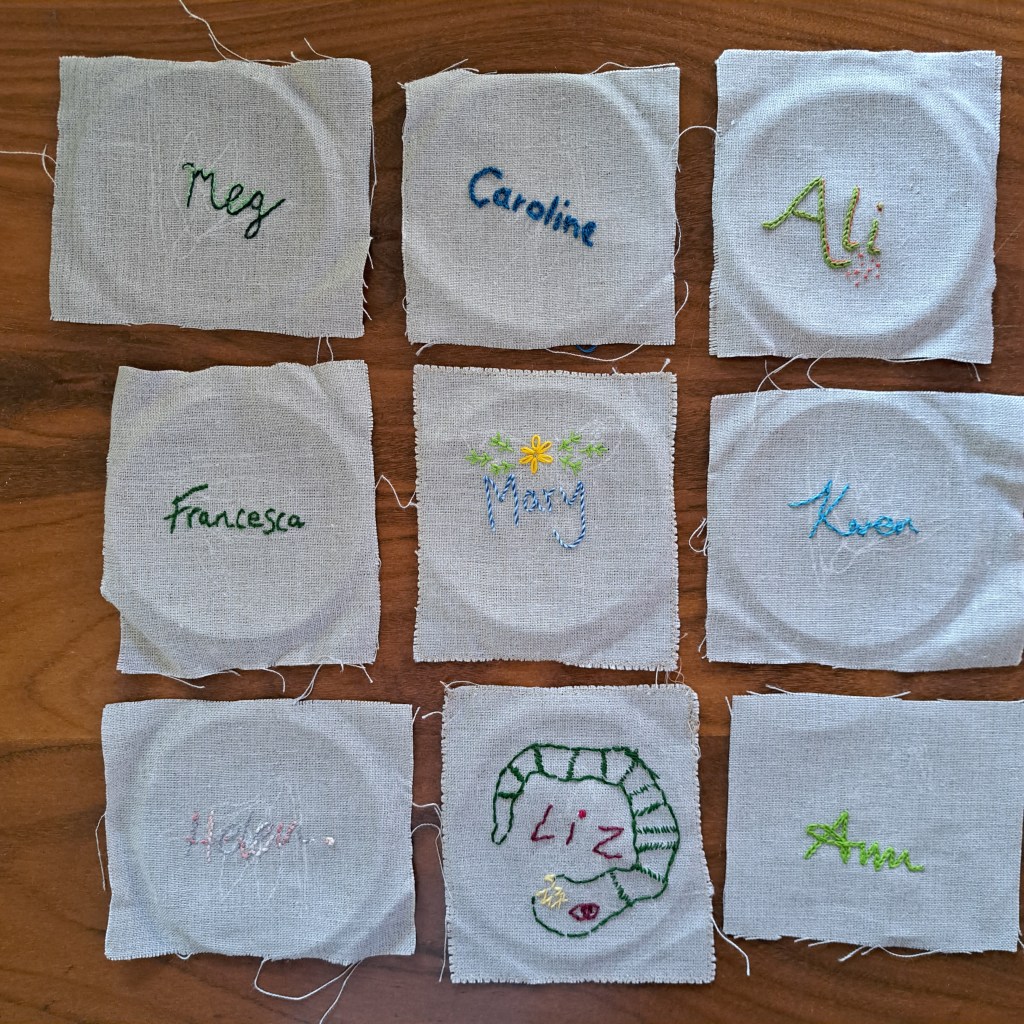
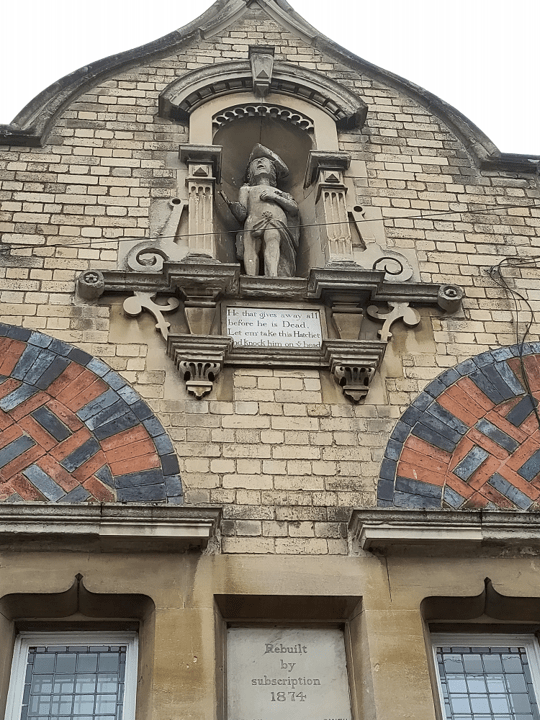
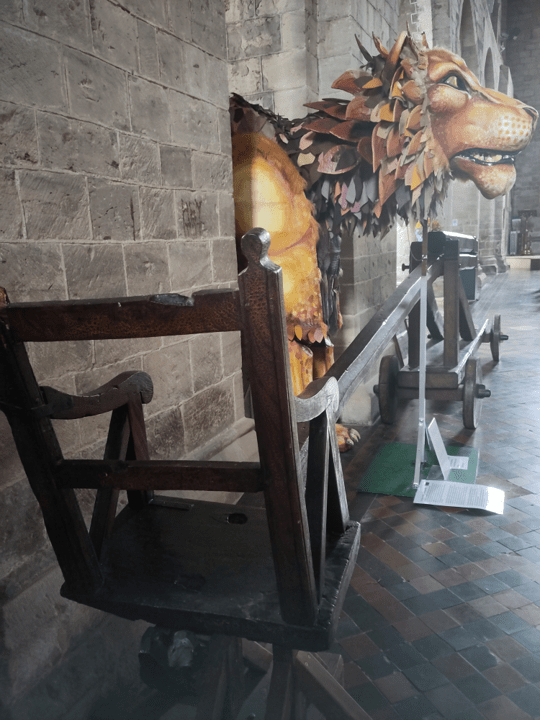
The idea was to put these on the cover of the ‘ideas atlas’. Annie had already sent me some photographs of two items in Leominster that she had seen on her intial exploratory walk, and that also featured in Ella Mary Leather’s book, namely the Almshouse and the Ducking Stool. I added her images to the ‘ideas atlas.’
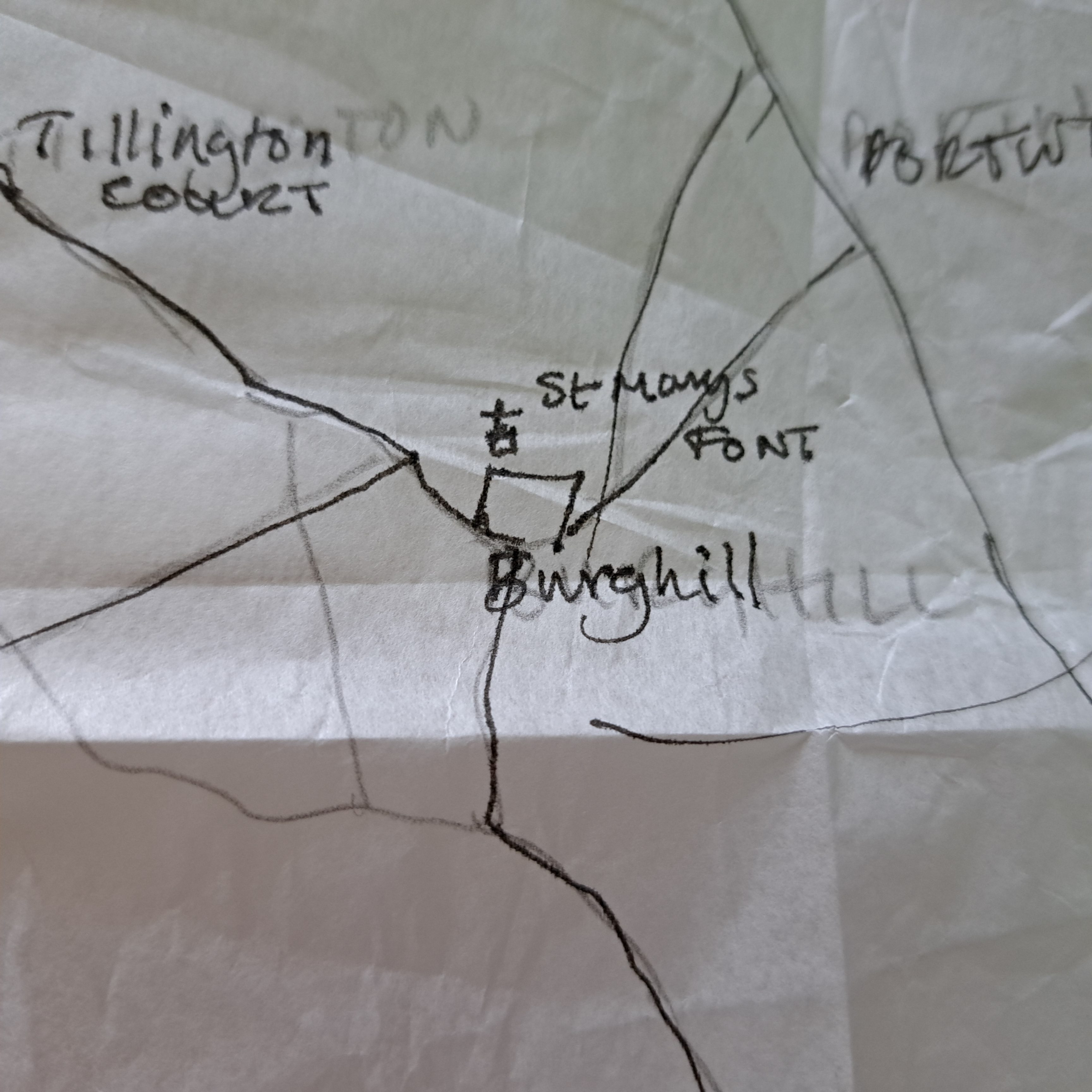
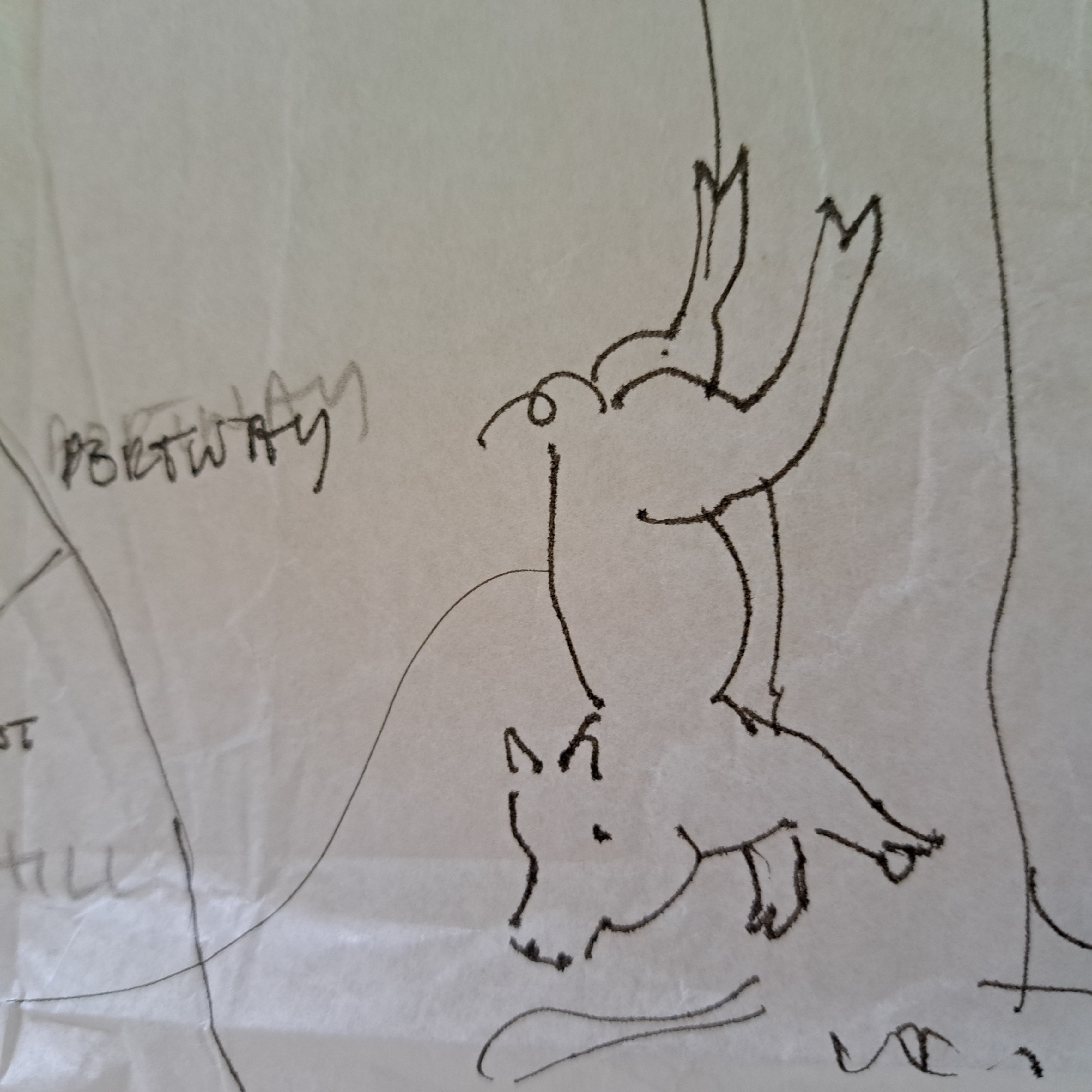
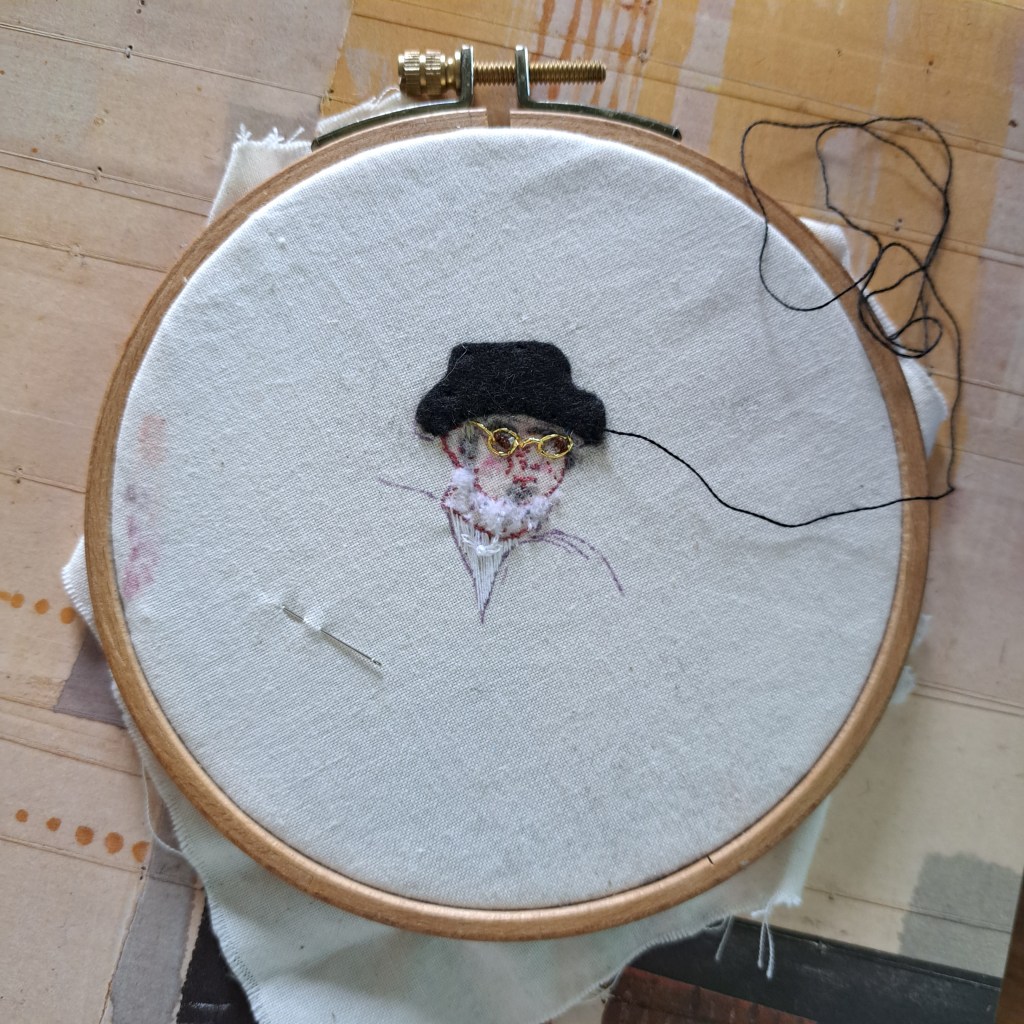
Some of the group had already decided the place and associated folklore they wished to investigate and they shared their early work with the group, some examples shown below.

 The Stitched Atlas